新聞
The basics of Balatro: essential tips and strategies for your first runs
J
John Walker
Balatro gameplay basics: how does the game work?
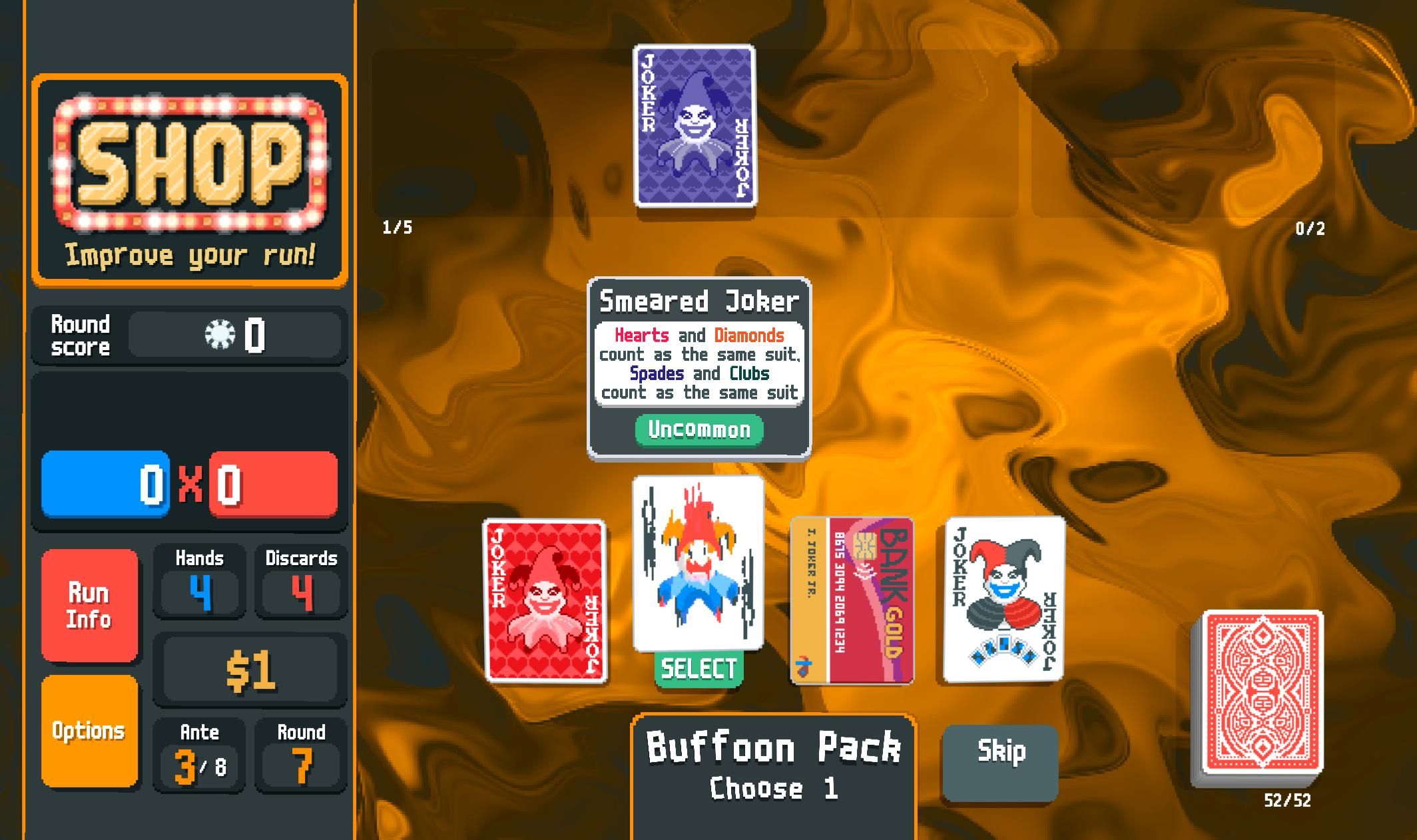
We’ll get into the specifics of how to play below, but let’s start with what you’re doing. This is all about playing a hand of poker from a selection of cards in your hand, using any number of cards you wish up to five (most of the time). You’re trying to form poker hands (we’ll get to those next), and each is scored according to its difficulty and the level to which you’ve upgraded it. It is then further boosted by the special bonuses you might have attached to each card you’re playing, as well as the array of Joker cards you’ve selected, which each offer their own bizarre bonuses.You need to clear the minimum score for three rounds in each Ante level, a Small Blind, Big Blind, and an extra-tough Boss Blind, with the ultimate goal of clearing all 24 rounds to win a game. Once that's done, you unlock new starter decks, new difficulty levels, and an ever-growing pool of Jokers that can hugely change how you’ll approach your next attempt. And the next one, and the one after that, and forever and ever and ever.
Understanding poker hand rankings in Balatro
Balatro is not a poker game, but it is a game based on the card hands used in poker. Before you start playing, you’ll definitely want to familiarize yourself with these basics, as this knowledge is key to everything that follows. If this is something you already know well, feel free to jump ahead.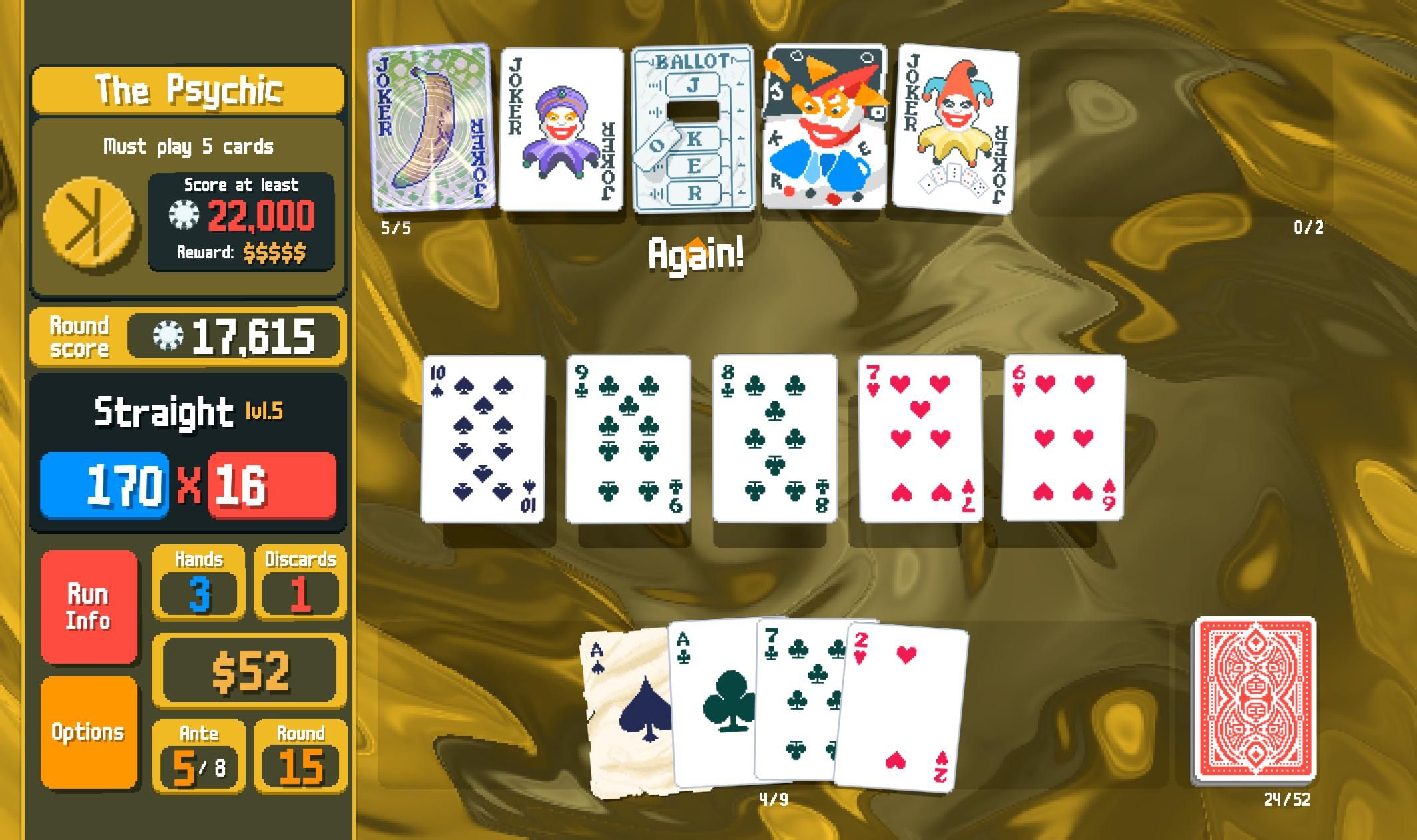
The lowest possible hand in poker is a “high card,” where you simply judge your cards based on which has the highest value. Then, in order of ranking, you have a pair (two of the same card), two pair, and three of a kind. Above that comes a straight, which is a run of five cards in numerical order, and then a flush, which is any five cards of the same suit. Next up is a full house, which is two of one card value and three of another, followed by four of a kind. Beating that is a straight flush—a five-card numerical run all of the same suit—and finally, the unbeatable (in regular poker) royal flush: Ace, King, Queen, Jack, and 10 of the same suit. With that in mind, you’re ready to go.
Balatro card packs explained: Standard, Arcana, and Planet Packs
Balatro is about seeing how far you can get in any given try. Your starter deck is a regular set of 52 cards, but you will almost immediately be given choices and upgrades that’ll dramatically change how it plays, and you don’t have an enormous amount of control over which opportunities will come up each turn. So, it’s important to let your tactical approach to any given run change on the fly to match what Lady Luck is offering you.There are four main ways you can change your deck:
- Standard Packs: The most basic option, these are sealed packs containing a few regular cards from which you can choose one or two to add to your deck. For example, you might grab an extra King of Clubs.
- Arcana Packs: These contain Tarot cards that have a massive range of abilities, from increasing the rank of two cards to turning a card into Glass, Stone, or Gold, each of which comes with special properties. There are also Tarot cards that will turn three selected cards into specific suits, which is enormously useful when trying to build a flush-based deck.
- Planet Packs: These are used to upgrade the scoring effect of specific poker hand types. Pluto will improve a simple high card, while Jupiter levels up your flushes. When you play a hand, the higher its level, the more points it’ll add to your total, pushing you to focus on one or two particular hand types during a run.
- Celestial Packs: These apply some of the most elaborate and peculiar upgrades to your cards and Jokers, and they appear much more rarely. It’s always worth opening a pack if you’ve earned enough cash in the previous rounds to afford one.
Balatro roguelite strategy: embrace losing
Balatro is, ultimately, a roguelite, and as such the intention isn’t to win incessantly. It’s perfectly normal to lose around Ante 3 or 4 for a good long while, and that’s not a result of not yet having unlocked various Jokers or extras—it’s all about mastering the game's systems. Each loss is a lesson, and as such, a vital part of your progress. This also frees you up to just experiment and try approaches that go against your instincts, since a loss is likely either way. You’ll quickly discover routes that please you and start to angle for them should they become available, or explore a whole new route when they don’t. Speaking of which…How to use discards effectively in Balatro
Balatro is, if nothing else, a very silly card game. There are few others where you can play a five-card hand that scores like a straight but contains completely different rules. The opportunity to form excellent hands comes up very often when you’ve cultivated your deck appropriately. So, when those cards aren’t in your first random selection, take advantage of the discards you get each round.You can discard up to five cards at a time, and it’s often worth burning through them all until you get exactly the hand you’re after, especially if you’ve powered it up enough to clear the target score in a single turn. While there are builds that reward you for finishing a round with discards left, they’re entirely optional and, in my opinion, non-optimal for beginners.
Balatro build synergy: pivoting your strategy mid-run
Personally, I love a flush-based approach. There are so many ways to boost this, from the obvious choice of upgrading the hand type to using Tarot cards to switch as many cards to one suit as I can, not to mention the range of Jokers that further improve the score. It’s my default approach, often to my detriment.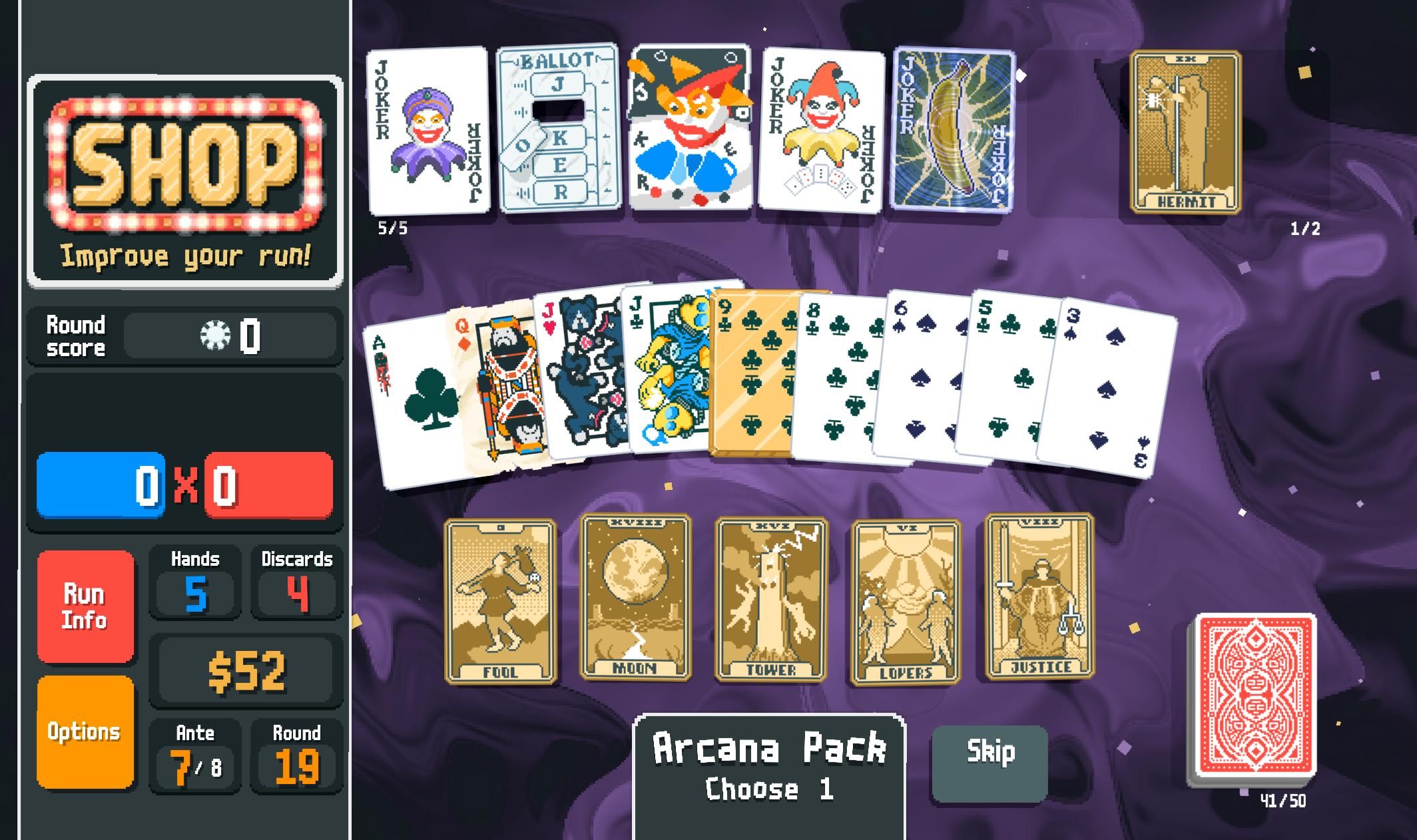
Sometimes the Balatro gods have different ideas. They might never offer you the Tarots, Planets, and Jokers that will help, or worse, cut you off just as you’ve gotten going. In the first instance, pushing for your favored approach anyway will always lead to disaster. You have to accept it and try something else. As I’m writing this, I’m midway through going heavy on straights instead, which I almost never do, and it’s working really well.
The second scenario raises a more complicated conundrum. If you’ve uniquely focused on one specific hand (another great one with a lot of synergy is three-of-a-kind), you will have made yourself very vulnerable, not least to the randomly assigned Boss Blinds that could well make your one and only move impossible. So, spread your bets. Have a backup plan. If you’ve built your run around three-of-a-kind, invest here and there in a two-pair strategy as well, given the likelihood of that showing up when you miss your main goal.
Sorting face-down cards
There’s a really mean move Balatro will often play during Boss Blinds where it starts dealing your cards face down. That’s rather problematic given there’s no way to flip them back over, but there’s one neat way to make the situation a little easier that’s too easy to forget. At the bottom of the screen, between "Play Hand" and "Discard," is "Sort Hand." It’s right there in your face, but you need it so infrequently that you can start to blank it out. However, when cards are face down, it’s a real boon.You’ll likely have your cards sorted by Rank (i.e., in descending numerical order). Based on this information, you can make educated guesses about what a face-down card’s value might be. Then, choose to sort by Suit, and you get another tranche of information about those hidden cards, allowing you to easily work out if you’ve got enough for a flush by the order in which they’re grouped.
The best Jokers for beginners in Balatro
While I strongly encourage you to constantly try out new Jokers each run to learn which match your style best, there are a few that are must-haves every time you’re lucky enough to have them appear.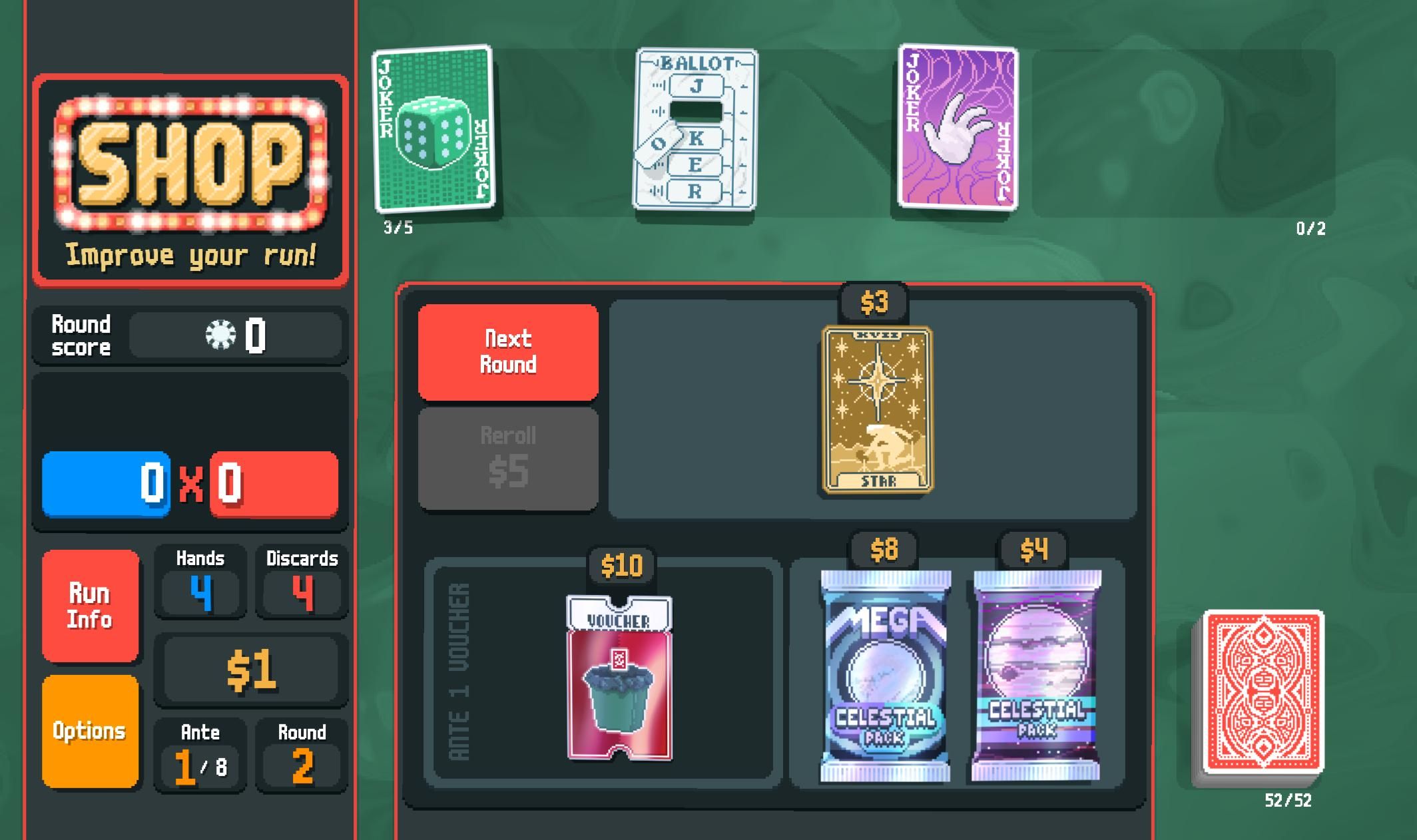
The first is the Four Fingers Joker, which is available from the start and is a literal game-changer. It allows you to make flushes and straights with just four cards, which is frankly silly. It’s a hugely OP move, making both hands so much easier to form.
My next favorite is the Hanging Chad Joker. When this is in your selection, it replays the first scored card two more times, and this can be epic. If your first card is a Lucky Card (which has a 1-in-5 chance of adding 20 to your multiplier) or a Mult card (which adds flat multiplier points), that bonus gets triggered a total of three times. If you also have a boost on the suit of that card, you can imagine how quickly the points start racking up.
There’s then the all-powerful Blueprint Joker, which mimics the effect of another Joker in your set, meaning you could have Hanging Chad trigger twice, setting off your first card a ridiculous six times.
Oh, and if you ever see Mr. Bones show up, grab it. This is essentially a second life; if you miss a Boss Blind target score but have achieved at least 25% of it, the Joker will destroy itself to let you keep playing into the next Ante.
Then, of course, it’s all about synergies. Working out which Jokers play well together, boosting each other’s effects until you’re making ludicrous, game-beating scores with every hand.
Master this, and you’re golden. The rest of the game’s secrets and tricks, of which there are so very many, are yours to find.