News
A train station's lack of accessibility inspired See Through My Eyes
N
Nicole Carpenter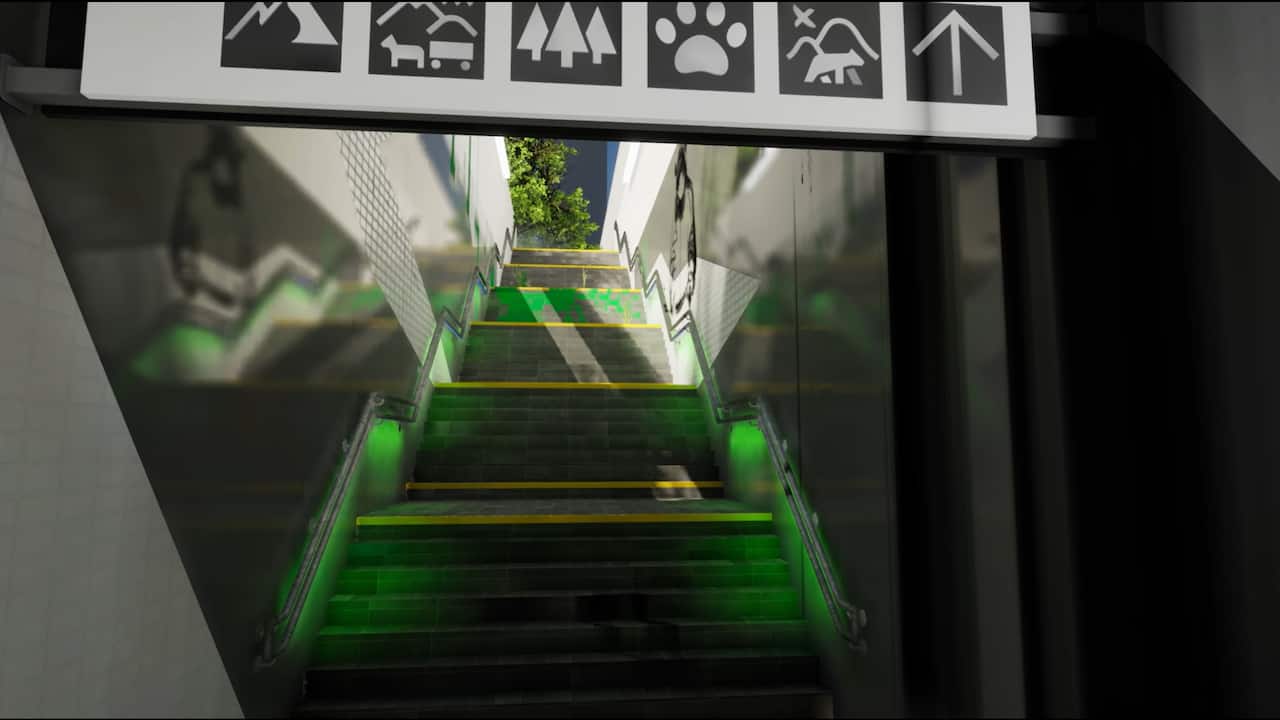
The very early access experience published on Epic Games Store in May is an offshoot of Polish company Urban Vision Solutions’ simulation tool that’s designed to help professionals like engineers and architects understand how people with vision impairment experience the world. The idea is that understanding and—crucially—experiencing someone else’s perspective will help designers create more accessible spaces.
Adam Kurdel of Urban Vision Solutions said the idea for this tool, which would eventually become a game experience, began with his collaborator Michał Makulski’s concerns regarding his work in the railway industry. Makulski was worried about the contrast of the railway platforms. Something that looks "accessible" to an able-bodied person's eyes may not always be so; it’s easy to overlook problems if you’re not explicitly thinking about the impact. For instance, designers typically use color to signify information, a message that may not always be conveyed for people with colorblindness. Yes, there are accessibility regulations in Poland, but mistakes get made, Kurdel said. The tool is designed to help visualize and demonstrate what works and what doesn’t when designing with accessibility in mind.
There are some tools and apps that do this already, like VisionSim from the Braille Institute, which applies an effect to your smartphone camera to demonstrate what a person with an eye disease sees, similar to an augmented reality game. ColorDeBlind, from elektron software, shows how people with colorblindness experience the world. Versant Health, a vision care corporation, has its own visual simulation, which provides a 360-degree view of a computer-generated scene to demonstrate some degree of visual impairment. What sets Urban Vision Solutions’ tool and game apart, Kurdel said, is the ability to walk around in a 3D experience that lets a player see a more full representation of the challenges, providing a better comprehension of what another person might be experiencing.
See Through My Eyes is in early access, and it's very simple at this point. (Kurdel said he expects to expand the game in the coming months.) There are two modes: one where you're able to walk around and explore, and a story mode about a woman named Marta, who has Stargardt disease, described by the National Eye Institute as a “rare genetic eye disease” that impacts the retina. People with Stargardt disease may see dark, hazy spots in the center of their vision, which typically happens slowly as a person ages. One in every 10,000 people has the disease, according to Baton Rouge optometrist Dr. Wendy Waguespack. There’s no cure for it.
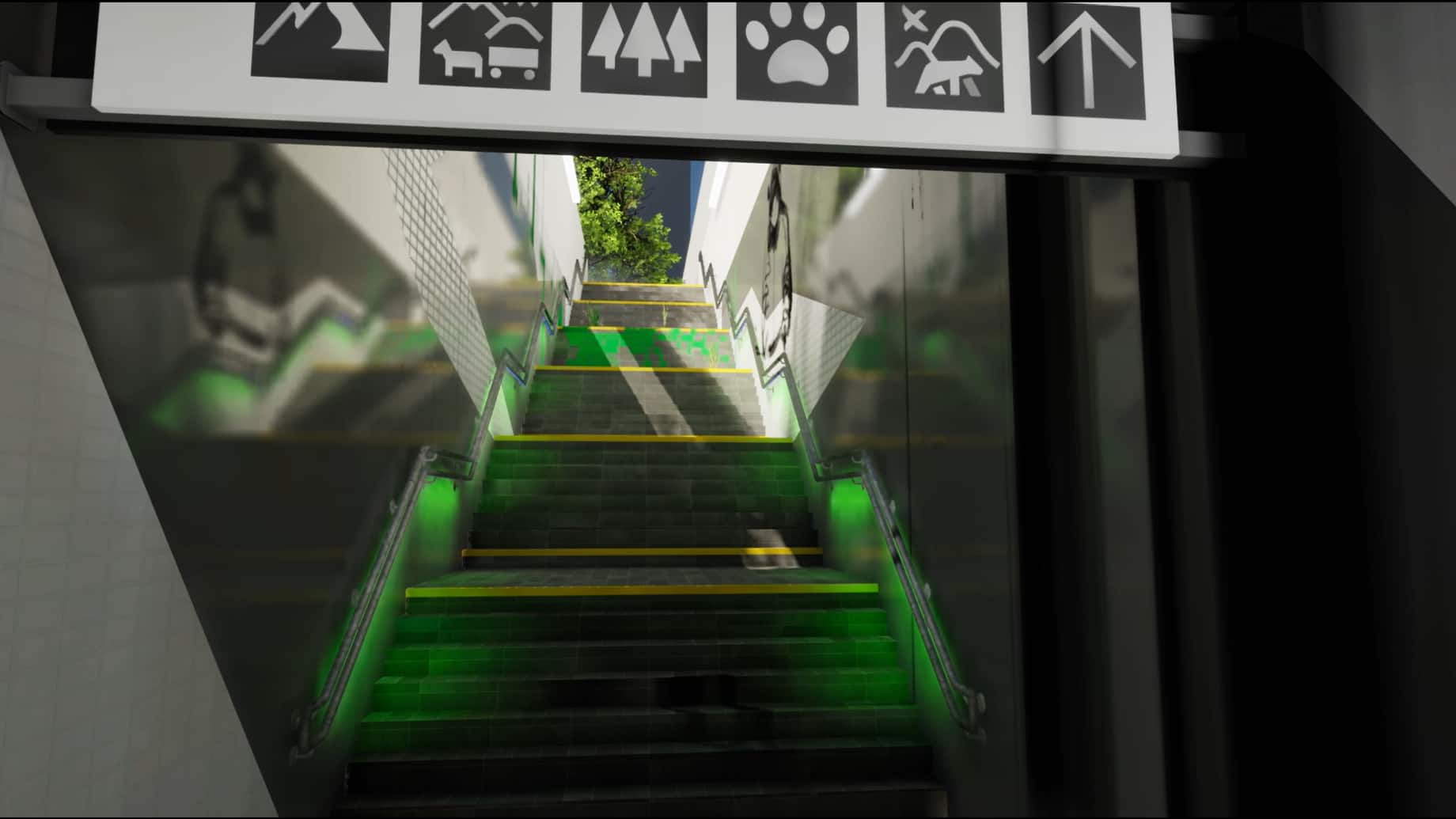
See Through My Eyes demonstrates this disease by blacking out parts of the center field of view and applying general blurriness. The story begins with Marta taking a train from her hometown to her mother’s—a necessary visit because her mother is quite sick. The first order of business is navigating and buying a train ticket.
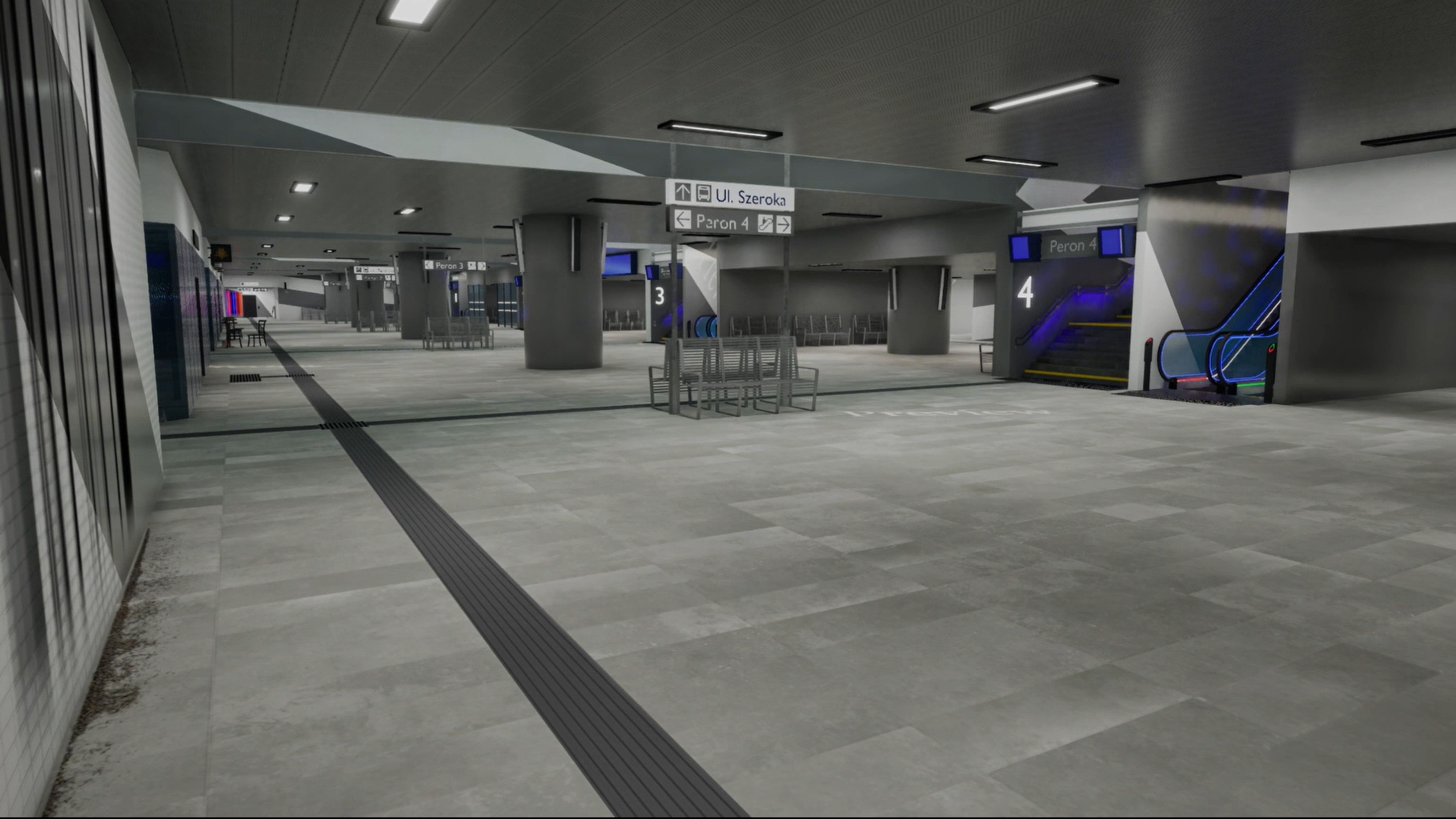
The free exploration mode allows the player to navigate the environment without a set objective and to toggle on and off different eye conditions, including colorblindness.
Makulski had been thinking about this for years, but the two started working on it in earnest about two years ago, Kurdel said. Neither are game designers; they are engineers by trade who met in college at the University of Technology in Warsaw, Poland. Using Unreal Engine, the two taught themselves using YouTube videos to stitch together different elements to create the beginnings of the tool and, eventually, the game. They decided to use Unreal Engine because it was a way to bring a visualization of the experience to life “in minutes, not in hours or days,” allowing the partners to prototype quickly and bring that to professionals for feedback. But making the simulator into a complete game experience with a story was more challenging.
“It took some time for us to make new mechanics,” Kurdel said. “We didn’t have in the original simulator a train that was coming and going to another location. Every new mechanic takes a lot of time for us to learn how to implement.”
Accessibility in Poland’s train stations has been a problem: As of 2021, only six percent of Polish train stations are “fully adapted for disabled users,” according to independent Polish website Notes from Poland. The train stations have elements designed to assist people with disabilities like vision impairments, but there have been design problems there; for example, the above-linked piece shows a person following a tactile path designed to assist people with visual impairments. The person uses a mobility cane to seek out and follow the yellow bumpy pathway created specifically for that use. He follows the pathway up the stairs, as laid out, and ends up face-to-face with a brick wall. To actually enter the building, he has to go down the stairs again, then back up—no pathway assistance available.

Kurdel stressed that See Through My Eyes is an early version of the simulation, but it does demonstrate the challenges of navigating a train station. The current version can't simulate tactile paths that are common in spaces like these, so a player must rely only on visual cues to navigate. The space appears dark and quite blurry, and it’s quite hard to make out important areas of the train station, specifically where to buy a ticket. The idea, Kurdel said, is to differentiate this sort of tool from the pages of written regulations that the Polish government has for accessibility in public spaces. That regulation is necessary and important, he said, but it’s largely “just showing the results of experts’ thoughts” on how to create an accessible space.
The simulation tool takes the regulations a step further by demonstrating and allowing people designing these spaces to test out implementations and fully understand the impact of their decision-making. “Even though you’ve got quite good instruction on this kind of regulation, it’s not grasped fully by people,” Kurdel said. “They’re making mistakes. They’re using materials that they think look contrasting to each other, but that’s only in their minds.”
One of the developer's biggest challenges is ensuring that they’re simulating these eye diseases correctly. Kurdel said they’ve spoken with government groups in the accessibility space, but that there’s more work to be done in that area. “It’s a mandatory condition for us to meet [people with these disabilities],” Kurdel said. He intends to bring in eye doctors who know the mechanical workings of the eye. This research will be essential in meeting some of the most difficult challenges. Kurdel said that colorblindness was easier to implement as part of the simulator because it impacts the “whole field of vision,” meaning that everything is seen through the lens of colorblindness regardless of where your eyes move. But there are other diseases, like Stargardt disease, that impairs the central field of vision. This impairment is hard to simulate because people without the condition can move their eyes away from the impacted spot.
The goal, Kurdel said, is to gather feedback from people trying out See Through My Eyes and address feedback in its next updates. Urban Vision Solutions is focused on the Polish market at this time. He wants to expand, though, and to cover more experiences. “We don’t want to make these people [we’ve created in our game] to be heroes, or to show them as miserable. We just want to show their lives, every life, are a bit harder, but they are normal. They may struggle with the condition they’ve got, but also with the typical things around you.”
He continued: “Right now, it’s a very little plant growing.”
See Through My Eyes is available on Epic Games Store.