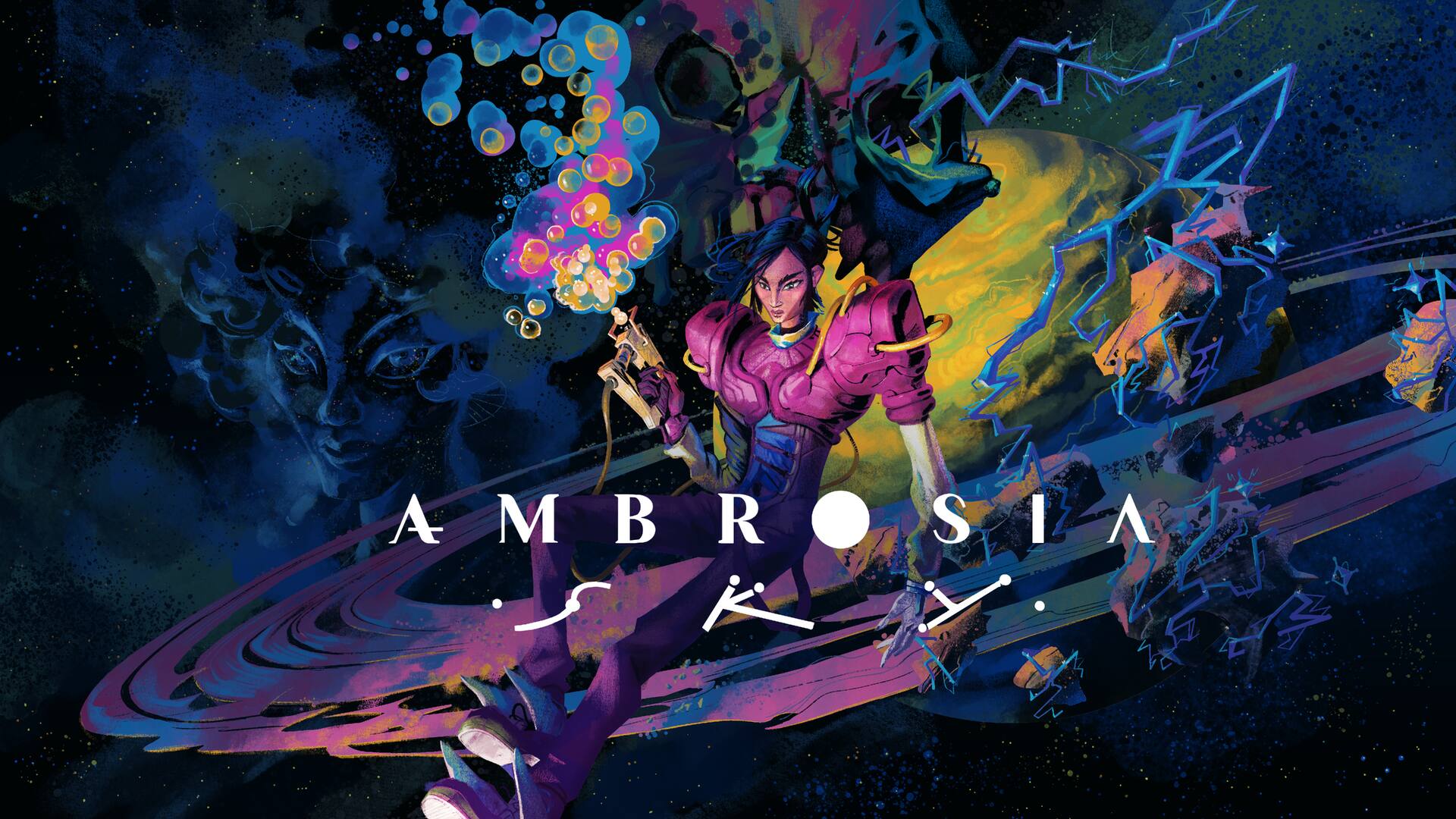
Ambrosia Sky: A cosmic chemical-shooter for scientists, not space marines
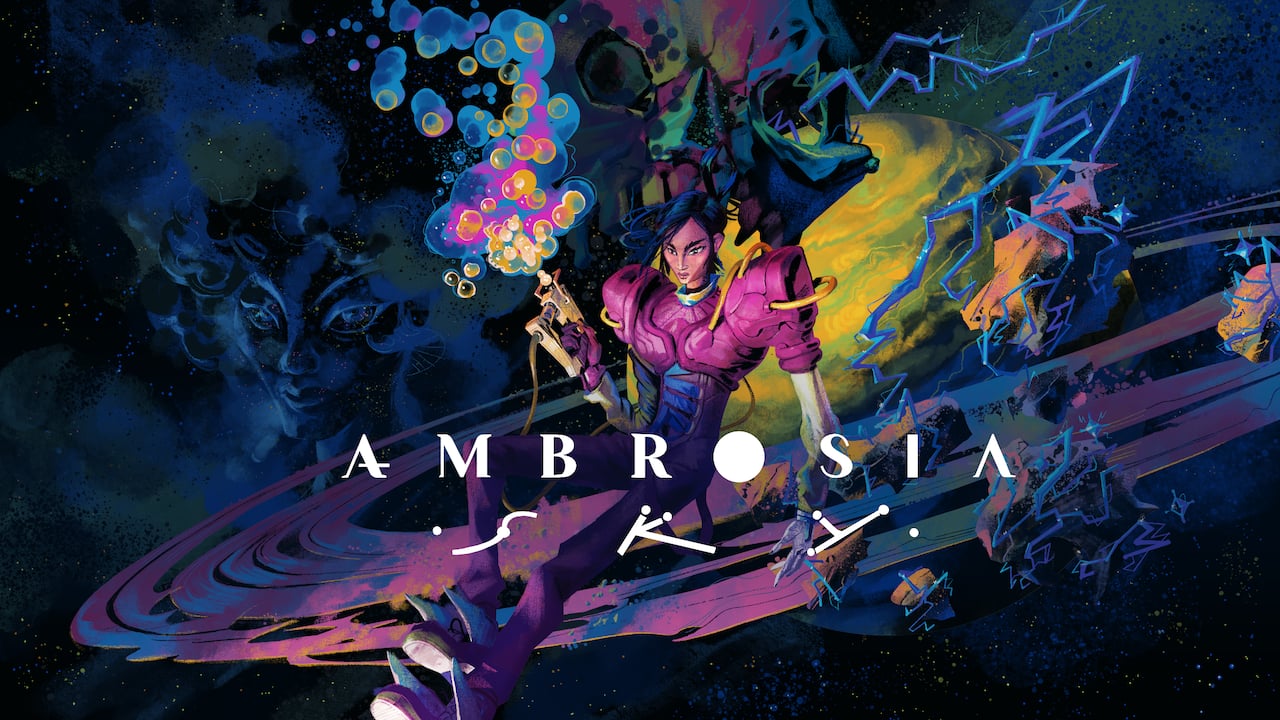
Forget taxes. In Ambrosia Sky, two things are inevitable: death and fungus. Soft Rains intends to give you a new understanding of both topics in its debut sci-fi clean ‘em up, which takes spray-cleaning mechanics to an eerie outer space context that couldn’t be further away from sprucing up the front yard back on Planet Earth.
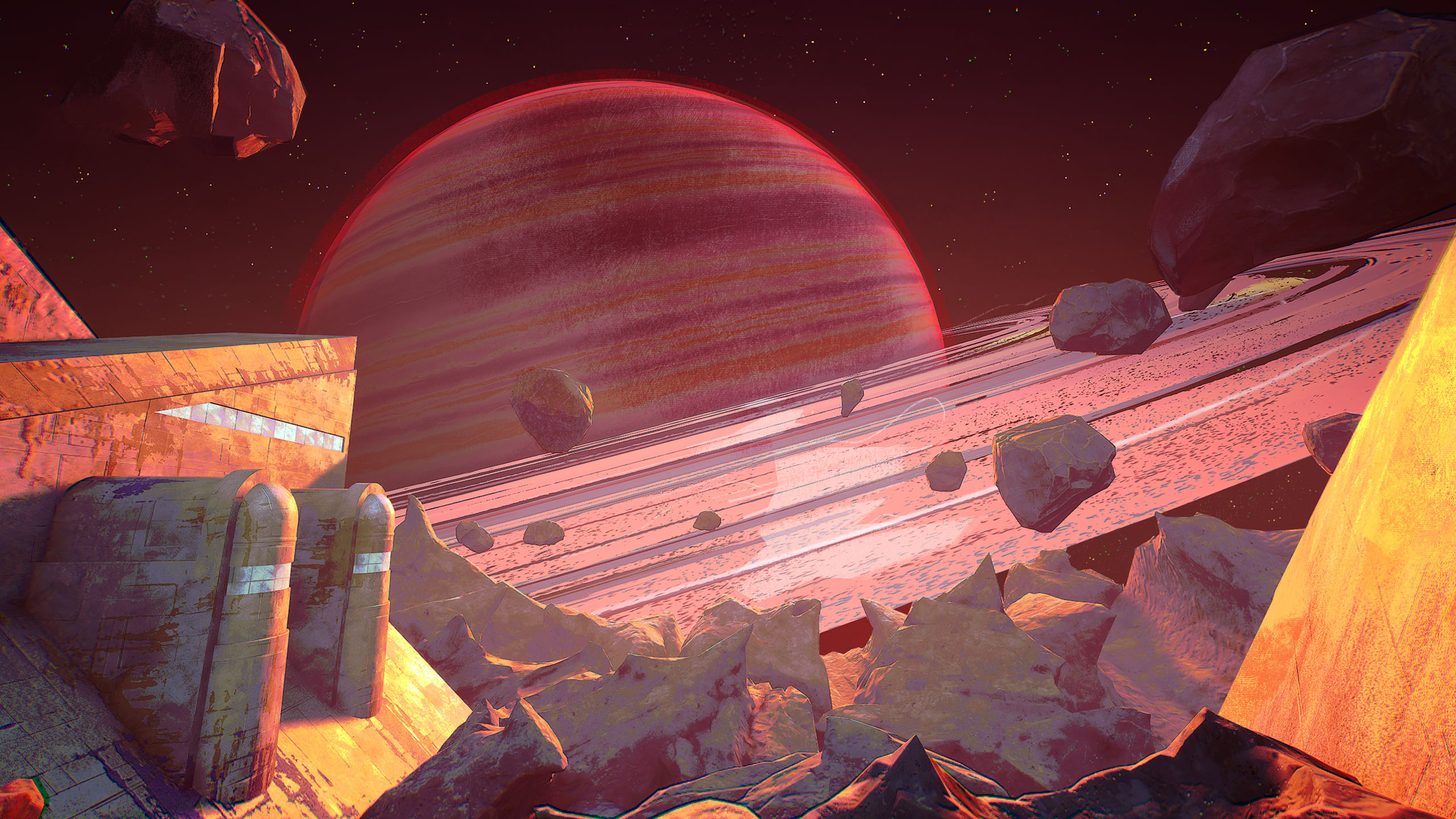
Dalia is a disaster specialist, returning home to the rings of Saturn to collect DNA from the deceased victims of a fungal infestation who donated their genetic code and memories to The Ambrosia Project. She comes armed—not with a plasma rifle, but with a moddable sprayer loaded with fungicide.
As Joel Burgess, Studio Head at Soft Rains, says, “The player fantasy is a scientist, not a space marine.”
Kaitlin Tremblay, Narrative Director and a keen PowerWash Simulator player (as is Burgess), drew additional inspiration from an unusual home service that people rarely encounter whether in real-life or video games: death cleaners.
“People get called into places where people died and they have to clean up after them,” Tremblay explains. “It's a mix of science, where you have to understand chemical cleaners and how to properly decontaminate spaces, and communal care, taking care of people and places and memories.”
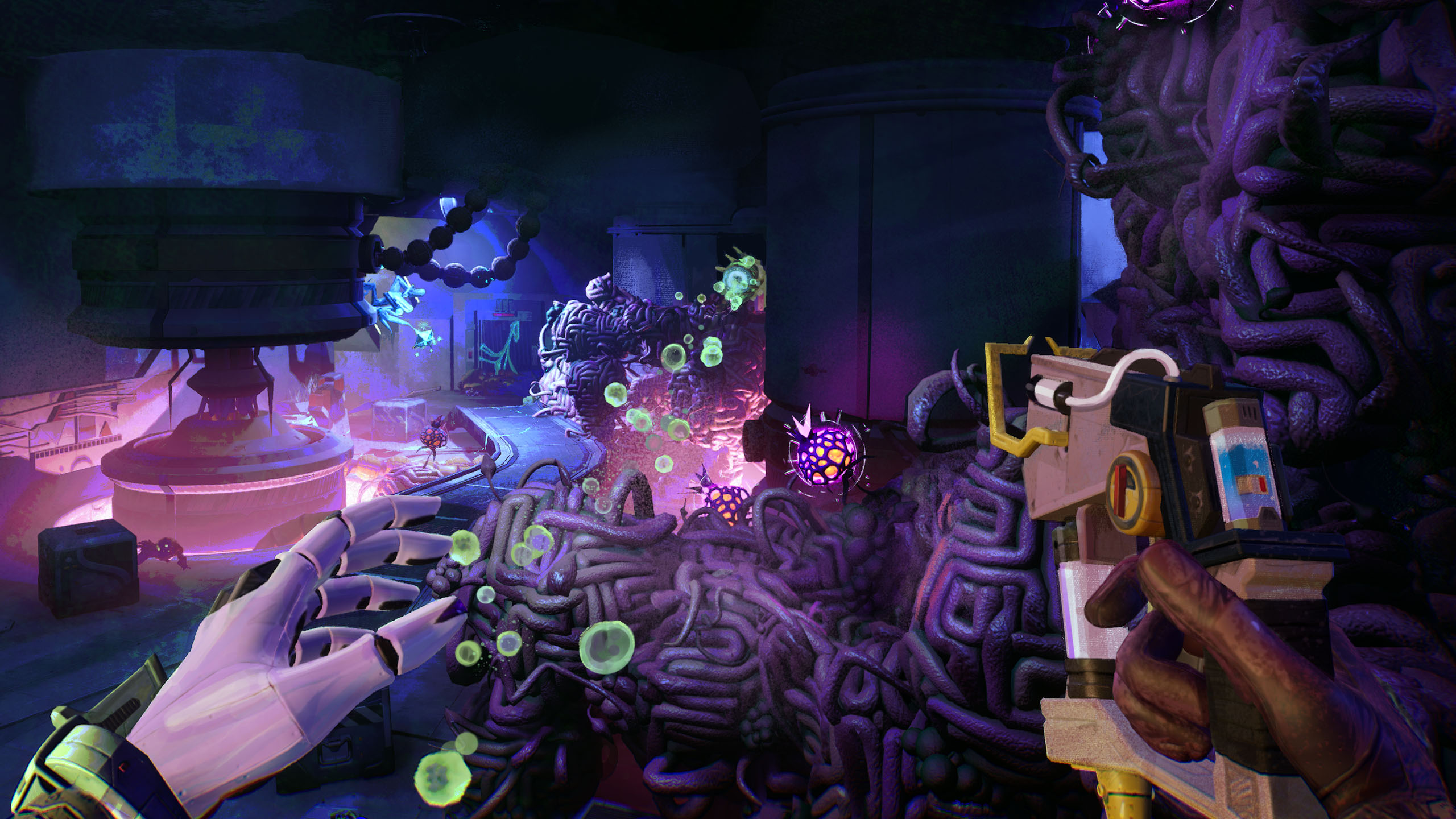
To reach her quarry—like a death cleaner grappling with a client’s collection of impenetrable clutter amassed over a lifetime—Dalia decontaminates space station chambers overrun with giant fungal clusters. Each level is a unique and peculiar ecosystem, which Burgess says mirrors “whale fall,” a natural process where a dead whale’s corpse supports a newly thriving habitat during its decomposing descent to the ocean floor.
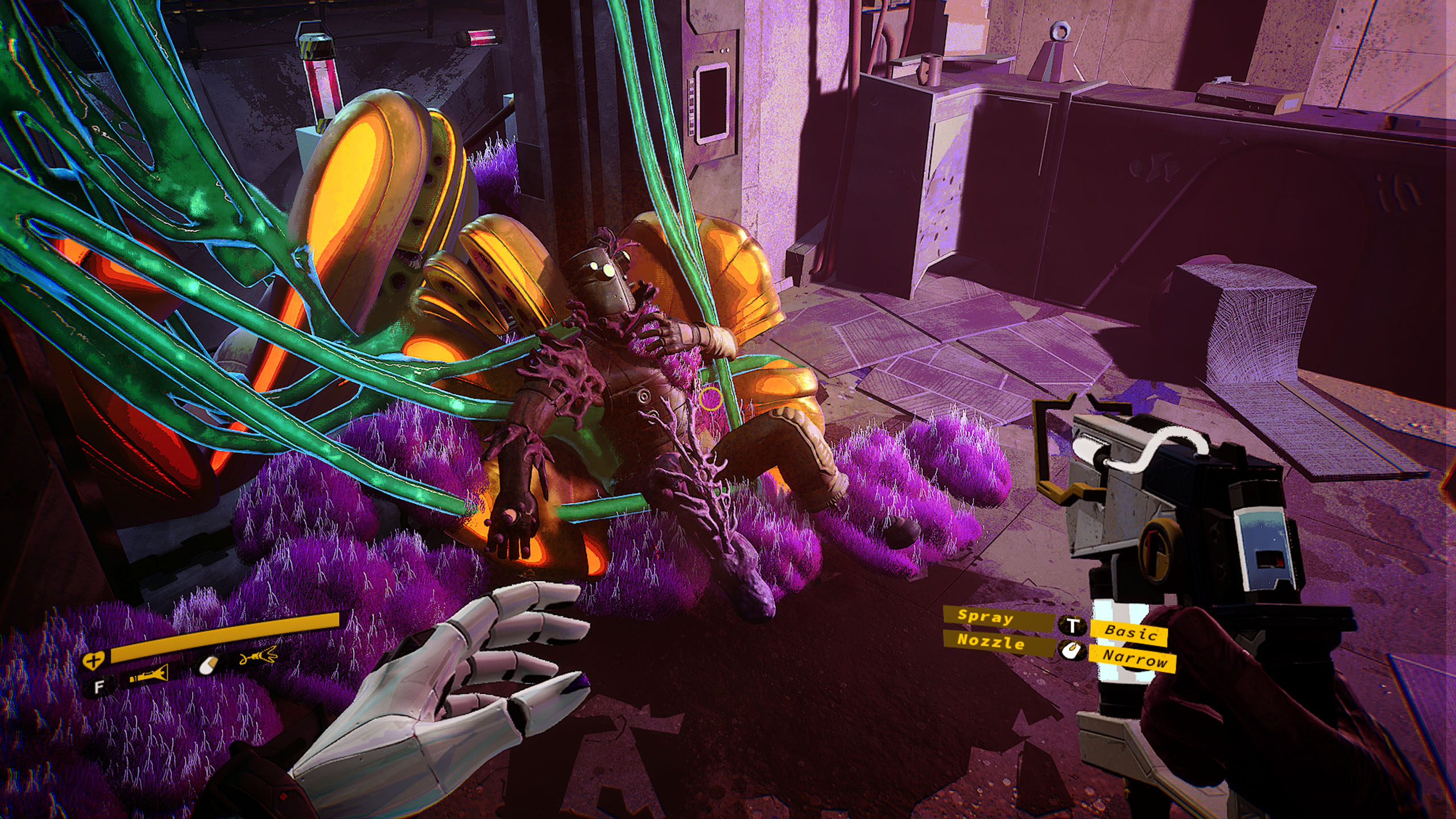
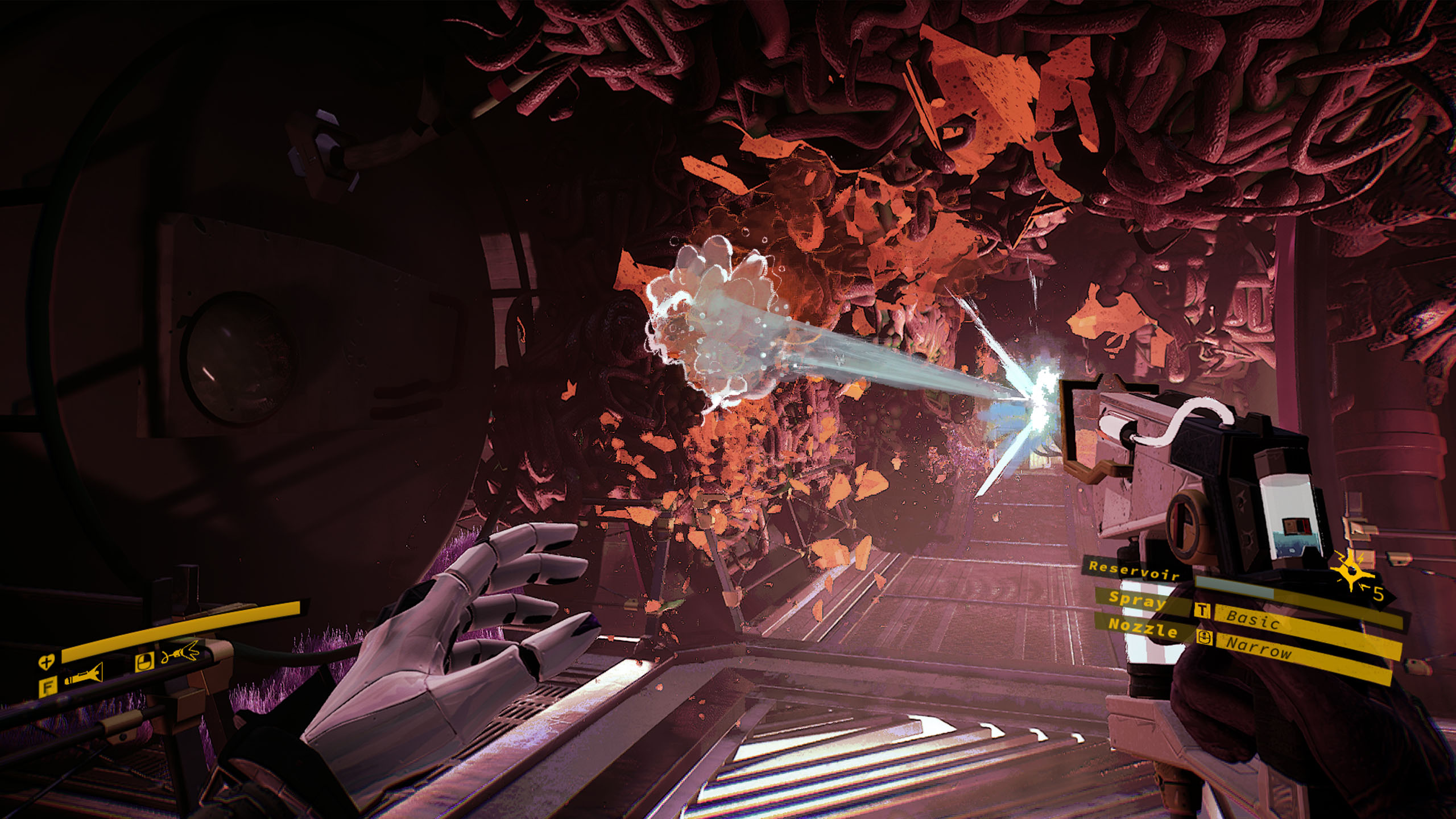
Fungus manifests across the environment, following each strain’s unique propagation pattern and behaviors. Brittle electric fungus spreads in a jagged pattern of narrow trails which “shatters like sugar glass,” says Burgess. Another fungus may present a solid wall of bulbous growths. Demolishing them—using a variety of spray-type and nozzles, of course—feels as satisfying as Donkey Kong Bananza’s tunnelling mayhem, especially with the addition of nimble zipline navigation provided by Dalia’s tether.
But you’ll need more care than Nintendo’s reckless primate ever takes with his destructible sandboxes. At the heart of each fungus lies a fruit, which can be carefully severed from the surrounding fungal network, harvested, and then used either as research samples or converted into a spray to perform functions like laying a fungal conduit to power up a door or fueling a makeshift flamethrower.
Despite sharing a planet, we don’t know as much as we could (or maybe should) about fungus, but it’s impossible to hold a conversation with Burgess without partially rectifying that. Some of his favorite fungal facts: The largest organism on earth isn’t a blue whale or even a 380-foot tall giant sequoia, but a 2,200 acre fungal network found in Oregon. Fungus has even been found growing on the ISS, to the amazement of astronauts on-board. He hopes players share that sense of mystery and discovery.
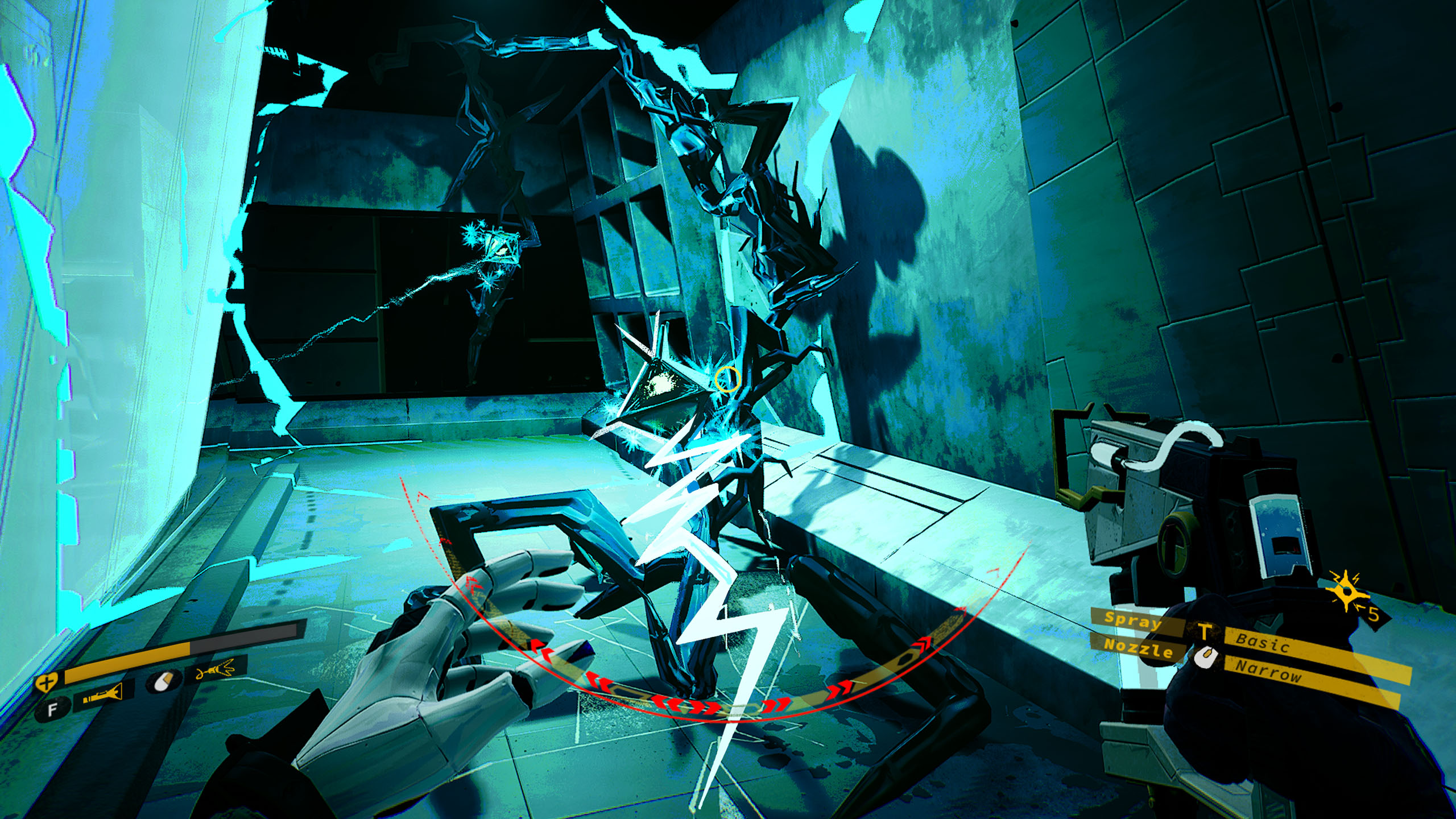
Where innumerable level designers hide their secrets behind waterfalls, he hides them behind procedurally-spawned fungal designs with myriad interactions for players to trigger. Fungal networks composed in 3D voxel-form represent an advance from PowerWash Simulator, where you scrub away one flat texture to reveal the original surface beneath.
“As a level designer trying to hide something behind a waterfall—this is my waterfall in this game! You can put a big room-filling mass in here that you're carving through, and then our explosive fungus has these puffball mushrooms—when you get near them they swell and burst and set a whole room on fire,” he says. “We're not thinking of fungus and mushrooms as a mono-mass.”
While you may consider his prior work across The Elder Scrolls IV and V and Fallout 3 through Fallout 76 to reside in the RPG genre, he says he always considered them to be immersive sims, thanks to their systemic density.
So how deep does the simulation go in Ambrosia Sky?
“It is a yawning chasm of possibility that should terrify any game developer. This is where I think we really earn our immersive sim badge” says Burgess.
A different death
Ambrosia Sky’s emphasis on posthumous clean-up duties can give missions an unusually contemplative texture. With no one to save, you don’t succeed in a blaze of glory, showered in gratitude and praise from those you’ve heroically rescued. Instead, you interrogate the memories of a life that has now ceased.
These motifs stem from Tremblay’s interest in death positivity—a movement to remove the stigma from talking about death—which they previously explored in funeral home management sim A Mortician's Tale. “A lot of Ambrosia Sky is about acceptance of death and mortality and our role as humanity in an ecosystem, and getting closure through really traumatic and heartbreaking things in a way that is affirming,” they say.
It’s a bigger shift than you may expect. We often learn about gaming’s departed NPCs in throwaway manner—a well-placed body next to a convenient audio log, diary entry, or even a message scrawled on the closest wall in their own blood. The art of understanding the dead can feel relatively undeveloped, relying on the same repeated techniques.
This makes Ambrosia Sky’s bioremediations stand out all the more. These are hauntingly beautiful burial rituals that Dalia performs for each contributor she reaches within the 48 hour countdown before their DNA irreparably decays. You bear witness to their last will and testament in an ethereal scene that superimposes their voice and likeness on-screen, before a gentle flurry of leaves takes over and gradually subsides. When the leaves fade, the body is gone.
“These death rituals are a way of letting characters have a say in how they feel about their own deaths,” says Tremblay. “It's making them feel like real characters who have a real perspective, a real identity and life. You, alongside Dalia, are honoring that and saying goodbye to that.”
Burgess explains that an intense amount of prototyping went into getting these moments right, giving them the respect they deserve and avoiding the risk of jarring misjudgements like Call of Duty: Advanced Warfare’s infamous “Press F to Pay Respects” funeral scene. They considered integrating mechanics, collecting samples, investigating the body—but it all felt wrong. Interactivity, the driving force behind the entire medium, robbed the moment of its dignity.
“When I think about interactivity as a narrative designer, I think a lot about responsibility. What are we saying about what you are responsible for? And with Ambrosia Sky, your responsibility is not to save people. Your responsibility is just to be a witness, in a lot of ways,” says Tremblay, who places the player in the same category as death doulas who accompany the terminally ill in the final stretch, tasked not to act but to be a compassionate presence.
“Your responsibility is to be here to listen, to let this person have their say about their body,” Tremblay continues. “I hope we're able to reflect this often-overlooked part of society and death through the actions we let players embody as Dalia.”
You may think working on the topic of death every day takes an emotional toll, but Ambrosia Sky’s creators don’t find that to be true. As a horror writer, Tremblay is excited to confront the topics that scare them the most. As for Burgess—well, after facing the post-apocalyptic horrors of the Fallout universe and the plausibly dystopian hyper-surveillance of Watch Dogs: Legion, examining the nature of mortality on the rings of Saturn almost comes as a relief.
It’s a new premise, so new and so peculiar it’s led Soft Rain to reexamine every preconception, “You can't take anything for granted. Other games do this, but we're not that. So what are we putting in and why and what does it matter?” asks Burgess.
How should corpses operate in a game about honoring the dead? Do you interact with ones ineligible for The Ambrosia Project, or let fungal interactions affect them? Do you add ragdoll physics, whose erratically flailing limbs and outrageous postures added so much unintentional comedy to the Fallout and The Elder Scrolls games? Death, the great unknown, is given the weight and consideration its impact and mystery deserve.
“We hope that players look at corpses differently in other games after playing Ambrosia Sky, because we’ve gone to great lengths to treat corpses a bit differently,” says Burgess.
Ambrosia Sky is coming soon to the Epic Games Store.