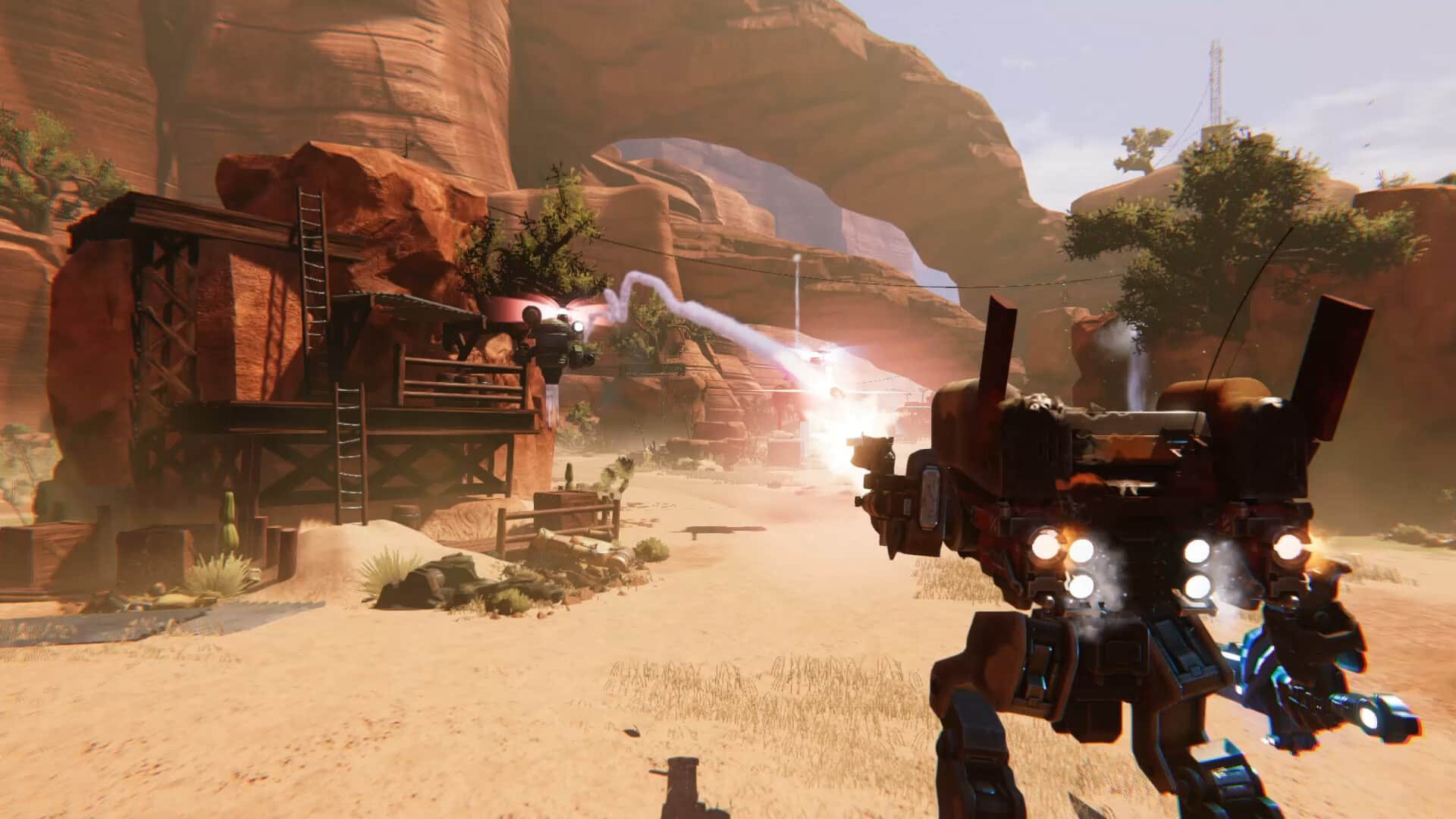
Bounty Star exists at the surprising intersection between mech warfare and farming
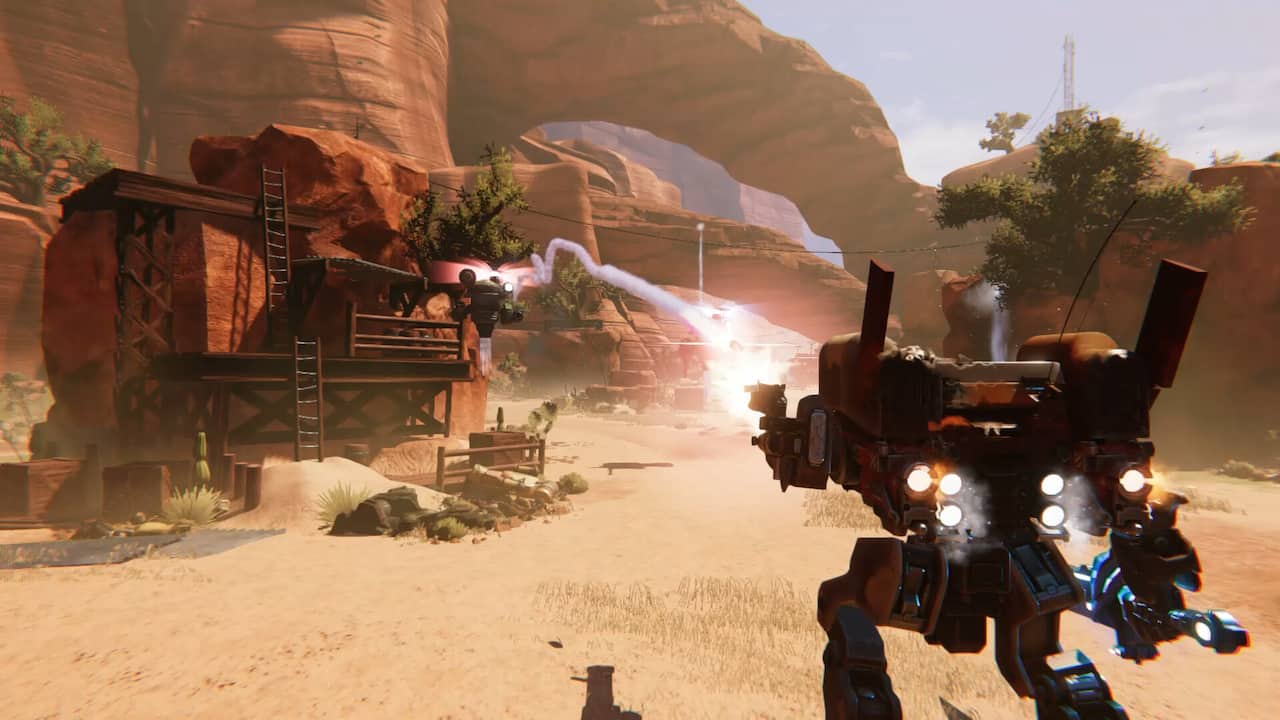
When you picture giant mechs punching each other in the metal face and then launching missiles at passing weaponized drones, how quickly does your mind turn to farming? That’s a question asked by Bounty Star, the first video game from developers DINOGOD, a team that previously worked on physical tabletop games and is now turning their attention to post-post-apocalyptic robotics.
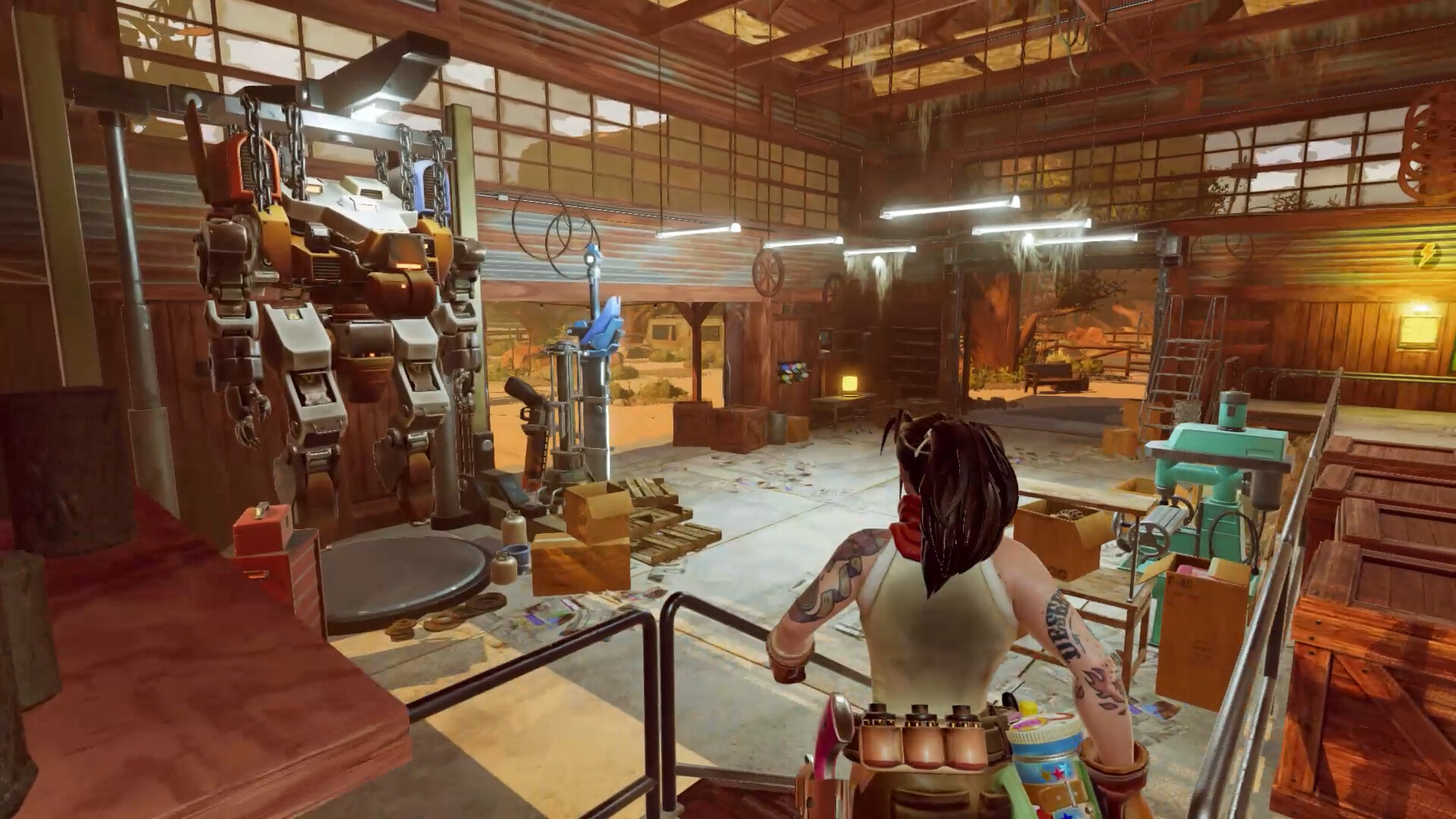
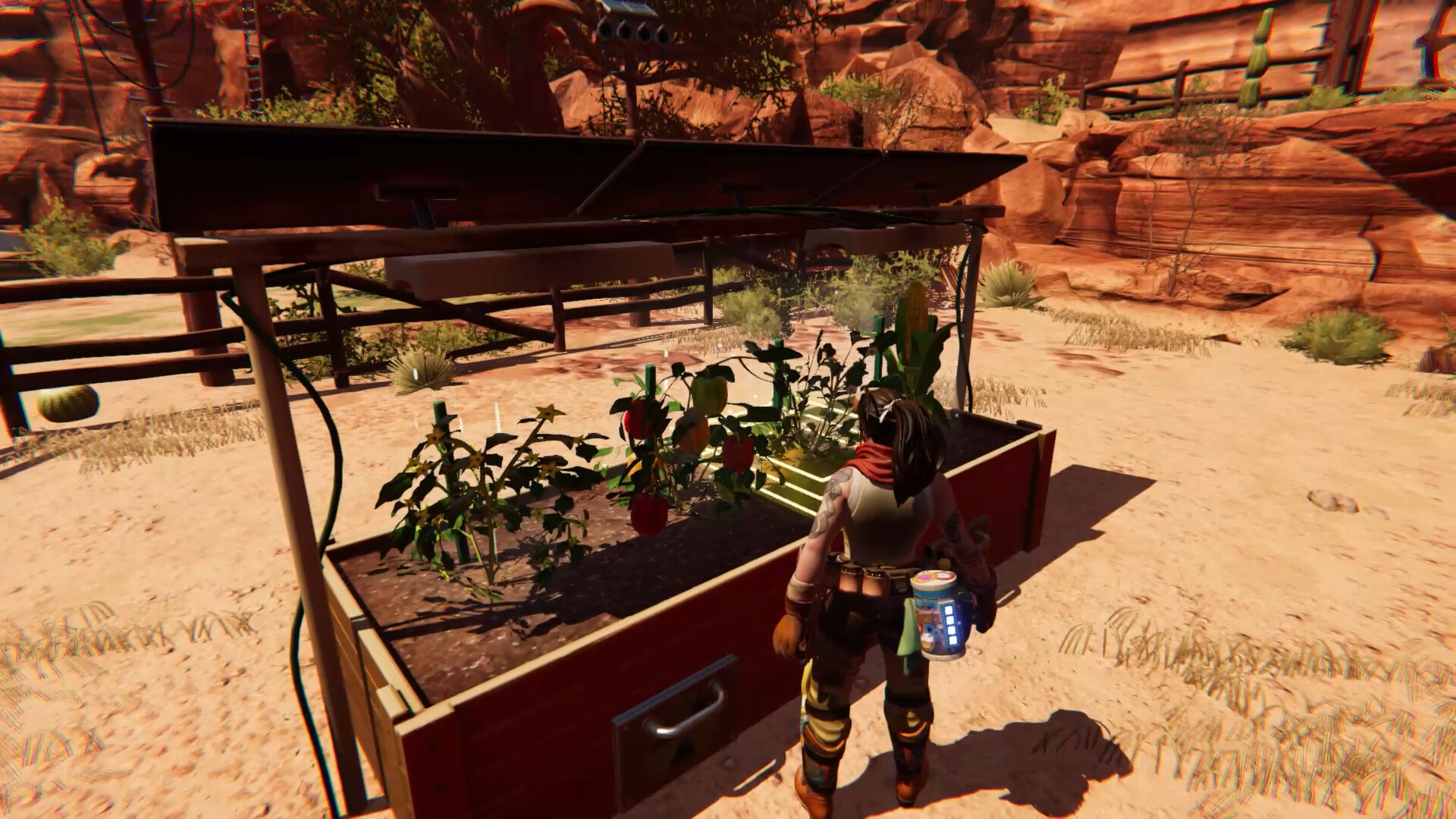
Bounty Star is first and foremost a mech game. It makes that clear from the start as you literally hit the ground running in an enormous metal suit, tasked with punching your way through a series of abandoned cars before taking on some aerial drones and a crowd of other mechs. It’s only after you’ve safely returned to your base town that your character steps out of her suit and turns her attention toward more rural matters. Here you can harvest food, prepare meals, beef up your mech rig, and, if you’re bored, shoot a few glass bottles off a fence with your handgun. But it’s not long before a new contract comes in and you’re back in your mech, tackling other giant stompy robots for profit.
It’s an interesting contrast, seeing two such diametrically opposite game styles being woven into one coherent game. I wanted to understand how that came together, so I spoke to Ben Ruiz, DINOGOD’s director and Bounty Star's lead designer, to find out more.
“It’s actually a pretty old fantasy of mine. I grew up in a harsh, desert farming environment, loved mechs, [and] loved farming games,” Ruiz said. “It’s one of the handful of random fantasies that has a practical chance of being an actually fun game. Unlike, say, that one idea I had to put on a mech fashion show during Mars Fashion Week.” (Please, don’t be so quick to write that off.)
Bounty Star is set in the increasingly popular genre of post-post-apocalypse, where things have moved on from a world-ending disaster. “If post-apocalyptic is a depiction of the ruined world in the aftermath of the event that ruined it,” explains Ruiz, “then post-post-apocalyptic is some meaningful distance into the reset of the world. Ecosystems [are] repairing, trash is buried, people are forming sustainable groups again.” So what is it about this particular setting that appeals to him? “To me, it’s the more romantic (and pretty) form of the idea,” he says.
Of course, you can’t have a mech game without mech customization. No one wants to be caught wearing the exact same enormous robotic suit as someone else—imagine the embarrassment. I asked Ruiz how Bounty Star approaches this aspect, given that it isn’t a game about an army of soldiers, but rather one individual surviving with her single suit.
“The player will have access to a sizable collection of equipment, including melee weapons, firearms, and support systems of varying utility,” Ruiz says. These are things like repairers, shields, and dash systems as well. Players also have the ability to tune their engine. This is certainly one of the game’s more peculiar aspects, as alongside adding augmentations, you can also change how your mech moves by the meals your character eats before she gets in.
This boils down to designing the mech to best match your personal approach to the challenge. “If they wish to have some more hit points, move faster, hit a little harder, or cool the engine a little more efficiently, they can,” Ruiz explains. “And since there’s a variety of enemies with different attacks and weaknesses, it does matter somewhat. You are allowed to brute force it with the equipment you like.”
But what about that switch from brute-force battles to serene farming and base-building? It seems like this would be something pretty complicated to put together, trying to ensure it didn’t give players a sort of whiplash. “[It was] fairly easy, fortunately,” says Ruiz. “The base-building aspect is ultimately about pacing. Lower the ‘ol heart rate, unsweaty the ‘ol palms, and unclench the ‘ol behind, etc. Just like in real life, some chores can tip the mind’s scales in healthy ways.”
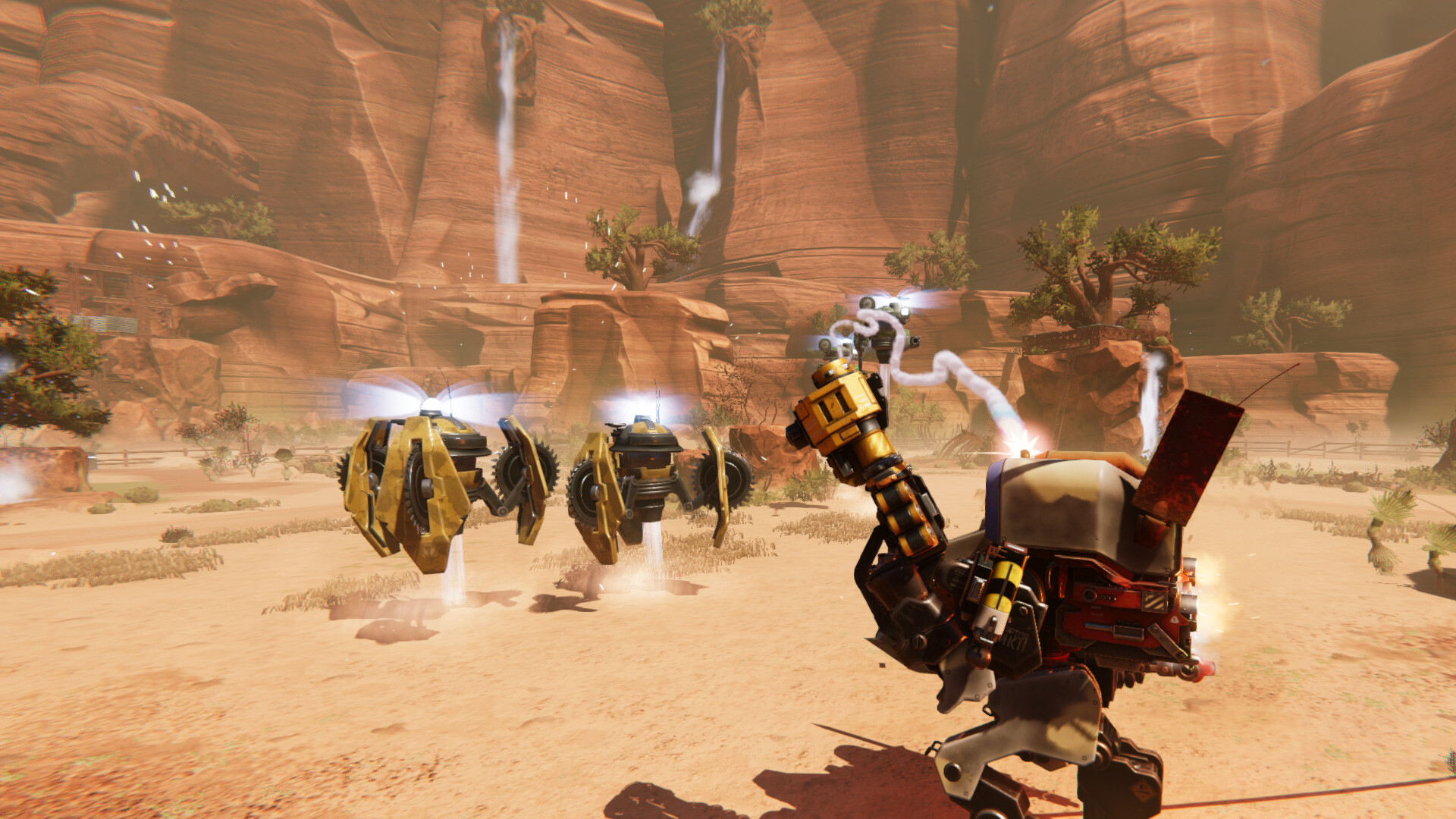
However, Ruiz makes clear that “sixth gear lunatics” need not worry about being forced to do the dishes when they’d rather be smashing up robots: “If you wish to forgo the chores you may! But you’ll definitely be less profitable. We love our violent, unmetered, brute force players at DINOGOD.”
Given people’s love for mechs, it’s surprising that widely adored games like Titanfall 2 and MechWarrior 5: Mercenaries are so few and far between. I wondered if DINOGOD might have some insight into why this is the case. Is designing mech movement and combat especially difficult?
“In the case of a third-person action game, not especially,” says Ruiz. “Making it feel like a mech is all about proper animations, specific visual and audio feedback, and a precise level of impact in action and reaction. But these are things one already has to think about and execute on in any third-person situation.” Bounty Star is very much a third-person action game, eschewing any notion of a first-person view. “In first-person it’s probably a much more complicated beast,” adds Ruiz, “and I’d wager that’s why you don’t see it more.”
As the development went on, ambitions grew beyond just combat and base-building. “We originally didn’t intend to include voice acting or lip-syncing,” Ruiz explains, nor was it planned to have “heavier cutscene animation.” But as they poked at these ideas, things started coming to life. “Once we started walking down that path, it made us take the narrative a lot more seriously. Now we’re hearing these great actors bringing these characters to life.” So more smooth sailing? Kinda. “It was magnificently painful and costly, but I don’t regret it,” he said. “I am very happy with the narrative experience we built, and love all of the actors we got to work with.”
Bounty Star is out now on the Epic Games Store.