Build worlds in 30 minutes with Kainga
Solo developer Erik Rempen has seen a lot of the world. He says he's lived in eight countries and visited over 70, and those experiences lead him to develop Kainga – which he did entirely by himself.
As a self-taught developer, Rempen didn’t seek out game-making as a career. He says he wanted to “see if [game development] was possible,” but his Environmental Science and International Relations double major didn't let him fit those classes in. Considering Kainga is billed as a roguelite city builder, maybe it was meant to be. “I was working at a marketing company and really not enjoying it, building Kainga in my spare time," Rempen says via email exchange. "I saw Kainga as my way out, so I threw myself at it and took it seriously,”
Rempen began a Kickstarter for his project while living in Thailand. That was in March of 2021, and Kainga hit its funding goal in June. By October, Kainga was in early access. “The Kickstarter's success was a surprise for sure," Rempen says. "I really couldn't have done it without their support. Of course, the money was a nice boost, but it was a small fraction of the actual cost of the game's creation. The real benefit came with having hundreds of ‘superfans' that I could share ideas with. They could test early versions of the game, making suggestions that would help shape Kainga into a better experience. Those backers were essential to its success over the long term.”
 Rempen currently lives in Germany, and his game Kainga is readying itself for the Epic Games Store. It belongs to a quickly ballooning genre, but offers a unique formula. “Kainga blends the distant lines between a city-builder and a roguelite," Rempen says. "In addition to having no major numbers or unit management, there isn't actually a technology tree. Technologies have to be discovered out in the world by sending your village leader—a weak and defenseless ‘Thinker'—to sources of inspiration dotted across the map.”
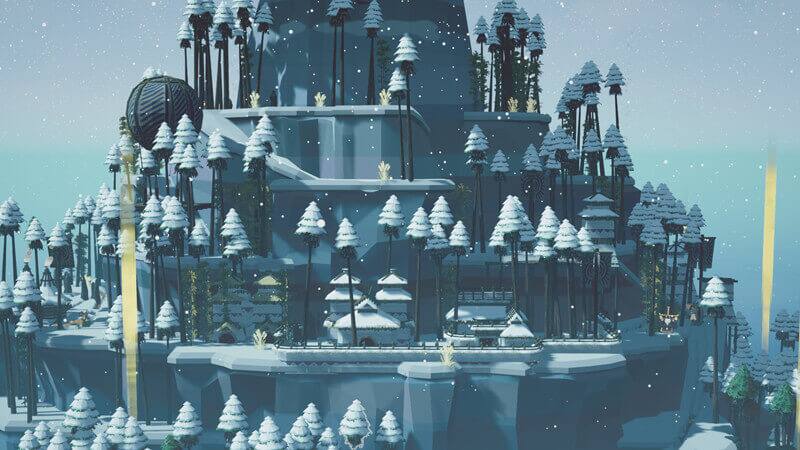
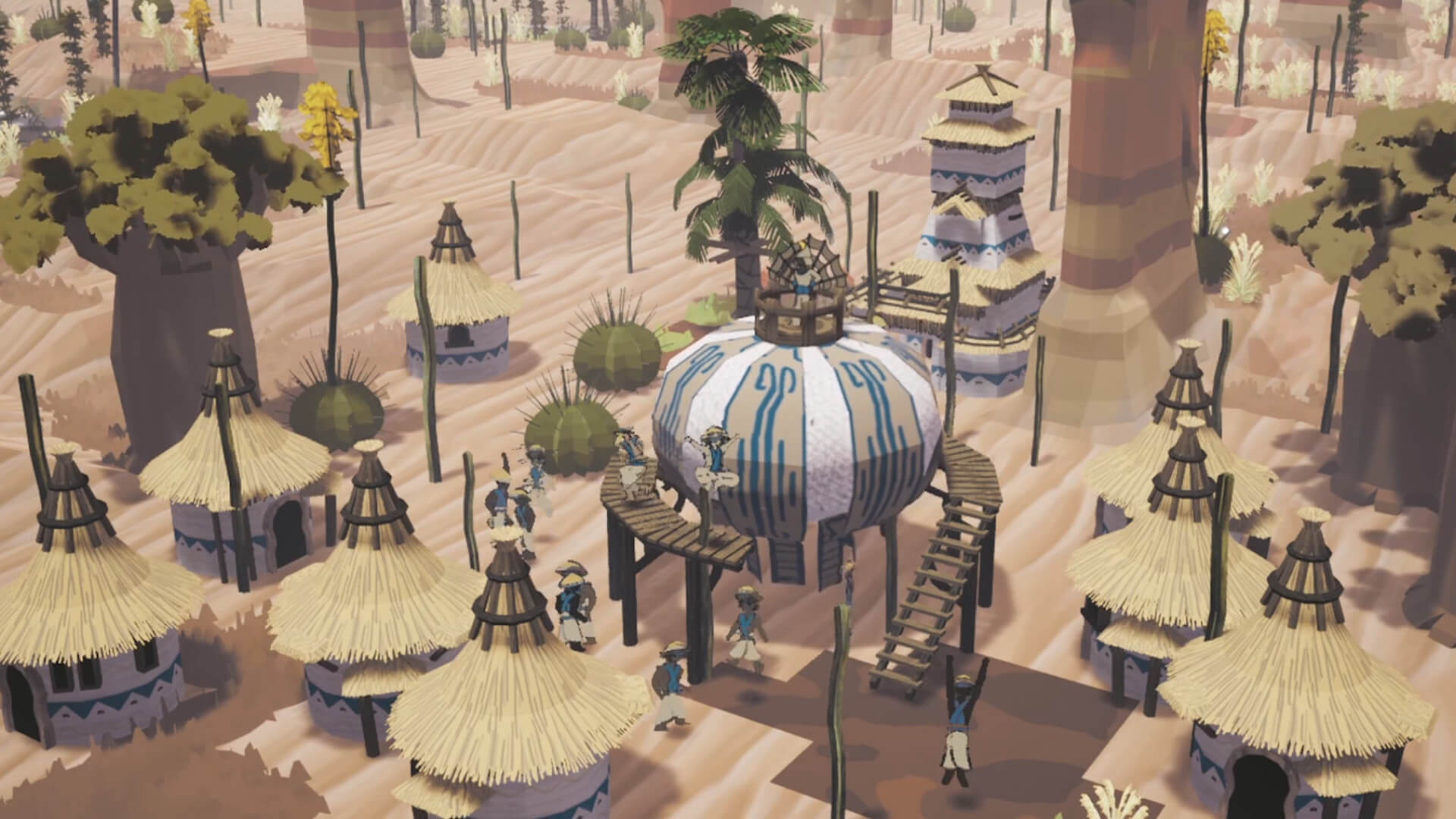
Some 400 technology possibilities exist in Kainga, including house boats, air balloons, windmills, and many others. However, a single game may only see a dozen of these unlocked, creating a varied challenge with wild lore. Some technology can raise the dead—others can exert control over weather. Also, the game has many unpredictable landscapes, including islands floating on the waves, chilly mountaintops, and sandy deserts. Unpredictability is Kainga’s selling point. “There's a different kind of shock that you feel when an enemy tribe is coming at you on the back of a giant crab!" writes Rempen. "I'm confident there is no other city-builder that lets you create towns as unique and varied in lands like these.”
I asked Rempen about the origin of the game's title. “I just wanted a strong sounding two syllable name that was unique… Retrospectively, I should have chosen a name that is easier to pronounce on first glance. I came up with Kainga, and when I looked it up, I found that Kāinga (with a macron over the 'a') in Māori means home or village, which fit quite well."

Kainga belongs to a unique form of strategy gaming, and that genre carries a long, extensive history—from its earliest explosions in popularity via SimCity to modern incarnations. For Rempen, it was a Bullfrog-developed classic that he chose to draw inspiration from. “There was an old game I used to love called Populous: The Beginning, and I was tired of waiting around for someone to make a game like it, so I decided to try."
Populous: The Beginning was the franchise’s third game, and it's a wild departure from its previous identity. Rather than playing as a god, the main character is a mere shaman, building a tribe to conquer others. Noted Populous designer Peter Molyneux left Bullfrog prior to its development (to found his own Lionhead Studios), making The Beginning the first in the series crafted without its creator. The Beginning clearly influenced Rempen’s Thinker character. “I play a lot of city-builder games, but I didn't like the mentality they put up front and center,” explains Rempen. “I don't like managing stockpiles, hunger or temperature, so I did away with those. I don't like building boring fantasy cities in open fields, so I made my landscape really unusual.”
These preferences combined with Rempen's world travels to form Kainga’s design philosophy. “I was fascinated with all the unique ways each culture decides to build their towns, based on their environment, materials and what they deem important," Rempen explains. "I wanted to emulate this vernacular architecture and city design into a game and force the player to take technologies and resources that they need rather than absentmindedly acquiring everything around you,”
Rempen’s publisher convinced him to launch on other platforms first, but the Epic launch is one he wanted initially. “I really like Epic, and having made this game entirely in Epic's Unreal Engine, I want to do what I can to show my support!” writes Rempen.
On the plus side, the wait for the Epic Games Store release produced a benefit—Rempen released updates for Kainga during the wait. The “Life of Spice” version added map modifiers, eight new playable Thinkers, new objectives, maps, and more. It’s a beefy update, and it will be available on Epic from the outset.
In the midst of his Kainga work, Rempen is also beginning another project that he’s calling Shanty Town. It’s smaller in scale—just city blocks, not a planet—but clearly no less influenced by his world-faring than Kainga. Shanty Town will become more public in “the coming months” according to Rempen, but he’s posting video blogs to document his progress in the meantime.

Until Shanty Town, Kainga will certainly consume your time. Since each game only lasts between 30 minutes and an hour—unlike the endless campaigns of its rival city builders—the game's replayability is key. With every play, more options become available to tweak the next run, which is a creative spin on the genre’s usual method of sucking players in for hundreds of hours. That can be Kainga too, albeit in brief chunks. Epic Game Store users won’t have to wait much longer.
“I've recently been focusing on getting the game ready for Epic and I'm happy to say it's almost there!” closes Rempen. He's clearly excited to see his work on another storefront, and to reach more of the worldwide population he’s visited throughout his life.