Balita
Recapping Death Stranding's story before Death Stranding 2 releases on PC
D
Dave Tach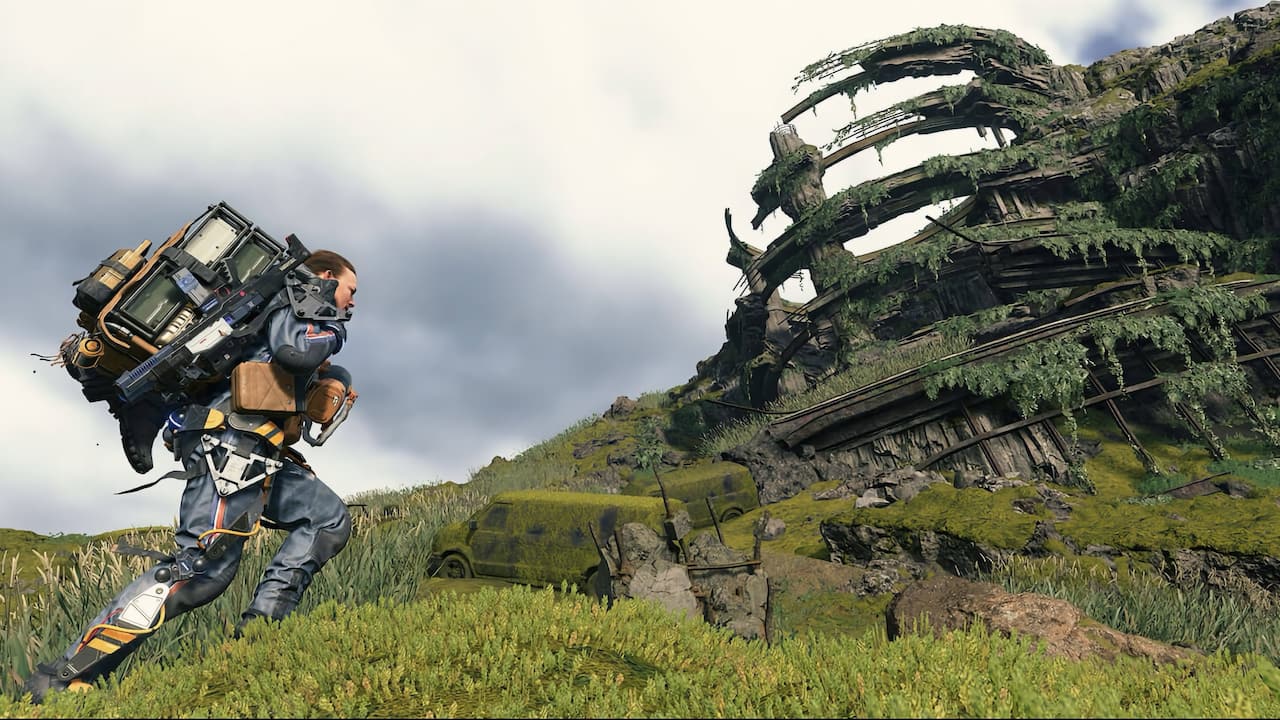
Before you and Sam trudge back through the lands of the living and the dead, it’s worth revisiting the original Death Stranding. If you’ve played a Hideo Kojima game, then you know that his stories are like bowls of spaghetti noodles, twisting and looping through their complicated narratives.
So let’s get ready for Death Stranding 2 by recapping the original Death Stranding’s story and breaking it down—the people he meets along the way, the journey he takes, and the philosophy that underpins the entire franchise.
It should be obvious that this story is full of spoilers for Death Stranding.
The people at the end of the world
By the time Death Stranding begins, the world as we know it has ended.
In a series of ongoing events referred to as the Death Stranding, the dead have crossed back into the land of the living. Those who return are called Beached Things, or BTs for short. As best as anyone can tell, they each come from a Beach—everyone’s personal place of afterlife limbo. New BTs form when people die, unless you cremate their remains first.
They’re not just creepy, these masses of particles in humanoid shapes that float above the land with trailing umbilical cords. They’re also immensely destructive. When the living come into contact with a BT, it triggers a voidout—an explosion of near-nuclear proportions that leaves a gigantic crater in its wake. Along with the Death Stranding, a strange kind of precipitation called Timefall started falling from the heavens, and everything and everyone it touched aged rapidly. People became instantly old. Buildings and infrastructure rusted and collapsed. Timefall aged the world, as BTs hovered in the deadly rain, and the world was filled with patches of a strange golden matter called chiralium.
What remained of humanity reacted by insulating themselves in what remained of cities—knot cities—closing themselves off from others. Travel ended. Face-to-face contact ended. Fear-fueled isolation normalized, and the bonds between humanity crumbled.
Life was on the verge of isolated extinction, and a lonely group of people called Porters wandered the wasteland, operating as a kind of apocalyptic postal service, making deliveries to whatever remained of human civilization.
To prevent humanity’s downfall, U.S. President Bridget Strand (Lindsay Wagner | Emily O'Brien) founded an organization called Bridges. Her idea was simple: Reconnect her divided America and rekindle humanity’s future through that connection.
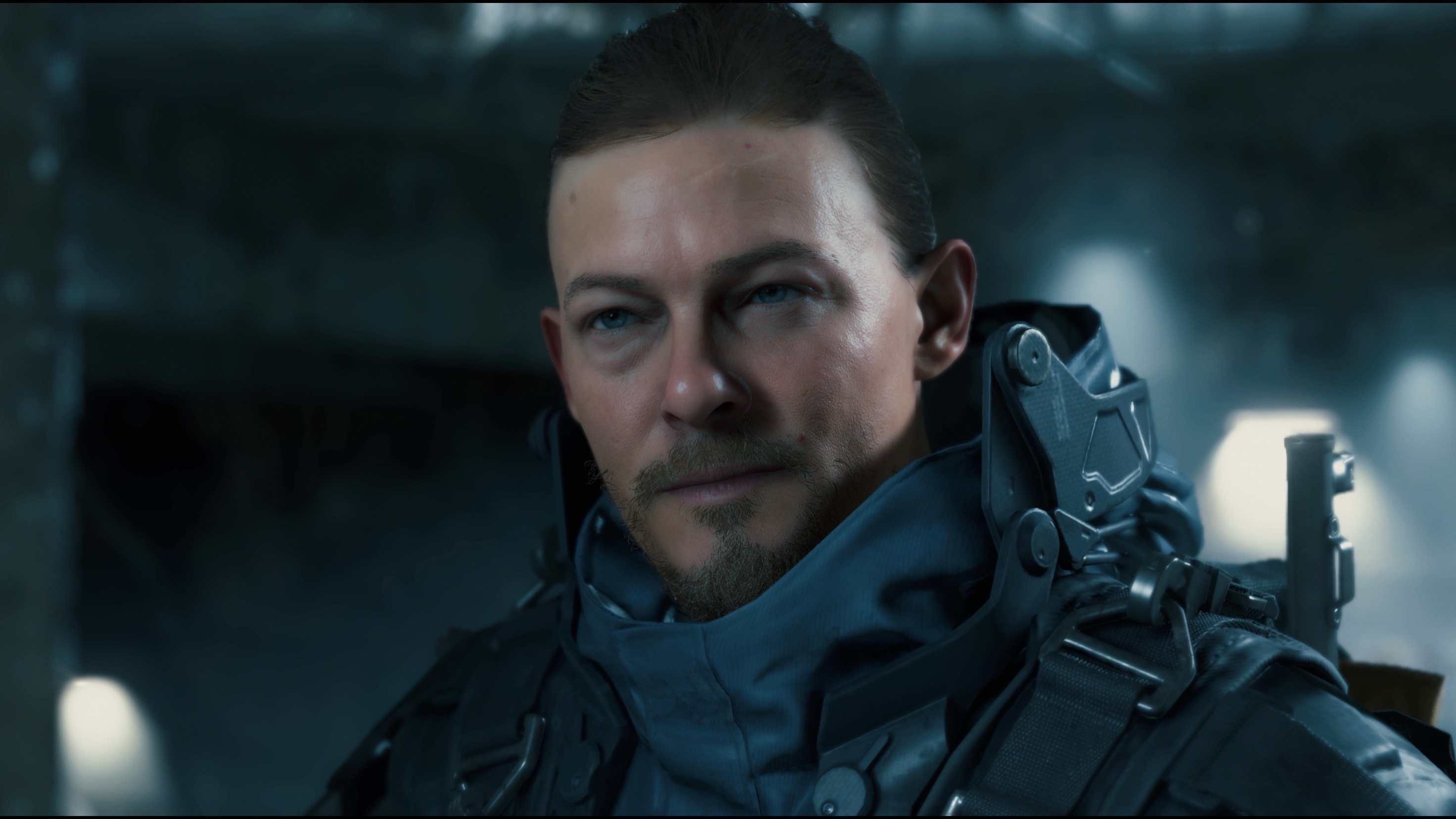
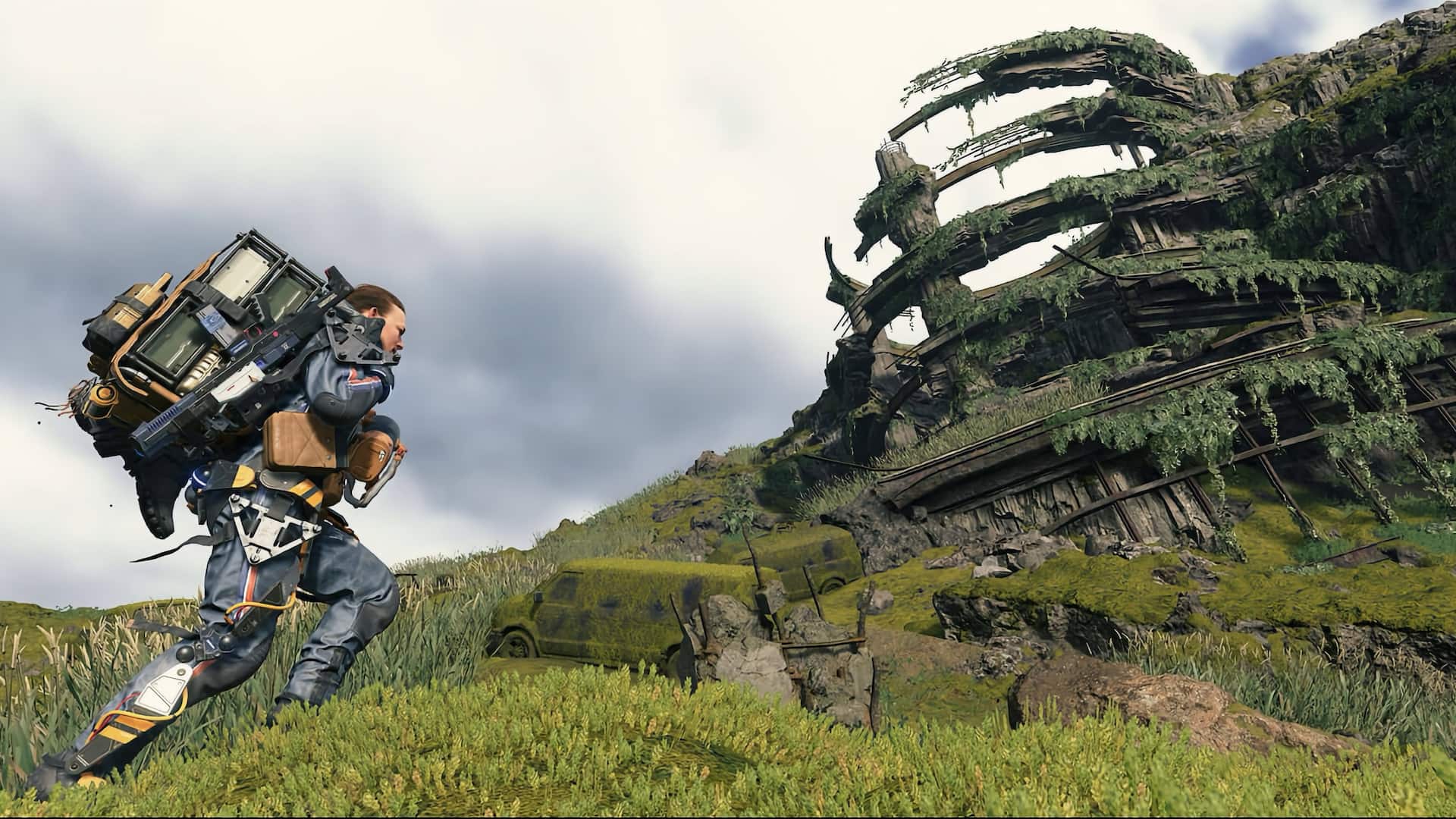
President Strand didn’t live to see her plan fulfilled, but her adopted son, Sam Porter Bridges (Norman Reedus), stepped up. He’s an unlikely and reluctant hero—gruff, antisocial, uncomfortable with human touch. He’s also a repatriate, which means that he has the strange ability to return to his human form after death. Sam may be unfit, but he’s humanity’s only hope.
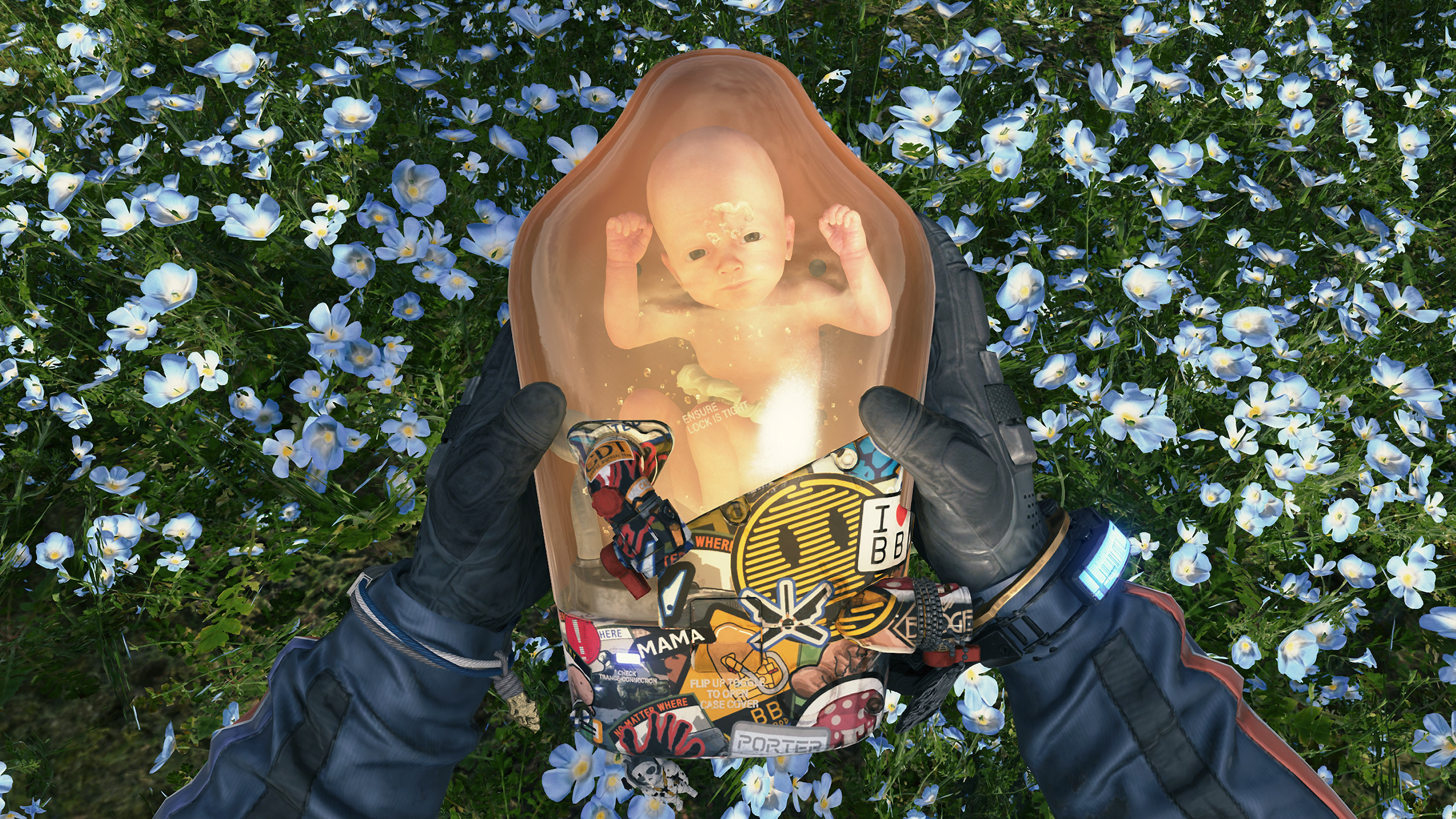
With his Q-pid gadget and his trusty companion—Bridge Baby Lou—strapped to his chest, Sam sets out on an adventure that spans North America, gradually joining its pocket islands of survivors to the chiral network. The United States of America may be gone, but in its place would rise the United Cities of America, the UCA. Also, Sam had to rescue President Strand’s daughter, Amelie (who bears a striking resemblance to her mother), from a terrorist organization known as Homo Demens.
Sam was never alone on his lonely journey. As mentioned, closest to him was a Bridge Baby or BB, a child strapped to his chest. Bridges used these infants as disposable tools. They enable people like Sam to sense when BTs are nearby. But the bond between Sam and Lou (a name that Sam gave the BB) transforms them into an improbable family.
Sam’s ragtag team of rebuilders includes President Strand’s close friend, Die-Hardman (Tommie Earl Jenkins), the director of Bridges. Then there’s Deadman (Guillermo del Toro | Jesse Corti), a former coroner, a test-tube baby, and a man who’s received multiple organ transplants.
A pair of identical twin sisters, Mama and Lockne (Margaret Qualley), created the Q-pid device that powered chiral network expansion and linked humanity together. As Death Stranding begins, they’re separated. But like with so many others, their arc is one of reconnection. In fact, by the time that the game ends, both twins’ souls inhabit a single body.
Sam’s pal Heartman (Nicolas Winding Refn | Darren Jacobs) dies every 21 minutes, stays dead for three minutes as his soul travels to the Beach, and then returns to life. This makes him quite the expert on the Beach and the Death Stranding. He shares that knowledge with Sam.
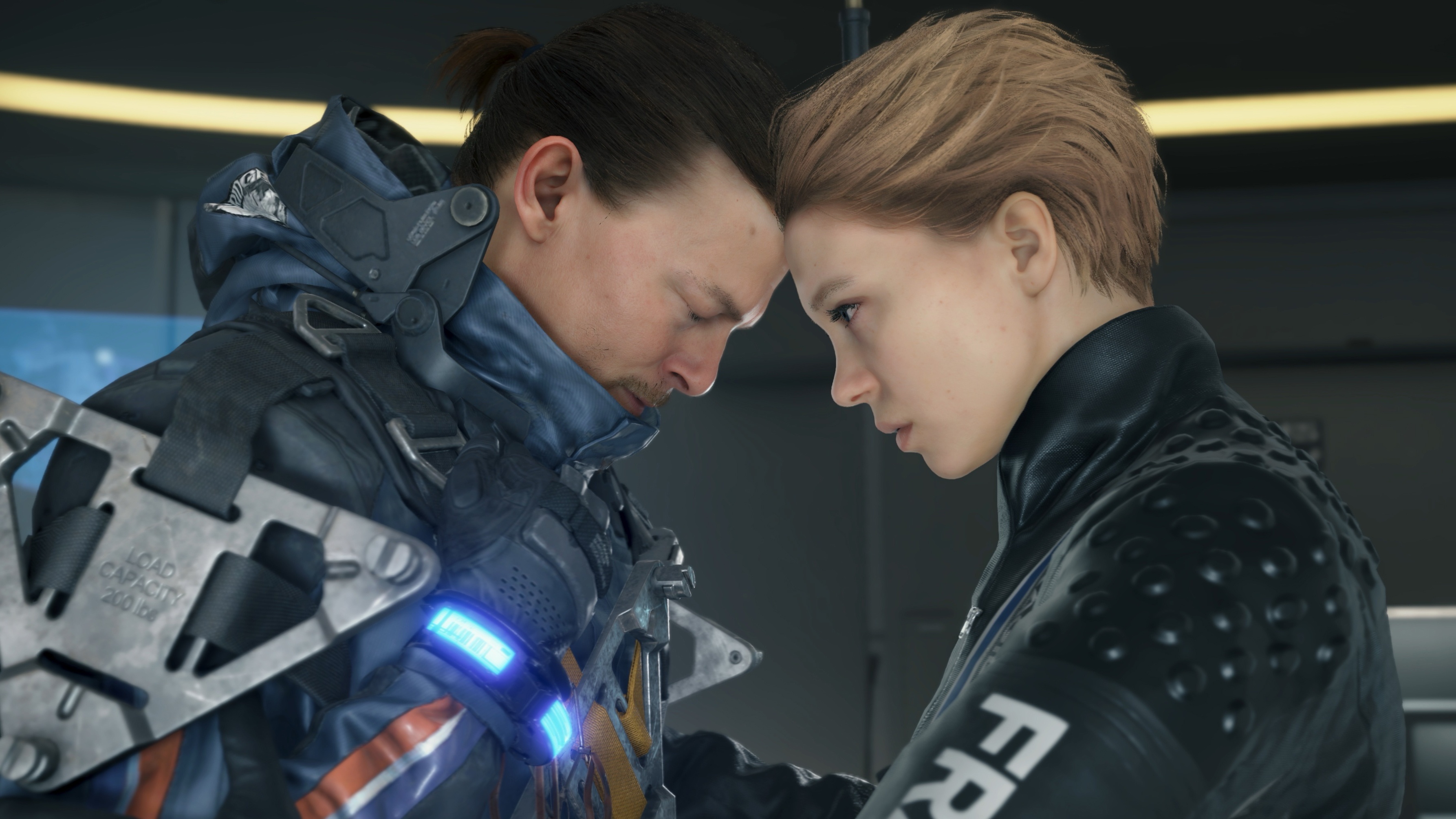
Fragile (Léa Seydoux) runs a sort of private version of Bridges called Fragile Express. She used to work with a guy named Higgs, who is awful and tortured her with Timefall. When Death Stranding begins, she’s out for revenge—but her lust for blood subsides, in part because of the connection she makes with Sam.
The journey across the end of the world
Sam had a team behind him, but he was in charge of the grunt work.
His fundamental purpose is to travel through the post-apocalyptic wasteland, step by literal step, reconnecting the cloistered remnants of humanity, and fighting when necessary.
Much of Death Stranding takes place as Sam travels east to west across the United States, first walking and then with vehicles.
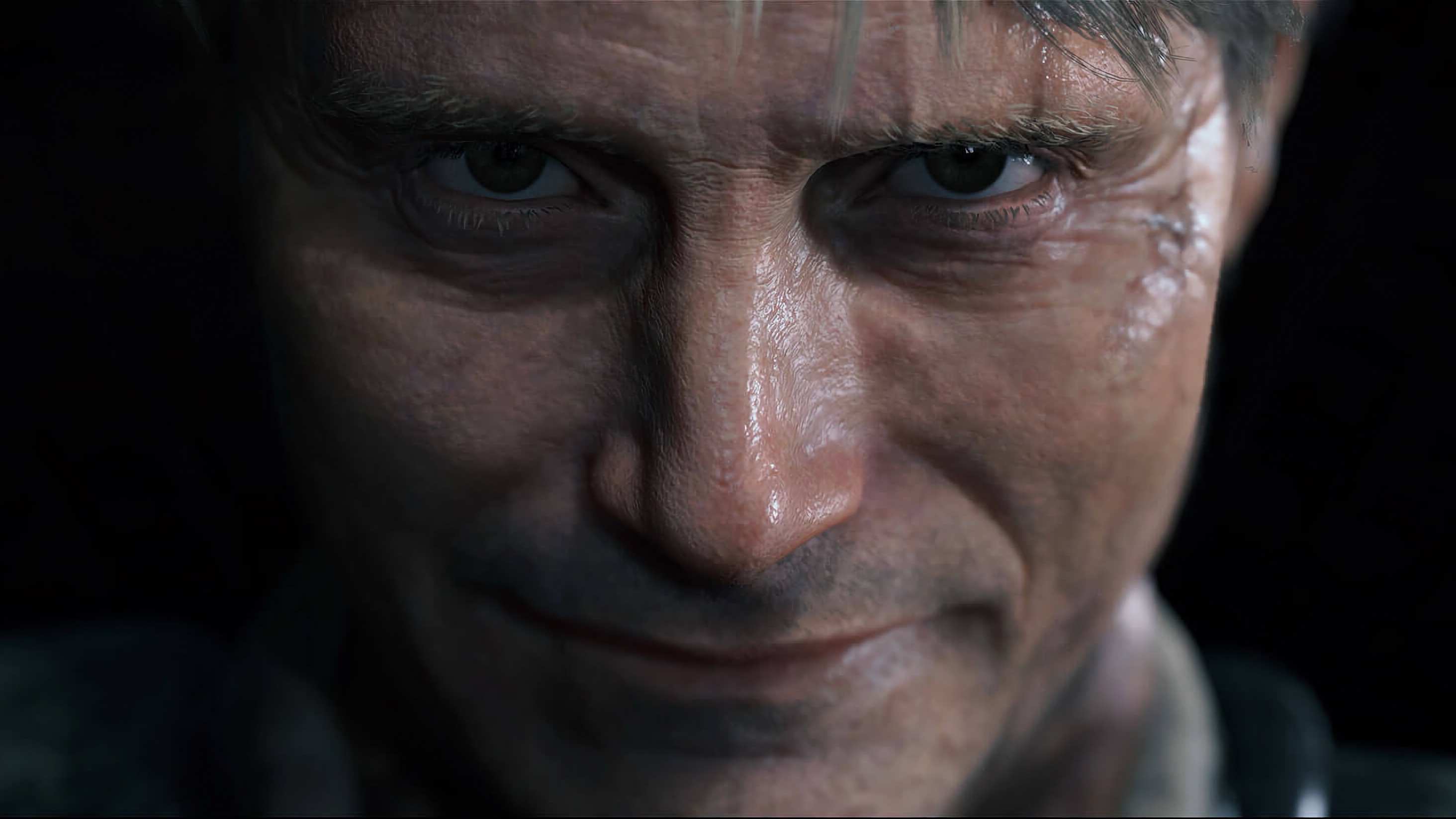
It is a game about reconnecting a post-apocalyptic version of humanity that’s not interested in connections—offering ropes, you might say—and the people he meets along the way are difficult to convince. One by one, Sam convinces them to join the chiral network.
Sam climbs mountains, crosses vast landscapes, keeps his footing, and meets the survivors, delivering cargo to and among them. Sam fights BTs, dodges marauding scavengers called Mules, and winds up on a collision course with Higgs Monaghan (Troy Baker), Fragile’s old ally and the leader of the Homo Demens terrorist organization holding Amelie. Higgs is convinced that extinction is the best thing for humanity, and Sam is the biggest obstacle to his apocalyptic dream.
Throughout Sam’s journey, he’s plagued with seemingly random memories of a man named Clifford Unger (Mads Mikkelsen). Many of those staccato memories are about Unger, his wife, and a baby. Sam learns that he’s Unger’s son. And in fact, Sam was once a BB, just like Lou.
Sam completes the chiral network, one knot at a time, and builds rope to humanity’s future—or so it seems. In truth, Sam learns that Amelie was behind the Death Stranding. She was created to bring forth mass extinction, is the real leader of Homo Demens, and the chiral network was her tool to bring forth the Last Stranding—the end of life on Earth.
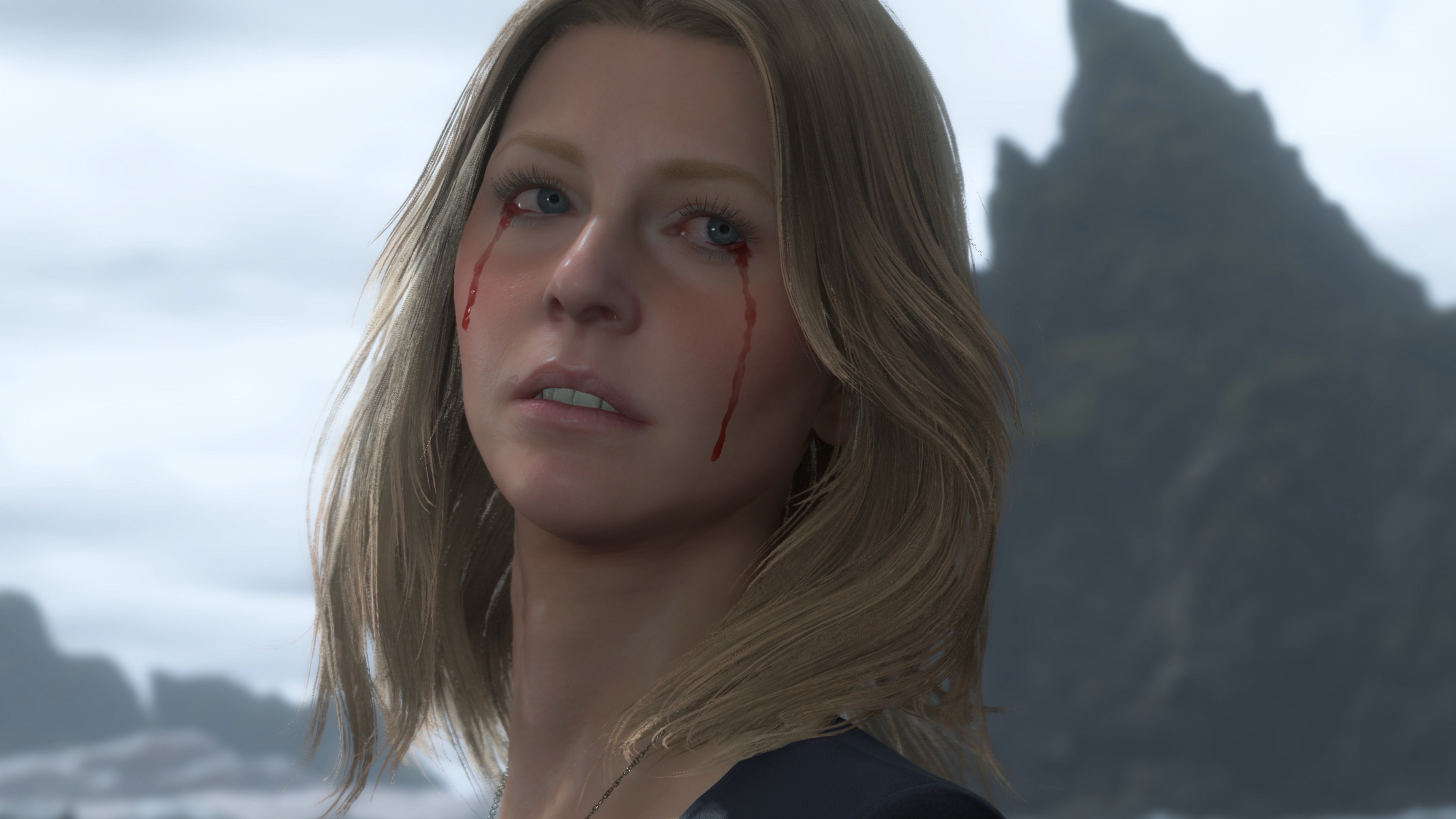
Tough as that revelation was, Sam finished his original mission, defeated Higgs, and chose not to allow the Last Stranding to take place. The final mission Sam undertook was to save Lou and remove him from his pod. Then the father and his adopted daughter—surprise, Lou is a Louise—disappeared into a hopeful, solitary future.
The philosophy at the end of the world
A 62-year-old man stares through a hole in the wall at a scrap heap, looking for children who’d kill insects and birds, who’d break toys and sneak into a graveyard of metal corpses, as he daydreams about throwing something at them.
Thus begins Kobo Abe’s surreal short story Nawa or “The Rope.” And a quote from that very story is how Death Stranding begins.
“The ‘rope,’ along with the ‘stick’ are two of mankind’s oldest tools,” the quote reads. “The stick to keep the bad away, the rope used to bring the good toward us. They were our first friends, of our own invention. Wherever there were people, there were the rope and the stick.”
Abe has long been an inspiration for Kojima, and he made the connection explicit years before players saw that quote in Death Stranding.
“In this short story,” Kojima told IGN in 2016, three years ahead of Death Stranding’s release, “Abe states that the first tool mankind created is a stick. He states that the stick is the first tool that mankind created to put distance between himself and bad things—to protect himself. He states that the second tool mankind created is a rope. A rope is a tool used to secure things that are important to you.
“Most of your tools in action games are sticks. You punch, or you shoot, or you kick. The communication is always through these ‘sticks.’ In [Death Stranding], I want people to be connected not through sticks, but through what would be the equivalent of ropes…but of course you will be able to use the sticks, too.”
Much remains the same in Death Stranding 2: On the Beach. It’s a franchise most comfortable when its players are pulling things together. Its protagonist is an embodiment of that leitmotif, which Kojima has been talking about for a decade or more.
You can rejoin Sam Porter Bridges' journey in Death Stranding 2: On the Beach on the Epic Games Store, releasing March 19.