새 소식
Duck Side of the Moon is built on curiosity and creative detours
A
Aron Garst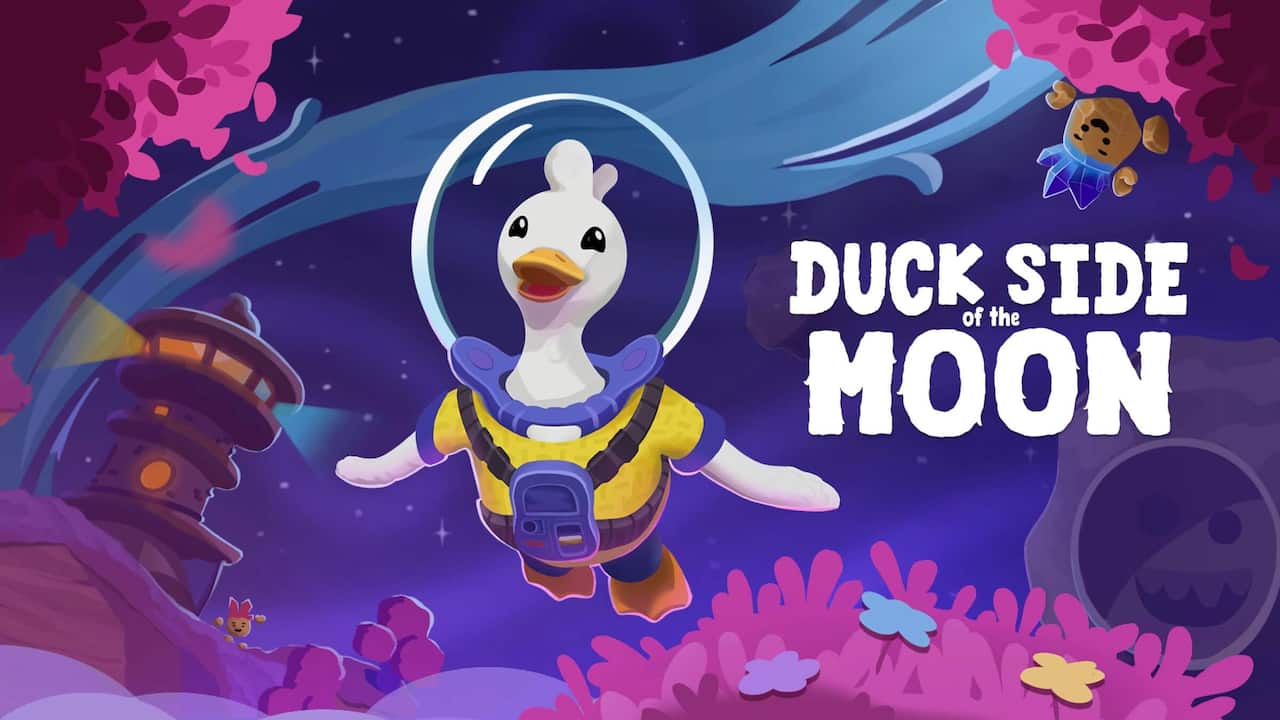
Developed by Starbrew Games, Duck Side of the Moon builds its identity around open-ended movement and level design that prioritizes detours.
The game’s origins stretch back to a student project at Breda University of Applied Sciences in the Netherlands. For Co-Founder Jip Crombag, the concept began in a highly constrained assignment that would eventually grow into something much larger.
From game to graduation
“As part of a concepting block, we were tasked with creating a prototype in two weeks about a game that combined three words of our own choosing," Crombag said. "Those words were duck, space, and automation, and the rest is history, so to speak!”
What started as a rapid prototype evolved significantly over the course of the academic year. The team iterated through multiple versions, shifting mechanics and scope as the project expanded into a full student demo.
“From there the game went through multiple stages as it was allowed to continue development throughout the school year," Crombag said. "We took out the automation aspects in favor of more of a craft & collect loop, combined with some survival mechanics like oxygen and hunger. [This] ultimately culminat[ed] in the final eight weeks of the school year, where around 20 people were working on the project, making it into a 30 minute demo that you can still find on Itch.io to this day."
That prototype demo resulted in a Dutch Game Award nomination in the Student Category and shortlist at the YUGO BAFTA Awards.
After graduation, the team briefly split up before regrouping with a more ambitious goal: turning the concept into a full studio project. That decision ultimately led to the formation of Starbrew Games.
Rebuilding the game from scratch was a creative reset. The team abandoned earlier assumptions in favor of a more stable foundation, including a shift in genre that better matched both scope and tone.
"It might seem strange to start over again after we had already built a successful prototype, but we felt it was necessary," Crombag said. "During the prototyping phase, there was barely any time to think about major decisions in the project. We just had to make things as fast as possible, since we had an eight-week deadline. When we started fresh again, we allowed ourselves to set up a proper foundation for the game, which was now a lot easier since we already had an understanding of what we were building.”
That reset also led to a significant pivot in direction. The team found that the style and theme better fit the cozy genre rather than survival. It was also a question of feasibility due to the size of the team and the breadth of what they wanted to create.
Duck and run
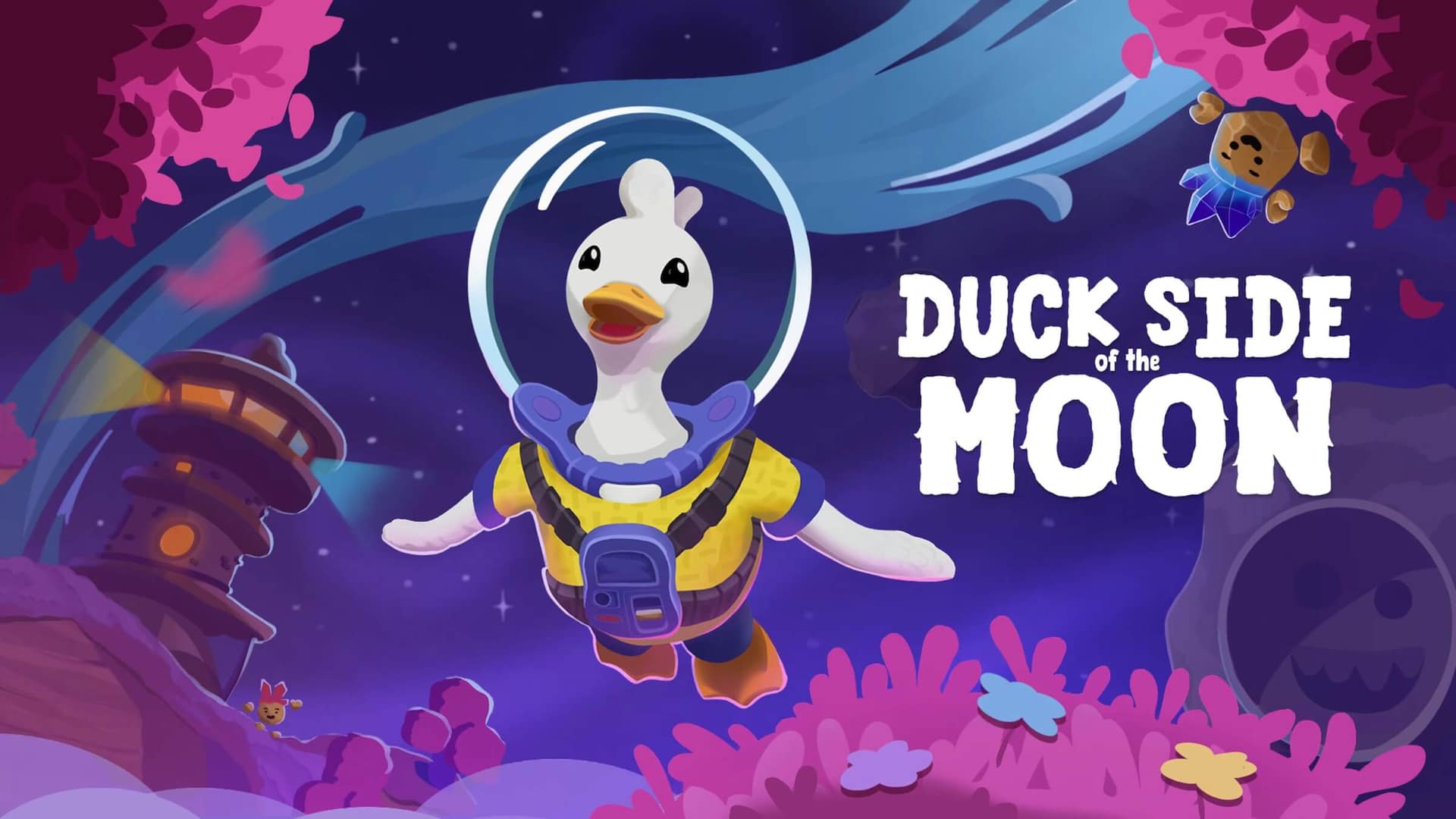
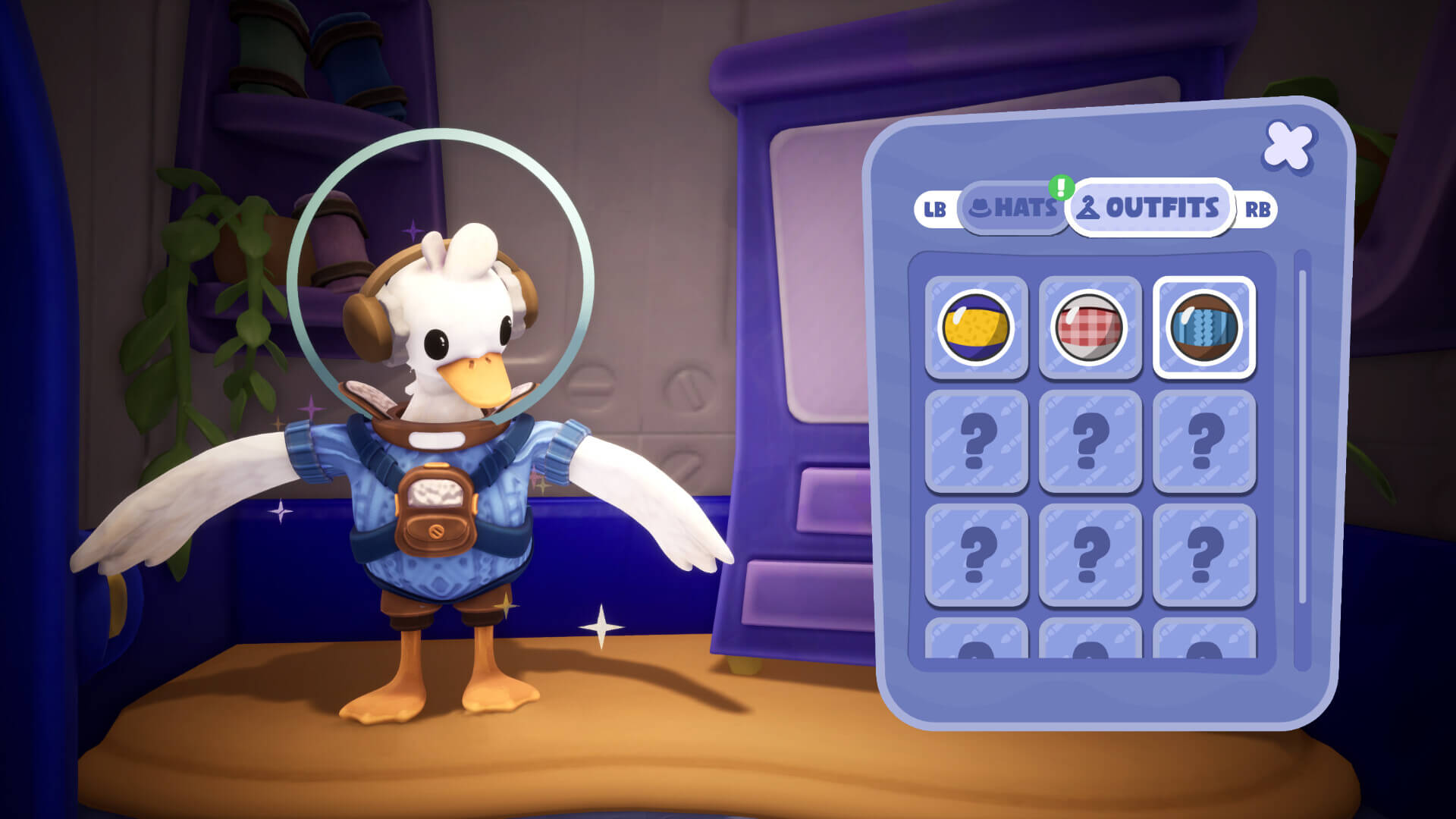
At the center of Duck Side of the Moon is its unusual protagonist: a duck astronaut named Doug drifting through space. The choice, according to Crombag, came from a creative accident that quickly proved too fitting to abandon.
“It was one of those first words being called out when we had to pick a theme and direction,” Crombag said. “Just a happy accident and we went with it. It definitely had a great influence on the overall design of the game. Being a duck, you can just fly through space, which creates a lot of interesting design challenges for an exploration game, since you can see everything from above.”
That sense of freedom became both an opportunity and a design problem. Early versions of the game leaned into the idea of unrestricted traversal, but the team quickly realized that pure openness risked flattening the experience. Without structure, movement could become aimless rather than expressive.
To solve that, Starbrew Games shifted its approach away from hard gating and toward environmental temptation, building spaces that constantly pull players off their intended path.
“We decided that instead of punishing the player for taking the straight path to an objective, we should reward them for taking a detour,” Crombag said.
That idea became foundational to how Duck Side of the Moon is structured. Rather than forcing progression through barriers or strict objectives, the game encourages players to deviate organically, turning curiosity into the primary driver of engagement.
Distracted, but not lost
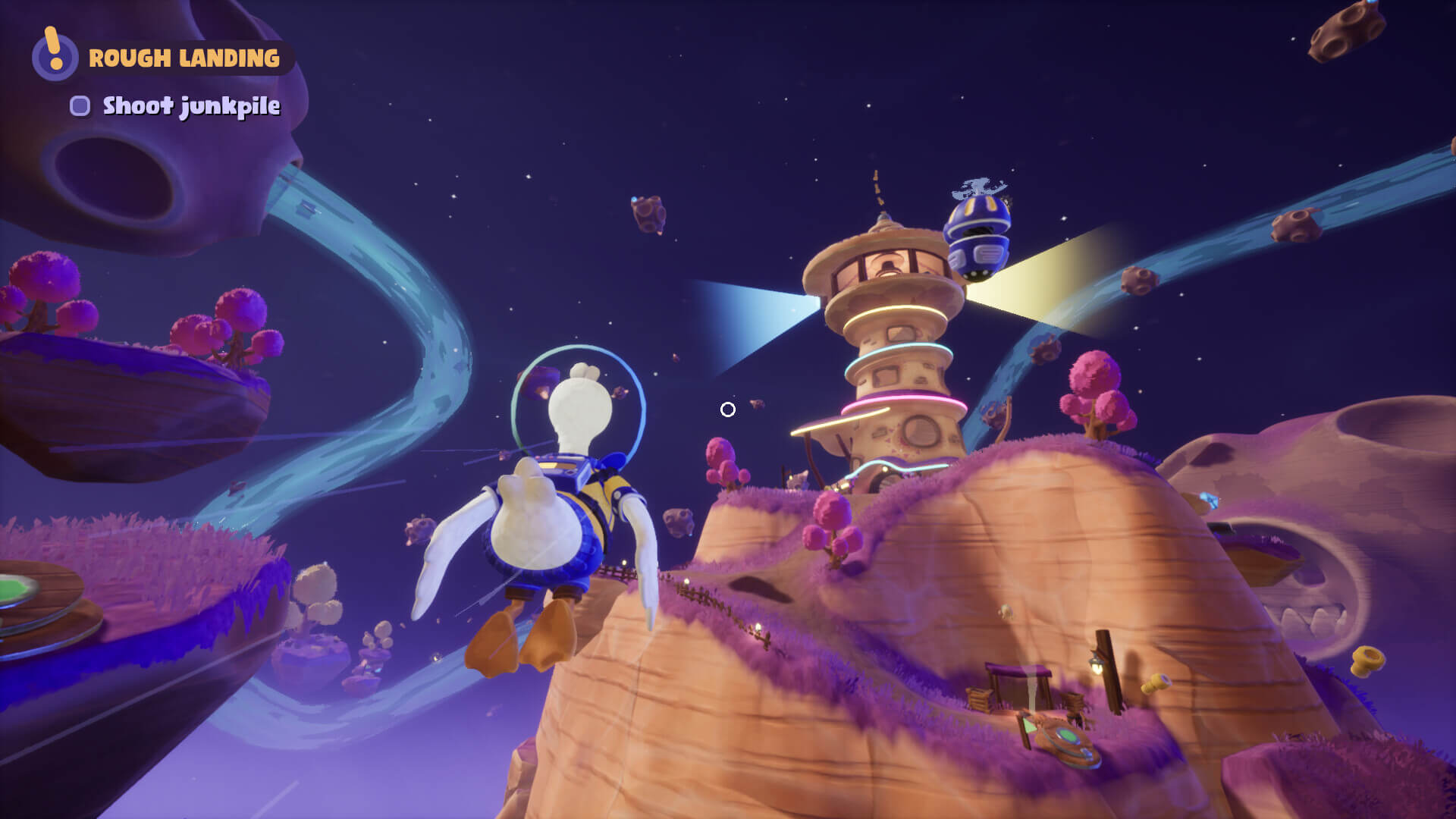
“This sparked the philosophy of wanting players to be distracted, but not lost. As soon as the player first sees an area, we want them to be curious about what’s out there,” he added. “Whether it’s a chest they see in the distance, an outcrop they can mine, or a big point of interest like the lighthouse. We want them to constantly abandon their main objective in favor of a distraction, but still have a clear understanding of how to pick the main objective back up when they feel ready to progress the main story.”
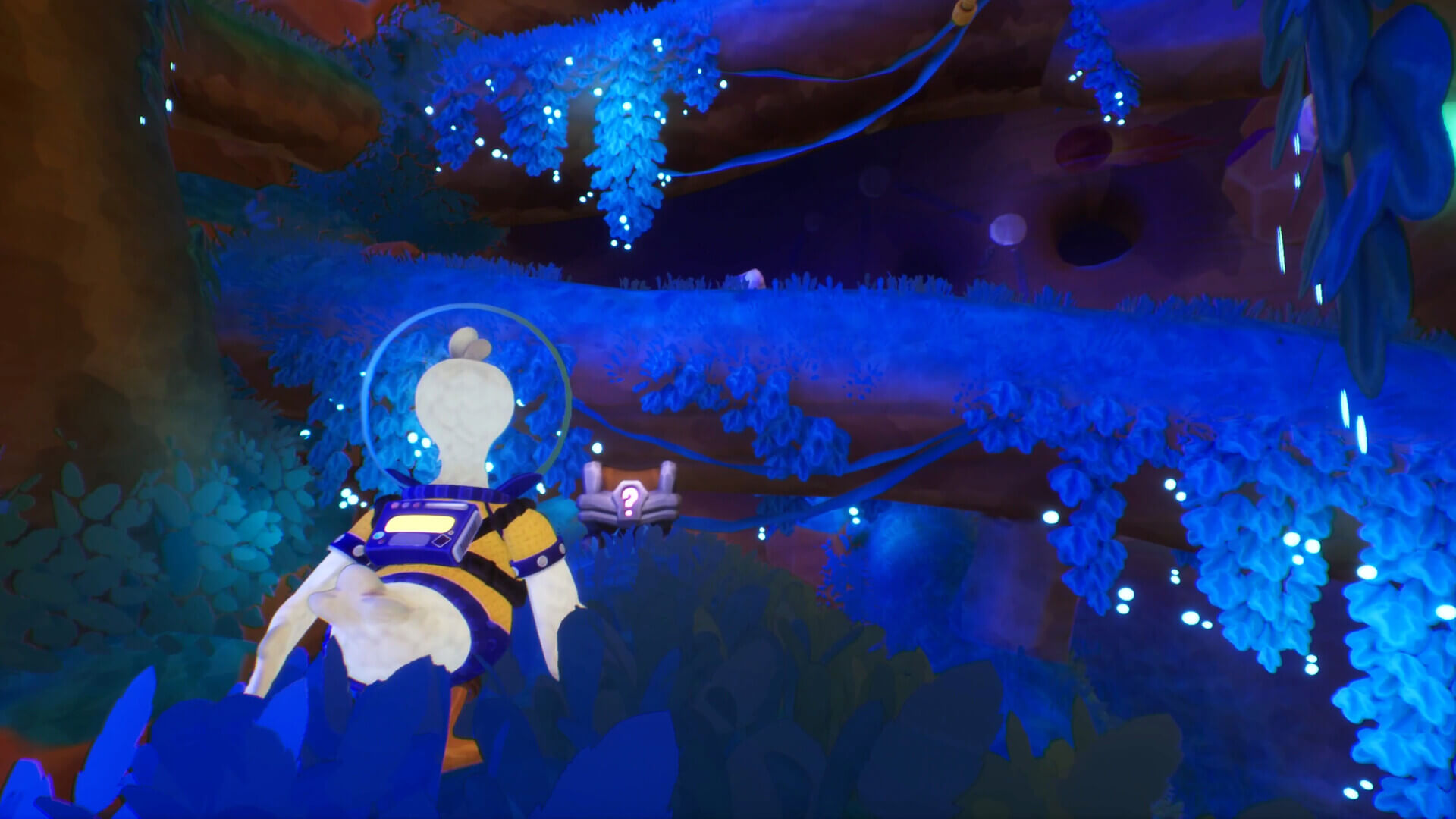
Balancing that freedom required careful iteration, especially around navigation and player guidance. Playtesters became overwhelmed at times by the sheer number of things they could do and see on the horizon, while others stuck closely to the main quest without ever taking a detour. To find the right balance, certain elements were either highlighted or obscured.
One example involves how critical locations are revealed. One of the game’s earliest objectives tasks players with locating a pier along a meteor river. While it isn’t visible from their ship, a nearby lighthouse is.
“We made the lighthouse the first location the player sees, which just contains some side content,” Crombag said. “So most players explore around the lighthouse first before finding the pier.”
Players can also speak with a nearby NPC who will guide them back to the pier if they get turned around.
“The game is full of these examples where we try to guide the player to be distracted, but not lost,” Crombag said.
Following some cozy footsteps
Early inspirations for Duck Side of the Moon helped shape its structure and tone, particularly as the team moved away from survival mechanics and toward a more relaxed exploration experience.
While the game started out with a “Subnautica in space” vibe, according to Crombag, it eventually shifted toward the tone of games like TOEM and A Short Hike. That influence extends into progression systems as well, particularly the use of a central currency to guide player choice without restricting freedom.
“There are also some structural things we have latched onto from these reference games. All of them use some sort of currency to drive the main progression, whether that be feathers in A Short Hike or stamps in TOEM,” Crombag said. “This currency is what allows a sense of freedom for the player to tackle whichever side content they want without being forced to do it all.”
Duck Side of the Moon includes its own currency: bolts, which the player uses to repair the spaceship and progress the story. Starbrew Games also layers in a crafting and collection loop that nods back to Subnautica, giving players additional systems to engage with as they explore at their own pace.
The value of rest
Outside of the structure and gameplay, Starbrew Games felt it was vital to have a heartfelt theme that stretches throughout the experience. Where A Short Hike centered on a story about growing up, Duck Side of the Moon focuses on the value of rest.
“As a passionate indie team working on our first title, it can often be hard to strike a balance between passion and crunch,” Crombag said. “So ‘the value of rest’ felt like a theme we could relate to and wanted to communicate throughout the game. Doug therefore is an overworked astronaut flying through the galaxy, trying to find a new homeworld.”
The adventure begins with Doug pushing himself too far, eventually dozing off and crashing into an asteroid. From there, players help him repair his ship while slowly coming to understand the consequences of burnout and the importance of stepping back before hitting a breaking point.
In that sense, Duck Side of the Moon builds on the familiar strengths of the platformer genre, blending exploration in a whimsical sci-fi setting with expressive movement and a steady stream of charming discoveries. But beneath the playful tone, it’s ultimately a quieter reflection on balance, asking players not just to keep moving forward, but to consider when it might be time to rest.
Duck Side of the Moon launches on Epic Game Store on May 7.