Новини
Ghost In The Feed's haunted house is designed to keep players guessing
A
Aron Garst
That cycle is exactly what Ghost In The Feed is designed to avoid.
Created by Nuci, founder of Nuci Games, the paranormal horror experience builds its entire identity around instability. Every session reshuffles the rules of the house, scattering anomalies, changing environmental details, and altering the rhythm of exploration in ways meant to keep players uncertain from beginning to end.
For Nuci, unpredictability is not a feature layered on top of horror. It is the foundation of it.
“I designed the core of the game with the goal of offering playthroughs that are always unique, while maintaining a consistent difficulty level based on the chosen setting,” he said in a translated interview.
That philosophy grew naturally out of Nuci's own path into game development, which was anything but traditional. Before building haunted houses and paranormal systems in Unreal Engine, Nuci worked in landscape architecture, spending years working outdoors while maintaining a deep fascination with games and technology. Eventually, that fascination became impossible to ignore.
His first major project, This is a Ghost, pushed him headfirst into the realities of solo development. The multiplayer ghost-hunting game helped establish the paranormal design language that would later shape Ghost In The Feed, though Nuci admits the process came with plenty of pressure.
“My initial experience as a solo developer was quite intense,” he said. “It cost me quite a few sleepless nights.”
After finishing work on another multiplayer horror game, Hunt Me, Nuci found himself drawn back toward a more focused solo experience—one built around a singular mechanic instead of multiplayer chaos. Conversations with streamers introduced him to the growing popularity of “spot the anomaly” horror games, experiences that ask players to carefully study environments and identify subtle changes.
“The ‘spot the anomaly’ concept fits this atmosphere perfectly,” he said. “I quickly began envisioning how I could take it further through the use of different vision modes and genuine psychological tension.”
The earliest prototype for Ghost In The Feed was stripped down to its essentials. There were only two test maps and an infrared mode designed to validate whether the core gameplay loop actually worked. The current version is more elaborate, but that early phase established the principles the entire Ghost In The Feed experience would grow around: observation and paranoia. Those ideas now drive nearly every system in the game.
At the core of Ghost In The Feed is a randomized anomaly system designed to undermine player memory. The game currently features 15 different anomaly types, though only eight are selected during any individual session. Their placements are generated at the beginning of each run according to rules tied to map layouts and difficulty settings.
One session may place players in relatively familiar territory, with only subtle environmental changes disrupting the atmosphere. Another may rapidly escalate into something more disorienting, forcing players to question every flickering light around them.
Even seemingly harmless details are unstable. Computers and televisions may begin either switched on or off. Paintings display different images. Doors that were once open may be closed on a subsequent run. Minor environmental changes accumulate over time until players stop trusting their own recollection of the space.
“The underlying idea is to ensure that the player can never rely entirely on their memories from a previous playthrough,” he said.
Scripted horror often relies on carefully timed sequences, delivering scares through controlled pacing and rehearsed reveals. Players eventually learn those rhythms, even subconsciously. Ghost In The Feed builds tension through uncertainty itself.
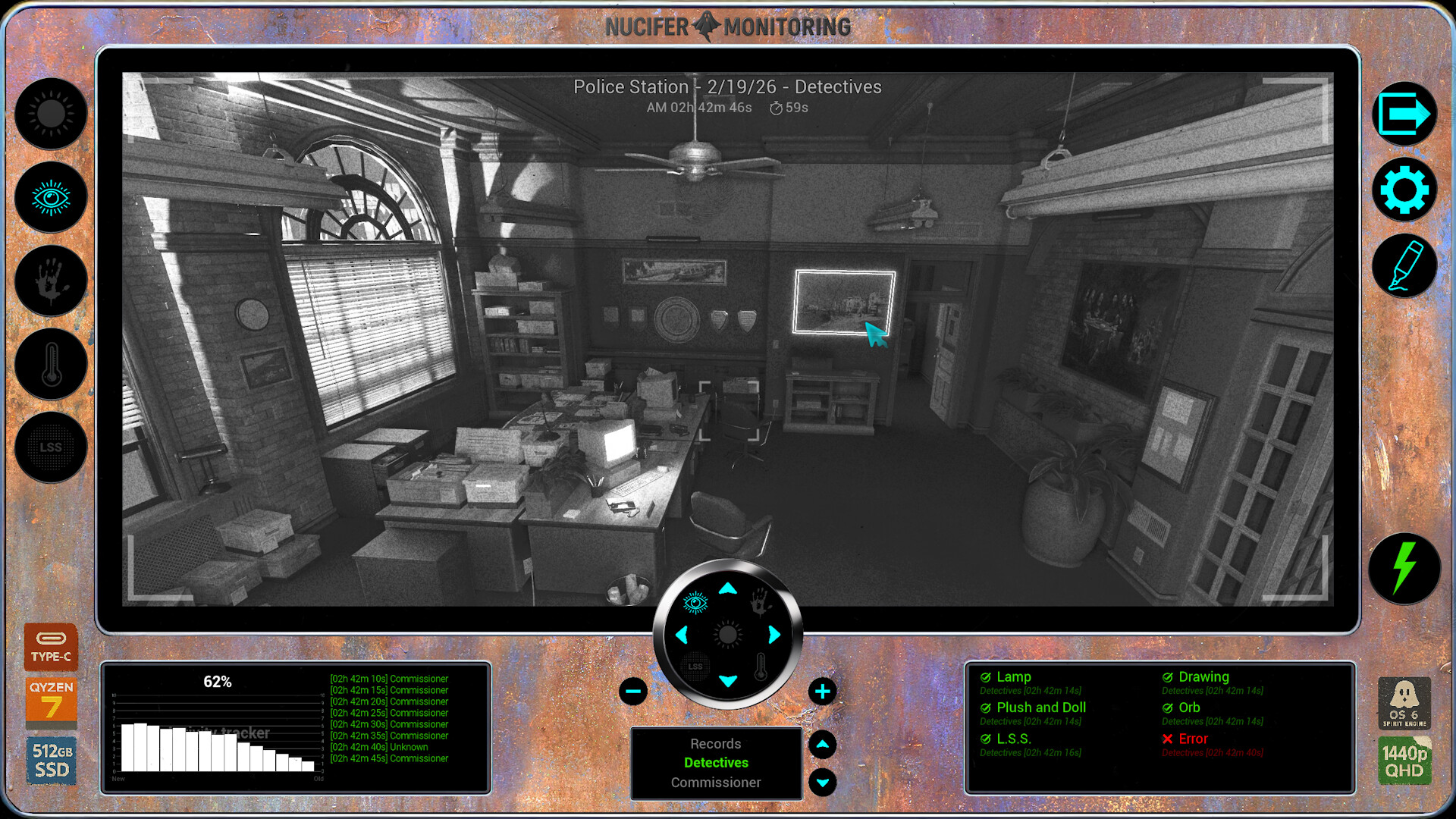
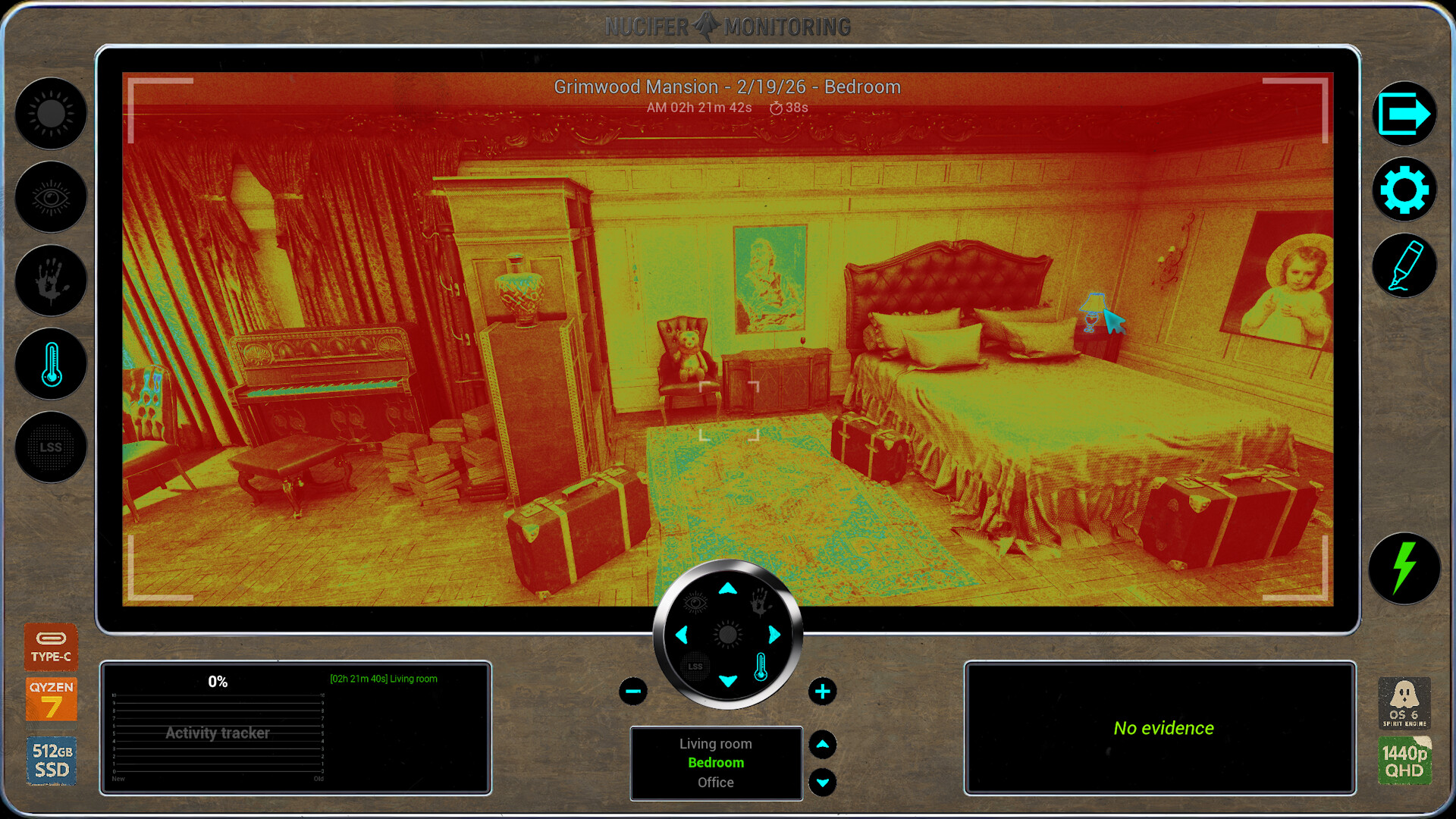
That uncertainty is reinforced through the game’s investigative tools. Different anomalies can only be detected through specific vision modes, including infrared, ultraviolet, and thermal modes. Instead of simply walking through haunted spaces, players are constantly interpreting incomplete information, scanning rooms for inconsistencies while trying to determine whether something is truly wrong or if paranoia has started taking over.
A shadow caught in thermal vision might signal danger—or it might be environmental noise masking something else. Because the systems overlap in unpredictable ways, no two playthroughs unfold identically. That variability extends beyond jump scares and monster placement. It affects pacing and even the relationship players build with the environment itself.
Over time, the haunted house starts feeling like an opponent.
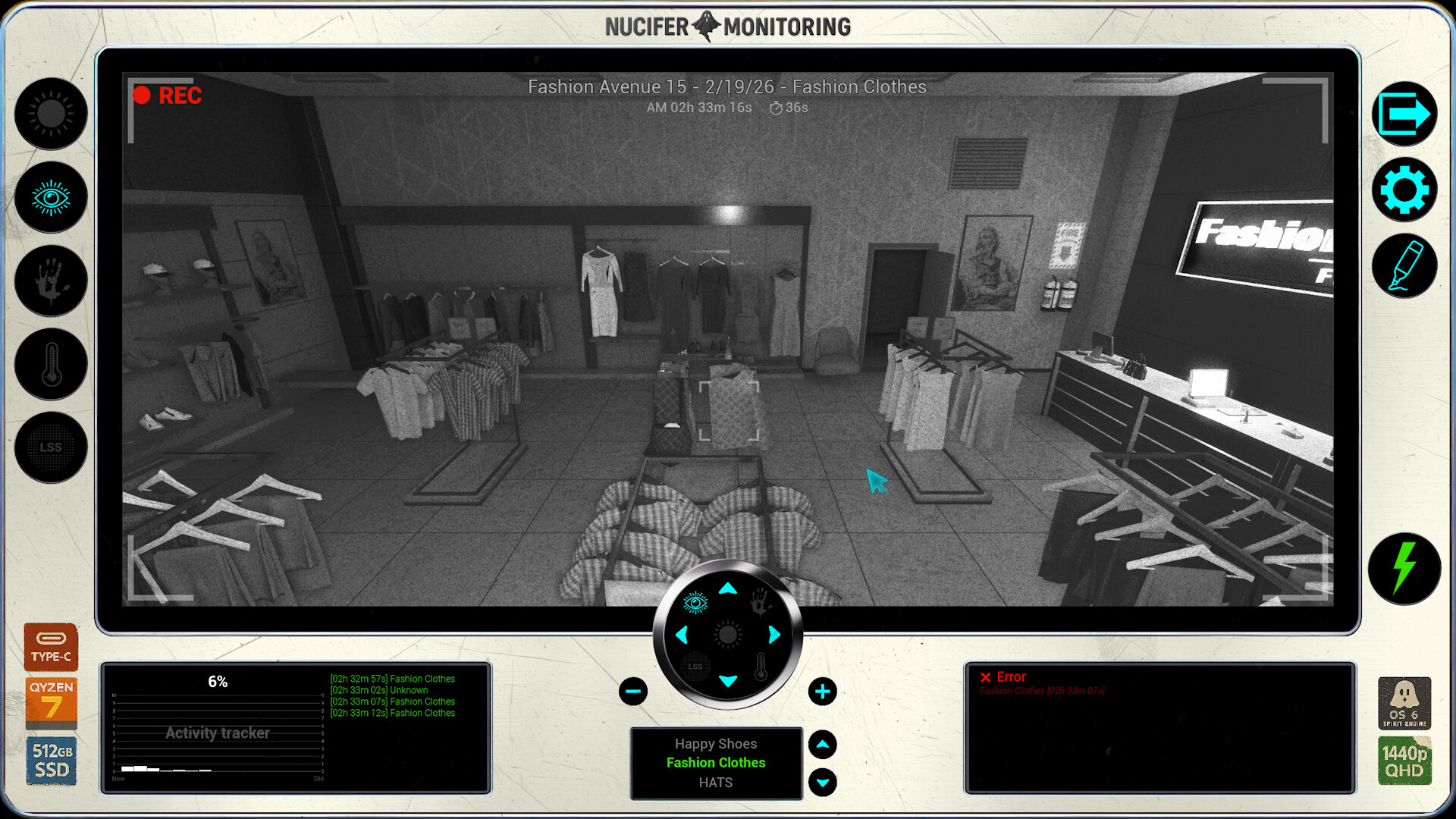
Nuci’s background in environmental design emerges here as well. Ghost In The Feed is not simply about populating rooms with random events. The layouts, lighting, and object placement work together to create spaces players instinctively try to memorize. Once familiarity sets in, the game begins weaponizing it.
A room that once felt safe becomes suspicious because players remember it differently. A hallway feels unsettling because something is slightly off, even if they cannot immediately explain what changed. The horror emerges from fractured recognition rather than outright chaos.
Pure randomness can quickly become exhausting or incoherent, especially in horror, where tension depends on player investment and attention to detail. Ghost In The Feed operates in structured unpredictability. The systems are controlled enough to remain readable, but flexible enough to make mastery a significant challenge.
That philosophy helps sustain replayability, something many horror experiences struggle to achieve. Ghost In The Feed approaches replayability differently by making uncertainty itself the attraction. Each session becomes an experiment in perception.
What changed this time? Which anomalies are active? Can the environment still be trusted? The game encourages players to second-guess themselves, turning routine exploration into a psychological exercise.
For Nuci, maintaining that tension over time was one of the project’s central goals. Horror works best when players remain mentally engaged, and Ghost In The Feed achieves that by refusing to let players settle into certainty.
Every flickering monitor, every altered painting, every door left unexpectedly ajar becomes part of a larger question hanging over the experience: Was it always like that?
Ghost In The Feed is available now on the Epic Games Store.