Noticias
How one Satisfactory player crafted Godzilla and other creations in the factory sandbox
J
Julian Benson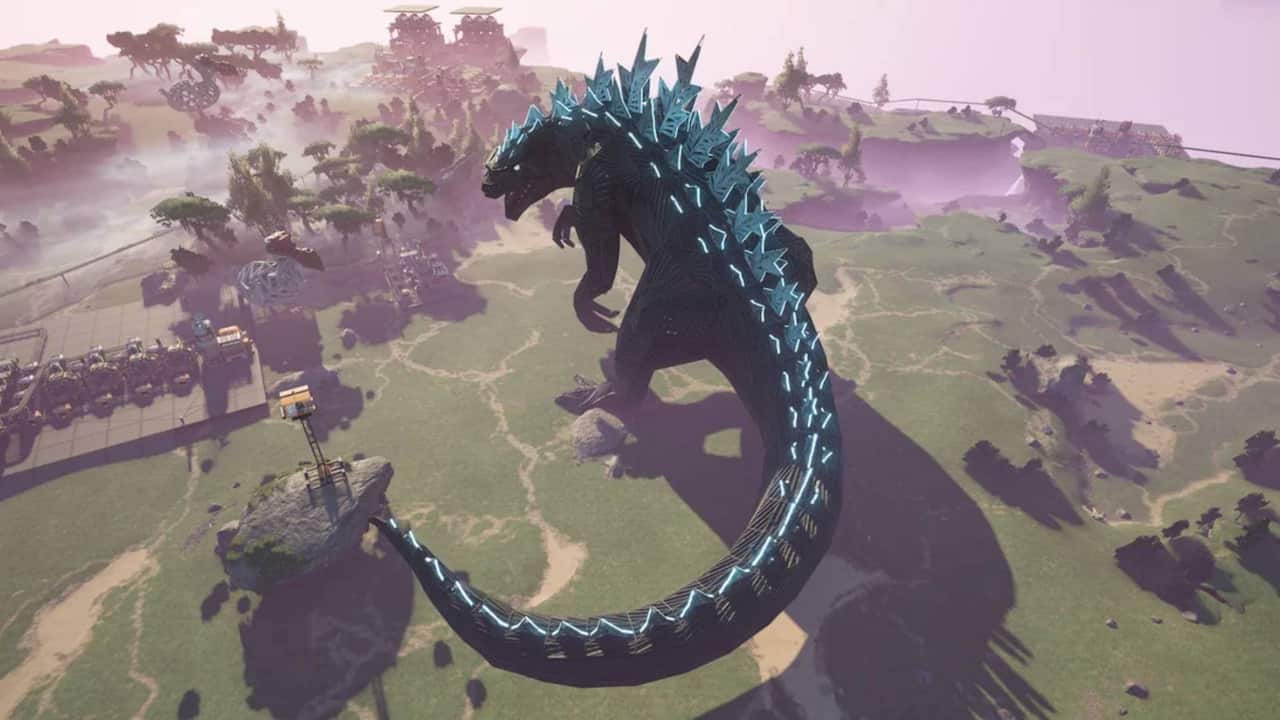
"Creating art wasn't my intention at all," MutedArtist says. When they started playing Satisfactory, they began as a regular player. Picking Coffee Stain's game up back in 2019 shortly after release, they poked around the alien world, built resource mines, connected them to their home base with conveyor belts, and set up simple factories to get through the game's first technology tiers. Your aim in Satisfactory is to develop ever-more-complex and demanding production chains, and your reward for this labor is the tools to make even more complex products. MutedArtist had fun, but ultimately drifted away from the game.
MutedArtist returned to the game years later to see how it had changed in early access, and they realized there was hidden potential for creativity in Satisfactory's toolbox. "I noticed that Satisfactory has its own grid system—there’s a world grid for foundations, and each block has its own grid depending on what’s placed on it," MutedArtist explains. This means that while Satisfactory's rectangular foundations lend themselves to boxy constructions, you can be much more flexible when placing beams.
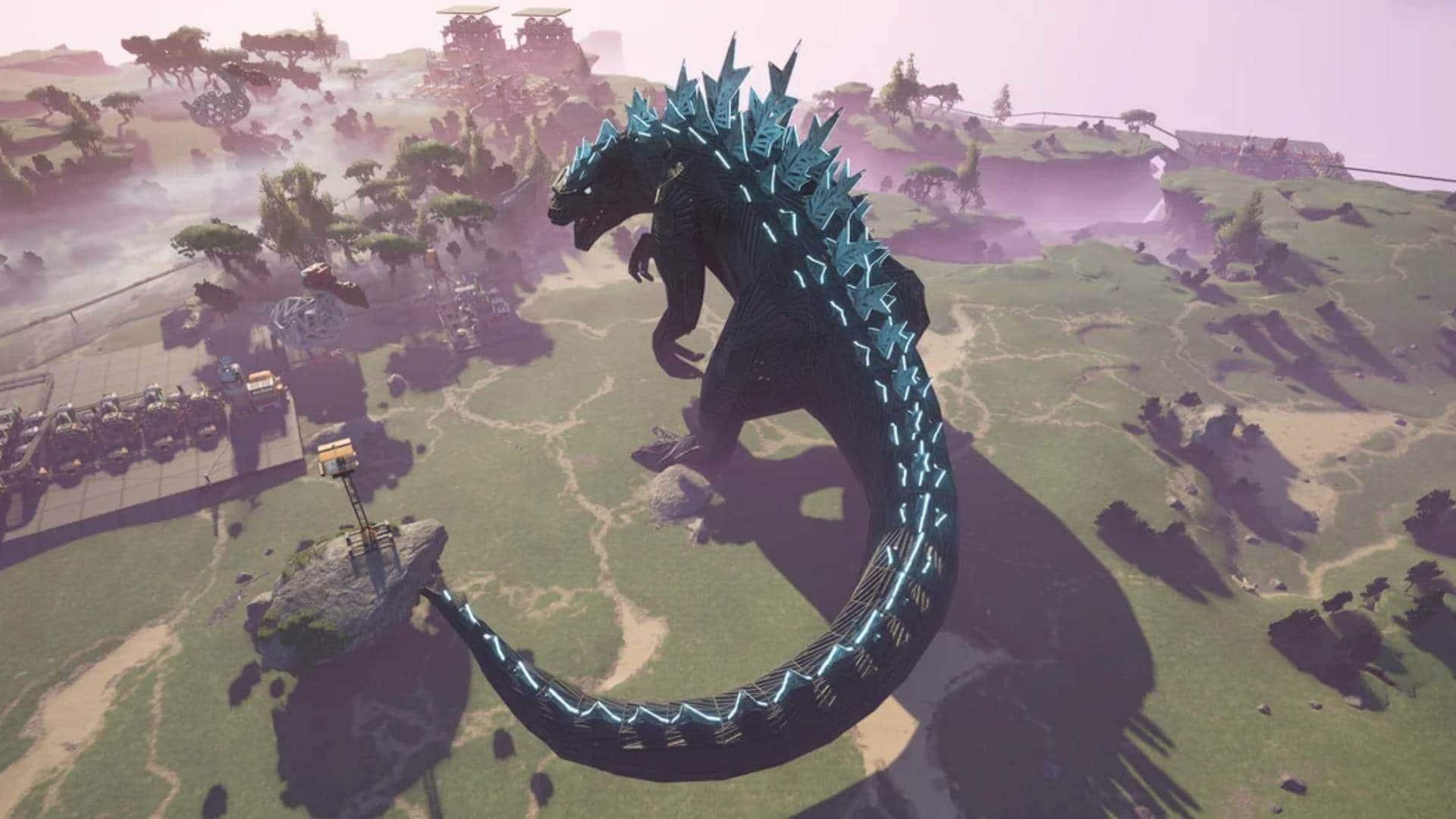
As an experiment, MutedArtist began building something that would stand out like a sore thumb in most games. However, in a world where giant creatures walk across the land in the far distance, this creation was actually quite at home: Godzilla.
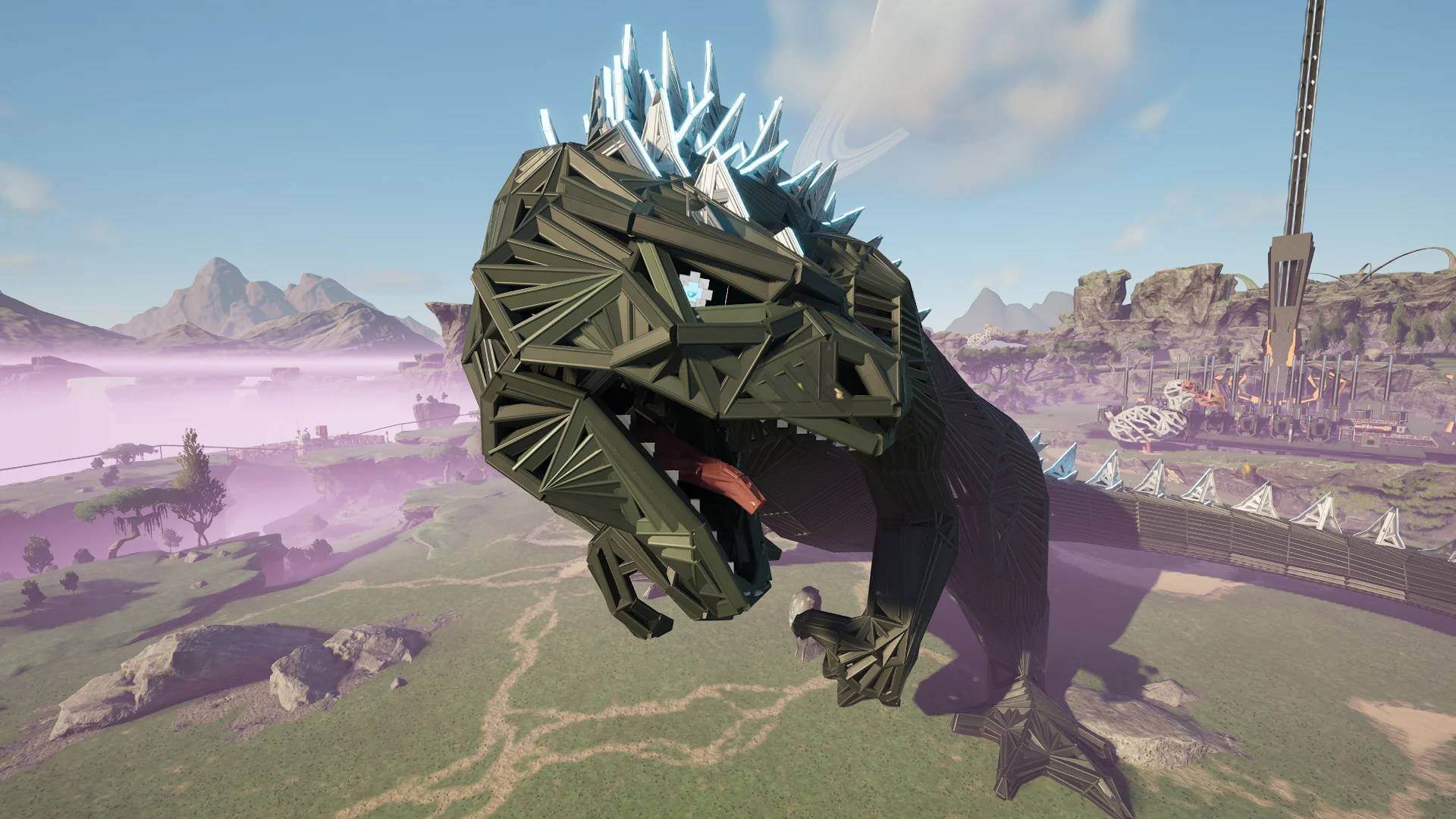
After a few hours of blocking out the famous kaiju, MutedArtist shared a screenshot of their progress with a friend, who suggested they start livestreaming the build. Over 20 days, the terror of Tokyo was finished, becoming the statue you can see today. MutedArtist has been making more and more ambitious Satisfactory sculptures ever since.
MutedArtist cut their teeth as a creative player in Minecraft, where they've been working on large builds since the alpha version of the sandbox game. "Even with the limited choice of blocks at that time, I understood that I could create anything in 3D space," MutedArtist says.
They didn't start with anything quite as ambitious as Godzilla. Instead, they elevated the style of structures many players make in their first days of playing Minecraft's survival mode. "Initially, I built rectangular and square houses with repetitive and non-repetitive patterns on the walls, windows, and roofs," MutedArtist remembers. "I soon got bored and began experimenting with more organic shapes—circles, curves, and a mix of rectangles with curves."
Minecraft is easier to work in than Satisfactory, MutedArtist admits, pointing out that the uniform cubes mean "few blocks can go off-grid." However, they follow the same principles in both games. "When planning a creation, I look for reference pictures from different perspectives to understand the proportions, colors, movements, and details," MutedArtist says. They then begin sketching out the build with a single line to get the proportions right: "I call this the spine."
Once the spine is in place, MutedArtist begins adding the bones. They divide the spine into different segments—"the head, neck, torso, hips, tail, etc."—tweaking the structure until all the proportions are correct. From there, they flesh out the structure, first getting the shape right in 2D before expanding it to 3D. You can see their process in the time-lapse video below:
MutedArtist is self-taught, preferring not to look for tutorials about creating art in Satisfactory, and they encourage anyone who wants to follow in their footsteps to just dive in and start trying it for themselves. "By experimenting, you can learn and understand how the game's building system works," they say. "That's exactly what I've been doing since January—experimenting and challenging myself to create more complex designs each time. It’s a step-by-step process, learning as I go."
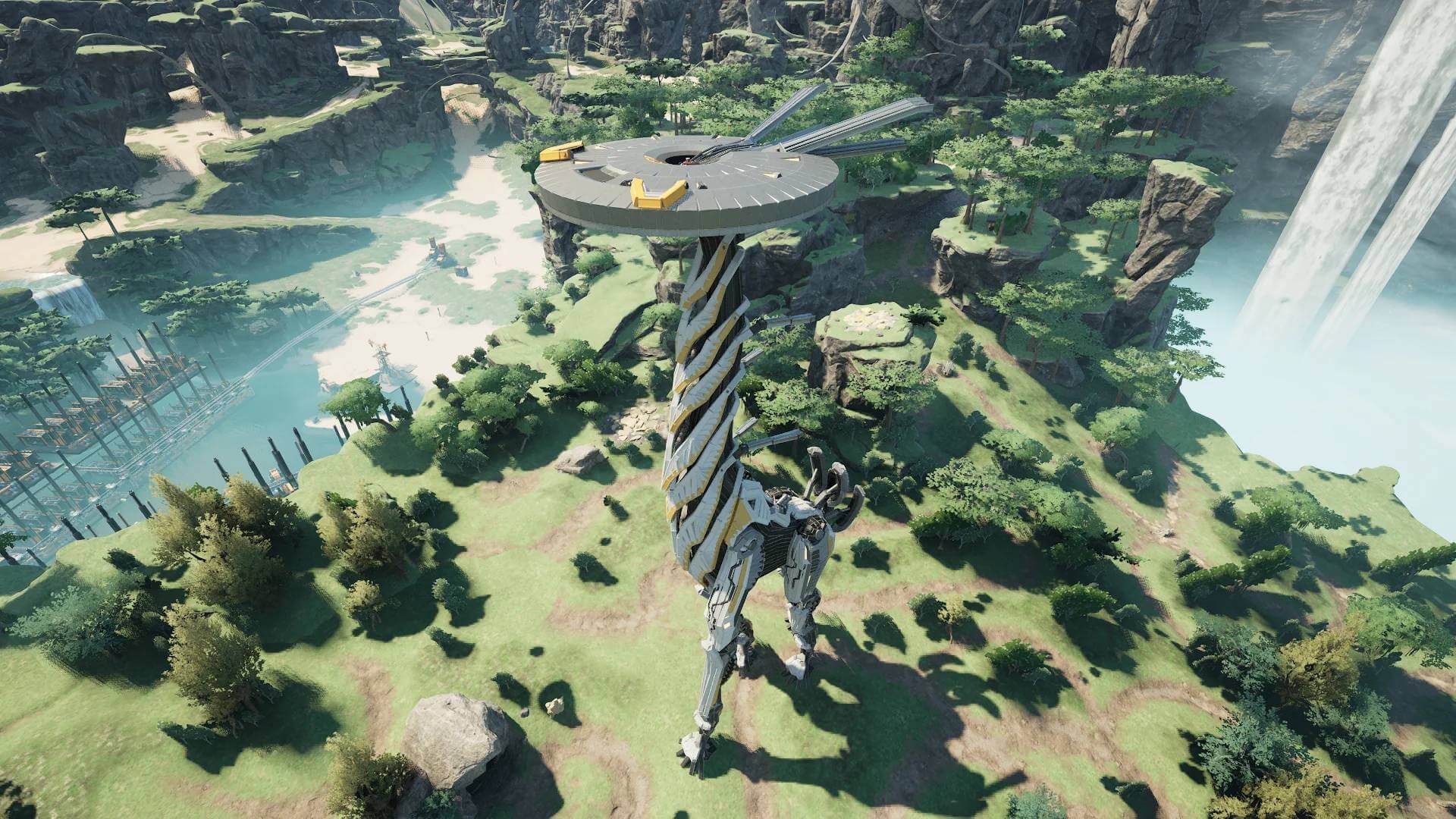
When you look at MutedArtist's current work, you can see how they've improved since that first Godzilla sculpture. You can even see the change, as MutedArtist explains, within a single build: "The best example is the three dragons around the Nautiloid. The first is 90% symmetrical, the second is about 60-70% symmetrical, and the last one is bigger, with only its head being symmetrical—everything else is asymmetrical." That confidence to move away from symmetry only came as they developed their skills.
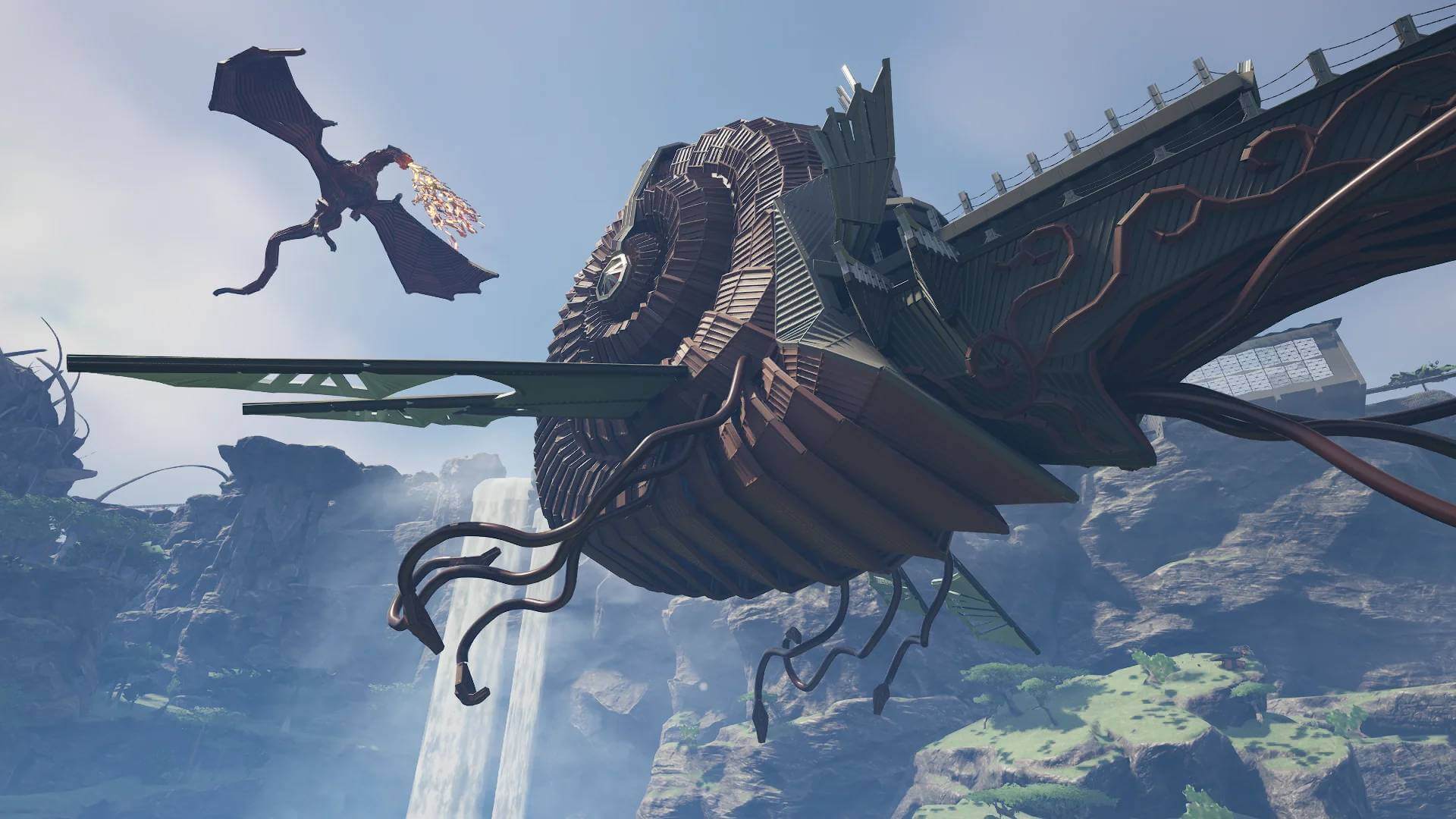
It's also helped that MutedArtist has been part of a community of creators. Since that first Godzilla build livestream, they've shared the process of their creations. Viewers will sometimes make suggestions for small details. "These suggestions have helped many times." If you want to follow their lead, you could join MutedArtist's Discord or search for other creators on the Satisfactory Reddit. It's a great place to share what you're working on and get advice on how to improve.
MutedArtist isn't the only player pushing the limits of Satisfactory's building toolbox. In fact, when we spoke with community manager Snutt Treptow earlier this year, he said that when Coffee Stain Studios launched the alpha, the team wondered: "‘Is anybody going to make anything cool with this?’" Within days of players getting stuck in they were "making these amazing factory builds, more impressive than anything we've ever built."
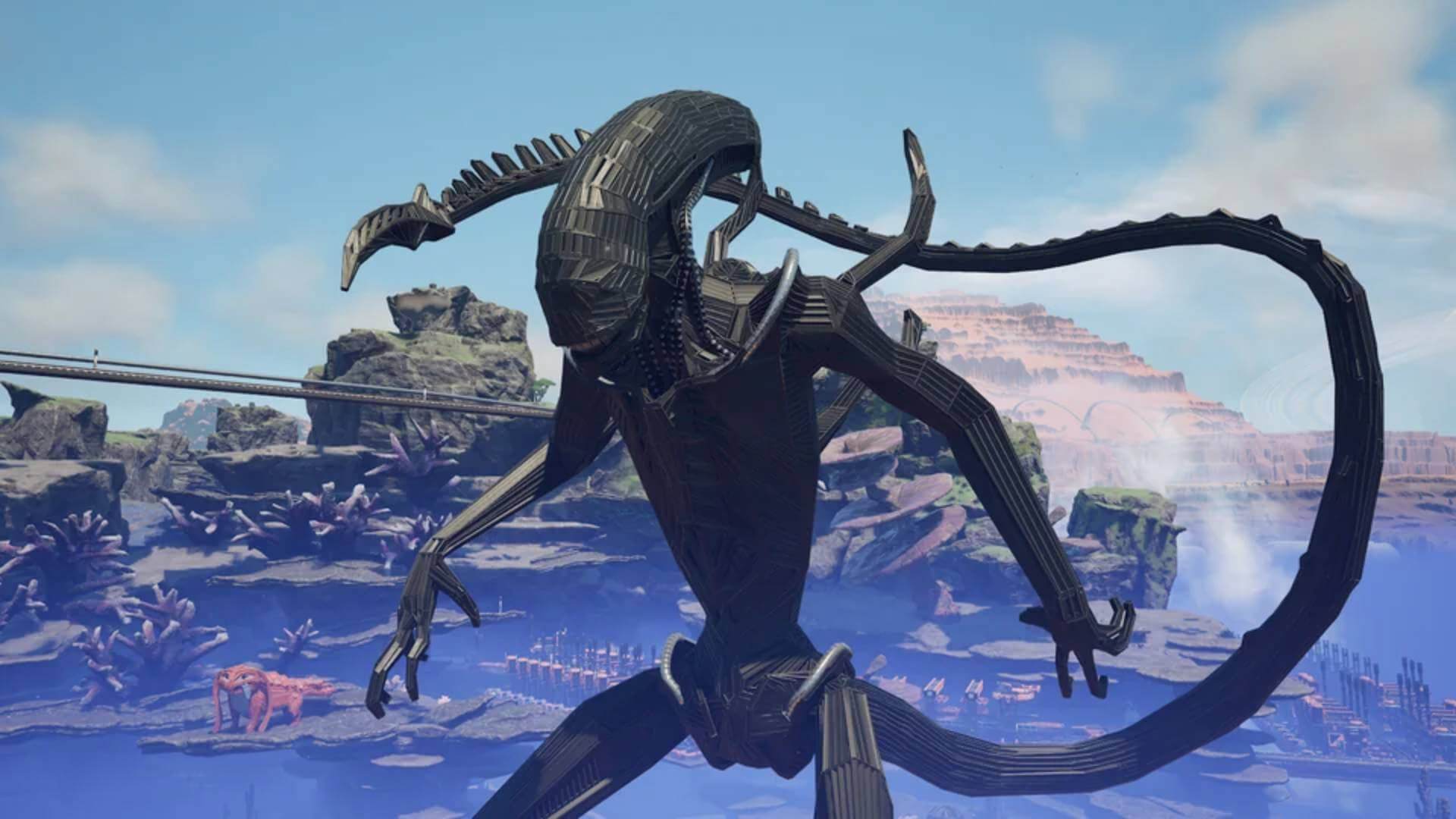
Throughout Satisfactory's early access development, Treptow explained that players have "pushed the game further than we thought was possible, and every time we optimize the game, they manage to push it further.” Allowing for these bigger and more complex factories is also what has made it possible for creative players like MutedArtist to make such intricate artistic builds, as the sheer number of beams involved wouldn't have been supported in the first release of the game.
With the 1.0 release of Satisfactory out now—adding the long-awaited story mode and a heap of balance changes and optimizations—we’ll hopefully start seeing even larger and more impressive creative builds from the game's artistic community.
Satisfactory is available on the Epic Games Store.