How room-escaper Boxes: Lost Fragments hopes to escape The Room
There’s a peculiar phenomenon where a video game becomes a genre, and it’s been the case since basically the birth of the medium. When Steve Wozniak made Breakout in 1976, it was the game about vertically batting a ball against a wall of bricks. By the time Arkanoid released a decade later, it had become a genre with dozens of imitators and evolutions. Before Grand Theft Auto III, there were no 3D games about stealing cars and driving around cities to commit crimes. Today, it feels like one of gaming’s staple genres.
With Boxes: Lost Fragments, developer Big Loop Studios reminds us that The Room, 2012’s collection of intricate magical box puzzles, is now a genre too.

“Fireproof's The Room series pioneered a gaming niche that resonates both with us and the players,” Big Loop said when we spoke to them about the Epic Games Store release of Boxes: Lost Fragments. “This niche is severely underserved, with a very small number of quality games coming out each year. We wanted to bring our own spin and ideas to it, while remaining faithful to what makes the genre loved by so many.”
There’s absolutely no question that, while we aren’t short of imitations, quality is in very short supply. Browse any mobile store and you’ll find countless dozens of games attempting to embrace The Room’s approach to what are now called “escape games,” with dark and spooky locations that feature puzzle boxes and interactive dioramas—but none of the charm or wit or mind-blowing animation that made the original series so popular. The most successful The Room-like to-date is The House of Da Vinci, but Boxes has the potential to join it.
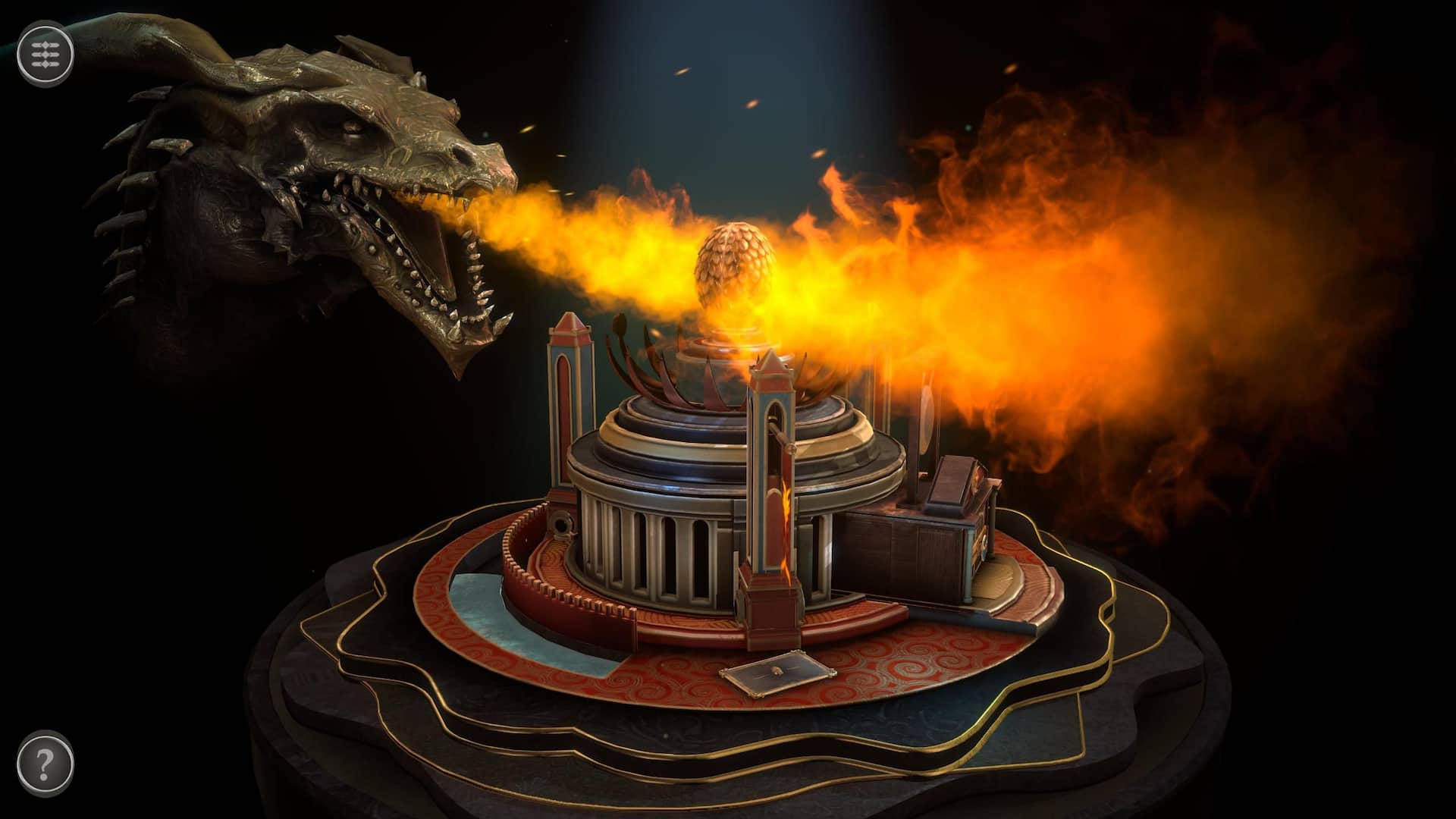
In Boxes: Lost Fragments you play as a thief, breaking into an enormous mansion to steal a specific item—but finding yourself embroiled in an ever-growing number of increasingly complex puzzle boxes, pulling and poking and prodding in order to reveal their secrets and discover items needed to progress deeper into the mansion’s mysteries.
Big Loop has a head start here. Its previous games, including Doors: Paradox, have offered similar The Room-style puzzling, albeit in bright, cartoonish settings. Boxes: Lost Fragments marks a sudden shift in tone. “We chose a darker direction for Boxes because we wanted to create a more serious, harder, and more cryptic game,” says Big Loop. “Despite that, we've included plenty of fun moments, as well as Easter eggs from our previous games that fans will recognize.”
Of course, heading in this direction also has the advantage of an audience that’s likely already familiar with the vocabulary of a very specific genre.

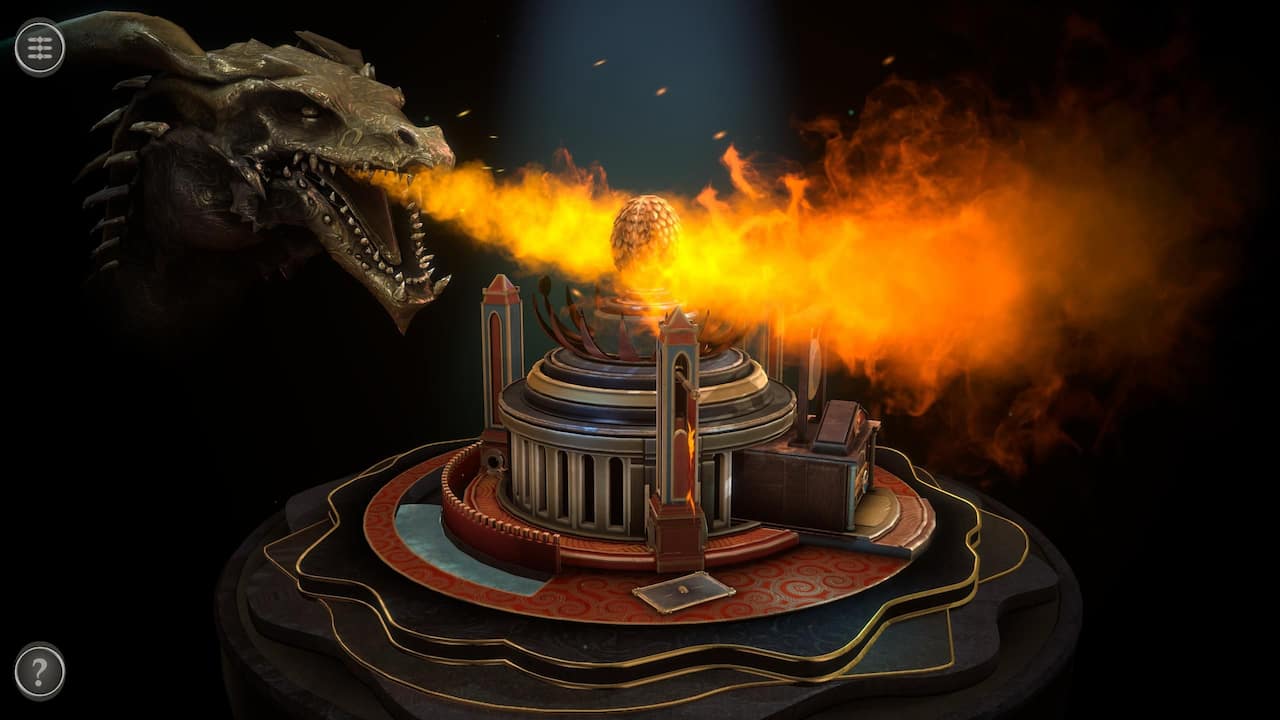
In any given Boxes: Lost Fragments level, you begin with some sort of box or model on a plinth in the middle of a room. Moving around it, you can investigate, looking for obvious handles, switches and dials, and less obvious hidden compartments, sliding pieces, and items to pick up and use elsewhere. Oftentimes panels will contain more bespoke puzzles—perhaps a rotating maze, or sequence of buttons and lights, which when solved will unlock a new compartment, or cause pieces of the puzzle box to slide aside and rearrange in feats of impossibly elaborate clockwork magic.
Speaking of magic, many of the boxes contain impossible spaces, geometry-defying depth, and even portals. All the while, you’ll be looking for the strangely-shaped peg that fits the similarly oddly-shaped cog you found earlier—and then, after finally sliding it in place, rotating the resulting mechanism to reveal the next secret. Boxes: Lost Fragments is methodical, neither designed to get you stuck nor leave you pulling your hair out, but rather endlessly receiving the chemical hit of progress.
So much of this comes from execution. “We’ve spent a huge amount of time coming up with engaging and diverse gameplay,” says Big Loop, “And then we made sure the interactions are as smooth as possible, and the art and sounds are polished to perfection.”
Ah yes, sound! Boxes: Lost Fragments really leans into sound, with audio cues playing almost as much of a role as visual.
“We use sound in three ways,” Big Loop’s Boyko Spasov explains when I ask more specifically about the game’s aural design. “We leverage ambient sounds and music to immerse players in the game's atmosphere. Very importantly, we have sound as a feedback mechanism for every interaction of the player with the levels. And lastly, we have grand cutscenes, supported by custom sounds and music.” It’s this second element that really stands out in Boxes: Lost Fragments, directing the player toward solutions in ways that are more interesting than simple visual cues.

The other thing that stands out here is that Boxes is very clearly a PC game. Many games in the post-The Room genre begin as mobile games, and are then awkwardly ported to PC, complete with low-resolution textures and clumsy interfaces. Boxes instead began as a PC game, and is now in the process of being ported to mobile. “We developed it for PC first,” Big Loop says, “as it is easier for us to create a polished game and then cut out the heavy parts and make it work on less powerful devices.”
It’s still a lot of work to be seen in the shadow of a genre-creating series of games like The Room. The comparisons are inescapable, in large part due to—as Big Loop observes—the genre being so underserved. Even FireProof, originators of the genre, haven’t made a new non-VR The Room game since 2018.
And speaking of VR, that’s potentially the next step for Big Loop. “We’ve already taken the first steps in researching what it would take to bring Boxes: Lost Fragments to VR,” they told us. “Whether this materializes into a released game is still uncertain, but you can tell that this kind of game is suitable for the medium.”
Boxes: Lost Fragments is available now on the Epic Games Store.