Indika: A nun seeks redemption in this unique (weird) tale set in alt-history Russia
If at any point in the last decade you've complained about a lack of unique video games—if you feel like you’ve played the same thing a dozen times over, pushed the same buttons and fired the same guns and gone down or up the same skill trees—then you should take a serious look at Indika. The second game from Odd Meter, a small indie team founded in Moscow and now based in Kazakhstan, Indika is the alt-history Russian adventure/puzzle/platformer/Catholic-doctrine-interrogator/nun-simulator you never knew you needed.
Indika is the sort of game where, when you describe it, you have to make heavy use of the phrase “I’m not kidding.” At its core, Indika might be easiest to describe as a dialogue-heavy adventure game, in the spirit of other big interactive narratives like Syberia: The World Before.
What sets Indika apart is its heavy focus on questions of faith, its genre flexibility, a truly bizarre use of old-school graphics, and its sudden and unpredictable shifts from pathos to humor to psychological horror. A lot of video games have aspired to crack into the New Weird by virtue of an unhinged premise, but Indika doesn’t stand still. It can go weirder. It can get darker.

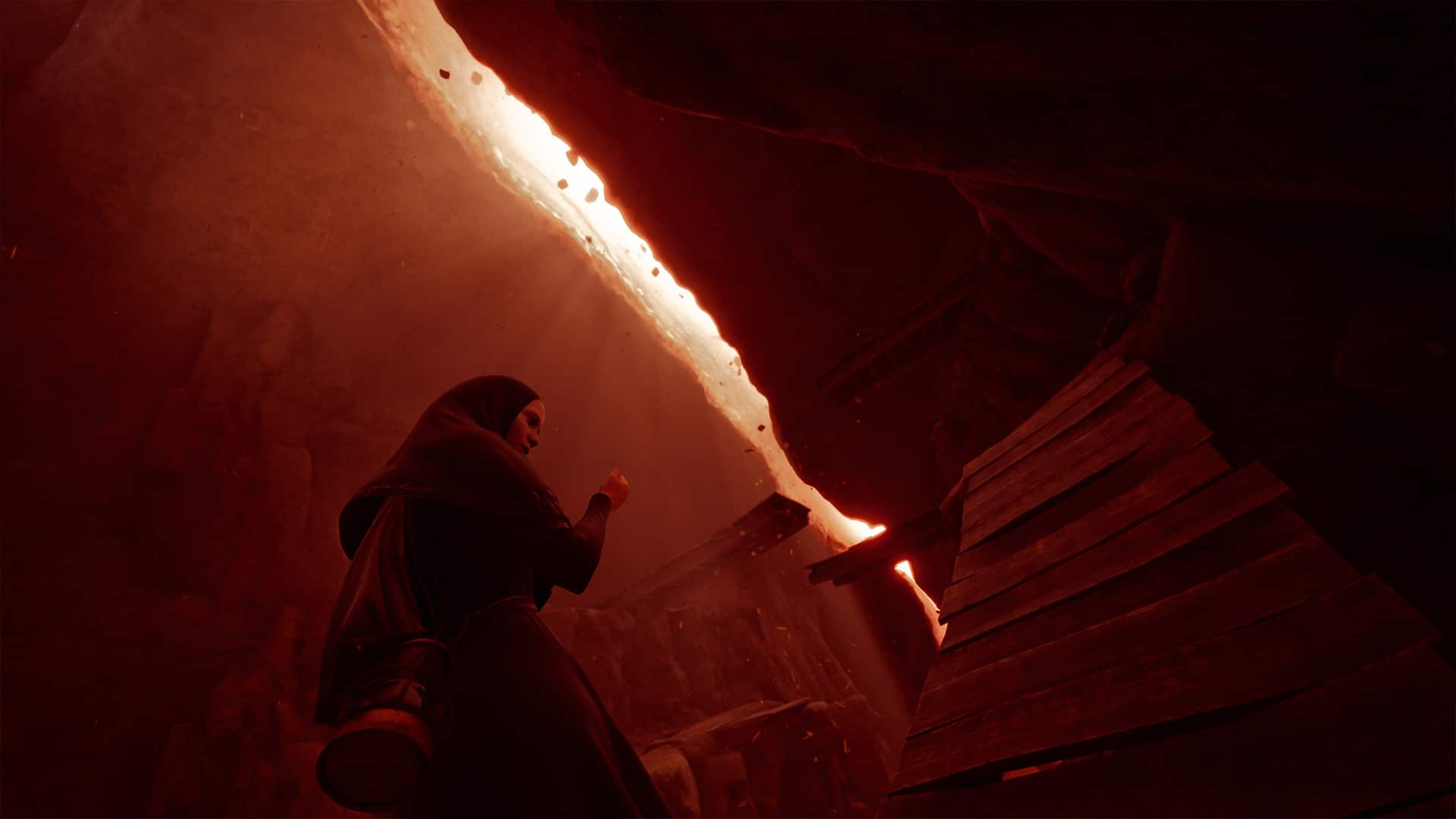
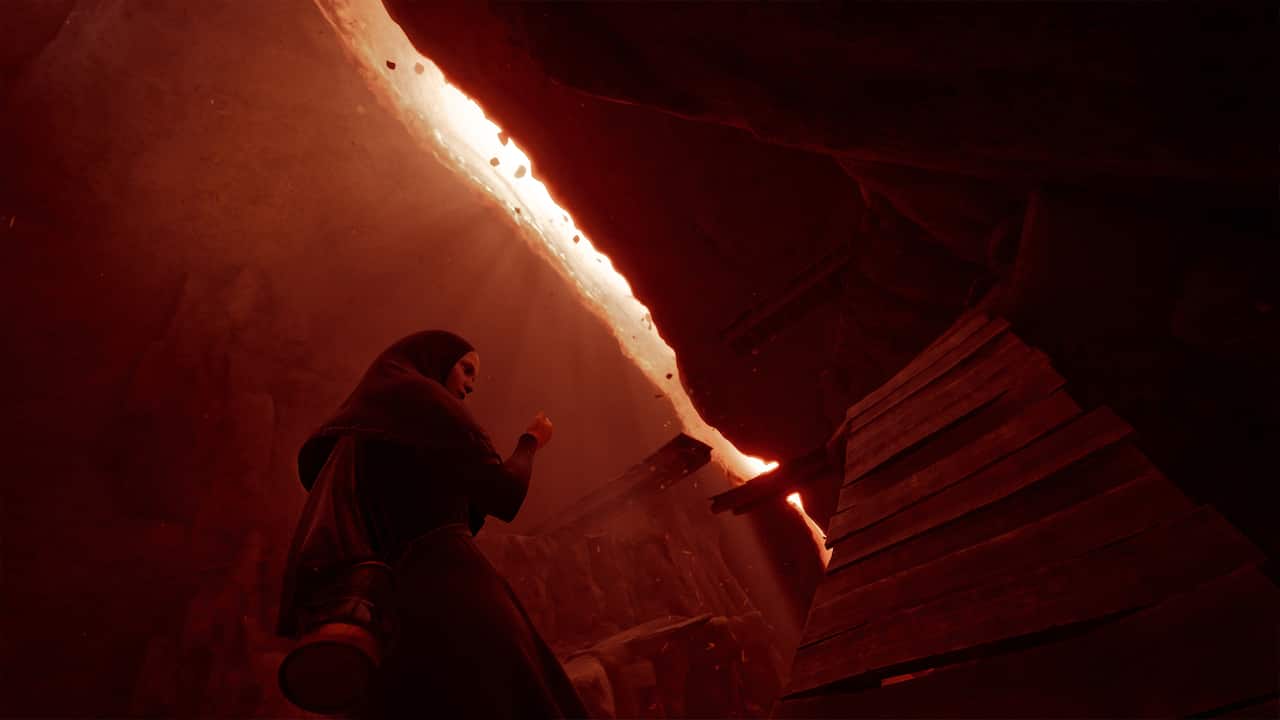
Set in an alternate Russia, at an indeterminate point that seems to be right around or after World War I, the eponymous Indika is a young nun who’s unpopular with the rest of the sisters at her convent. She’d like to think her faith is genuine, but Indika is prone to vivid hallucinations that have made her a pariah. Worse, she’s saddled with a mocking voice in her head that encourages her worst impulses.
Finally, after one humiliation too many, Indika is sent out from the convent in the dead of winter to hand-deliver a letter to a distant monastery. It’s a blatant excuse to get rid of her, and it sends Indika on a journey across the Russian countryside, through harsh weather, multiple disasters, and the aftermath of war.
There are a lot of modern adventure games where the protagonist is an unreliable narrator. The first real puzzle of the game, however, is also where Indika starts to take off. This isn’t just another walking sim about exploring someone’s inner demons—something here is genuinely wrong, and Indika cannot realistically be expected to figure it out.

Some of that disconnect is conveyed by some deliberately anachronistic graphics. Indika mostly looks like a high-end Unreal Engine game, with motion-captured character models in a broken-down but realistic world. It resembles a dark prestige drama, or a distaff version of The Name of the Rose.
But Indika’s stranger hallucinations (and certain UI elements) are rendered with old-school pixel graphics. Several action sequences are accompanied with incredibly out-of-place chiptune music, and when you find a collectible item, it’s often accompanied by a little electronic trill or a big golden coin. Imagine Scott Pilgrim vs. the World—except all the discordant video game elements in Indika’s world are part of a curse she’s in no way equipped to understand.
There’s a black comedy to it all, particularly in the ways the mechanics reflect Indika’s waning faith. Whenever you discover a relic, rescue a manuscript, or light a votive candle, you earn a few points that are tracked in the upper left-hand corner of your screen.

At certain thresholds, Indika levels up, granting her new abilities like Shame (each time you earn points, you get six extra) or Grief (a chance of a 146% multiplier on any incoming points). Indika is fervent Catholicism as a ‘90s arcade game, where your good works and devotion all contribute to a visible high score.
This dissonance continues throughout the game. The further you get into Indika, the more genres and gameplay mechanics get pulled into its fabric. Indika is gameplay-as-extended-metaphor, where magical realism, racing games, platforming sequences, and massive, unexplained steampunk machinery all figure into the same narrative about faith, sin, and redemption.
I do get the feeling that there’s a lot in Indika that I’m not equipped to understand. I’m not Catholic and/or Russian, and Indika is in many ways a meditation on being both. There’s a lot going on here, and I sort of want to run through it a second time with a Russian-to-English dictionary open in my lap.

The bigger takeaway for me, at least for the time being, is how Indika uses the visual language of games in a unique way. Imagine seeing a 16-bit platformer before you’d seen a television set, and that’s part of the raw horror of Indika’s experience. It’s something that you’re intimately familiar with, but seen through the eyes of someone who has no basis to understand it as anything other than a riot of color, movement, and artificial sound.
Of course that’s terrifying—but it’s something I’d never thought about before.
Indika is available soon on the Epic Games Store.