Inside the Baldur's Gate sequel you haven't heard of
When he’s not making games, BioWare co-founder Trent Oster is an amateur blacksmith—he hammers away at an anvil like an NPC in one of his famous RPGs. “There’s a lot of pushback that you should use traditional techniques,” Oster says. “And my friend’s argument is that blacksmiths were the original technologists. Whenever something new came along that allowed them to work better, smarter, faster, they jumped on that and leveraged the heck out of it. I don’t have to use a charcoal forge. I can use propane because it exists.”
Oster brought that same attitude to the Infinity Engine when his current studio, Beamdog, developed "enhanced editions" for Icewind Dale, Planescape: Torment and the Baldur’s Gate series. The team rewrote the what Oster calls the “vast majority” of Bioware’s ancient tech—rebuilding systems for graphics, pathfinding and memory management, as well as flushing out every bug left over from the 1990s.
“I’m really happy with where we wound up from a technology standpoint,” Oster says. “I think we took that engine and did some pretty amazing things with it, and got it running on literally every platform out there.”

It’s an effort that culminated in 2016 with Siege of Dragonspear—a new campaign that slots between BioWare’s two existing Baldur’s Gate entries. “We really wanted to take a half-step into developing a new game,” Oster says. “And the goal was this: How do we build up the experience of the team and build the skills and get good at storytelling without having to build a new game from scratch?”
The result was a worthy entry to the digital Dungeons & Dragons canon, a game that harnesses nostalgia with an eye towards the present. You can still buy on the Epic Games Store today. But it also ended with a fractured team and the abandonment of Beamdog’s plans for its own hypothetical Baldur’s Gate 3. Given that Larian's Baldur's Gate 3 recently released to general acclaim, it's a story worth telling.
Inventing an "interquel"
You finish the first Baldur’s Gate as a hero, having saved the Sword Coast from the machinations of the warmonger Sarevok. However, when Baldur’s Gate II begins, you’re told that your status soured in the intervening time because the locals grew suspicious of your bloodline.
“You left the city under dark circumstances,” Oster says. “So something big must have happened in there. What was it? We dug into that.”
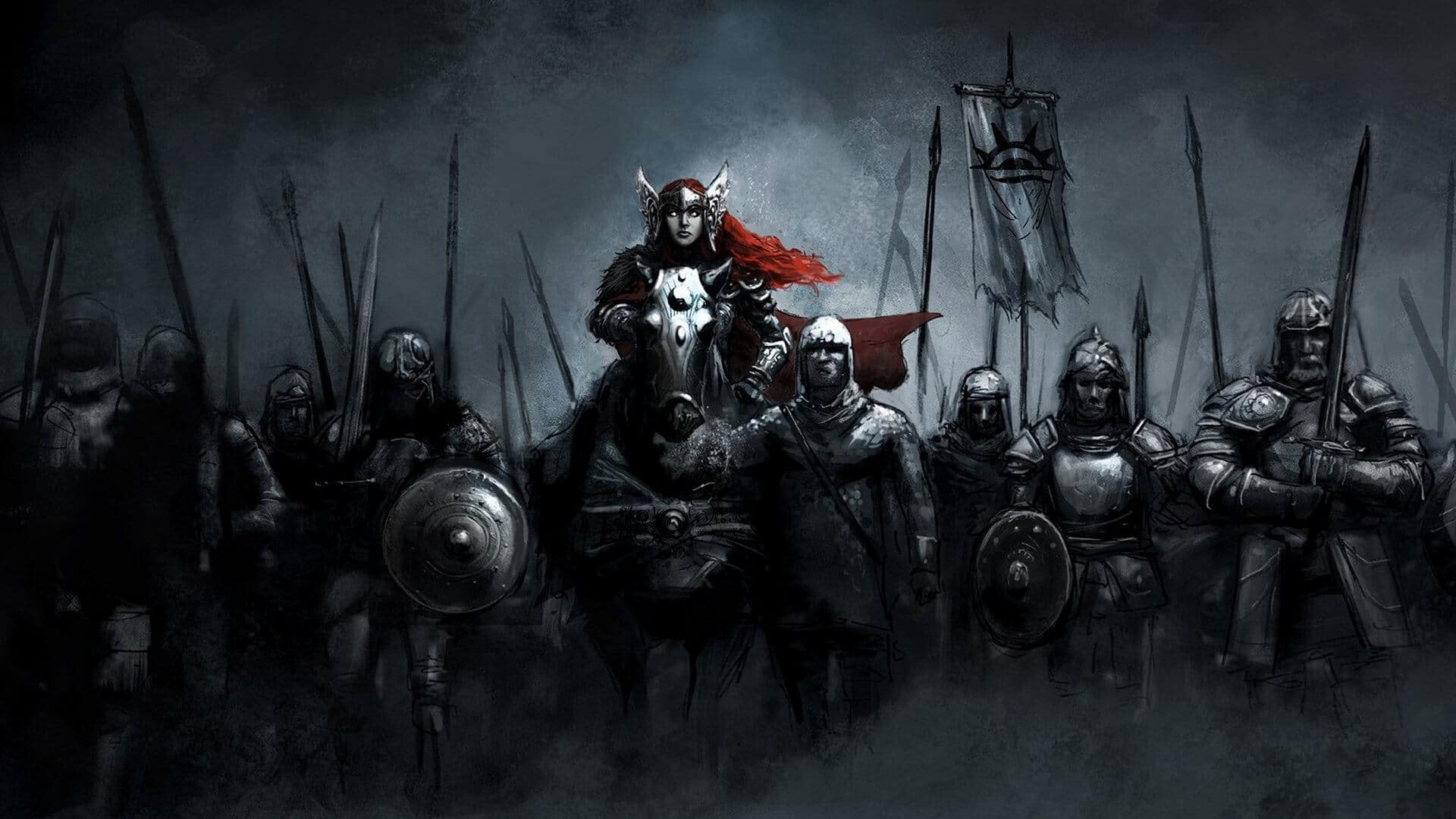
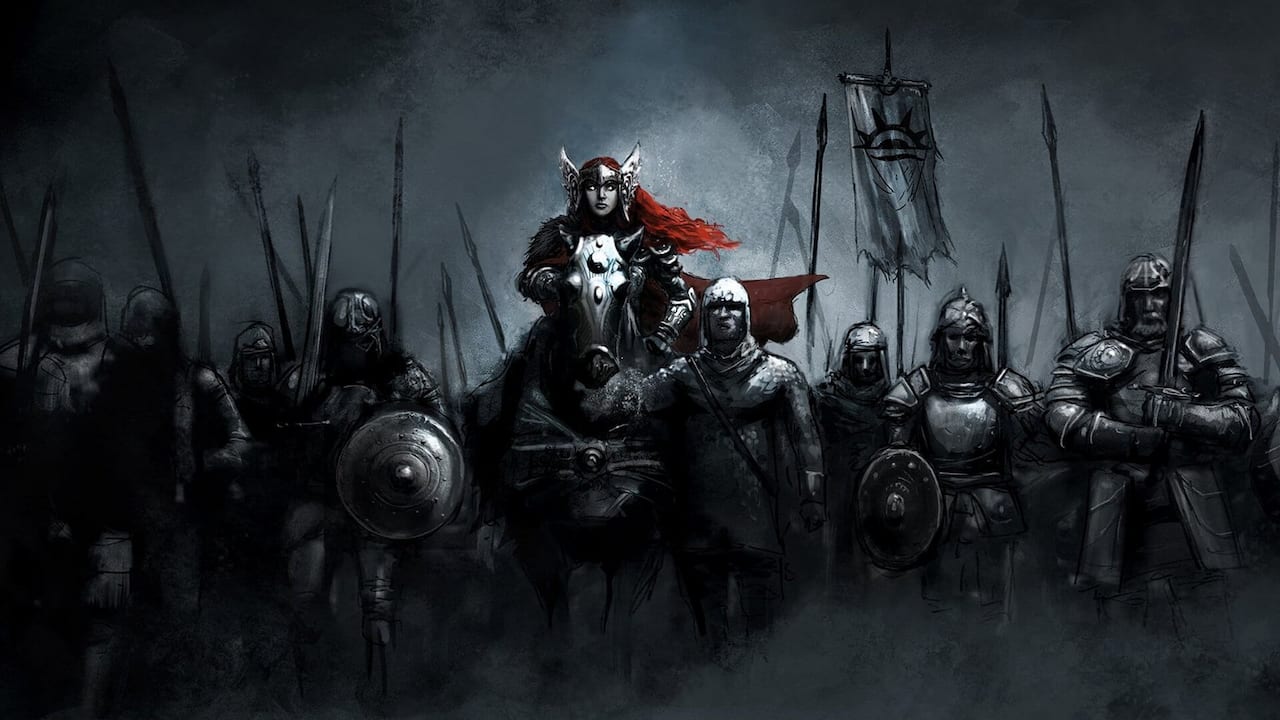
The plot Beamdog came up with concerned rumours and reputation—not just your own, but that of Siege of Dragonspear’s chief antagonist, a charismatic warrior named Caelar Argent. Known to her followers as the Shining Lady, Argent leads a crusade along the coast, seizing supplies and pressing peasants into service as she goes. Terrified of this snowball rolling downhill towards the city of Baldur’s Gate, the lords send you and an army north to halt Argent’s advance.
“We really wanted to support that idea that you’re the hero of Baldur’s Gate,” Oster says. “And they’re going to turn to you, and they’re going to respect you.” That fantasy was backed up by Beamdog’s newly buffed Infinity Engine, which it used to populate the streets of the titular city with crowds of roaming citizens. This grants credibility to the sense that your actions are being watched and judged by the masses.
BioWare, but better
In Siege of Dragonspear, you accompany an army on the march, which lends the campaign an unusual structure for an RPG. Rather than exploring an open map, you’re tied to wherever the army makes camp, with optional areas and side quests radiating out from those temporary hubs. It’s as if you’re on a train: You can get off at stations along the way if you please, but no matter what you do, you're hurtling down the track towards a climactic clash with Argent.
“A lot of it was dictated by how much time we had to produce art,” Oster says. “We had a couple of key locations that we really wanted to focus on and do a great job with, so we put a lot of effort into those areas and everything around that was essentially what we had time to do.”
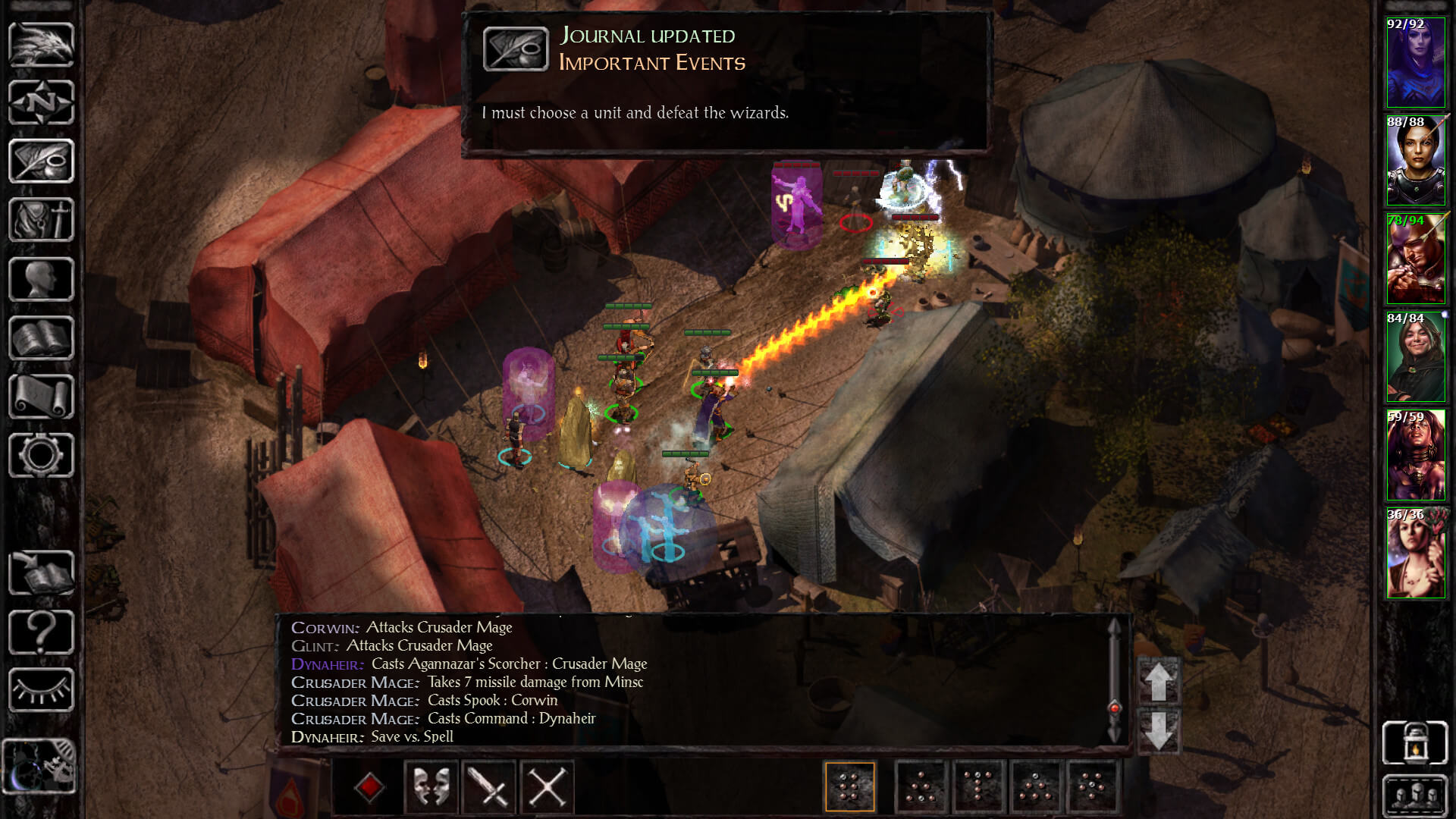
This approach was inspired by the lessons of Neverwinter Nights, the Bioware RPG which Oster directed in the early '90s. That game was rightly loved for its multiplayer and the tools it gave players to build their own D&D adventures, but less so for its central campaign, which started strong but dwindled in its second act.
“Whatever doesn’t get your eyes on it withers and dies in the dark in weird ways,” Oster says. “And honestly, on Neverwinter Nights, I was at war with the tools, I was at war with the engine, I was very focused on the rules implementation. I didn’t have eyes on the story until late in the game. It was about four or five months from ship when we finally delivered how the structure was going to be. And we parachuted in every bit of talent that BioWare had at the time just to complete that campaign and get it stood up and working.”
For Siege of Dragonspear, Beamdog set out to ensure the campaign wouldn’t run out of steam. “The biggest bit of intelligence I brought in from working on other games was that, if you plan too big, you’re gonna have to cut,” Oster says. “So let’s build our main set pieces and lay out our core cast, let’s focus on those. Let's make sure we can hit them at high quality.”
Overall, Beamdog did have time for a number of meaningful side quests—like an excellent excursion into a haunted dig site with an embattled group of dwarves. But these only came about once the big beats of the main story were secured.
As the CEO of Beamdog, Oster had to step aside from his usual directorial duties, which meant that he had to step back to let the Dragonspear team—led by Phil Daigle, with Scott Brooks as lead programmer, and Amber Scott and Andrew Foley as writers—do their thing. As he puts it, it was challenging at times. “It’s not like you're making the game anymore,” Oster says. “You’re making the team that makes the game. And you’re allowed to guide them a bit, but they have to own it. Otherwise, it’s not theirs, and they don’t care about it to the same extent.”
Bringing the battle to Baldur’s Gate
Dragonspear’s central setpiece is the Battle of Bridgefort, which let Beamdog flex its muscles as masters of the improved Infinity Engine. The improved tech set up fights on a scale that was never seen in the '90s. “We worked pretty hard on that,” Oster says. “It was difficult, but worthwhile. I think it was a lot of fun in the end.”
The Bridgefort assault is more reactive than your standard RPG scrap, too, as it gives you the freedom to take various tactical approaches—such as teleporting into the fort via a magic circle, or surrendering to the crusaders. This allows for a wider variety of outcomes.
“One of the goals was to expand the possibility space,” Oster says, “and have those not be strict, authored setpieces, but more adaptive, almost simulation-lite. Baldur’s Gate players will poke every cranny and niche and find everything, so we wanted to delight them with a lot of opportunity to try different things.”
Under siege
Siege of Dragonspear was moderately well-received by critics on launch, but it was soon swamped by controversy. Beamdog’s team was hit with sustained review-bombing from users who objected to a line of dialogue from beloved companion Minsc which “essentially mocked the Gamergate argument," as well as a brief interaction with a trans NPC.
“We actually had filed bugs saying, ‘Cut this line, this doesn’t really work for Minsc’ and it just never got fixed,” Oster says. “And the trans character, Mizhena, she was just a target of opportunity. It was like a strawman: ‘Oh, we’d be fine with her, but she’s not well-written.’ Of course she’s not well-written, she’s a shopkeeper.”

Beamdog snipped the Minsc line and fleshed out Mizhena, but the attacks continued. “We were sailing down the river and then all the cannons opened up so we just shut all the hatches,” Oster says. “And you could hear cannonballs bang the hull, and everybody was just huddled down inside. It basically fractured that team. At Beamdog today we have one person remaining from that team. Everyone else is gone. It drove some of them out of the industry. It drove others to seek completely different kinds of games to work on. It was a shattering experience.”
The other Baldur’s Gate 3
Siege of Dragonspear never recovered from the review bombing, and Beamdog’s plans for a full-fledged Baldur’s Gate sequel faltered.
“With another game under their belt, that team could have done something amazing,” Oster says. “But that team doesn’t exist anymore. And that’s one of the reasons that we weren’t able to do a Baldur’s Gate 3. Literally, that team was in the process of slowly collapsing.” Beamdog worked on a couple of internal pitches around that time, including one for a sequel to Planescape: Torment that was “looking wonderful." But ultimately, the studio couldn’t get these projects funded, and they wound up canceled.
Meanwhile, Larian Studios had gathered momentum with its two popular Divinity: Original Sin games, and was thus in a better position to make the enormous and ambitious Baldur’s Gate 3 we have today.
“They had a good fat bankroll, and they had a good technical platform that they could base everything off of, so it made a ton of sense,” Oster says. “I think if Siege of Dragonspear had been a bigger hit, and we had maybe been a couple more years ahead in terms of our technology, we could have put together a pretty compelling Baldur’s Gate 3 concept. But, looking at what Larian has done, you can own that, you can run with that. I don’t want to build that much stuff.”
Instead, Beamdog is focused on smaller projects, like its Saturday morning cartoon-inspired roguelike Mythforce. The studio is still thinking about its next stepping stone. “Mythforce is really us saying, 'hey, if we wanted to rebuild this and think about the gains we want to make in 10 years, what are the logical steps to get there?'" Oster says. “We need to make a really good system for melee combat. That’s going to be the core of any kind of CRPG that we do.”