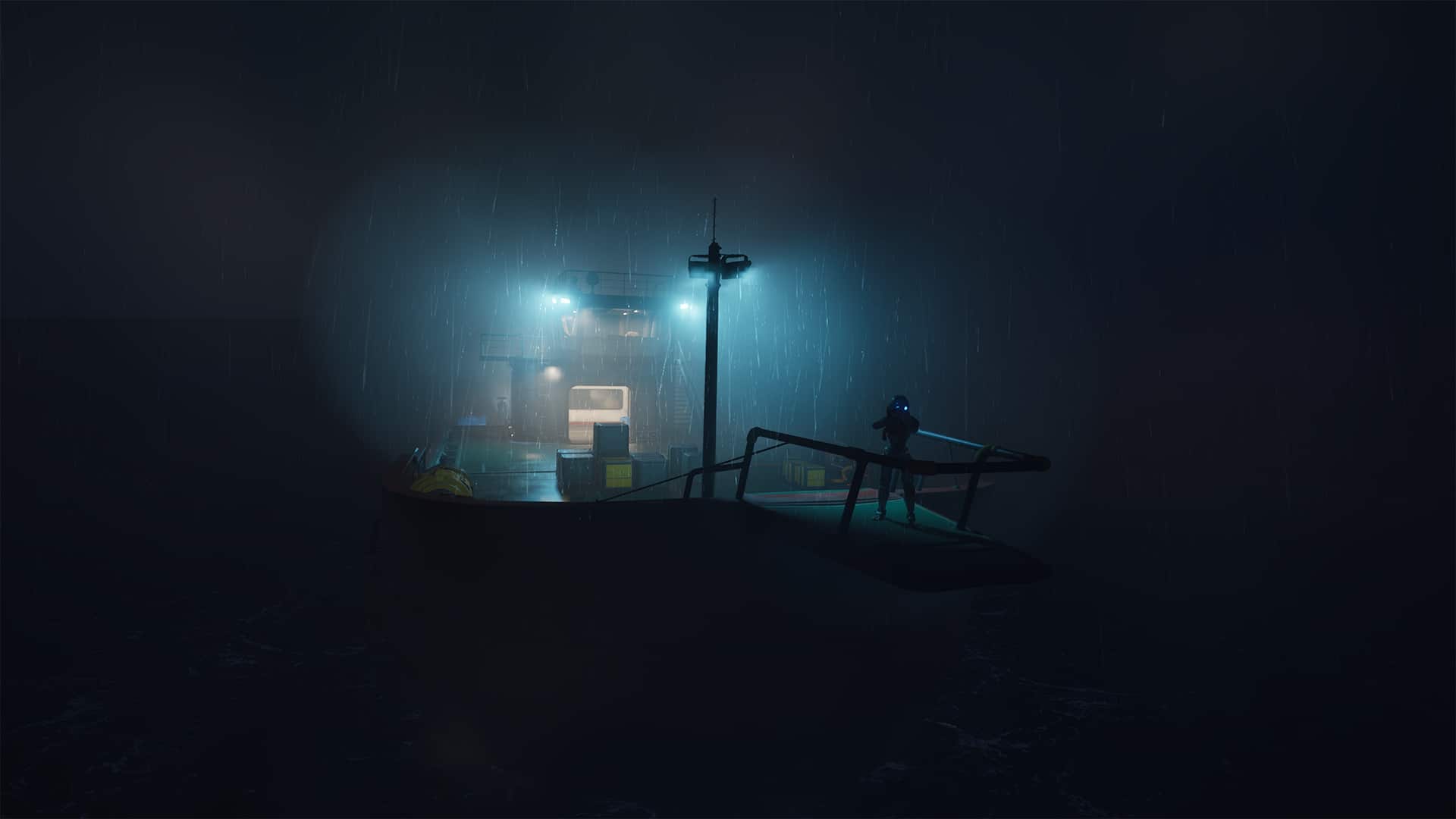
The Last Caretaker is a survival game, but your goal is to save all of humanity
Here's a fun fact for you: We don't know whether humans can reproduce in space. Theoretically, space babies are possible. Experiments with mice have shown that living organisms can sire healthy offspring in orbit under artificial gravity. But testing this with humans is significantly more difficult, for a host of practical and ethical reasons that hopefully I don't need to explain.
If you're wondering why this is relevant in an article about a video game, well, The Last Caretaker assumes that humans cannot make babies in space. When climate change floods the Earth and humanity departs for the stars, the continuation of the species depends upon a floating facility called the Lazarus Complex where humans are grown artificially by a fleet of caretaker robots and then eventually launched into space.
At least, that's how it was supposed to go. In The Last Caretaker, you play as the project's last surviving robot, reawakened by a voice in your head telling you to save humanity by reviving the Lazarus Project.
It's a premise that makes The Last Caretaker stand out in the crowded survival genre. The Last Caretaker is further distinguished by how it blends traditional survival and crafting systems with elements of automation, first-person shooting, and a heavy emphasis on exploration. It seems like there was a grand vision driving Finnish developer Channel37.
But as creator Antti Ilvessuo explains, the origins of The Last Caretaker are much humbler than they appear: "The idea when we pitched this studio was that we are doing something where you have a boat and you are exploring the world," says Ilvessuo, who previously founded RedLynx and created the Trials series.
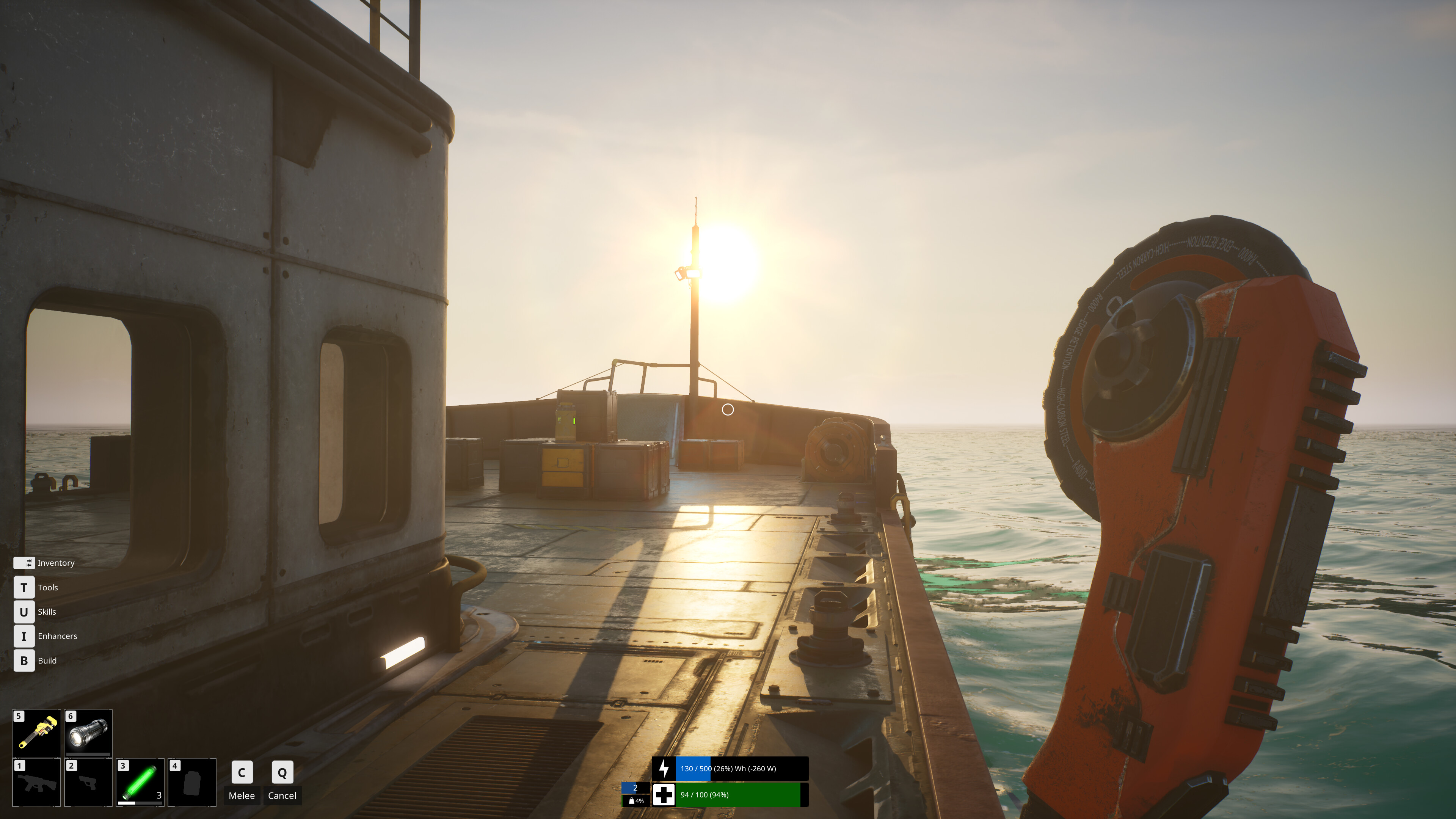
While very different in structure, The Last Caretaker's richly simulated ocean actually shares some of Trials' DNA. In its earliest prototypes, The Last Caretaker was essentially a physics-based sailing simulator. But Ilvessuo deemed the mechanics of sailing too complex to be fun and intuitive for players, instead opting for the player's mobile base to be powered by motors. "The motor works better, gameplay-wise," he says.
It wasn't until a year after establishing The Last Caretaker's systemic foundation that Channel37 began thinking about what kind of story it wanted to tell. The concept of growing and replenishing the human population as a robot was introduced midway through development.
"I remember we were at GDC two-and-a-half years ago. We said to people, 'We don't have the backstory yet.'" Ilvessuo says. "It was a bold move to say at that time." Once the concept emerged, however, it defined the rest of development. "Everything locked into place," Ilvessuo says. "Everything has an answer and a reason."
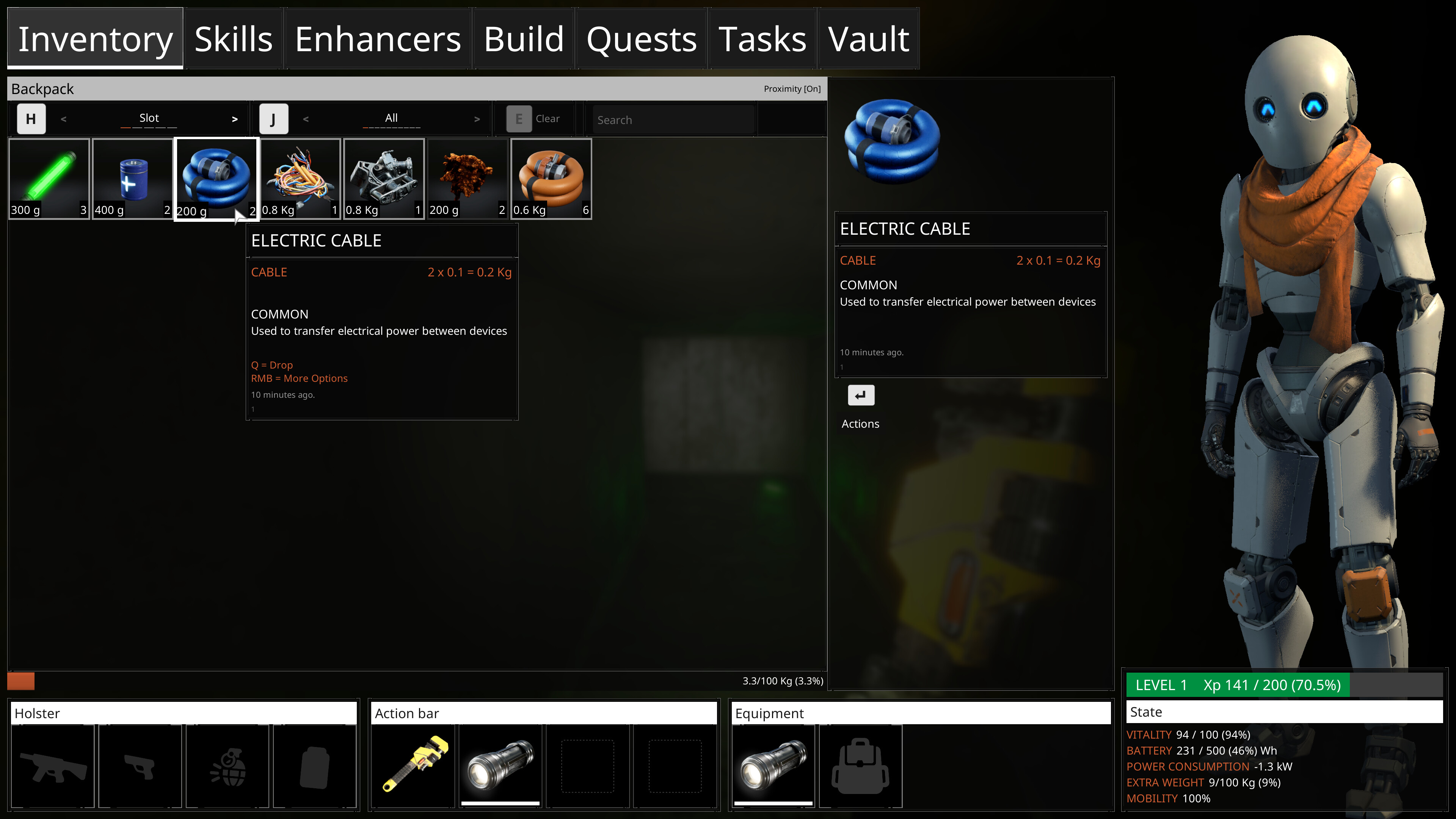
Playing as a robot in a survival game immediately gives The Last Caretaker a different emphasis from its peers. Your synthetic nature means you don't need to eat or sleep—but you do need to occasionally recharge yourself, which you do by consuming batteries or literally plugging yourself into recharge ports. Even saving your game folds neatly into the game's fiction, with you creating a backup copy of yourself in case the worst should happen.
Awakening in the bowels of the Lazarus Complex, your Caretaker makes its way to the docks, where you find the boat that forms your primary home while braving the waves and currents of the global ocean. Like fellow aquatic survival sim Subnautica, exploration is a component of The Last Caretaker, its oceanic world pockmarked by ruined megastructures left behind by humanity.
"Our map is entirely designed, it's not procedurally generated," says Jack Pattillo, Community Manager at Channel37. "There's tons of hidden areas throughout the game, and you'll find places where maybe humans were hiding or living…you might find Caretaker robots, like deactivated Caretaker robots that were trying to protect people. It's these sorts of stories you can pick up on as you play the game."
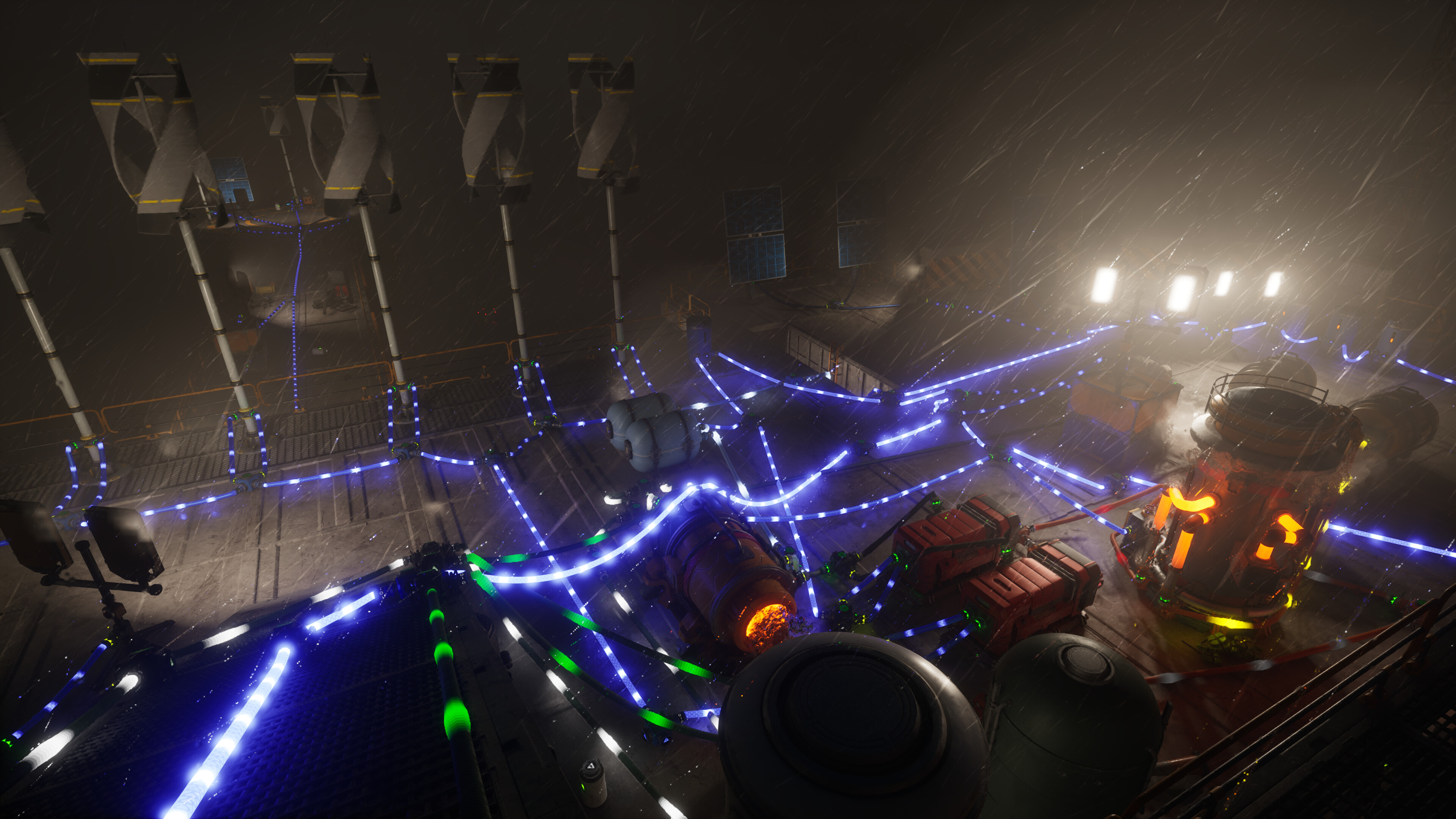
Along with slowly unveiling The Last Caretaker's story, exploration is also crucial to fulfilling your central objective. Growing humans artificially is not exactly straightforward, requiring you to maintain the biopods that serve as humanity's cradle, which are supported by a host of subsystems. The heart of The Last Caretaker is a dynamic resource management system, where you'll need to choose the best way to allocate what you've collected to achieve your goals.
"Maybe I can use these resources to make machines to make my life a little bit more automated, a little bit easier. Or I can use it to make weapons…I can make things to protect myself," Patillo says. "It allows you to approach the game however you want to approach it and play it in your style."
This flexibility applies to other elements of The Last Caretaker too. The flooded Earth is prowled by creatures both organic and synthetic, which may attack your floating base as it moves through the ocean. To counter these, you have various means of defending yourself, including fighting them directly with weapons, setting up automated defence systems, and more unusual solutions.
"Some enemies, they are attracted to light, and they will rush you if you have a light out. Some are afraid of light and they'll go away, and we have enemies that only come out at night," Patillo explains.
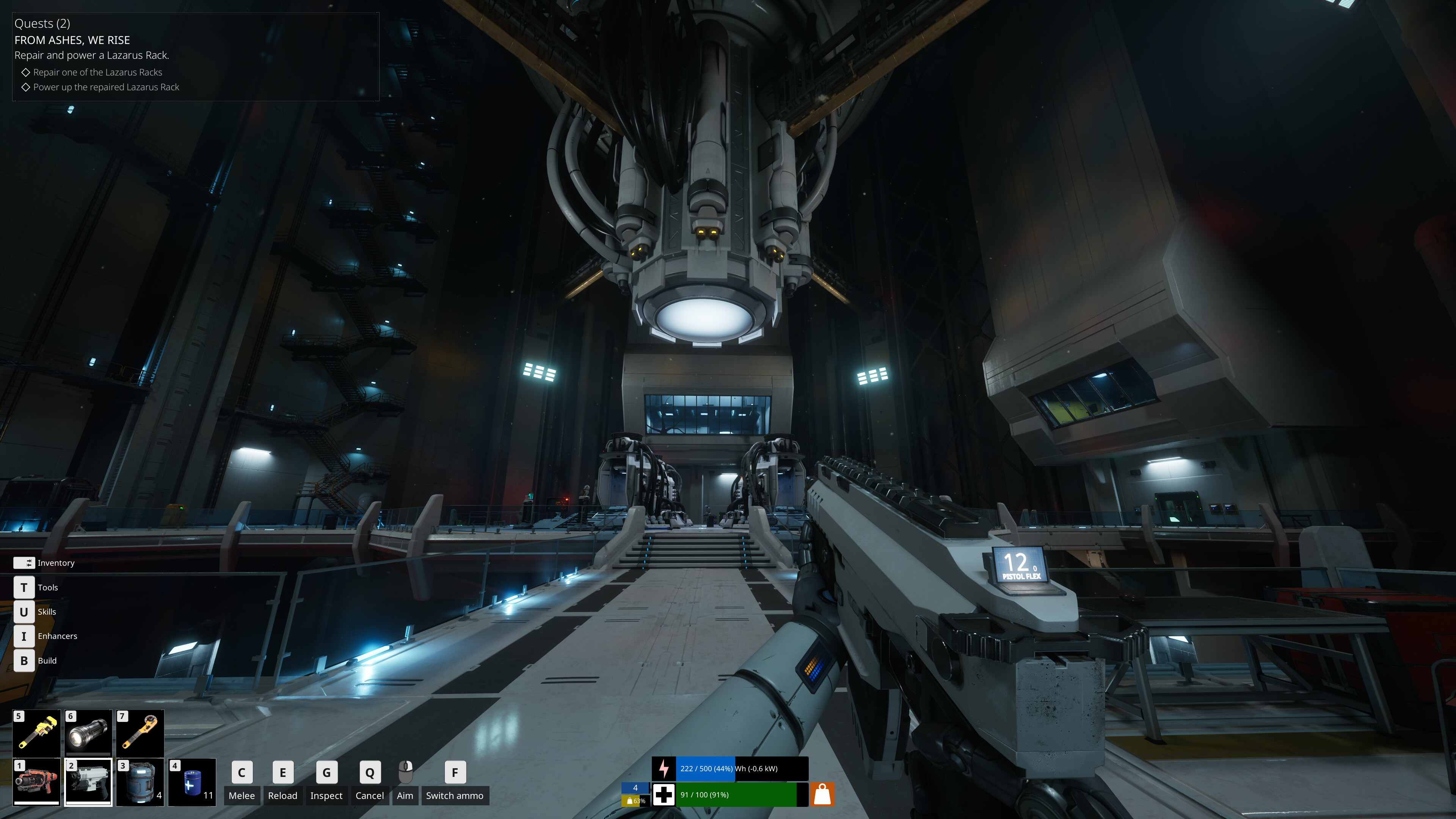
Hence, certain enemies can be rebuffed by simply illuminating your boat—but this comes with its own challenges. "Light draws power, so now you'll have to make sure you have enough power on your ship to keep all your lights running and keep the boat moving," Patillo points out.
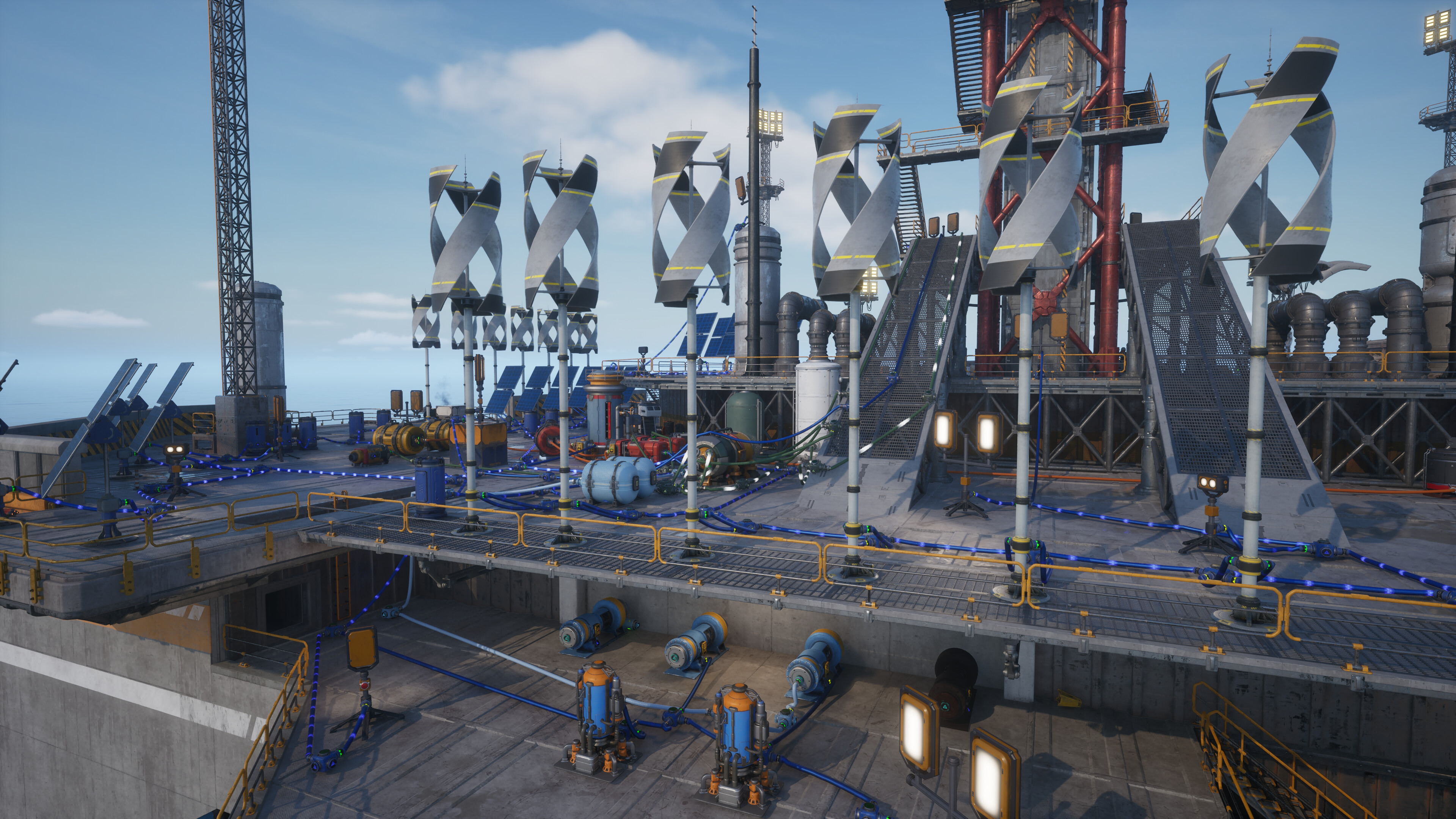
Power, in turn, can be generated in numerous ways, including using biomatter retrieved from enemies to create petroleum. But you can also use that petroleum as fuel for flamethrowers, or the basis for explosive grenades, defending your base in a more direct fashion. "Again, we try to leave it up to the player," Patillo explains.
Once players eventually succeed in growing viable humans, they can transport them to their extraplanetary home by launching rockets into orbit—but don't expect to be popping rockets off from minute one. "It will take a long time before you start launching humans," says Ilvessuo. While launching rockets won't require you to master complex orbital mechanics a la Kerbal Space Program, it does involve considerable preparation, such as learning how to produce substances like rocket fuel and oxidizer.
And while launching your first batch of humans into space is your primary goal, it doesn't necessarily mark the end of your mission. "When you send the first humans into space, something comes back. We don't tell you what it is, but it will change a little bit your attitude to the mission," says Ilvessuo.
The Last Caretaker is launching in Early Access, but Patillo says players can expect a fully rounded experience from the get-go. "The Early Access version of the game is the full version of the game—there's a full beginning, middle, end," he says.
Even so, Channel37 intends to expand the game considerably post-launch. "We have big dreams," Patillo concludes. "When I came on, the company gave me the World Bible, and it took me two or three days to read through. There are years of content plans down the line. I know where the story ends in Early Access—but I also know where it really ends."
The Last Caretaker launches November 6 on the Epic Games Store.