新聞
Mirage 7: A fantasy novel that became a true adventure
F
Francisco Dominguez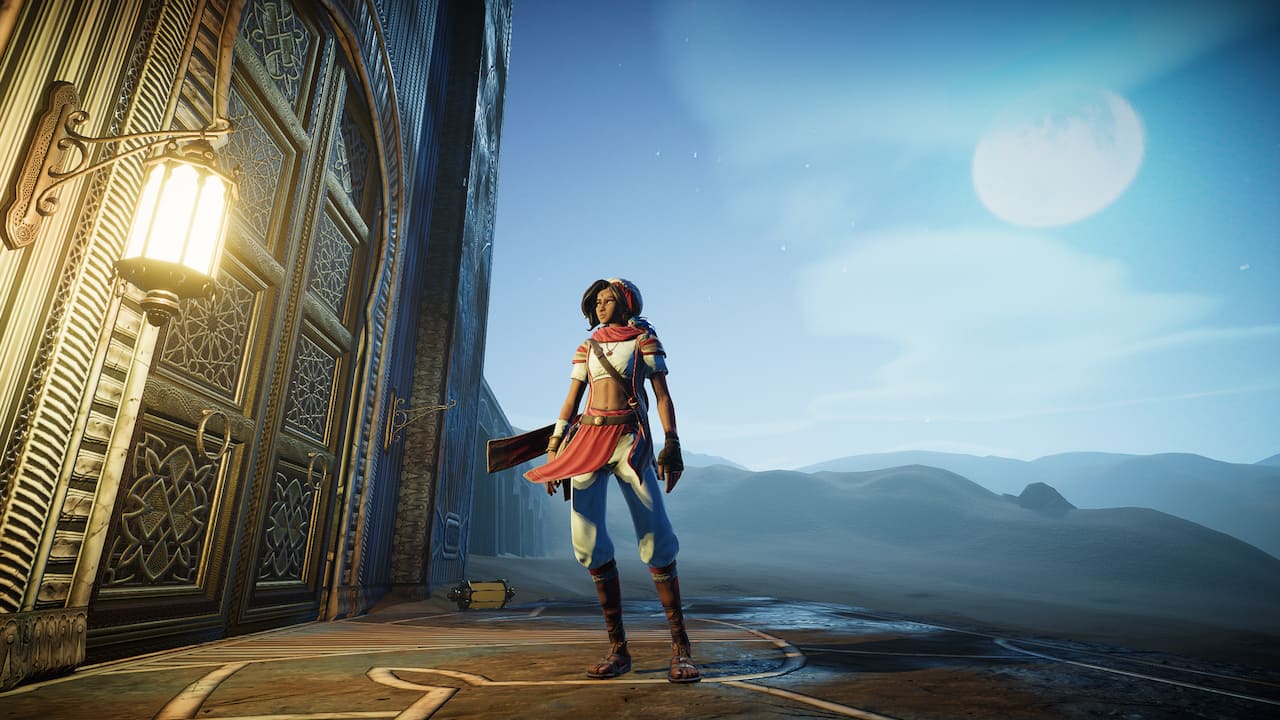
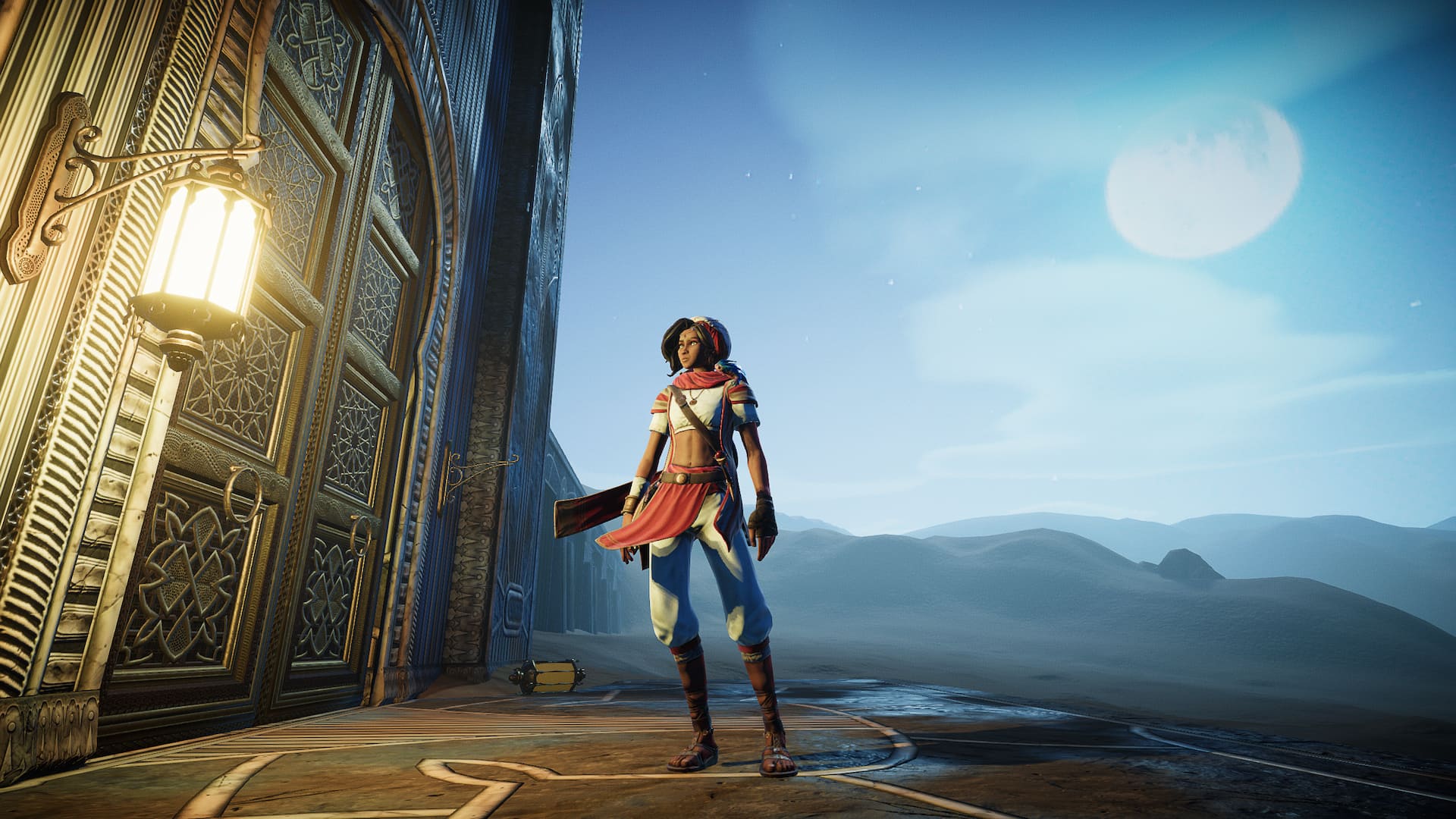
Co-founder Manlio Greco describes the project as the realization of a dark fairytale novel he completed ten years ago. It’s the definition of a passion project. With an Arabian Nights-inspired world set against a mysterious sci-fi plot, Greco calls it “an adventure game in the truest sense of the word,” an experience where each and every action serves the story.
That story begins with a drone flying over a military base. After an armed vehicle guns it down, a sinister being is rudely awoken by the explosion, gaunt and pale, as much machine as human. Then we cut, departing that ominous opening for a magical but equally dangerous past where Nadira is on the hunt for her sister, intent on saving her from a fate as good as death.
It starts almost like a survival game. Nadira’s primary concern is staying alive in the desert, learning how to find a canteen, locate water sources, and ignite a fire while dealing with giant sand insects that emerge from their burrows deep beneath the dunes. Greco says this illustrates the game’s true adventure sensibilities; despite first appearances, it’s not a survival game, just using their mechanics before their increasingly fantastical story progresses towards a collision between its two parallel worlds.
The relationship between those worlds is a close-guarded secret, one which Greco leaves the game itself to reveal. Fortunately, he’s less secretive about his inspirations. As the team’s resident Sicilian, the culture of Italy’s southernmost island always stood apart from the mainland. Its distinctive character was formed from centuries of territorial tug-of-war, a succession of invasions all leaving their mark on the land.
“In Sicily we have a lot of Arabic influences because of all the civilizations that passed through here, from Arabic people to Vikings [by way of the Normans]. It's part of the culture here,” Greco says. “Cities look a bit Arabic, a bit Viking. These things all together, in a strange mixture, makes Sicilians what we are.”
Two centuries under Islamic rule gave the island an enduring love of pistachios, a unique architectural style, and an interest in folklore like the Arabian Nights. He points out that Mirage 7 is a fictional amalgam, drawing inspiration from the similar fusion architecture in once Muslim-occupied areas in southern Spain like Seville, and even Chinese temples.
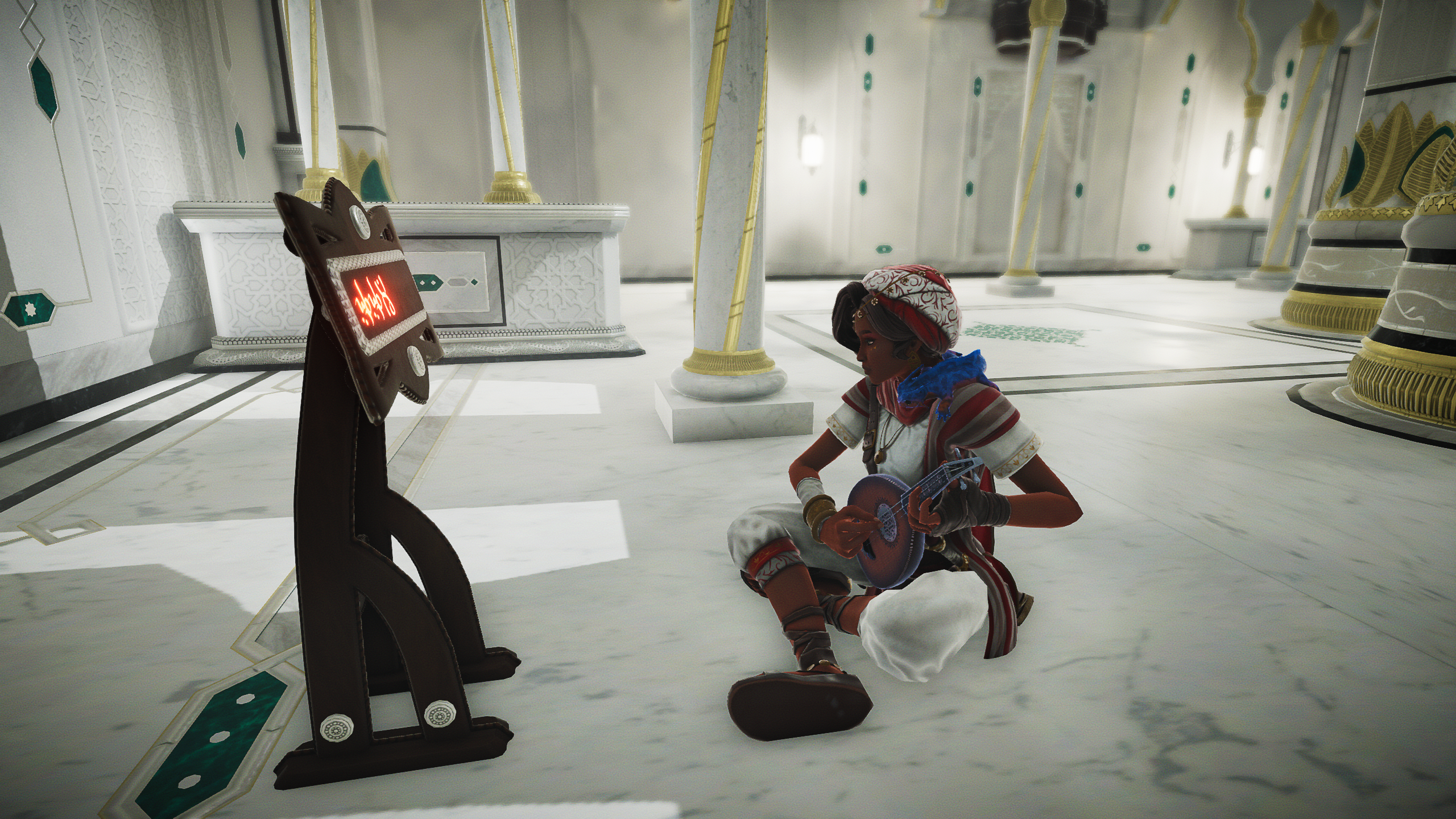
One of the game’s more surprising aspects is Jiji, Nadira’s lizard companion. She’s as adorable as she is crucial: During the day, she helps access tiny passageways or detect one of the desert’s few water sources; at night, she can defend Nadira from advancing scorpions (after eating her fill of flies), which she bludgeons to death with careful projectile tongue attacks.
Jiji’s role expanded hugely from the novel, where she began as a tiny pet that lived in Nadira’s pocket. In the original novel, revealing Nadira’s inner thoughts was effortless. In-game, they needed an excuse. Chit-chat with her chameleonlike pet was a simple solution that went on to shape the entire project. “Jiji is the reason we can tell the story,” says Greco.
As Nadira sets out on her quest, a slightly diminutive figure sporting a slingshot and a musical instrument, it’s easy to draw comparison to The Legend of Zelda. I sure did, but I was wrong to do so. The slingshot was instead intended to communicate Nadira’s position as an everyday figure, a versatile tool compared to Drakkar’s arm-mounted turrets. And the musical instrument came from Greco’s novel, its plot importance preserved with adjustments: Originally, it was a sitar, but its long neck got in the way of their combat system. Her dodge rolls looked implausible because Nadira had an oar-sized instrument strapped to her back, so they shrunk it down to a more sensibly portable string instrument: the lute.
Not everything had such simple solutions. “We wanted to add at least one genie,” Greco recalls, with regret. “Not the genie-in-the-bottle you see from Disney’s Aladdin, but the genie of the true Arabian Nights setting. It would become a horror game! It's something very evil, like a devil.” Alas, the addition of the twisted jinn of Arabic legend and their often Faustian arrangements would have been one element too many for what had become an already complex tale. Although Greco assures us Mirage 7 comes close indeed to horror later on, as if its perturbing “hybrid” we saw awakening in its jump-scare introduction wasn’t a big enough hint!
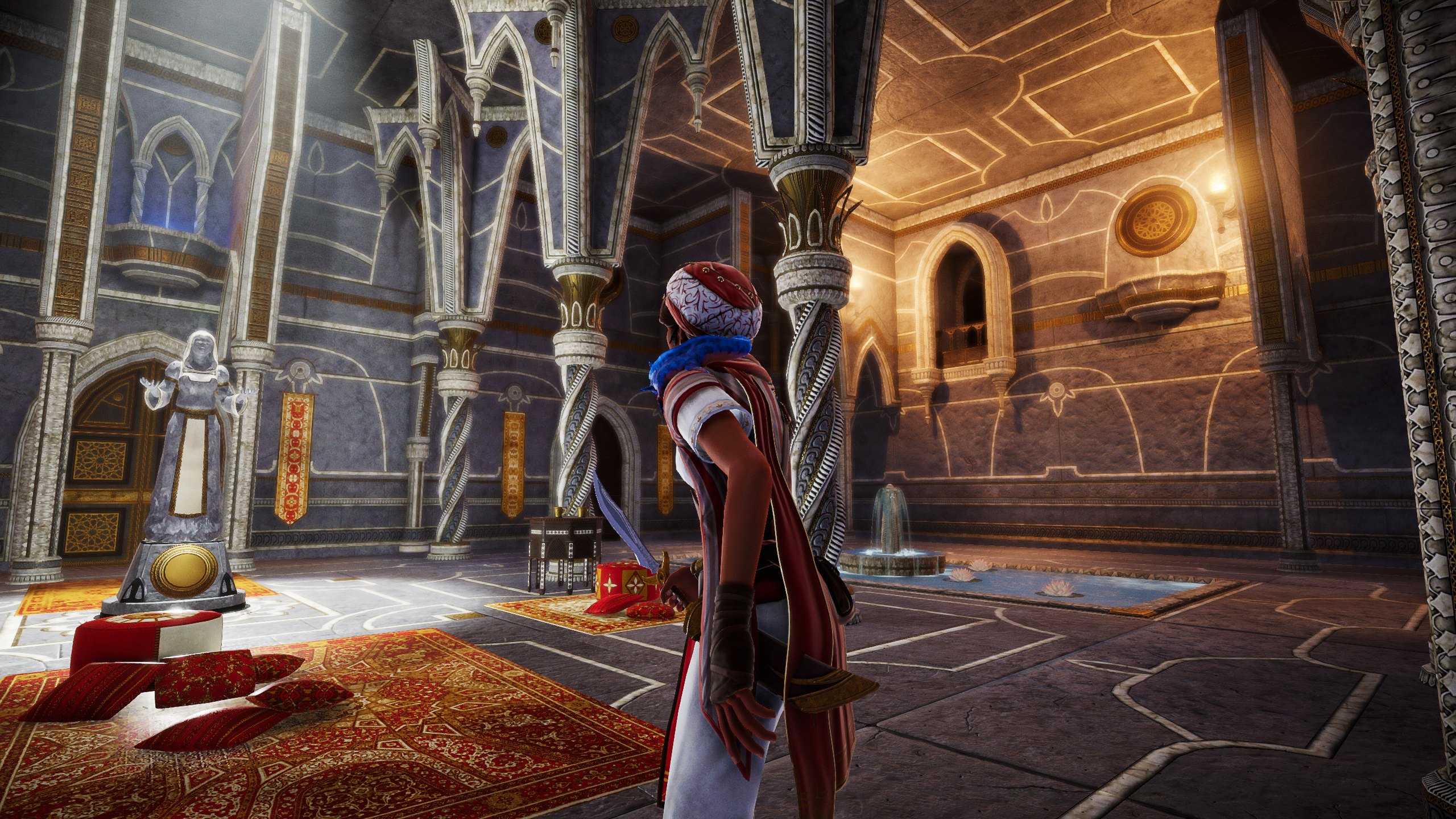
Mirage 7 proved complex to design in other ways too, including its shift from robots in space to humans in deserts. “It's the first time we approach a completely organic game where there's no giant robot, no hard surfaces,” says Greco. “Yes, it was a challenge!”
Another challenge was designing the temple, which the pair both regard as Mirage 7’s standout level. With Mirage 7’s mechanics established, alongside a full suite of items, it’s where their designs come to fruition. It involved a somewhat unorthodox approach. Game developers often use gray-boxing, making a rough draft of a level from featureless gray boxes to work out the space, flow, and puzzles before adding the art that makes it come to life. They pioneered a different method.
“The narrative designer came to the office with a strange box made of cardboard,” Greco remembers. “It was a scale model of part of the temple! I’d asked her to find a gameplay idea for this part of the game, it was already there—even if it was made of cardboard. It was very creative. One of the best days of development.”
Although they’d discovered the newfangled technique of cardboard-boxing, they’re not giving up Unity in favour of their low-tech invention just yet. But Greco feels it helped them look at their designs from a fresh perspective, producing a sequence of interesting actions for players that don’t feel repetitive while still harmonizing with the story. “It was the hardest part, but for us it's the best part of the game.”
Mirage 7 is out now on the Epic Games Store.