Out of Sight is a second-person, action-adventure game with a teddy bear to guide you
When my son was 2 and a half years old, he had never slept through the night. (In fact, this would not happen until he was 5. We had some rough years.) One especially challenging night, making an effort to not entirely lose my cool, I left his room while he screamed and shouted, and sat on the stairs outside his door. Needing to calm myself down, I ignored his usual yelled claims of being too scared until he finally quieted down. And then I heard this tiny, terrified voice. He was speaking to his favorite toy, a stuffed dinosaur: “Dino, will you keep me safe?”
I burst back into the room, scooped him up in my arms, and promised him I would always keep him safe. It broke my heart, and I’ve never forgotten it. That moment immediately came to mind as I saw Sophie desperately ask her own teddy if he would protect her while playing Out of Sight.
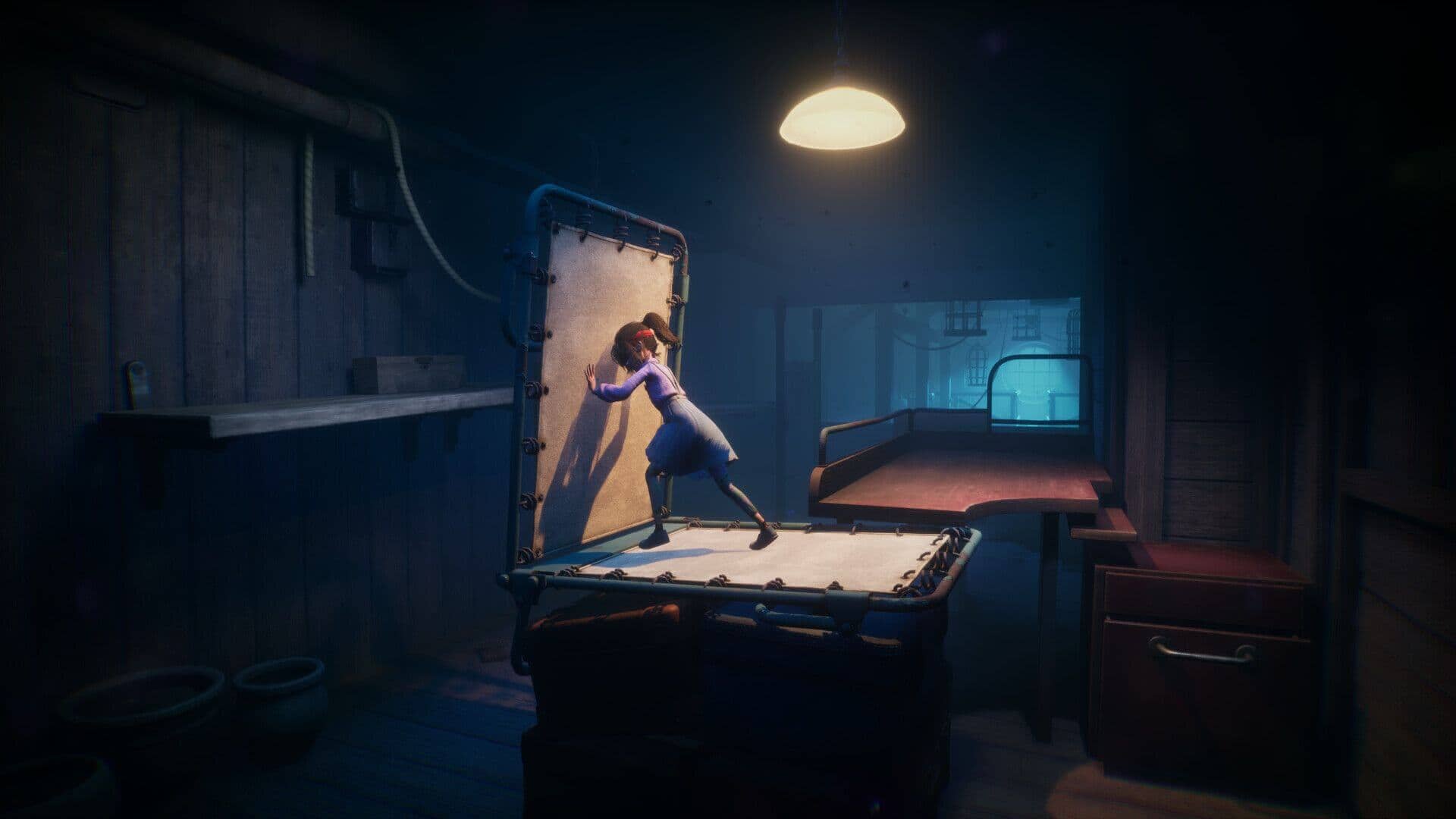
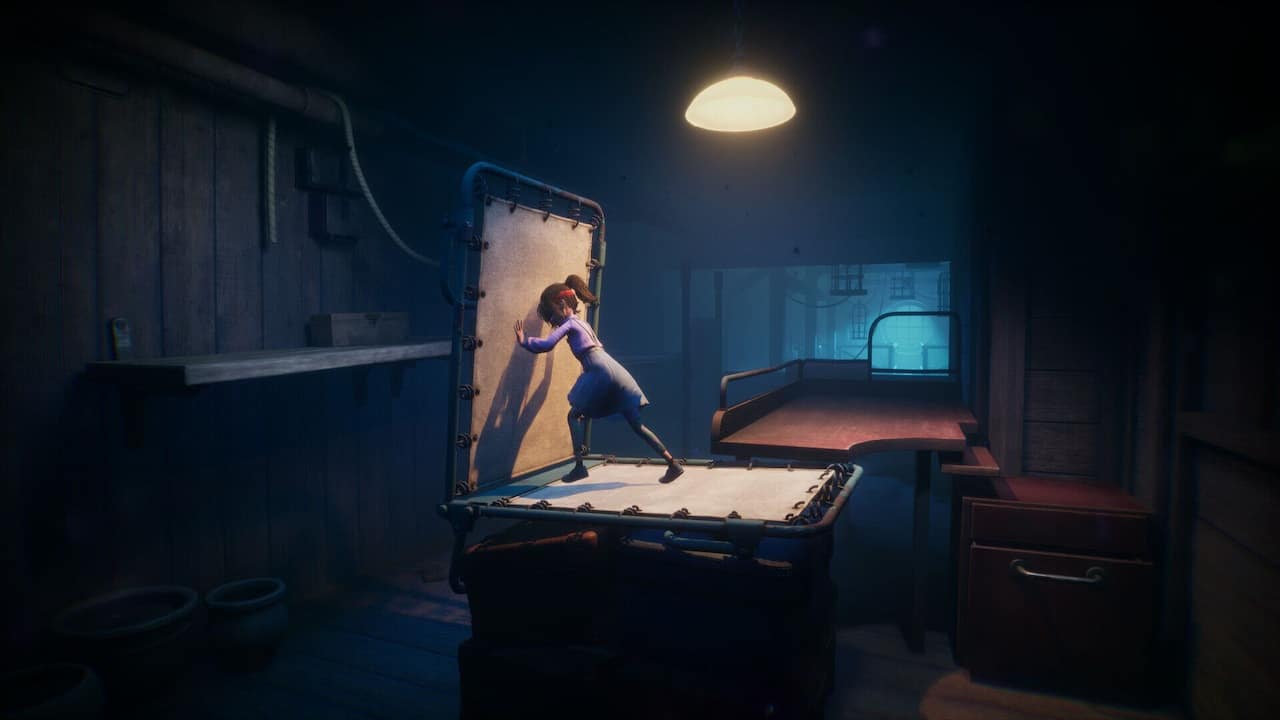
Out of Sight has a strikingly original premise. In this spooky action-adventure game, you play as a young, blind girl named Sophie who mysteriously gains the ability to see through the eyes of her teddy bear. By carrying the bear in front of her, she is able to see where she is going, but unable to use her arms. By putting the bear down on a surface, she can view her surroundings from his perspective, freeing her to climb and interact with the obstacles in her way.
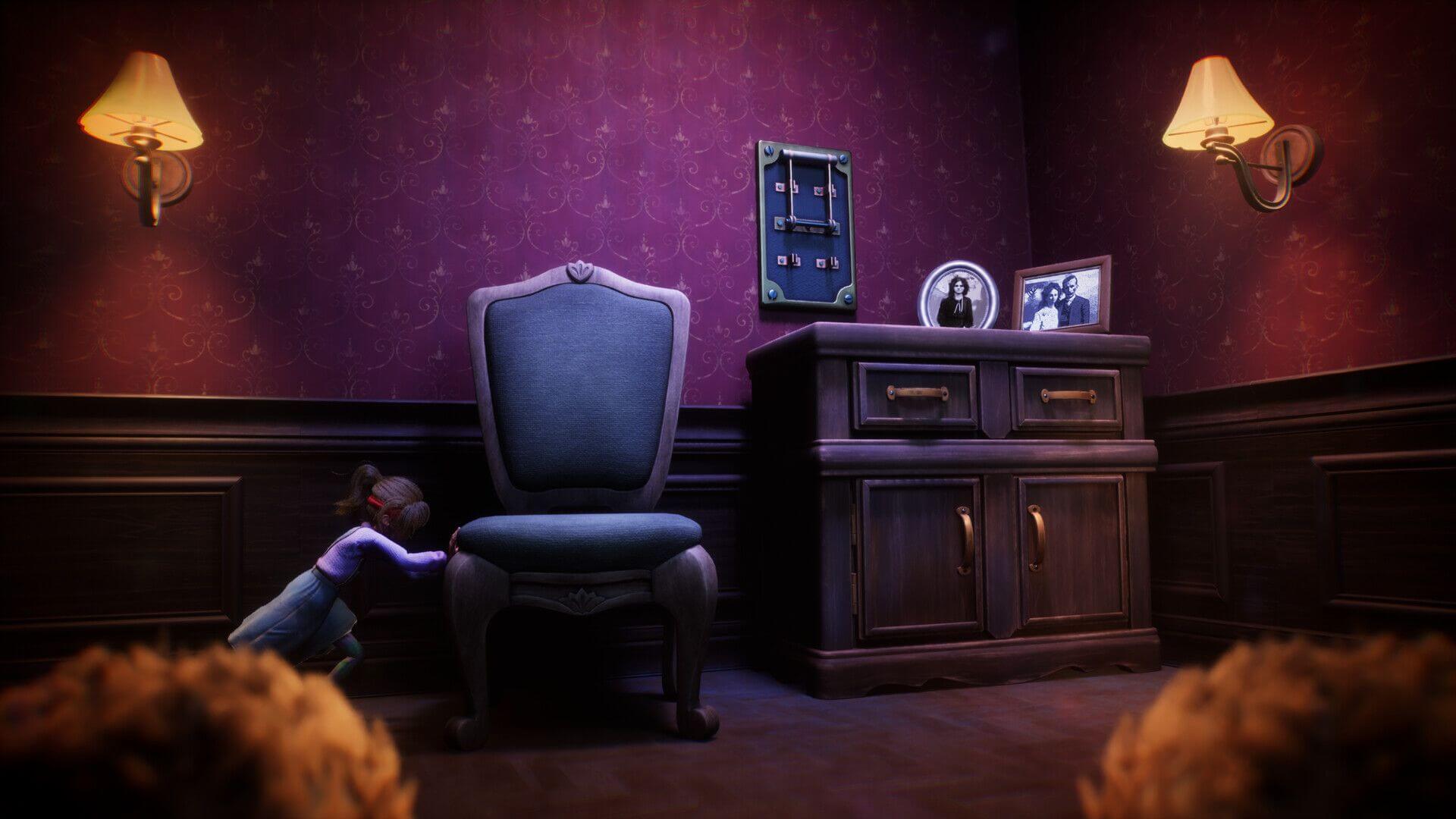
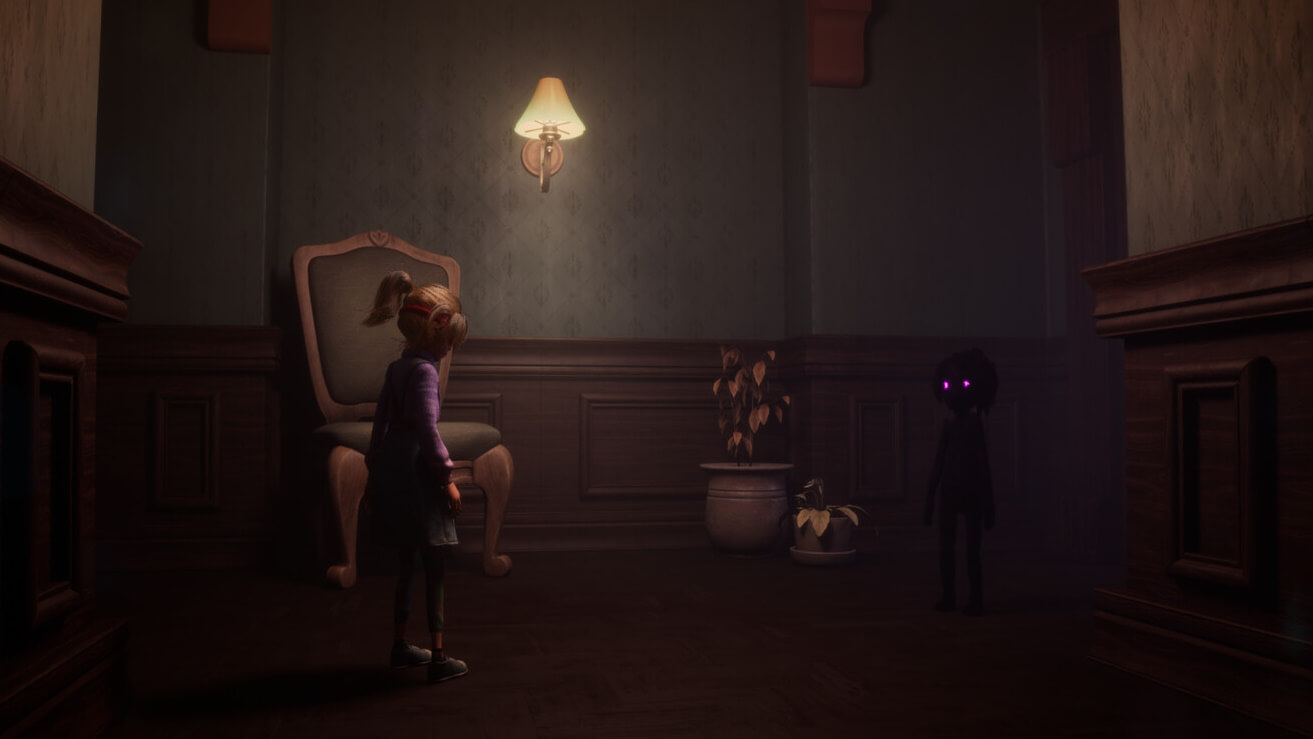
The result is a combination of first- and second-person puzzle games, which is a term we don’t often get to use. And it all takes place in a setting that’s outlandishly spooky: a huge, creepy mansion filled with dark, dusty rooms containing faded, dilapidated items. All the while, you’re being stalked by the furious adults who appear to have trapped this child. Sophie must be as silent as possible, lest she attract their desperately unwanted attention as she attempts to escape this horrid place.
As I put it to Out of Sight’s developers, The Gang, their game seems to tap into that visceral moment of a child’s desperation for safety. “The story for Out of Sight originated in the connection between Sophie and Teddy,” said Creative Director Per Hallros. “We think most people can understand the connection a child can have with their favorite toy, and a lot of people might have had connections like that of their own. Having that unwavering friend who can comfort you when you’re scared is invaluable, and we wanted Sophie’s dependency on Teddy to highlight those emotions in the game.”
It’s something that’s immediately apparent, even in the game’s brief demo. Here, you quickly understand the relationship between the two as you explore the intriguing nature of playing a game from a second-person perspective. When you put Teddy down (you can only place him in specific spots marked by pink blankets), the view switches to his. He can independently turn his head but is otherwise stationary. From this bear's-eye view, you directly control Sophie to push over obstacles, drag furniture, and climb to new vantage points from which she can pick up Teddy once again and make progress.
“We wanted their relationship to feel relatable, and being a vulnerable child in a scary world where your only source of comfort is your favorite stuffed animal resonated strongly with us,” said Hallros.
It’s definitely a starting point that’s sure to resonate with many players, even if the exact circumstances are hopefully not a part of most people’s childhoods. Although, for whom has an endless, imposing, and inescapable building not been the source of a dozen childhood nightmares?
“Pairing that vulnerability with a need to escape from an eerie mansion created a prominent starting point for our narrative,” Hallros continued. “Through her connection with Teddy, Sophie is able to find the strength she needs in order to face her fears and attempt to escape the mansion. She’s not just doing it for herself, because if she doesn’t get it out, it also means Teddy isn’t getting out.”
It’s very notable that Out of Sight almost immediately enters fairy-tale territory. The mansion is impossibly big and grim, Sophie is capable of falling far too far without injury, and the adult figures are grotesque, Disney-like evil step-creatures. It feels like a welcome attempt to make such an unpalatable situation—a small, terrified child living in abhorrent conditions—into something more allegorical. Oh, and there’s the small matter of a blind girl who can see through a stuffed toy.
“Fairy-tale aspects are inherent to the core of the game,” said Hallros, giving the magical teddy as a key example. Think more Brothers Grimm than Disney musicals, though—the kind of scary stories about things going bump in the night that tap into atavistic fears and instincts. “There are things happening that Sophie doesn’t understand at first, which unfold as the story progresses. We have created rules for our world that emphasize the connections between the characters, and while it is not directly realistic, we hope the players’ experiences feel real in the context of the game.”
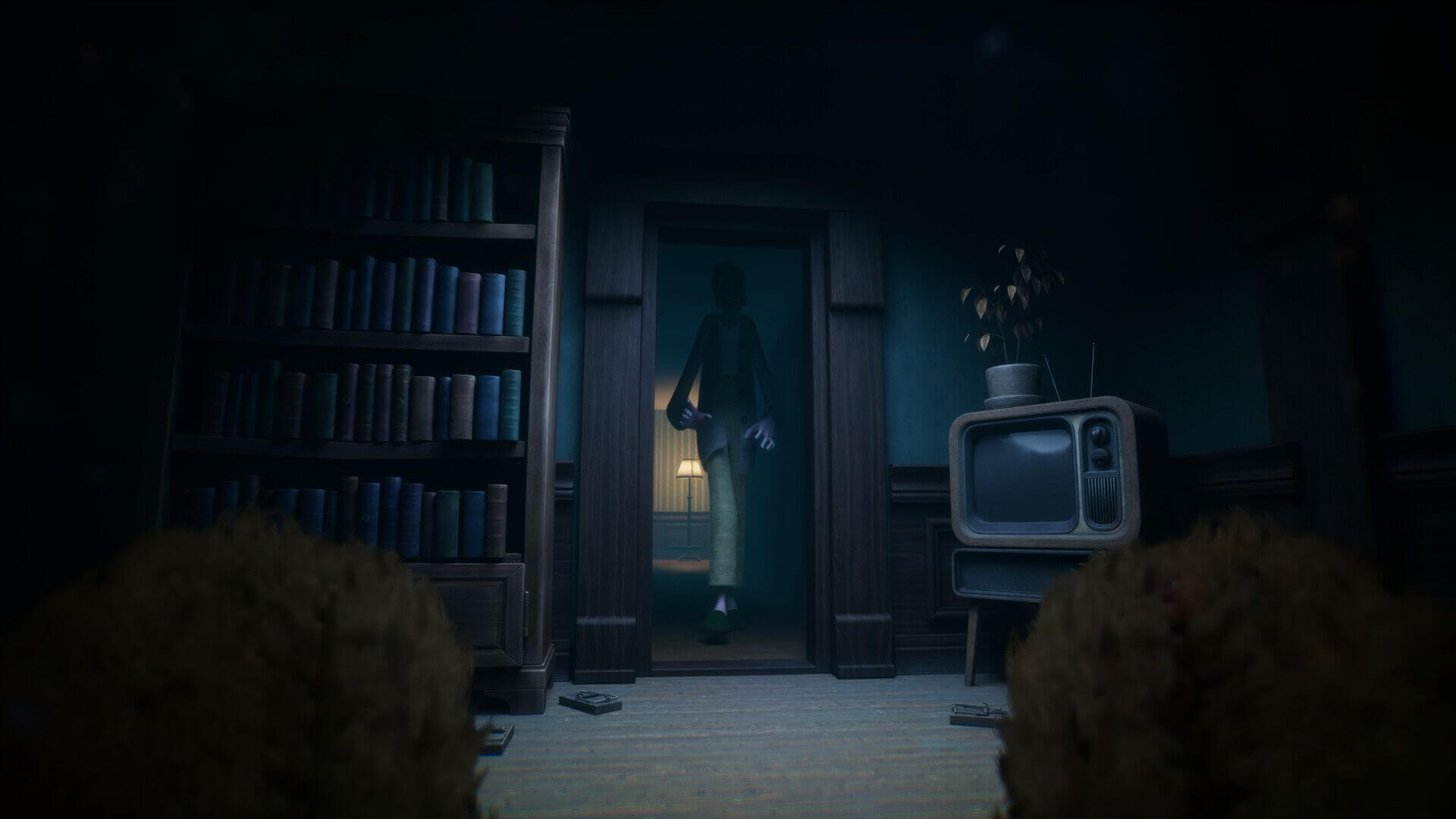
A great deal of this effect comes from the literary inspirations behind Out of Sight. The game feels dreamlike in places (well, nightmarish might be a better word), and the rules of reality don’t necessarily apply. Hallros explained that a lot of this atmosphere comes from 19th-century literature.
“Balancing the line between reality and fiction was a way of exploring unknowns in the real world. Mary Shelley’s Frankenstein, Bram Stoker’s Dracula, Oscar Wilde’s The Picture of Dorian Gray, and Jules Verne’s Journey to the Center of the Earth are a few examples. In Out of Sight, our aim was to create a world that feels believable, while still retaining an intriguing sense of mystery.”
We’ve not long to wait to find out how these influences and aspirations are conveyed in the full game. In the meantime, go find your favorite stuffed animal and give them a squeeze.