Uutiset
South Park: The Stick of Truth is a rare RPG parody that hasn’t aged a day
F
Francisco Dominguez
Somehow, Cartman’s approach works just as well. Almost a decade from its release, thanks to Obsidian’s RPG know-how and Trey Parker and Matt Stone’s talent for parody, nobody’s skewered ridiculous RPG tropes better than South Park: The Stick of Truth. You don’t need to be a South Park fan to enjoy these sharply observed genre riffs, as relevant to Baldur’s Gate 3 today as they were in 2014, and delivered in trademark style from the show’s creators. South Park is almost as rich and vivid a setting as D&D’s Forgotten Realms—and the jokes are better, too.
You’re “the new kid”, dropped into the crudest, rudest town in Colorado on what starts as an endearing quest to simply make friends in your new hometown. This introduction quickly spirals into an outrageously overblown tussle between kids play-acting drow elves (discernible by pointy ears strapped to their head) versus humans, quibbling over the mighty Stick of Truth. Their epic dispute over what appears to be just your bog-standard twig can make fantasy conflicts like The Witcher 3’s war between Redania and Nilfgaard look tame after you witness the bloodthirsty horrors unleashed by South Park’s cruelest eight-year-olds.
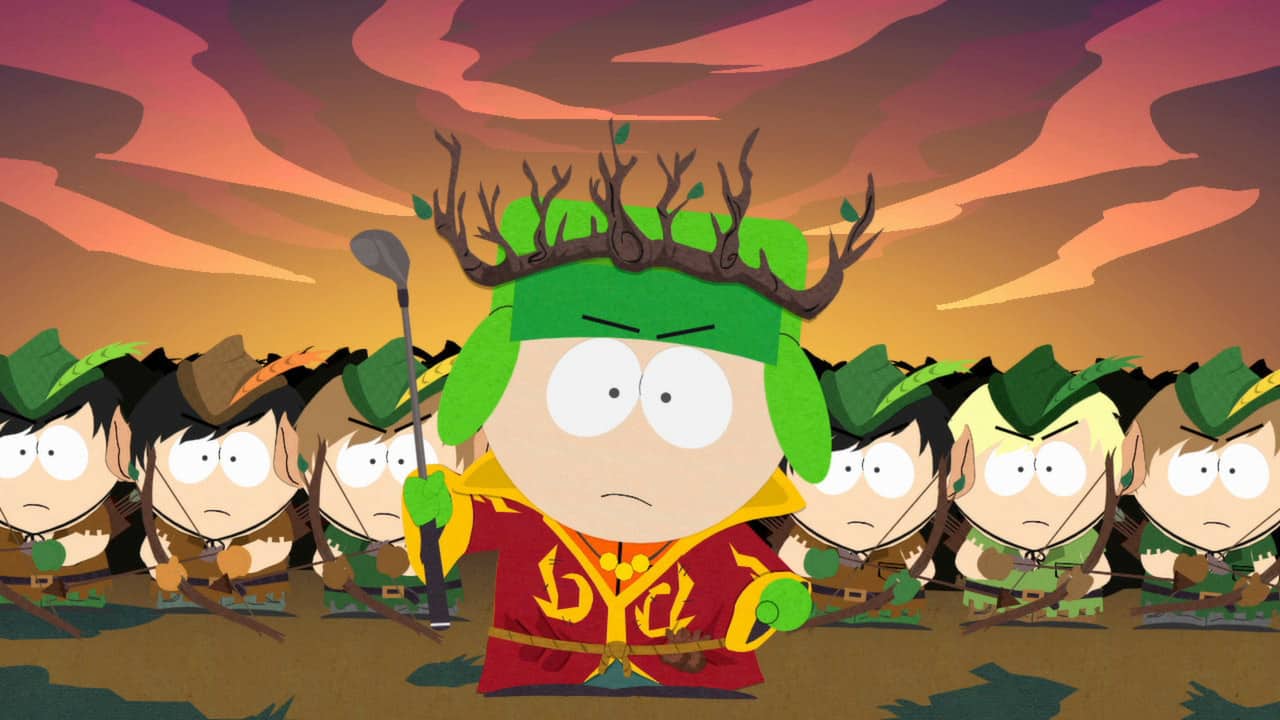
The kids roam the streets like feral gangs of preteen cosplayers taking their LARP just a bit too seriously, donning a mishmash of fancy dress outfits and wielding a mix of harmless toys and dangerous hardware. Innocuous suction pad arrows escalate into dangerous weapons like Paladin Butters’ lethal hammer, Drow Elf Kyle’s weighty golf club, and piercing bar darts pinched from Skeeter’s Bar. It’s a game with an alarming talent for making a scavenged assortment of everyday objects an extravagant source of pain, just as the Yakuza series has done to such colorful effect.

They say comedy is all in the timing, and the same is true of South Park: The Stick of Truth’s turn-based slapstick combat. With light but vital interactions akin to Paper Mario, QTE prompts can boost your attacks and blunt opposing blows beyond recognition with a well-timed button-press. Except instead of Goombas and Koopa Troopas, you’re gleefully pummeling the kids who picked the wrong side (i.e. not yours). It's pretty rare to be allowed to attack kids in video games—Fallout 3 famously shied away from the option, along with many others—but as far as the age rating censors are concerned, it’s acceptable enough when you’re playing a snotty tyro yourself.
Just like the show, it’s as relentlessly crass as it is richly imaginative, rattling through the familiar RPG beats at breakneck speed. And, for an RPG that can be finished in 15 hours, it’s as finely tuned and well-considered as many games four times as long.
Roleplay staples are given a truly South Park makeover. Instead of mana, your powers deplete PP (Power Points…apparently); Power Potions resemble energy drink cans, guaranteed to increase your bladder’s stores of PP. Health items are trashy packets of chips and hotdogs. Your magic attacks are farts, your special attacks an impromptu round of rock, paper, kick in the nuts, and your summons range from the scatological Mr. Hankey to the almighty Jesus Christ himself.
South Park’s creators have genuine RPG bona fides—in case there was any doubt after their lauded MMO episode "Make Love, Not Warcraft." Fantasy nerds to the core, the pair are big on D&D, and Trey Parker even grew up playing influential classics like Richard Garriot’s Ultima games. And it shows in Stick of Truth's fond, teasing approach to the genre.

Case in point: your very own character. After spending however long you like personalizing your avatar in the character creator, you swiftly find you’re a very silent protagonist with less agency than you’d like. And the game never lets you forget it. It takes every opportunity to cut to your indifferent character’s face each time you’re asked a direct question. The name you chose for yourself is irrelevant, since you’re permanently dubbed “douchebag” by Grand Wizard King Cartman, and you can’t utter a protest. Surrounded by the show’s loud-mouthed cast and their deluge of crass jokes, you wouldn’t get a word in anyway.
But it’s not just the plentiful gags and in-jokes that make this game so memorable, but also the RPG spin on the show’s best-known locations. City Wok, Jimbo’s Guns, Park County Police Station, and more are all present and look and feel exactly as in the show. Although some locations can be very different: venture north of the border to the medieval “Kingdom of Canada” and the show’s familiar papercraft cutouts morph into a top-down overworld, aping the style of The Legend of Zelda on NES.
Naturally, it’s the school that’s the venue for many of the game’s standout moments. Breaking into South Park Elementary on an ignoble quest to free Craig from Mr. Mackey’s detention becomes a magnificent twist on the classic prison breakout. Thrown into a miniature dungeon, you knock out spotty Hall Monitors with lethal gas and scour the premises for a series of keys to free the captives from an afternoon of blank boredom.
Then, in a dramatic scene reversal that Dragon Age or Baldur’s Gate would be proud to stage as a final act twist, the school becomes the ravaged location for a desperate battle for the Stick. The school’s walls are cracked and graffitied, rickety barricades block your path; wounded kids lie on the ground, ripe for looting. And things get even weirder and wackier until it reaches a suitably barmy conclusion you’d never see coming.
Some things improve with age, given leisure to appreciate their fine nuances. Some things become dated, relics of their time. But some things, like South Park, remain exactly as amusing, outrageous, inventive, chaotic, depraved, and appalling as they ever were. Obsidian Entertainment and Trey Parker and Matt Stone pulled off an implausible act of profane magic any sweary necromancer would be proud of, and their savage parody of the RPG genre hasn’t aged a day.
South Park: The Stick of Truth is available now on the Epic Games Store.