Uutiset
TerraTech Legion combines car-building freedom with frantic bullet heaven battling
J
John Walker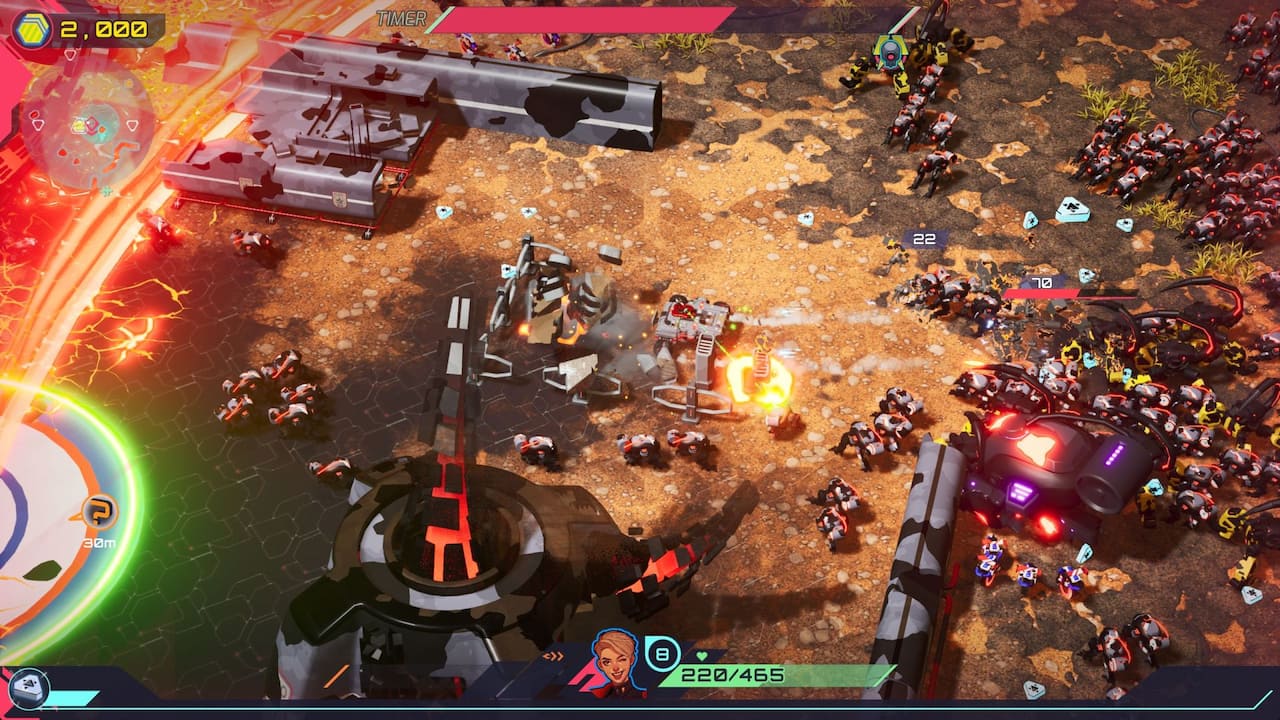
Payload Studios originally came together in 2013 with a Kickstarter campaign for the original TerraTech. Just six people at the time, the game’s success ensured the studio's survival and expansion into what’s now a team of 16. Founder and CEO Russ Clark describes Payload as “a close-knit team of industry veterans who have been through a lot together.” We chatted with Russ Clark to find out more about how spin-off title TerraTech Legion came to be and the goals behind taking such a bold tangent.
With an original game still receiving ongoing support a decade on, and another currently in Early Access, we wondered how such a small team even has the capacity to create a whole other title. “We never intended to be a single project studio,” says Clark. “Our goal was always to have multiple games in development and explore different gameplay areas.”
And that’s certainly true of TerraTech Legion—it’s a notably very different approach to the TerraTech series, abandoning open worlds and complete freedom for a much more restricted type of game. “With TerraTech Worlds we packed a lot of different possibilities into one game, which made it quite complex and ambitious” Clark explains. “In TerraTech Legion we’ve tried a different approach, picking out a few key concepts and aiming for a more tightly focused experience.”
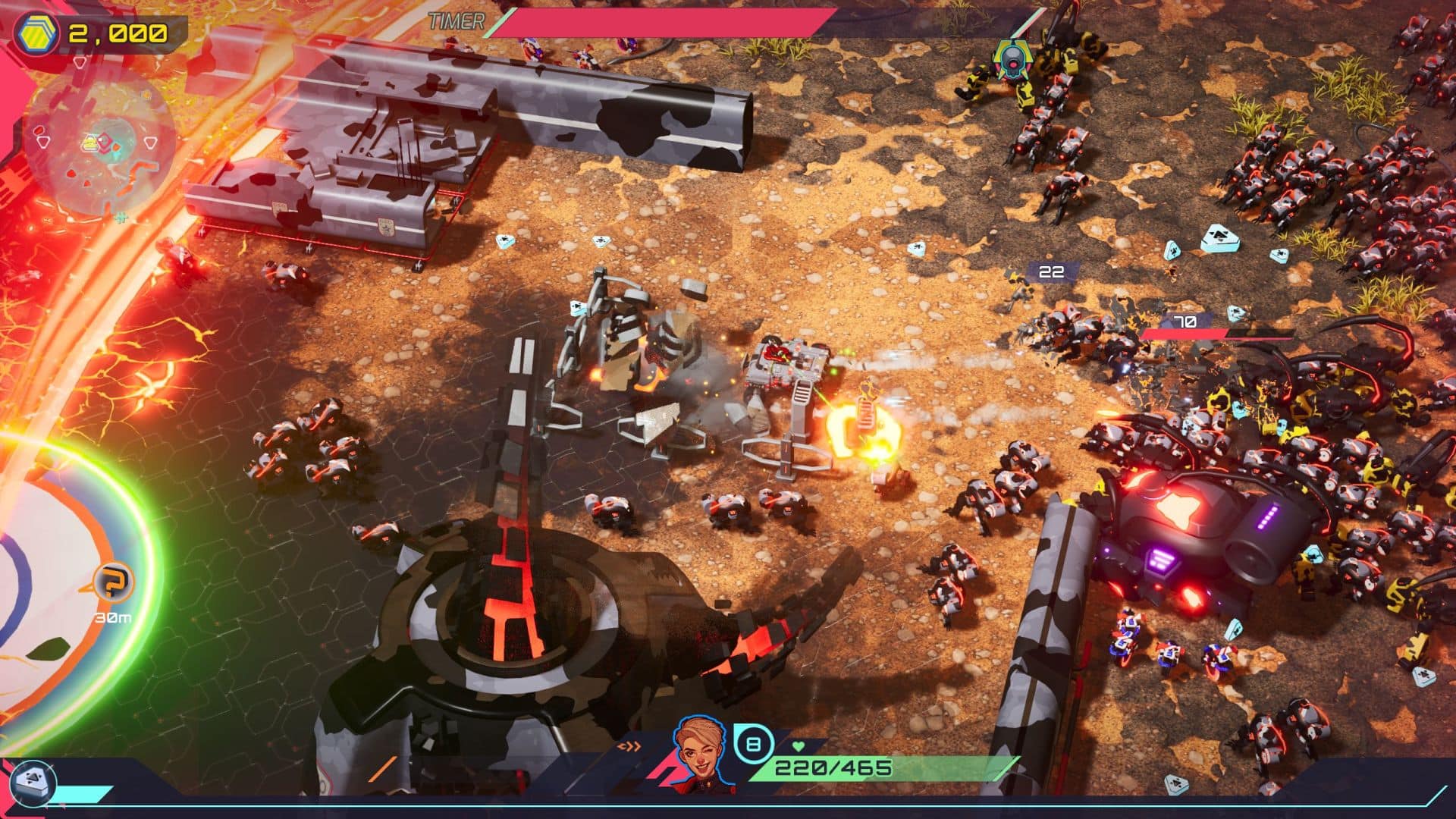
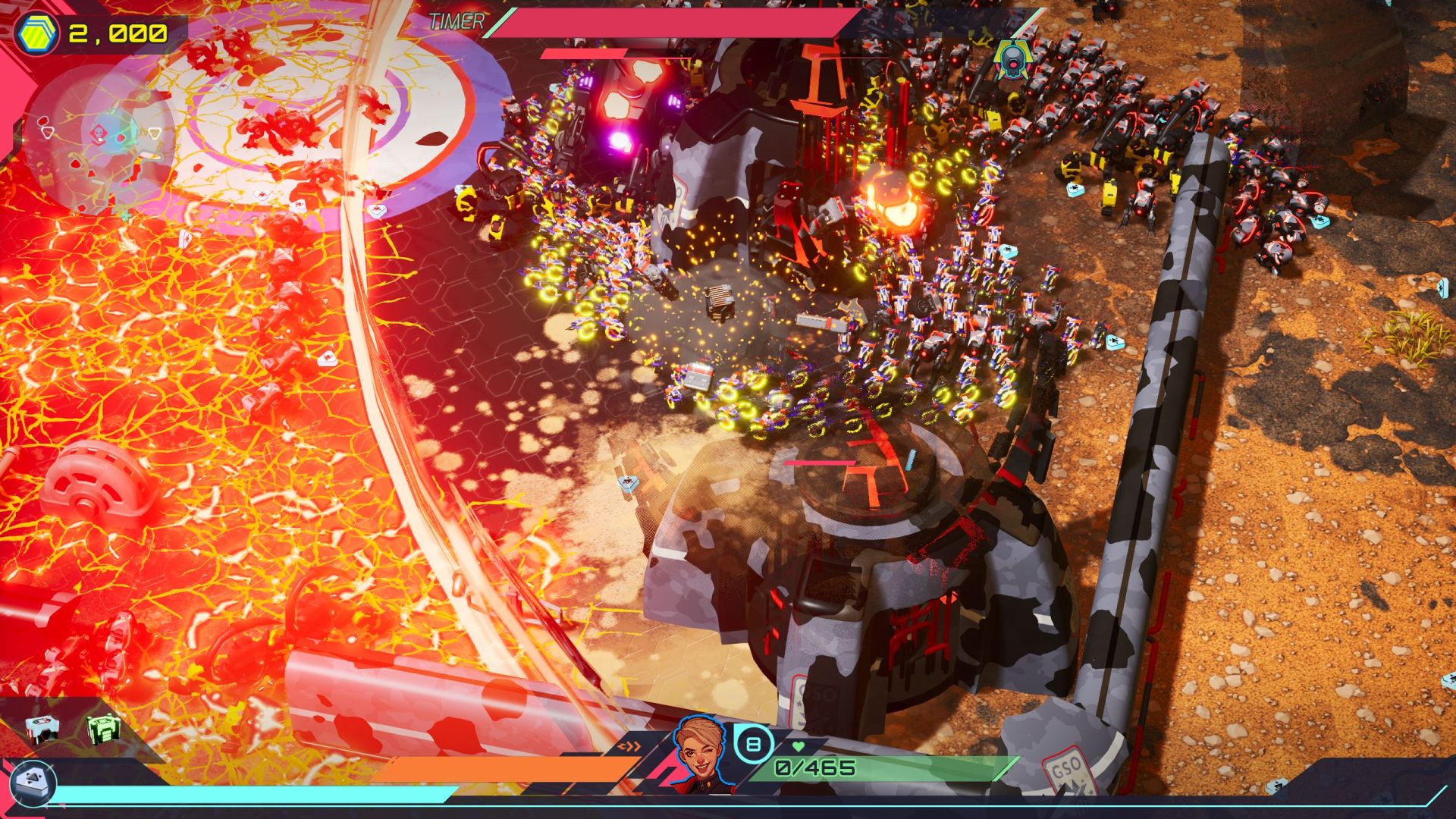
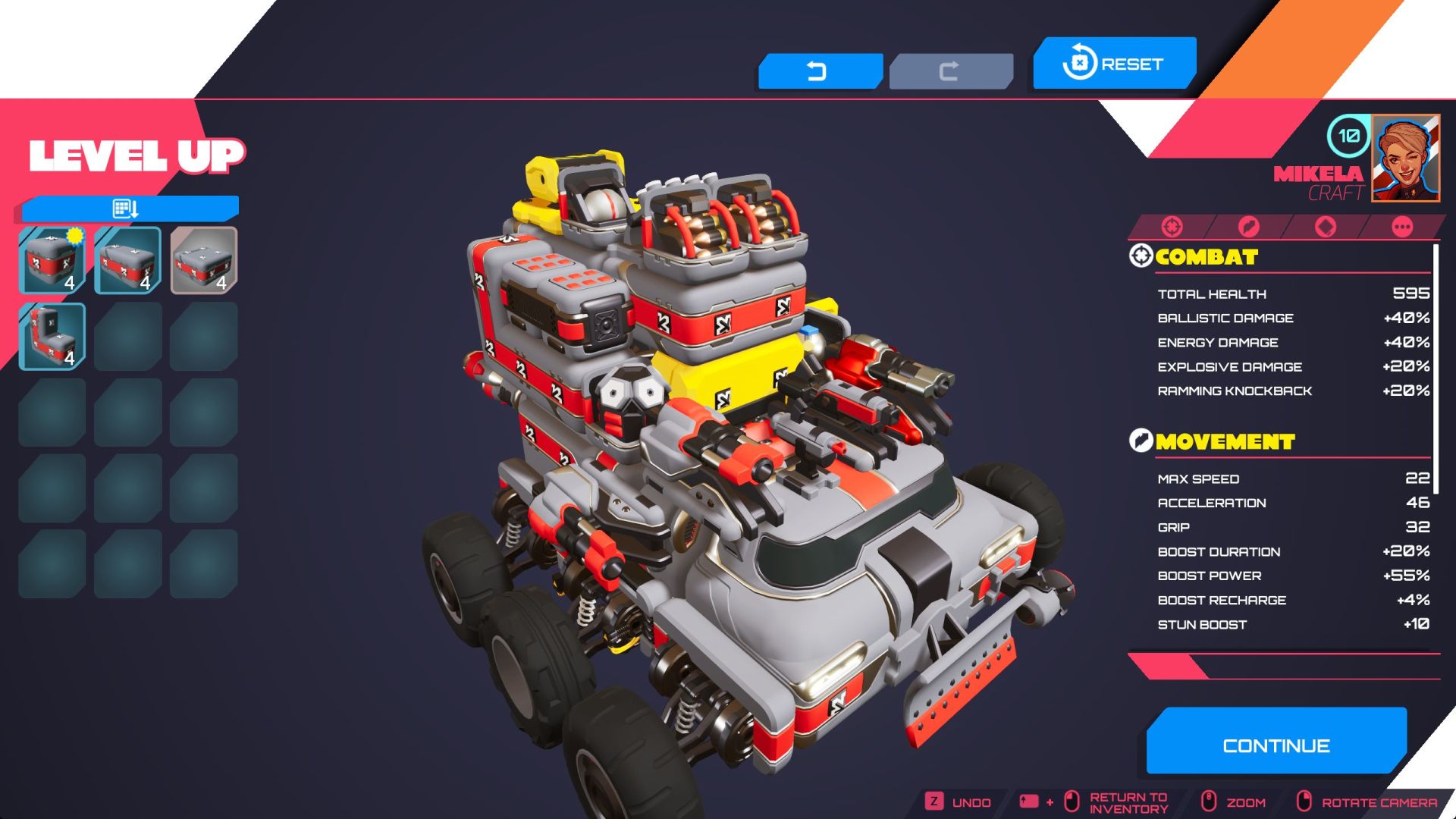
The two games most immediately overlap when it comes to Payload’s block-based buildable vehicles. Each time you level up (by collecting drops from the crowds of enemies you kill with your car, just like Vampire Survivors) you can drive into a zone that lets you open chests you’ve gathered during the rounds. Each contains new blocks to build up the shape of your vehicle, new components that improve your attack, defense, and driving abilities, or new weapons to place on the car as you see fit. The more you progress, the more barmily bespoke your vehicle becomes, and the better able you are to survive incoming hordes.
“The starting concept was to combine TerraTech’s freeform block building with the ‘bullet heaven’ gameplay genre,” says Clark. “As we prototyped this, it became clear that the TerraTech IP was a natural fit, with the Corporation-based narrative setting carrying through from the original game. This also gave us a fun opportunity to tie up an old loose end.” It seems Legion was originally intended to appear in the original 2018 game, but was never added. “This provided a perfect identity for the enemy faction in the new game.”
TerraTech Legion’s inspirations are very clearly worn on its sleeve, but it’s notable how its vehicle-building mechanics really do help it stand out from a busy crowd. “There have been so many Survivors-like games over the past few years,” explains Clark, “but relatively few of them have done something genuinely novel with the core gameplay. By bringing TerraTech into this space, the focus was on distilling the core pillars of TerraTech’s building to find elements that work really well in this genre space. So the fundamental idea that block placement matters is crucial—no other bullet heaven game does anything quite like this with the upgrade system.”
The results really are splendid. TerraTech Legion is perhaps not the most immediately welcoming game, absent a tutorial or even an explanation of what it intends you to do, but you very quickly get to grips with its unique take on the Vampire Survivors-like, unlocking new parts to add to your modular vehicles and designing them to take on unfathomable hordes of enemies. In fact, I found that by discovering it all for myself I had a better connection to the mechanisms.
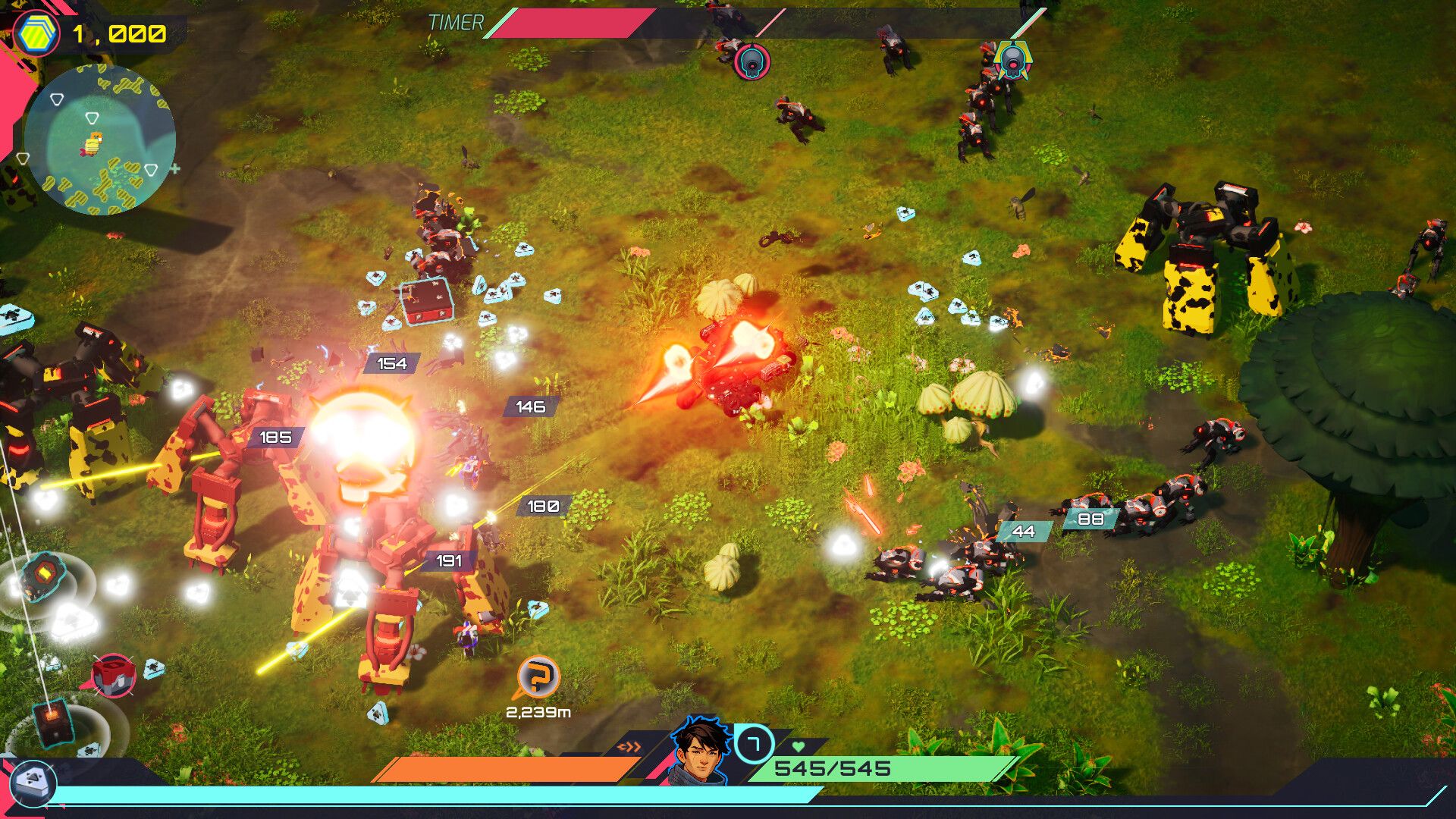
“Separate tutorials are always a double-edged sword,” Clark tells us, “because they come between the player and experiencing the fullness of the game, and can end up creating as many problems as they solve. TerraTech has always been about discovering the effects of your choices through experimentation, so our initial instinct was to keep the UI simple and let players have fun figuring things out. Based on community feedback, we now have a better idea of where some players can get stuck, so we’re looking at adding a bit more explanation.”
Something that really took me aback as I played was the fidelity of the game. Vampire Survivors succeeds at having thirty-billion enemies on screen at once because they’re crude 2D sprites, but TerraTech Legion has hundreds of animated 3D models moving independently without my PC bursting into flames. “We use a custom Entity Component System architecture,” says Clark when I ask how they achieved this, “that’s designed to power large scale TerraTech vehicle physics simulation. It’s highly multi-threaded and capable of simulating many thousands of elements at rock solid framerates. This is how we deliver the same quality and stability of experience on Steam Deck too—it’s a cool piece of tech, built on Unreal Engine of course, and you’ll be seeing it again in more games from us!”
Speaking of which, does Payload have plans to add any more genres to the TerraTech universe? The cagey reply is yes, but nothing they’re ready to talk about yet.
For the time being, TerraTech Legion has proven a very successful experiment. It feels like a genuinely fresh take on the Survivors-like genre, and the degree of freedom when it comes to building hilariously busy gun-toting, ram-raiding, laser-firing vehicles makes it ridiculously compelling to keep playing no matter how often you lose.
TerraTech Legion is out now on the Epic Games Store.