Timberborn guide: How to save the world using only beavers
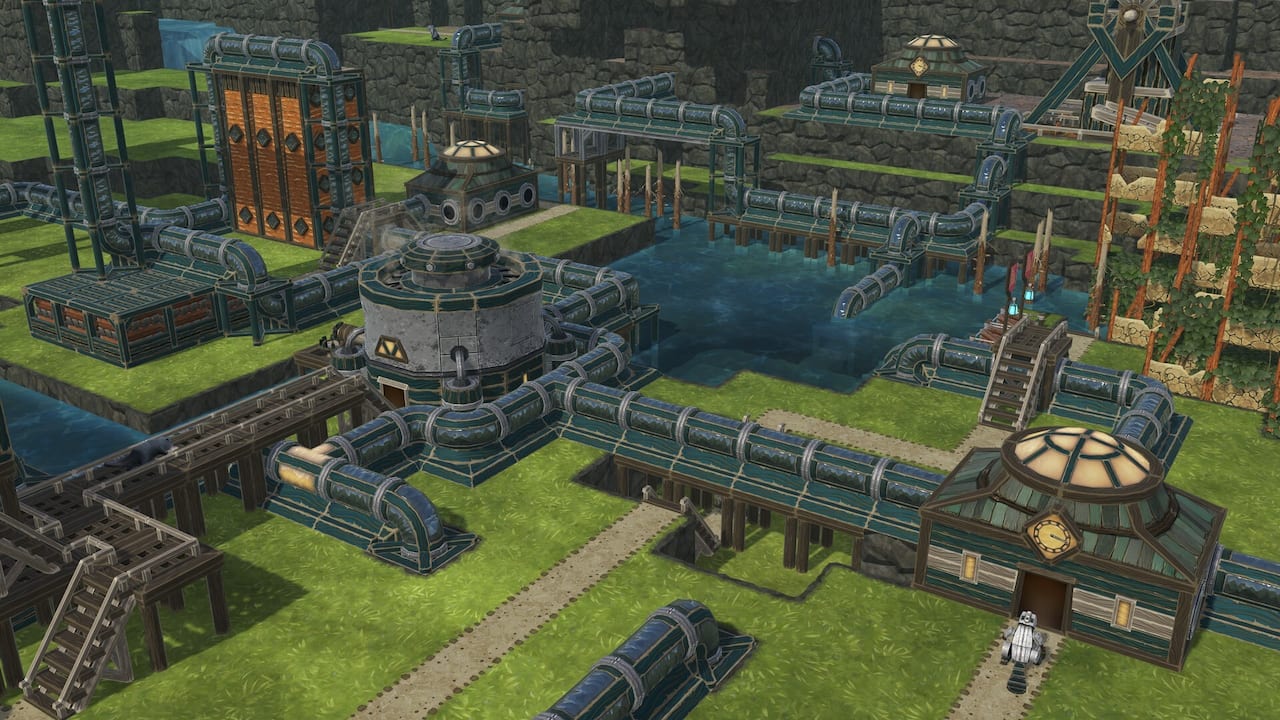
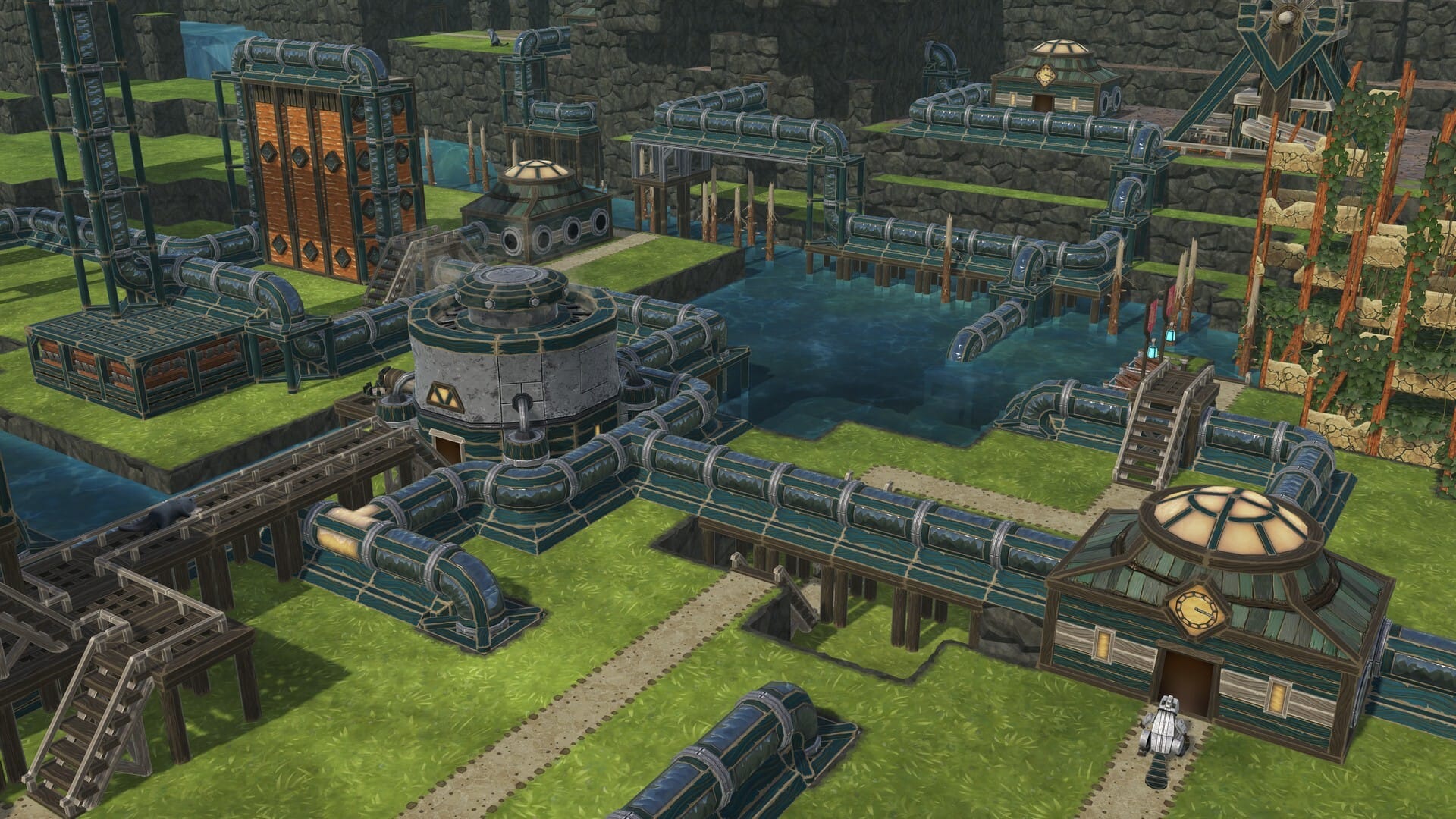
Timberborn, a city-builder about controlling a colony of enterprising beavers, hasn't always had much of an endgame. It was enough in its earliest Early Access builds to simply survive and thrive until you felt satisfied with your amphibious empire.
But now, it's possible for these beavers to save the world, and our Timberborn guide will show you how.
You might not realize it at first, but Timberborn takes place in a world where humans have disappeared, leaving ruined skyscrapers and ecological devastation in their wake. Presumably, beavers then evolved to become the new dominant species—and they've been left with a big task on their hands, in the form of a parched planet ridden with pollution.
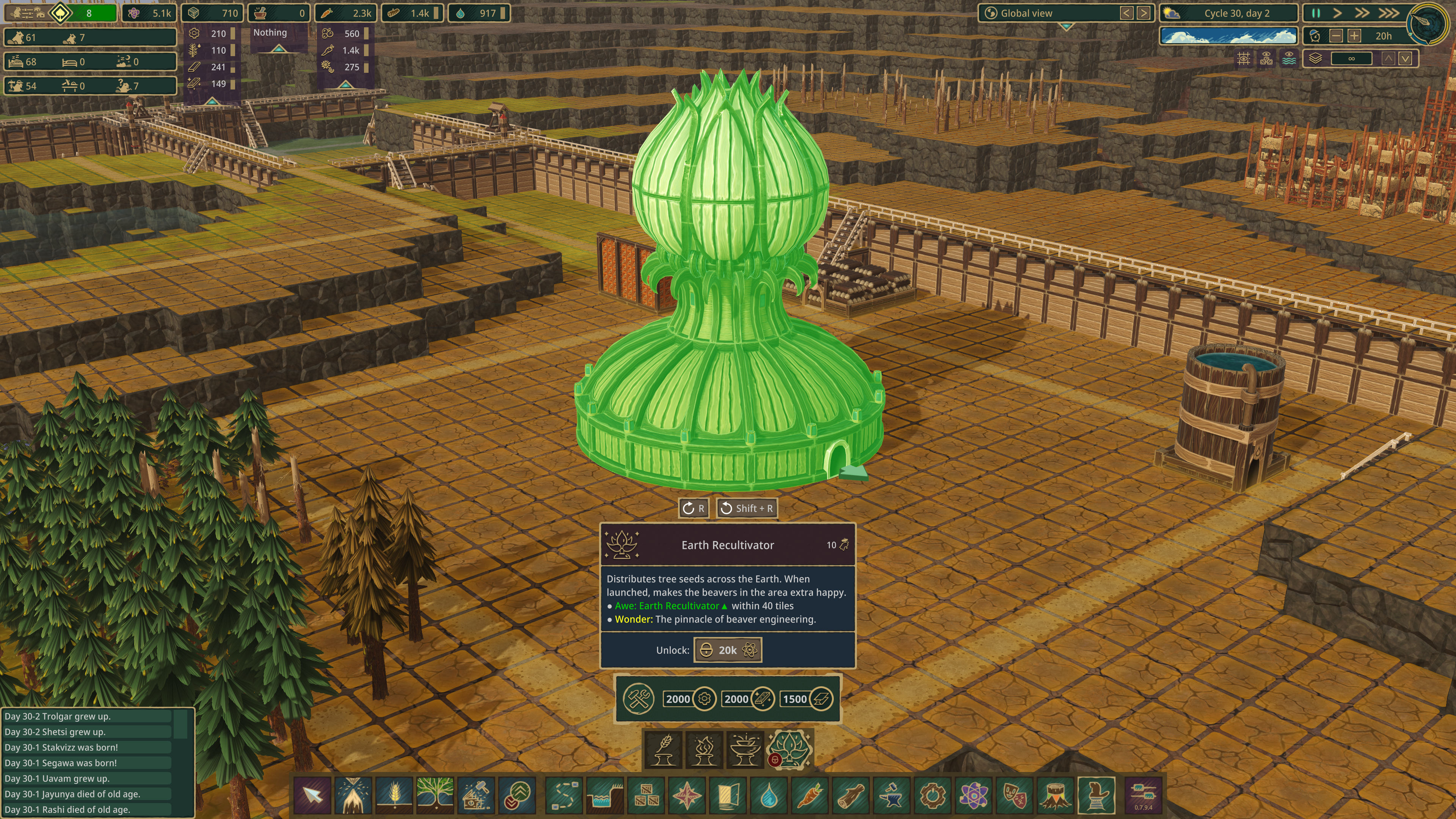
Luckily beavers are great engineers, and with Timberborn's dynamic fluid modeling system, you can eventually turn an arid wasteland into a green paradise. But what if you could do even more than just that? This is where Monuments come in—and particularly the final and grandest of them all, the Earth Recultivator. This massive, artificial bulb will spread seeds all across the lands, and also unlock the ability for you to start over on the current map and change where your first settlement is located. (Normally it's a fixed spot.)
It's the ultimate culmination of all the work you've put into a save—but it certainly won't be easy to accomplish!
How to build a sustainable settlement
Before you can even think about saving the world, you have to save yourselves. Beavers will require a sustainable supply of Logs, Food, and Water. And it won't be enough to simply stockpile provisions once you grow beyond a certain size. Two types of disasters will plague you on a regular basis: Droughts that cause all water sources on the map to temporarily run dry, and even scarier "Badtides" that cause all water sources to temporarily become toxic.
Since your crops will need constant irrigation, even during Droughts, you'll need to build Dams and reservoirs that can store enough water to see you through the dry season. As for Badtides, you'll need to create a system of Floodgates and Locks that can redirect the bad water safely away from your clean water reserves. It's sort-of similar to a Drought, in that you won't be able to get any new, fresh water while it's ongoing, so you'll need to have lots stored.
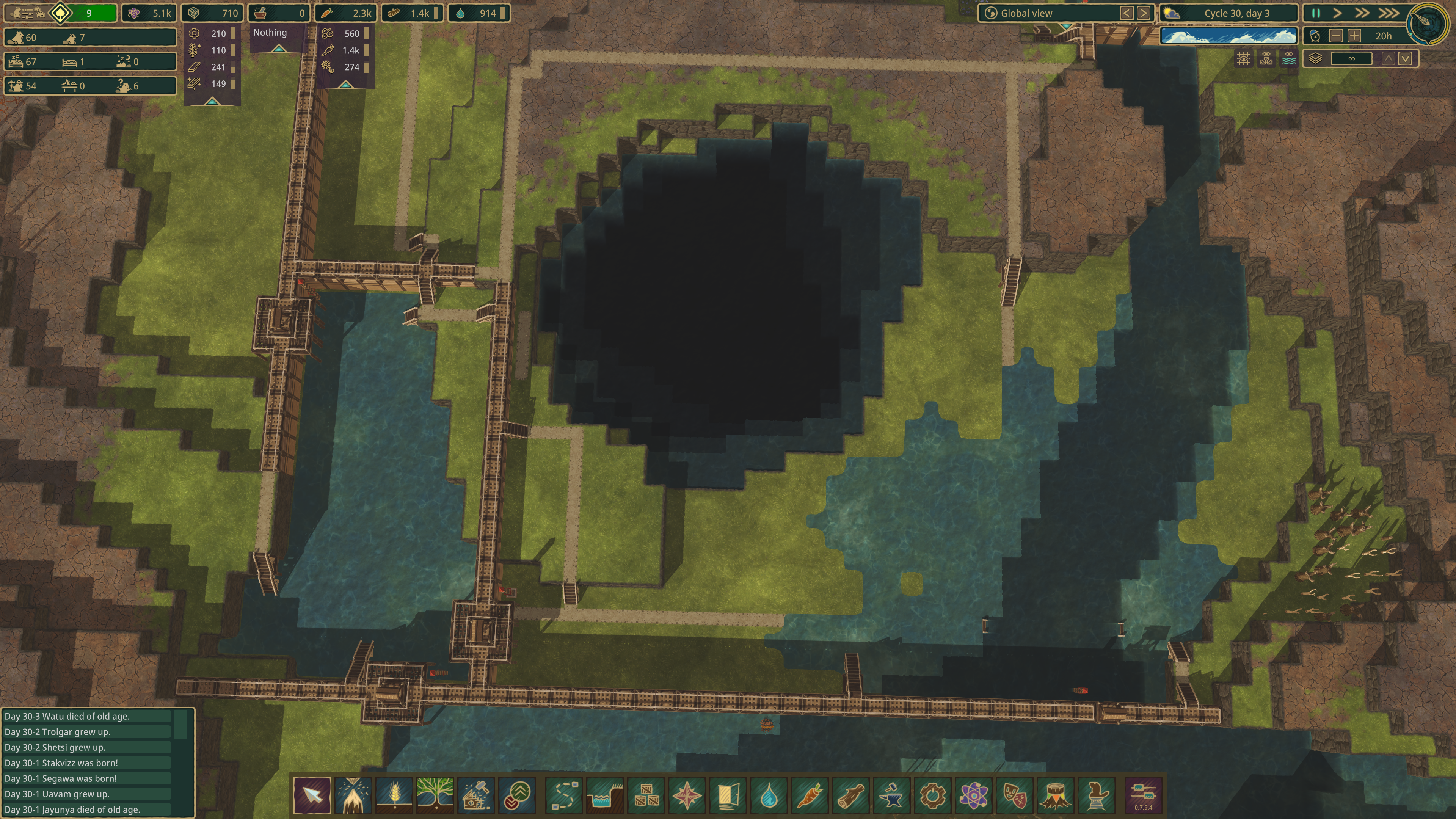
Mastering Timberborn's hydrology could be an entire guide unto itself, but keep in mind that water will always follow gravity, and will fill up any basin to the height of its lowest edge. In the case of Badwater, you'll need to steer it to a point where it can flow off of the map naturally. You can't just block off all the water sources, or they'll eventually spill over and pollute everything. That muck needs to go somewhere.
Don't worry too much if you don't get it right the first time. There are lots of little nuances to the fluid physics you'll learn by experimenting, and you might lose some beavers to thirst or contamination in the process.
How to unlock and build the Earth Recultivator
Just for starters, the Earth Recultivator costs 20,000 Science points, making it the most expensive tech you can unlock. The most efficient Science building, the Observatory, produces about 13 Science per hour and requires constant energy from a Water Wheel or a Windmill. So with a single Observatory running 20 hours a day—beavers need to sleep at some point—it would take more than 75 in-game days to unlock, not taking into account any of the prerequisites to get there. That's a long time, so you'll probably want multiple Observatories!
Aside from the huge cost in Science, the Recultivator is also the most expensive structure in terms of raw materials. You'll need 2,000 Gears, which are made from Planks, which are made from Logs. Then you'll need 2,000 Treated Planks, which are made by coating Planks with Pine Resin collected from pine trees. These each have their own Workshops, which require power. Finally, you need 1,500 Metal Blocks, which require scavenging those eerie human ruins for Scrap Metal and then firing it in a Smelter. This, too, requires power. Later on, you can unlock Mines to speed this last bit up somewhat.
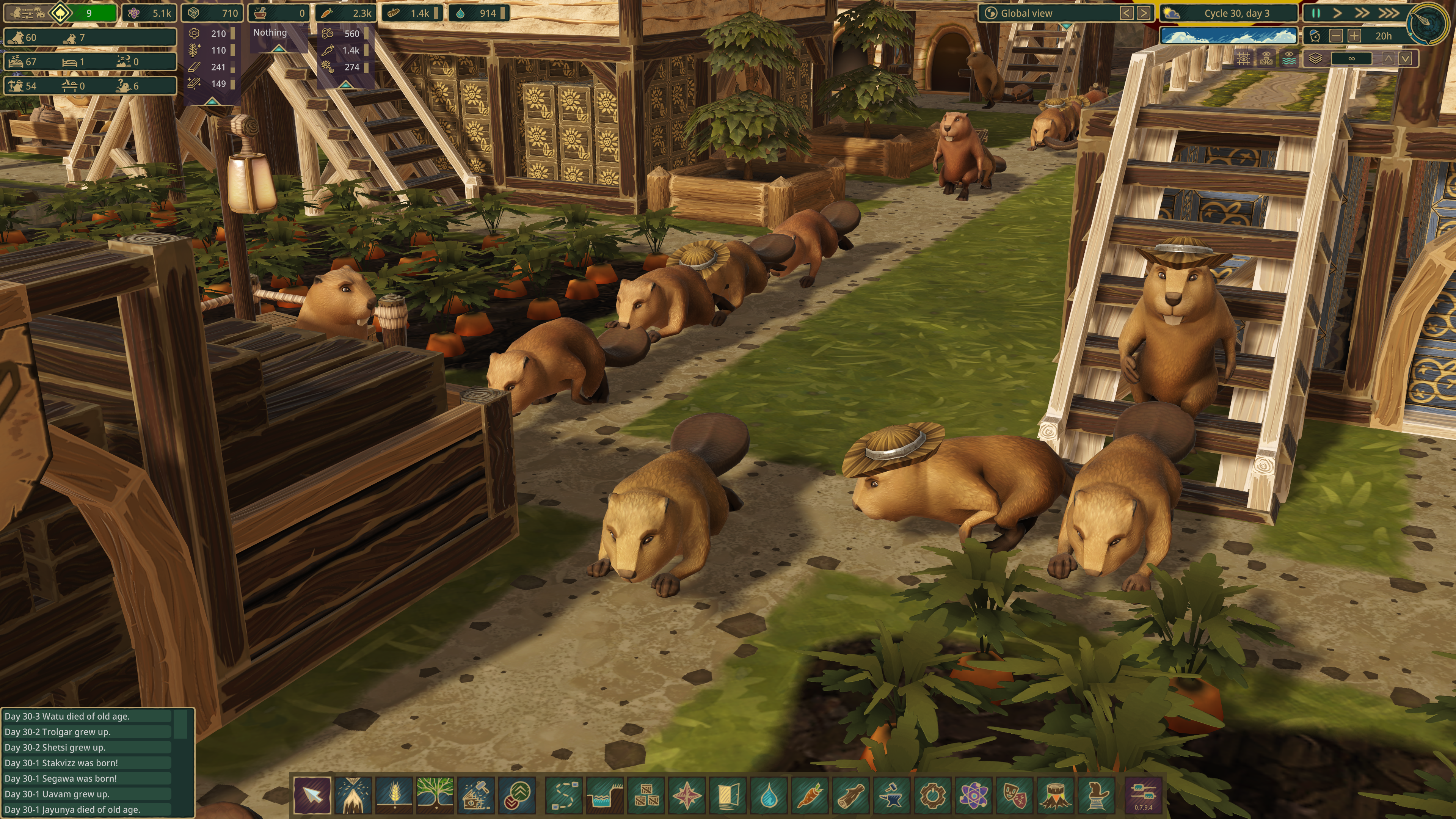
You'll also need a tremendous amount of storage to make this work. For reference, the largest underground storage area holds 1,000 units of any given material. It's not necessary to save up all the materials before you start building the Earth Recultivator, since your haulers will deliver it to the construction site as needed—but still, it's a lot, and you'll also need those same materials for other vital tasks, so be prepared.
And this all requires population. I built my first Earth Recultivator with around 70 beavers, which honestly felt a little on the low side. But the more your population grows, the more you'll need to be careful about food and water—especially in a Drought or Badtide. So slow and steady may just win you the race.
Journey's end
Finally, after a lengthy construction process (that can be expedited by building more Builder's Huts), watch the seeds fly as you renew the land and grant all nearby beavers a huge happiness boost. This doesn't need to be the end of your settlement. You could keep playing forever, technically. But at this point, you've accomplished the most difficult task we currently have to strive toward in Timberborn. If you were hoping for a big finale, you got it!
Timberborn is available now on the Epic Games Store.