Vlad Circus: Curse of Asmodeus heightens its horror by jumping through timelines
Within the first few minutes of Vlad Circus: Curse of Asmodeus, there is a chilling scene: a man, hazily awakened from his nightmares and dressed in a patient gown, stumbles towards a mirror. In his reflection, he sees himself burnt and disfigured, voiceless and memoryless. He screams, but barely manages a gurgled groan. The scene then cuts to a sleeping man, his portrait awashed in sepia tones; it’s the very picture of serenity.
As it turns out, you’ve traveled back to a not-so-distant past. This stark contrast between placidity and revulsion is how Curse of Asmodeus presents its creeping horrors, until the gap between the two polar opposites becomes smaller, even minuscule, towards its latter half. Such a portrayal stems from a story that spans across parallel timelines, with the player passing through mirrors to unravel the tale’s hidden layers.
In one timeline, the protagonist—a prisoner of unseen forces—will be walking through a dilapidated building, trying to find his way around its locked doors.
And in the other, he’ll be exploring the town of San Reno. “The idea was to create a dynamic and constantly changing story by moving the protagonist across several timelines,” says Diego Cánepa, founder of developer Indiesruption. “Horror isn’t just about what happens but about how memory and perspective distort it. The player can’t be sure which version of events is true, which mirrors the feeling of being haunted.”
More than just imparting a spooky story, the dual timelines also keep the game’s scares unpredictable. “For us, it’s a way to make the structure of the game scary, not just the content. The act of piecing timelines together is like chasing a ghost that you never quite catch,” he says.
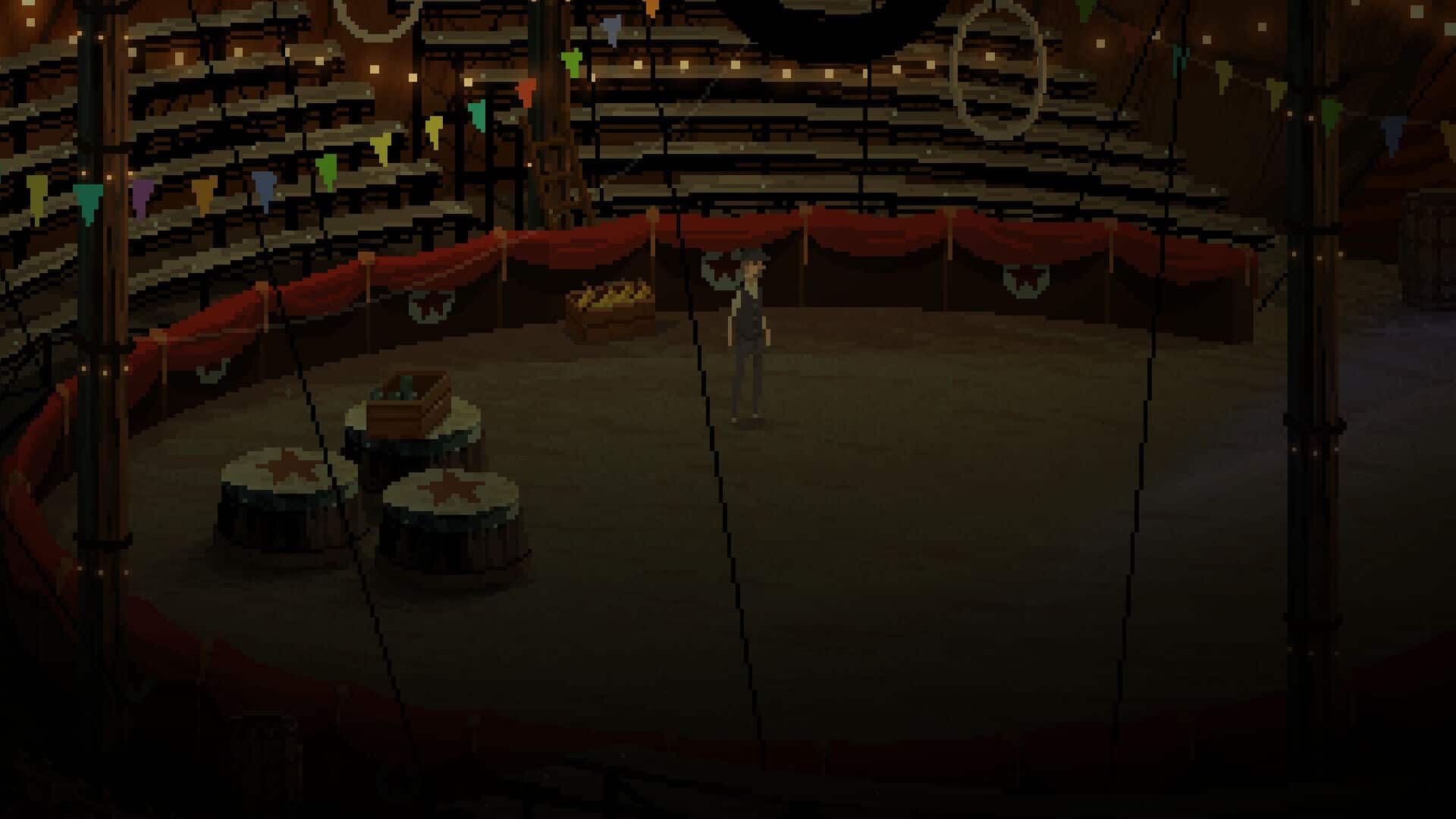
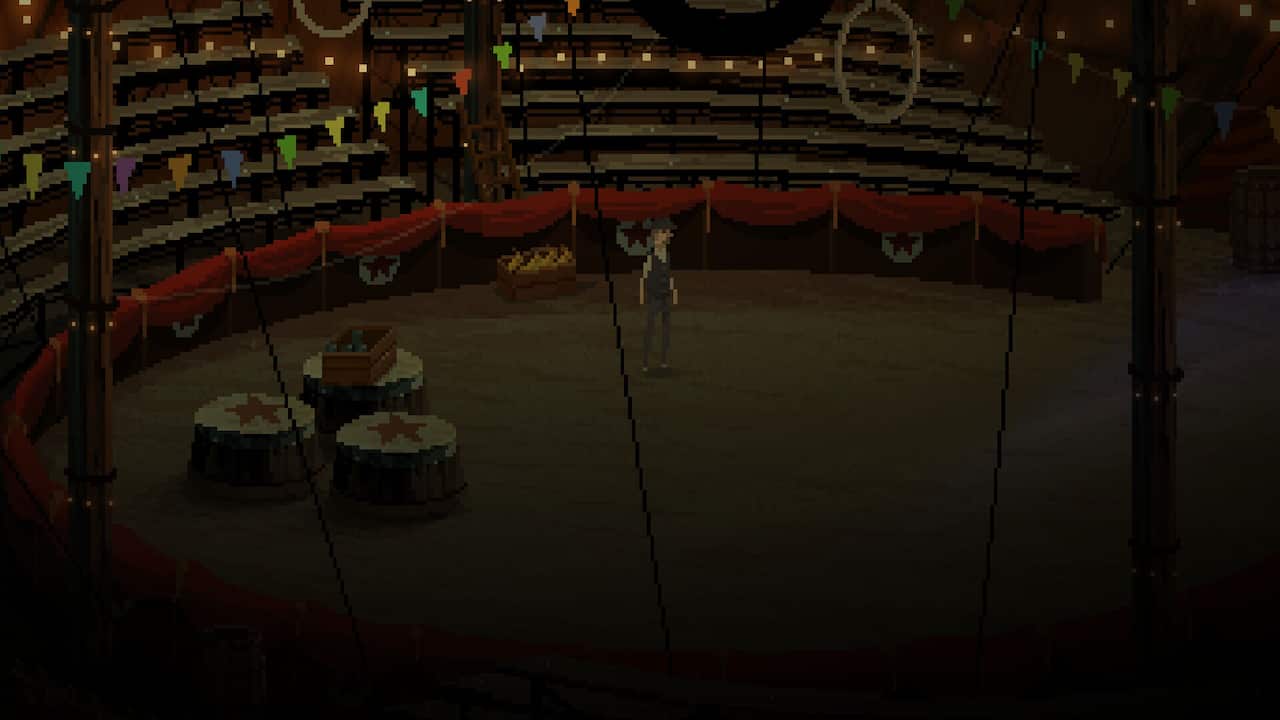
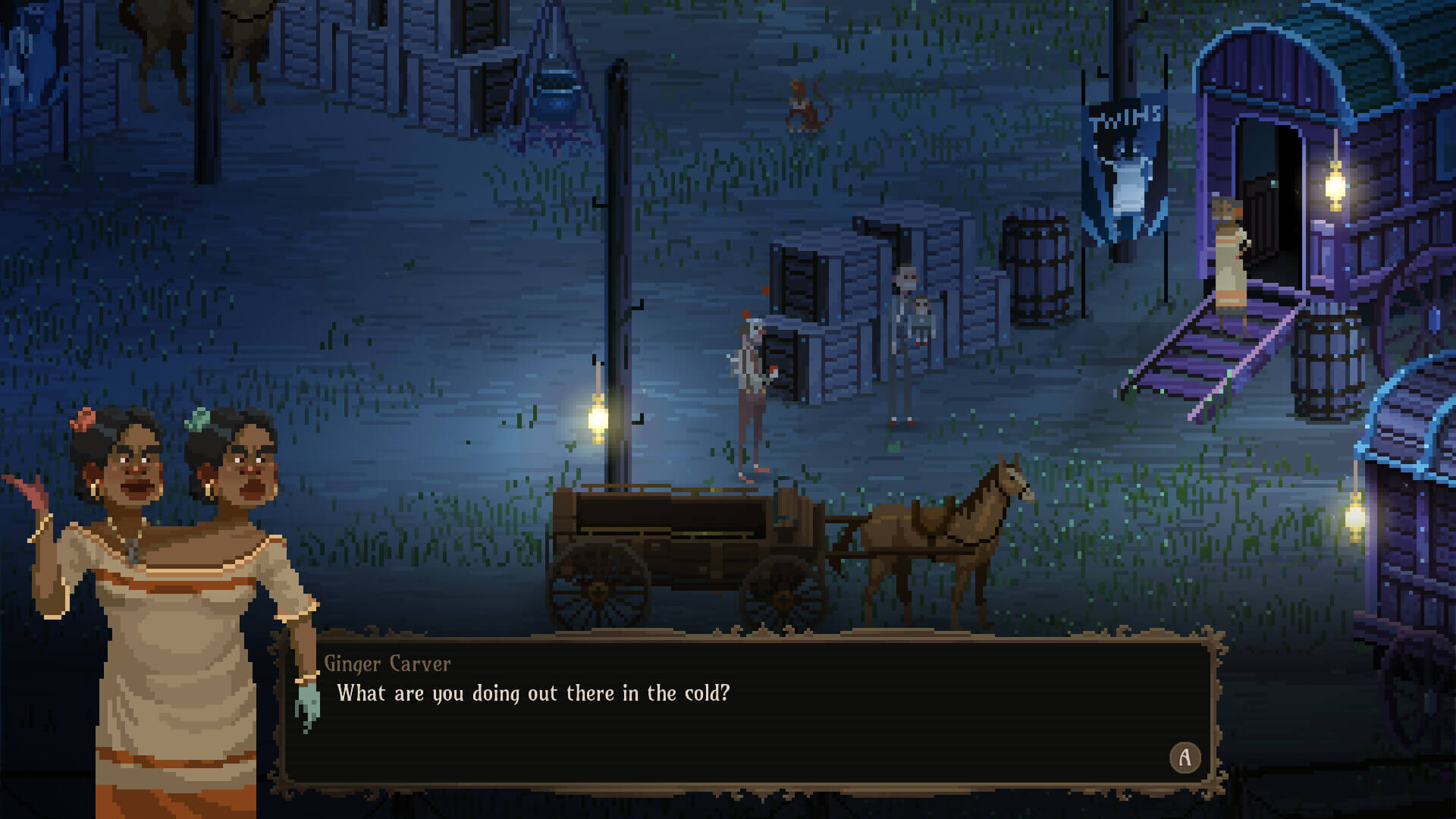
Curse of Asmodeus tells the macabre tale of Josef Petrescu, a figure that players who experienced the first Vlad Circus may recognize. In Vlad Circus: Descend into Madness, Josef is the culprit behind the burning of the circus—owned by his brother Vlad Petrescu—and who was sentenced to death in the electric chair. As the prequel to the first game, Curse of Asmodeus charts Josef’s journey as he pieces together his lost memories, discovers the cause of his downfall, and unearths the unhallowed motives of a parasitic demon, Asmodeus. And with a thick layer of religious overtones, these narrative threads are anchored by the game’s point-and-click system. Light exploration and puzzle-solving segments see the player uncover the secrets tucked away in the mysterious town while chatting with its eccentric denizens, including religious fanatics and peculiar circus performers.
That said, Cánepa shares that the game’s nonlinear sequences presented their own set of challenges. “The biggest challenge is maintaining [Josef’s sense of] sanity, cohesion, and a unified gameplay across the different timelines. On top of that, there’s also the task of keeping a logical thread that connects this story with the previous game,” he adds. As such, Curse of Asmodeus opted for a more stripped-down system as compared to Descend into Madness, allowing its story to take center stage. That’s why in this game, there are no more combat encounters, no inventory to manage, and no need to juggle resources.
This change is intentional, according to Cánepa. “In this new game, we use a more classic health point system with the intention of differentiating one game from the other and not repeating ourselves. Health is shown through a red vignette that intensifies as damage is taken,” he explains. “We designed it this way to add a touch of realism and to keep the player from knowing exactly how many health points they have left.”
One crucial lesson that Cánepa applied from crafting Descend Into Madness was the increased focus on silence to highlight the second game’s latent horrors. It’s part of what Cánepa believes that every good horror experience should entail: a way to generate tension before releasing it while steering expectation, dread, and surprise.
“Another was vulnerability,” he says. “Instead of the stress mechanics [from Descend Into Madness], we use uncertainty in health and narrative to make players feel fragile. We also put emphasis on consistency, no matter how bizarre the elements are. The world needs coherent rules. And maybe the most important lesson was restraint: letting some things remain unseen or unexplained. Imagination is often scarier than anything we could show, and [this suspense can] leave the door open for another title in the future.”
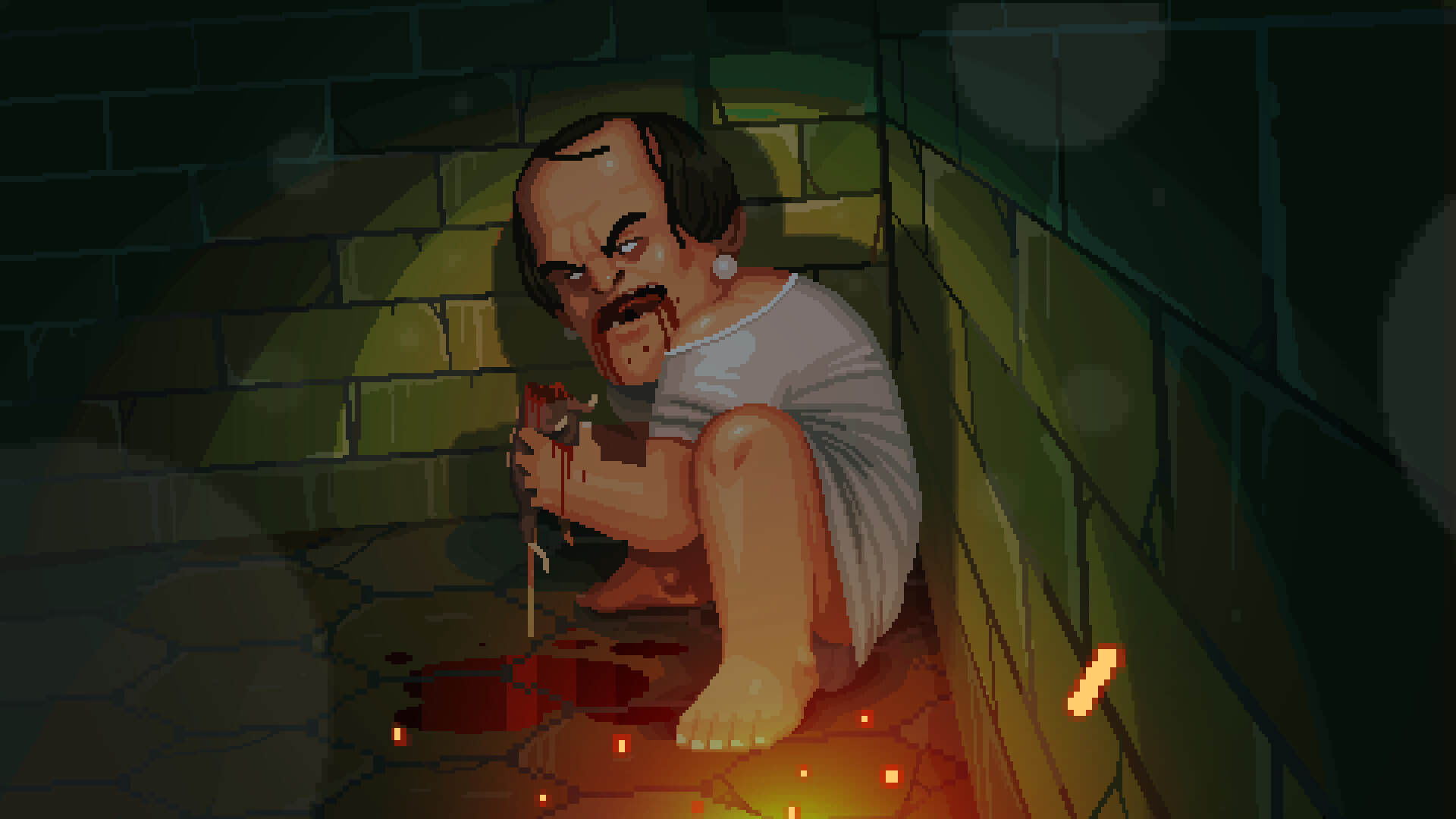
The time-traveling twist in Curse of Asmodeus feels right in line with the game’s grizzly horrors. At every corner lingers an abomination—a flesh-eating patient, a rotting cavader— threatens to overwhelm Josef. The tension ratchets up. And then he looks into the mirror, and he’s jolted back into his increasingly sordid memories.
Vlad Circus: Curse of Asmodeus is now available on the Epic Games Store.