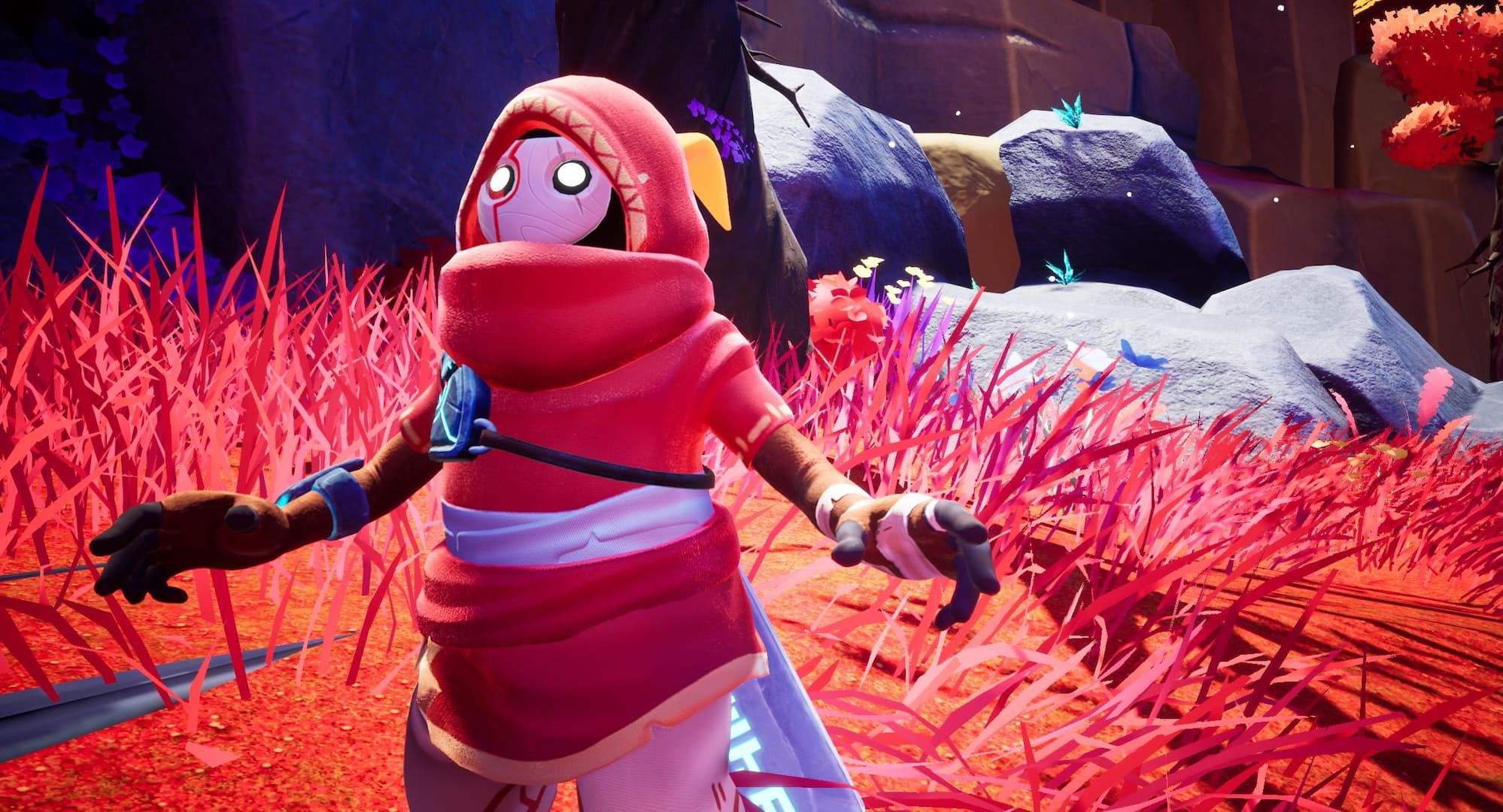
Zelda meets God Of War in colorful action RPG Astor: Blade of the Monolith
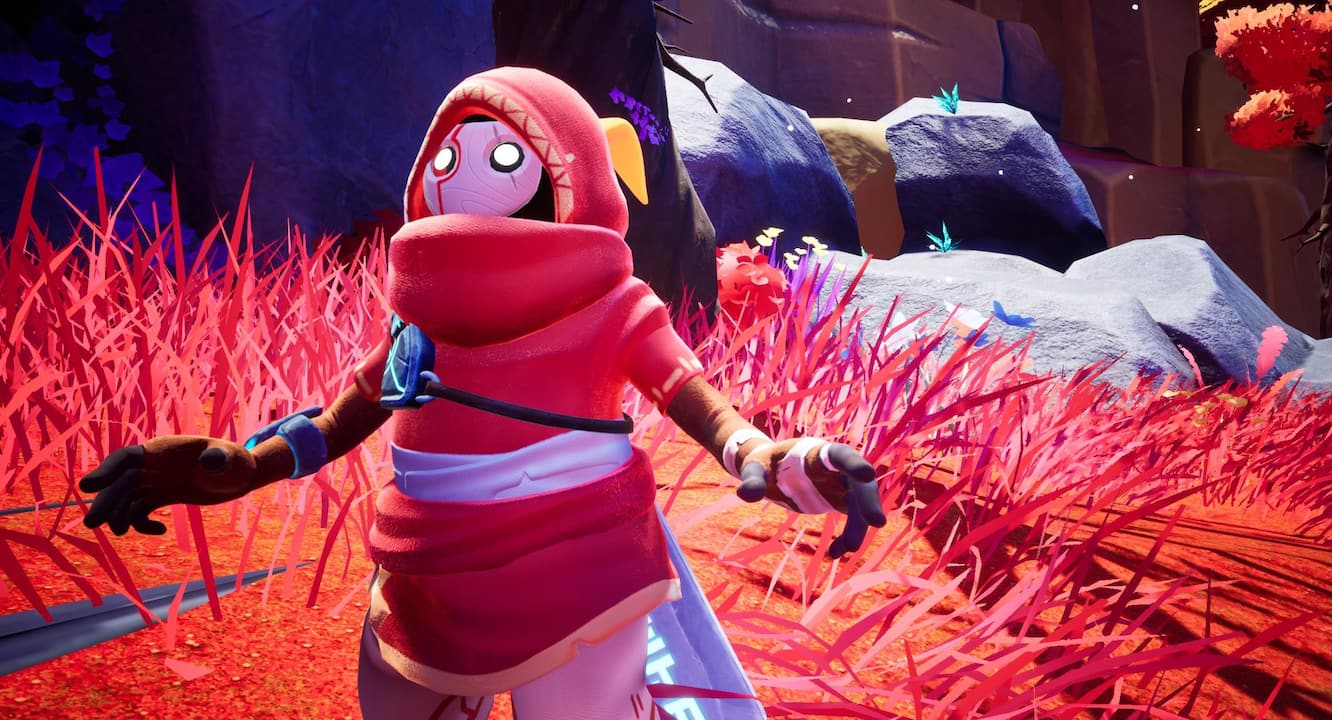
Action RPG Astor: Blade of the Monolith belies its hyper-kinetic battles with its quiet beginnings. Its gentle opening sees our hero Astor, a young Diokek living on the once-peaceful planet of Gliese, heading out on a journey to learn about his people’s origins and the ancient race that created them. All while a brutal force of invading creatures, the Hiltsik, attempts to wipe out the current generation.
However, despite this sounding like it could be the beginnings of a grimdark Soulslike, Astor is anything but. This is a super-colorful, cartoony game with big, bold designs, chunky enemies, and bright sunshine illuminating everything you do. It feels like a game that wants to be seen.
“Astor represents a new beginning for our studio,” says C2 Game Studio Co-Founder Luis Correa. “A dream that we kept putting on the back burner until we felt we were ready.” Before this, Columbian studio C2 made mobile games, but despite their popularity, the studio struggled to monetize them successfully. “The decision was made,” continues Correa, “to pivot into what we really loved, so a new engine (Unreal Engine), a new audience (core), and a new market (console and PC).”
That clash of contrasts, the color and the combat, is a big part of this dream. “We are fans of Zelda,” Correa tells the Epic Game Store, “and you can clearly see the influence in our visual style. However, we also love visceral, stylish, and impactful combat like Devil May Cry, Nier Automata, Bayonetta, and God of War. So we decided to blend the two together. Our mix leans more toward the combat side, but the beauty and mystery of the world that Zelda inspired are ever-present throughout the game.”
That emphasis on combat is clear from the start. Astor offers something far more immediately approachable than a Soulslike, and your basic attacks are not limited by stamina (although special attacks and finishing moves are). However, it still encourages a mix of combos and defense, growing ever more complex the further you progress.
“We approached combat in terms of responsiveness, momentum, flow, impact, and empowerment,” says Correa. “We wanted to make the type of game that was intuitive, and once you master it, you are able to flow as if you were controlling the game with your mind.”

The design behind the combat was far more focused on creating this sense of flow over and above multi-fingered dexterity. “We didn’t want to make a hard Soulslike game,” Correa explains. “We wanted a game where anyone could feel powerful. Impact is also a big thing that we feel can make or break combat feel; sometimes in games, you swing your sword and you connect and there’s the mandatory VFX and SFX, but there’s no weight. It’s like you cut something that offered no resistance, and you feel subconsciously disconnected. This is something we learned through a lot of iteration, so we added things like slow-motion and time stretch to sell the windup [as well as] hit stops and camera shakes to sell the impact.”
Street Fighter was a big inspiration behind all of this, and for one other key reason: “Their games offer an amazing training mode, which is invaluable for devs like us who are trying to learn from the best.”
This all adds up to what C2 hopes will be a balance of the complex combat that dominates console action RPGs but with the approachability of a third-person action game.
“We believe we achieved a good balance between accessibility and empowerment,” says Correa, “[and] we hope people who have been turned off by other game’s complexity or themes will find a home in our game, and those who are already fans of the brawler/hack-and-slash/adventure genre will find Astor enjoyable and compelling.”
Intriguingly, the character you play was never meant to be the hero. The Diokek were originally designed to be an enemy race on Gliese (a real planet, C2 notes—just head toward Libra and turn left), but the developers quickly discovered it felt horrible to attack them.
“You didn’t feel like a hero,” Correa tells us. “They evoked so many feelings, but none of them was danger.” Driven by the developers’ own desire to protect their creation, the once human-like Astor became a Diokek himself—squat, hooded bipeds with spikes for feet and a wooden mask for a face. “We felt that the kind playful nature of the Diokek combined with overwhelming power could make for an interesting hero people could relate to.”
Again, this allowed C2 to distinguish their game from the more violent and dark nature of the action RPGs that inspired them. “In a way,” says Correa, “Astor is a reflection of us. We are not sons of a demon like Dante or a demigod like Kratos. We are a kind, imperfect, quirky group of people that just want to make an impact, to give something good to the world.”
Astor: Blade of the Monolith is out now on Epic Games Store.