Boom and Bust: A Minister's Dilemma


Lead Korzarkia through economic crisis from the minister's desk. Set budgets, taxes and monetary policy, confront banking failures and political pressure, and face the consequences of your decisions in a deeply connected economic simulation.

Rebuild a country from the minister's desk
Korzarkia's old government has fallen. Its currency is losing value, its banks are concealing losses, and the provisional government needs someone to keep the economy working. You have returned from abroad to take the job.
As Minister of Finance and National Reconstruction, you decide how the state raises money, what it funds and which demands it can afford to meet. The President expects results. The country will live with the orders you sign.
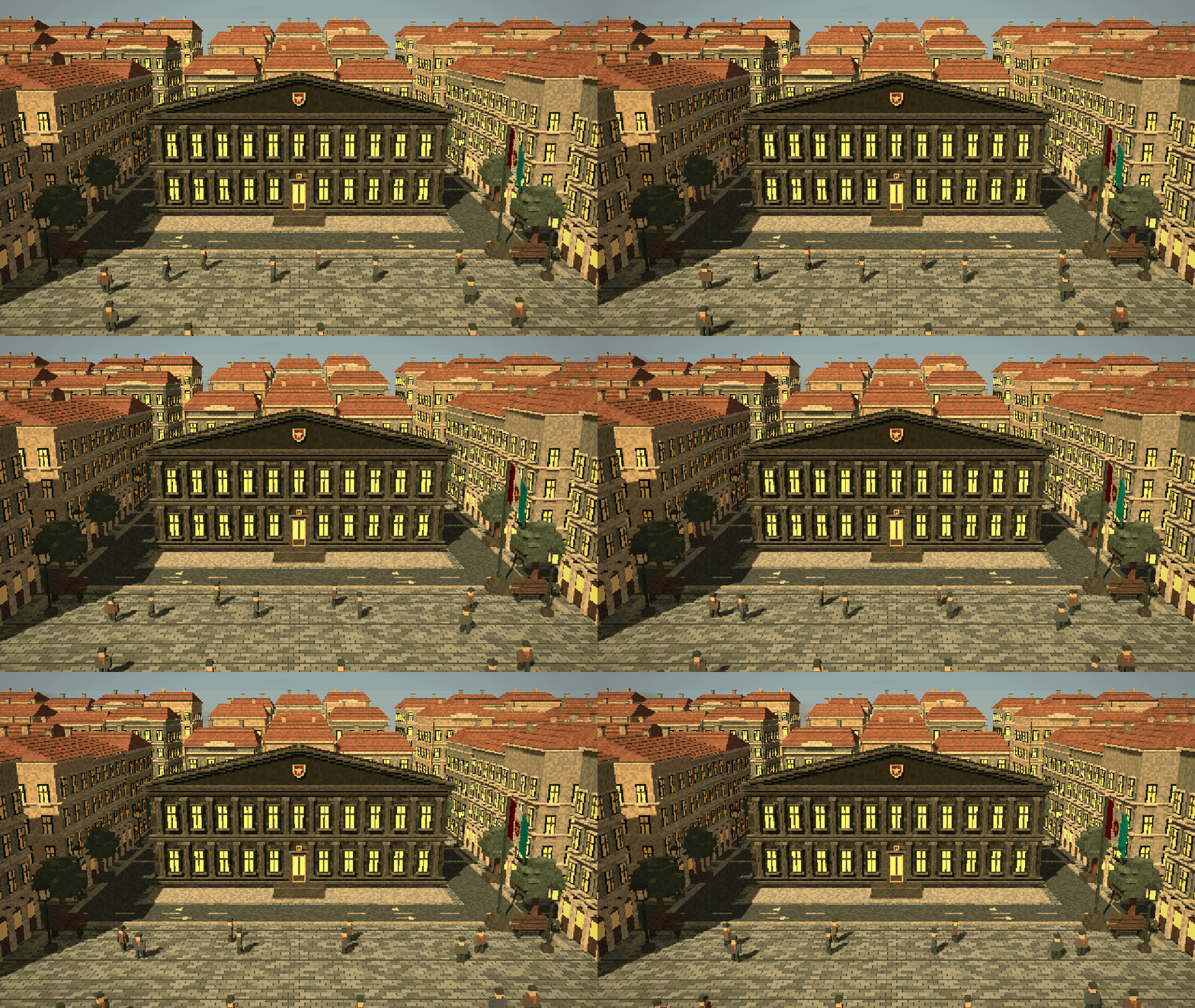
Every file carries a consequence
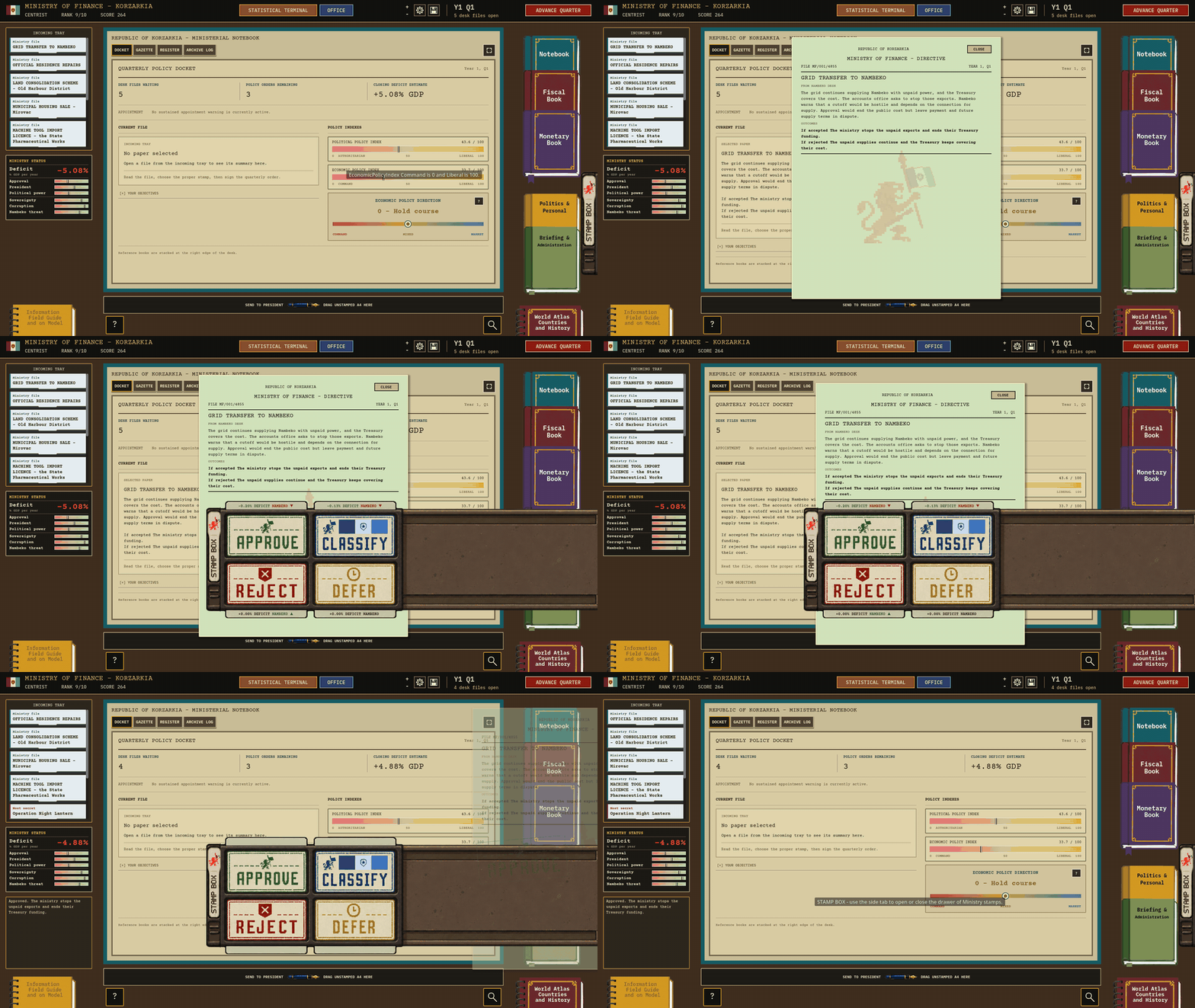
Your work arrives as requests, reports and policy books. Read an incoming file and answer with a stamp. Approve, reject, defer or classify it, or refer it to the President.
A bank needs support. A factory needs permission. A public service needs funding. Each request reaches a ministry with limited resources and competing obligations. Decide what your signature will commit the country to, then face the next quarter.
Make policy that reaches the whole economy
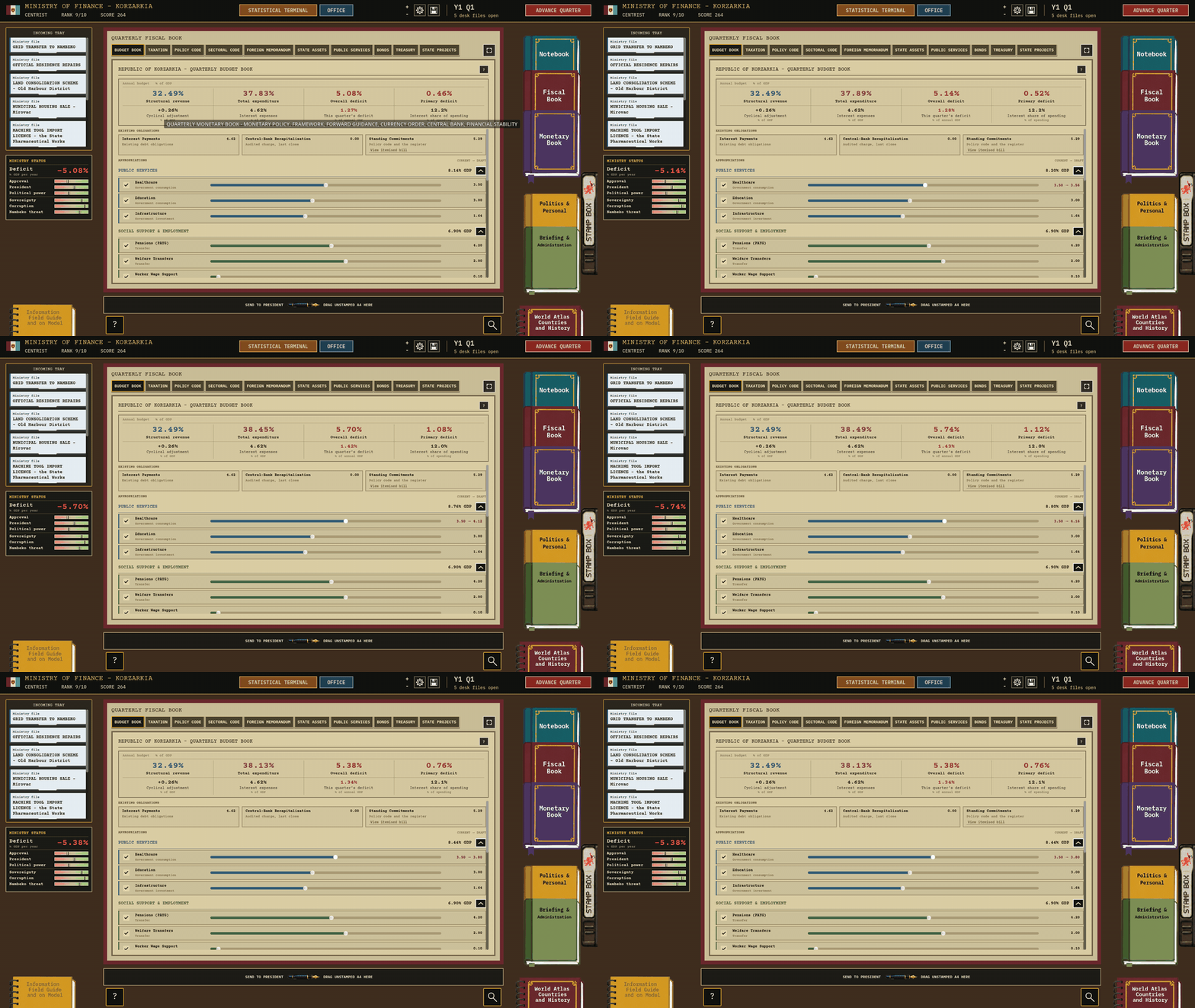
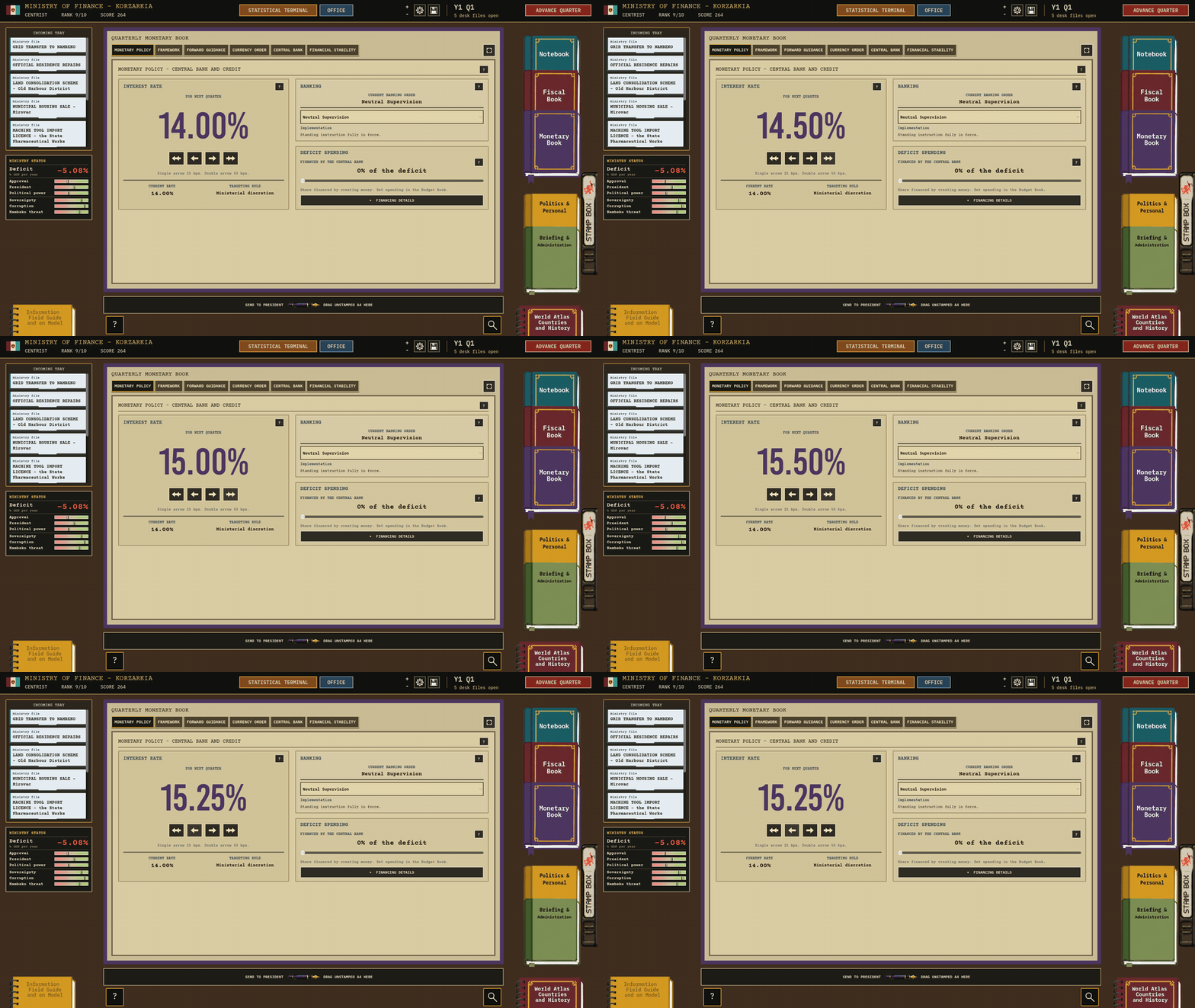
Set the budget line by line, choose tax rates and arrange public borrowing. Work through interest-rate orders, banking regulation, currency policy and foreign-exchange reserves. Change the laws governing trade and production.
The consequences spread through credit, supply chains and public finances. A larger appropriation needs financing. Tighter lending can affect the firms you want to keep in production. Decide whether to hold your course or change it as new evidence reaches your desk.
Read the country behind the figures
Follow prices, production, employment, credit and public debt through the Official Statistical Terminal. Magnify a chart and examine the record behind a headline number.
Official figures and staff forecasts can be incomplete or uncertain. Your statistical institutions affect what the ministry can measure. Compare those readings with the files, reports and requests in front of you. Policy still needs an answer before the country supplies a perfect explanation.
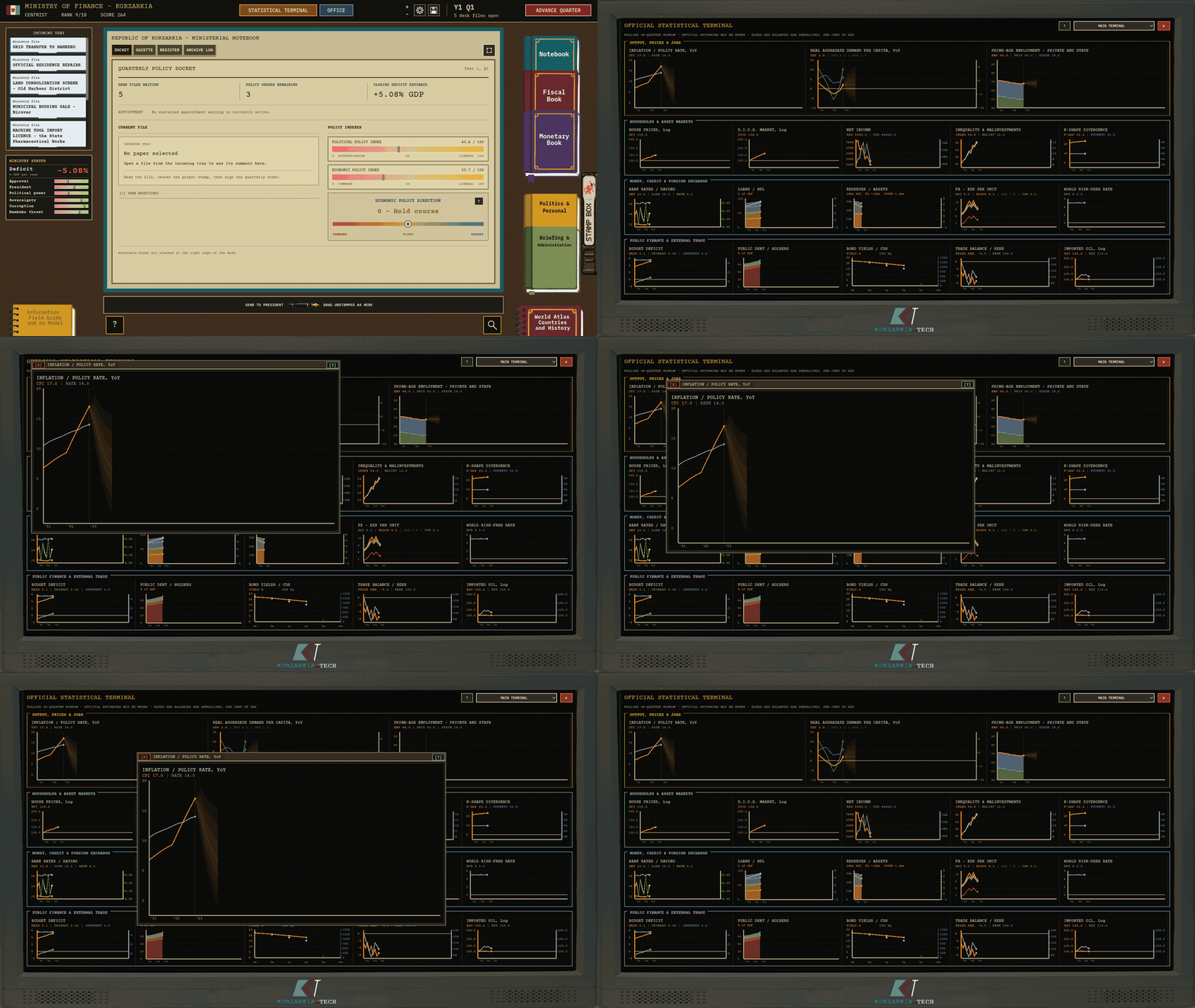
Central-bank economic models made playable
Boom and Bust is the first economic simulator of its kind, powered by the most detailed economic model ever built for a game.
The Hermetic Engine is a central-bank-grade economic modelling platform built for research and policy analysis. It integrates an agent-based economy, stock-flow-consistent accounting and a quarterly projection model to analyze how monetary, fiscal and financial policies affect an interconnected economy. In Boom and Bust, that analytical depth becomes playable.
Each quarter, thousands of economic calculations connect household finances, business decisions, prices, credit and public accounts. Macroeconomic transmission links demand, inflation, exchange rates and monetary policy.
Production spans 25 sectors and five stages. A normal simulation profile starts with 576 weighted household agents, 199 firms and eight banks. These are representative agents carrying the country's economic activity.
The engine records more than 170 campaign time series. Its economic relationships and calibration draw on actual published research, connecting your policy decisions to measurable consequences across the simulated economy.
These systems connect the decisions on your desk to the economy that follows. Credit conditions affect firms and households. Their responses feed into production, prices and the next set of financial accounts. During a campaign, you govern through the statistics your office can publish and the estimates its staff can defend.
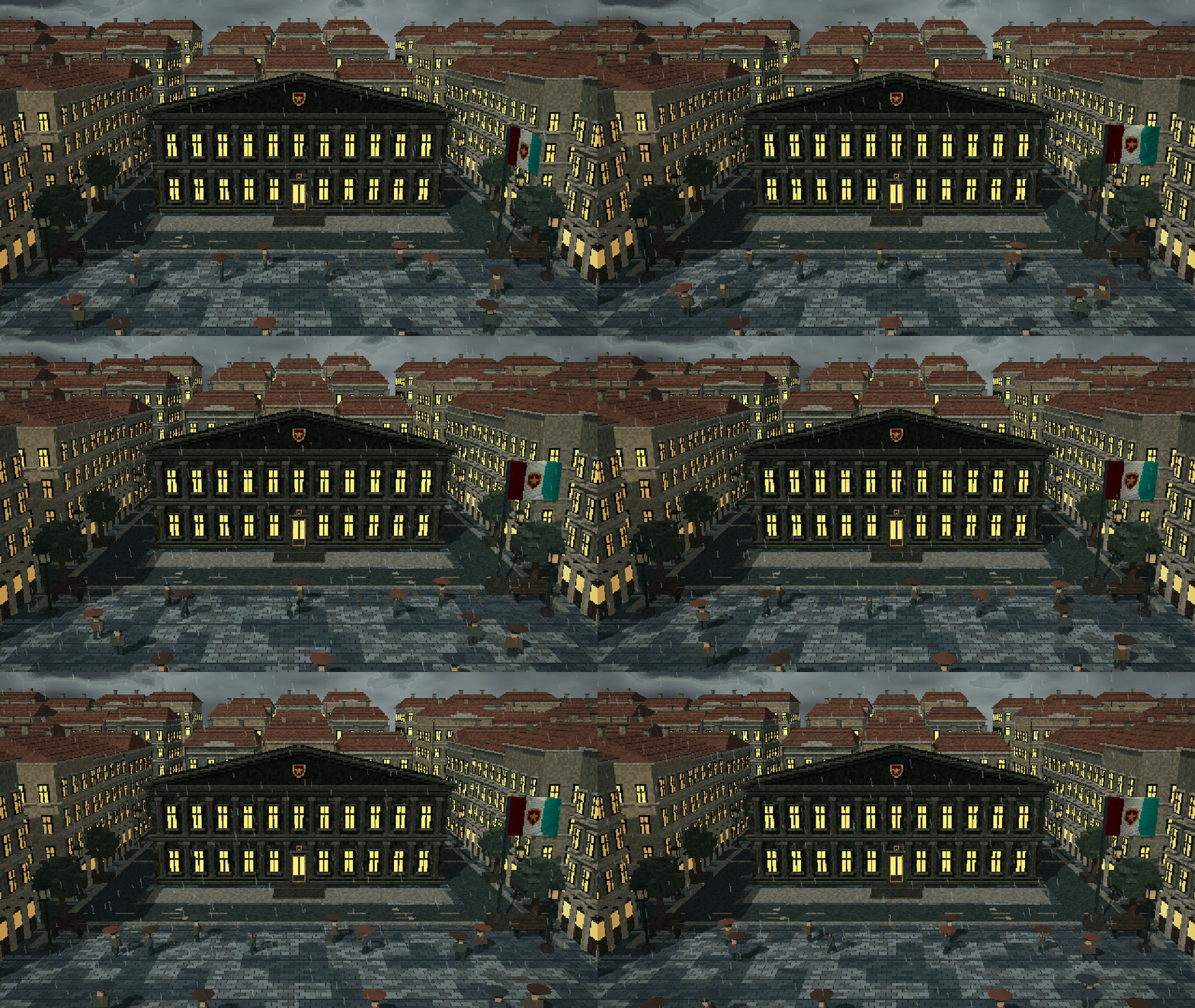
Keep the ministry, and your own life, together
Receive delegations in your office and hear their requests. Follow party support, compare programmes and manage your relationship with the President. A policy can help one part of the economy while creating obligations elsewhere.
You govern with incomplete information. Latent economic variables must be inferred from imperfect statistics, while the publics and the President’s approval and personal trust are conveyed through conversations, behavior and official responses. Exact relationship scores remain hidden. These limits are a deliberate design choice, reflecting the uncertainty of real policymaking and the judgement required to act without complete information.
Beyond the paperwork, travel through the capital with your chauffeur and hear what daily life looks like beyond the official reports. Your household has bills and expectations of its own. Your salary is paid in the currency you are responsible for.
You will return to the desk with another quarter to govern, a nation to reform, a President to satisfy, and the consequences of earlier choices still in motion.


Boom and Bust: A Minister's Dilemma System Requirements
Minimum
OS version
Windows 10 64-bit, version 22H2
CPU
Dual-core Intel or AMD processor with 64-bit and SSE4.2 support
Memory
4 GB RAM
GPU
Intel UHD Graphics from an 11th-generation Intel Core processor, or equivalent
DirectX
DirectX 12
Storage
5 GB available space
SoundCard
Windows-compatible audio device
Additional Notes
Minimum targets 720p Low. Recommended targets 1080p Balanced. Requires 64-bit Windows, DirectX 12 feature level 12_0, keyboard and mouse. Internet required for online multiplayer. Single-player can be played offline.
Recommended
OS version
Windows 11 64-bit
CPU
Quad-core Intel or AMD processor with 64-bit and SSE4.2 support
Memory
8 GB RAM
GPU
NVIDIA GeForce GTX 1650, or equivalent
DirectX
DirectX 12
Storage
5 GB available space on an SSD
SoundCard
Windows-compatible audio device
Login Accounts Required
Epic ID
Languages Supported
- English
© 2026 Valtice Center for Economic and Statistical Research
Privacy Policy (Opens in new tab)