
News
Beyond These Stars is a sustainable city-builder where you survive on the back of a sentient celestial whale
C
Charlie Wacholz
I received a full primer on space whales and sustainable city building during a half-hour hands-on-and-off demo with Balancing Monkey Games.
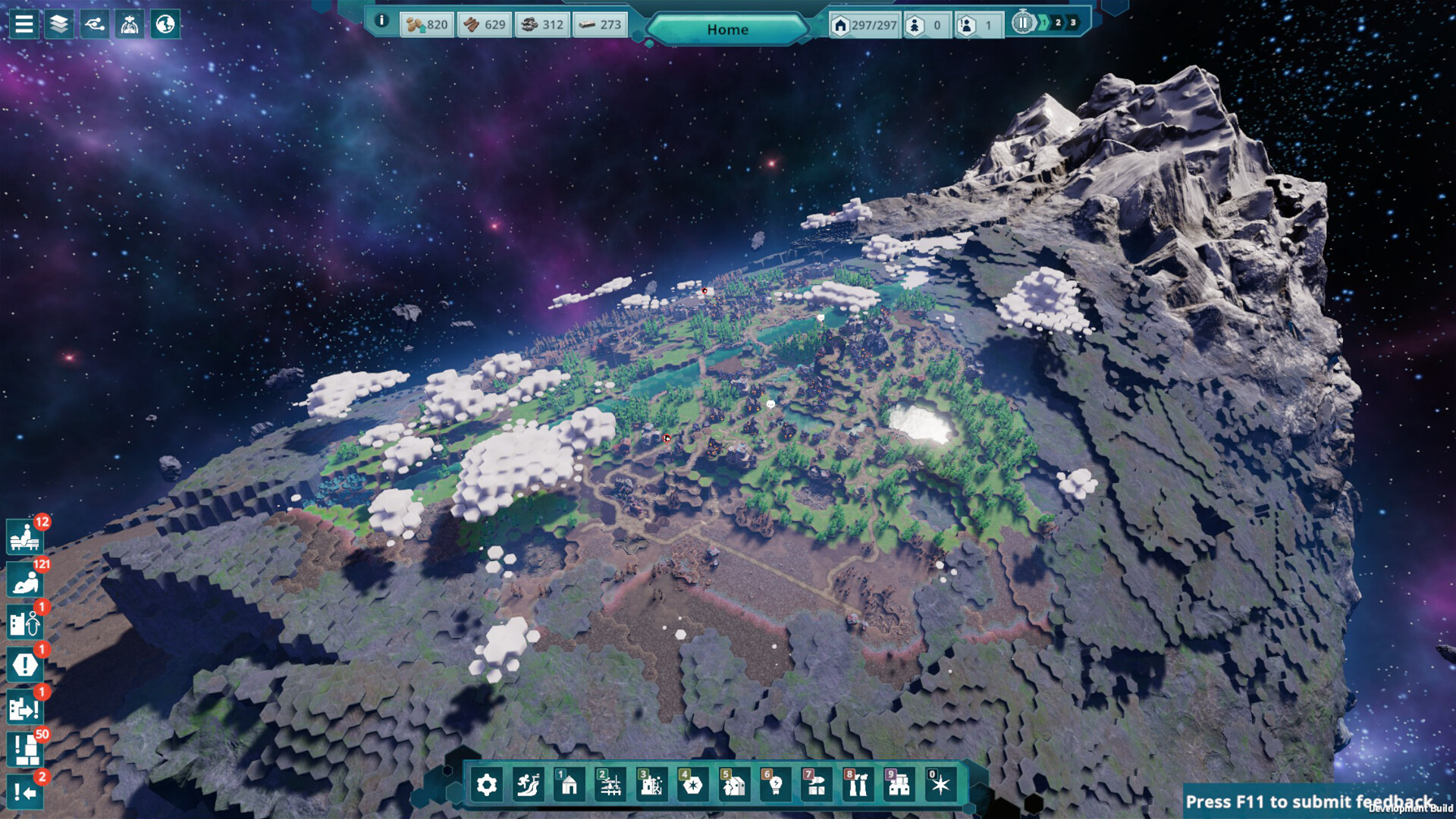
You preside over and control the descendants of a bygone interstellar civilization in their search for ancestral settlements across the stars while building out a civilization on the back of a gigantic celestial whale named Kewa. A sentient manifestation of your environment and land, Kewa isn’t a pet, but a companion and a character with a mind of their own. They have thoughts and feelings about what you build and where you go, and will act on them—and eventually share them with you, once your civilization develops the means to translate their song.
That can come from small things, like overcrowding too many factories into a small space, eventually polluting and even toxifying the ground. Kewa feels this, and will make sure you know it. Thankfully, this kind of damage is reversible, though that reversibility can depend on how you handle it. You’re certainly encouraged to take measures against it as it’s happening, but it can also be undone later. Either way, Kewa will appreciate your efforts to fix things, but if you don’t treat their body with care, they might act out by flying through an electric field which tickles them and disables some of your buildings. They could fly through an asteroid field for a snack, running the risk of damaging your carefully assembled neighborhoods, sometimes without telling you.
This won’t happen without warning though, be it from Kewa, or from the presence of unwanted pollutants. Beyond These Stars clearly communicates key measures like Kewa’s health and happiness. Speaking with Kewa directly is the coolest part of this mechanic. They’re written as an unfathomably old celestial force, speaking in mystical, poetic prose. They start the game in poor health, so it pays off to continually foster both your relationship and your home’s health.
But you can’t forget your goal: to rediscover and re-settle the stars. Using Kewa as your home base, you’ll set up small settlements throughout space, taking advantage of different planets’ conditions and environments. One planet I saw during the demo was a bit cold and barren, but played home to a flock of sheep! After placing a few houses and other necessary structures, the humanoid civilization (called Peeps) had successfully set up a wool farm, opening up travel to colder solar systems and planets.
Setting up a self-sufficient village like this requires a tactful approach. Like I mentioned earlier, putting factories close together can cause overpollution, but that’s far from the only effect nearby buildings can have on each other. A statue of your cetacean ride might improve the overall happiness of nearby residents, while putting too many huts near each other can make residents sadder, which can disrupt the flow of resources and trade, potentially leading to issues both for your population and for Kewa.
Producing goods will always yield two separate resources. Because each stack of a resource or item physically exists, it can affect the health of your civilizations. Beyond These Stars encourages you to develop and use resources and tools sustainably. Every byproduct has some kind of use, you just need to find the right circle of production to ensure that the soot from making tools, for example, can then go towards producing steel. I came away from the session really impressed with how Beyond These Stars manages to encourage and reward the right balance of efficient production and urban layout with sustainability and good stewardship that all play into one another.
I also saw a few small story events, including first contact with an alien civilization, who tasked the Peeps with finding a mysterious, powerful orb as an optional side quest to open up diplomatic relations.
Beyond These Stars is set for launch in early access before its eventual 1.0 launch.
