10 in-game computers to play on your computer
In a medium full of space marines and spell casters, video games tend not to revolve around activities that the average person finds particularly relatable. The most notable exception, though, is the very action you’re probably performing now by clicking through the Epic Games Store: using a computer. Faux desktop interfaces are the great unifier, able to immediately ground stories and game mechanics in our lived experience.
But even within such a specific presentation style, there is a formidable range of emotions and perspectives to be communicated. They can convey horror, suspense, and our most intimate experiences, ensuring that even the most superficially similar games say something entirely distinct.

As an anthology of horror shorts, Dread X Collection 2 covers a wide variety of styles and game mechanics. Another Late Night, in particular, finds existential terror in the hum of an old desktop monitor. The developer, Secret Cow Level, populates the fictional hard drive with chat messengers, stray music files, saucy images, and also a downloadable file for a cursed video game that manifests as black pop-ups with red text. It poses personal questions to the player that grow in intensity and, well, dread, until text in the bottom-right corner says, “everyone dies alone” before prompting you to hit the enter key. The game disappears as though nothing happened, and you’re left to your own devices on the desktop again. But then the game intrudes once more, like a nasty bit of software that refuses to be deleted, and the chilling climax lands precisely because of the solitary atmosphere and relatable desktop setting the game establishes from the outset.

Described as an “interactive zine” by developer Nathalie Lawhead (a.k.a. alienmelon), Everything is going to be OK collapses life itself into a Windows 98 fever dream. It’s scattered with pages and programs, creating a wide umbrella that encompasses animated vignettes of self-conscious rabbits, live-action rat footage, and an essay you progress by clicking the “overshare” button. The network neighborhood option ruminates on the difficulty of maintaining friendships, and in a sly little joke, the basic function of the “play” button becomes an arrow that nudges a window slightly to the right. Using the language of old computers to communicate uncomfortable truths and raw emotion, Lawhead faces down painful topics while always remaining true to her singular talents.

Like many games on this list, Buddy Simulator 1984 from Not a Sailor Studios starts with a text interface. To begin the game at all, you have to type in the command to load a ROM, and then the title comes up in ASCII font. The titular AI-powered “Buddy” plays rudimentary games like Hangman and Rock, Paper, Scissors with you in between asking such questions like what your favorite color is before transforming the screen to match it accordingly. These basic interactions seem quaint at first yet grow rather creepy once attached to a sentient, evolving consciousness, which is exactly what your Buddy morphs into as you hand it access to your in-game operating system. Your game experience gets upgraded in the process, first to a text adventure and then to a fully visual display that plays like a top-down RPG. As you explore, you encounter quirky NPCs and periodic glitches that provide a disturbing glimpse behind the curtain, as your Buddy’s eagerness to please devolves into obsession and anger once your displays of appreciation no longer meet its needs.

Also set in the mid-1980s, Stories Untold finds developer No Code focusing on the space around its simulated CRT monitors across four distinct chapters. First up is, naturally, a text adventure: a horror game loaded from a tape, which causes the environment to eerily shift in concert with the on-screen narrative. In later chapters, the technology available to you expands, to the point that you’re using the monitor exclusively as a point of reference to operate a complex series of devices for an unearthly experiment. These tactile interactions draw you into the game space, immersed in the chunky inputs as the rest of the world reaps the consequences of your actions.

The world beyond the computer is equally prominent in Song of Farca from developer Wooden Monkeys, not least of which because it’s right there across the top of the screen: a third-person view of your character. You play as the hacker and private investigator Isabella Song, who’s confined to her apartment with her two-legged dog and her house arrest ankle monitor. Sometimes she’ll be fiddling with something away from her desk, and you won’t be able to click around her screen until she comes back. House arrest hardly deters her, with the game broken up into detective cases where you’ll question involved parties (by video chat, of course), make deductions based on evidence, and even remotely hack into cameras to jump between other devices like drones and tablets. Each is even preceded by a contract, with her signature digitally scrawled on the line below the non-disclosure agreement. By exploring these processes, Song of Farca’s overriding feeling is one of power and capability, persevering even within apparent limitations.

In Orwell: Keeping an Eye on You and its sequel, however, developer Osmotic Studios portray the degree of power you wield as disturbing. Working on behalf of a totalitarian government, you’re handed the keys to a powerful surveillance system as efficient at cataloging suspicious social media posts as it is poking around bank accounts or eavesdropping on phone calls. The test case is a terrorist bombing, with files on suspects and their known associates on one half of the screen while the other half is dedicated to sources you grab data from to fill out each file. Like Song of Farca, it very much uses the in-game computer UI as a lens to view the outside world, so players get to know its characters and the apparent contexts of their actions. Its style, too, is sleek and modern, meant to evoke a future that’s not as far off as we’d like it to be.

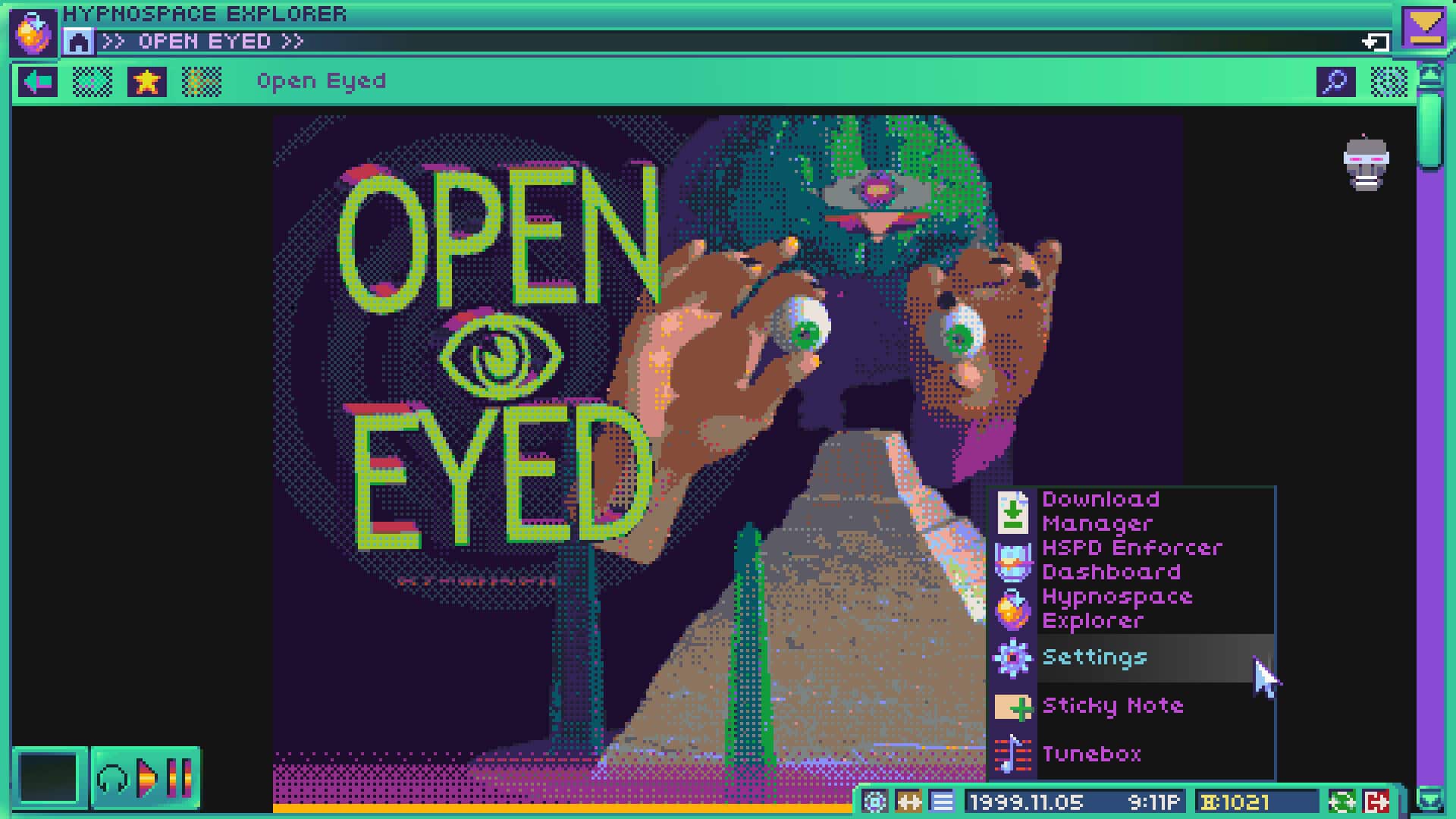
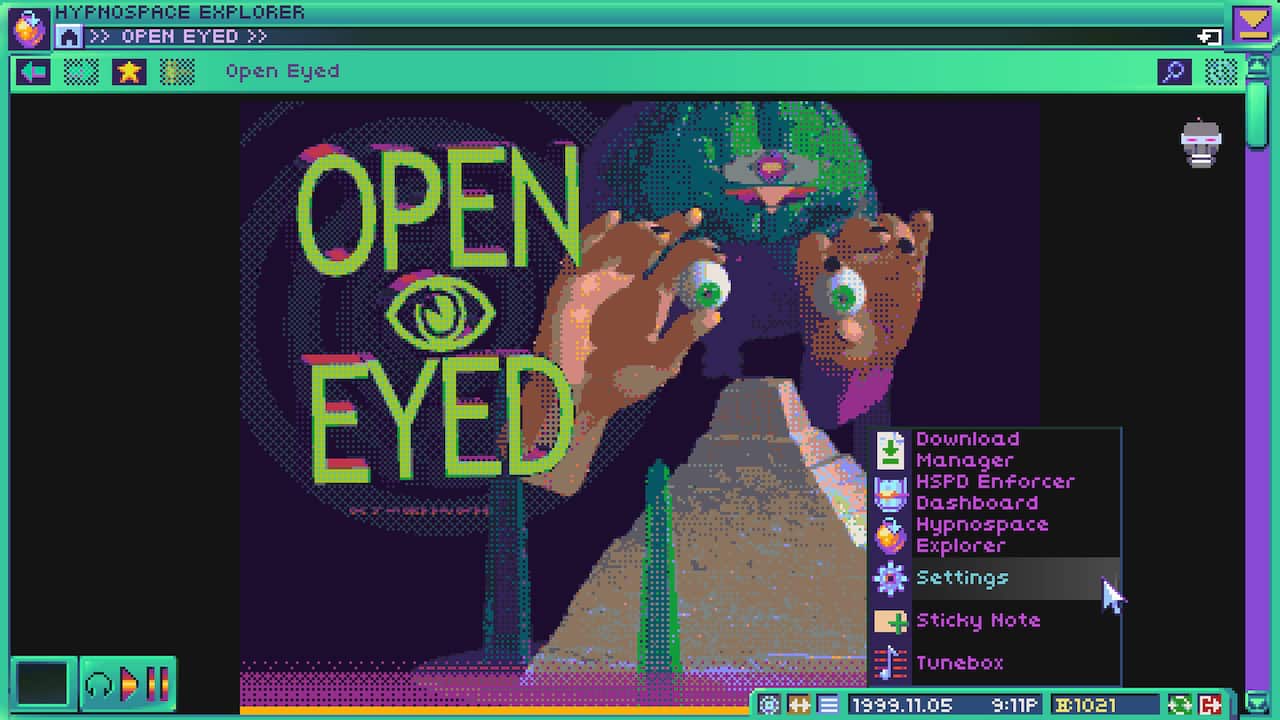
In Tendershoot’s Hypnospace Outlaw, your investigative subjects are far less grave, like people infringing on the copyright of a cartoon fish in a detective outfit. You’re a moderator for HypnOS, a sleep-activated virtual reality interface that’s far more low-tech than such a description implies, functioning instead as an alternate-universe version of the late 1990s internet. All the gaudy text and squashed images and sound quality you’d expect are here in all their kitschy glory. While you’ll do detective work to progress, the main attraction in Hypnospace Outlaw is simply perusing the wonders of an old-timey internet, getting to know its inhabitants as well as the hilariously detailed backdrop. There are trends to get hip to, like a confounding version of tennis and winter-themed music dubbed “coolpunk” (though “fungus scene” is really where it’s at).

Duskers by developer Misfits Attic operates in a more fantastical sci-fi context, though its blinking command lines and grainy footage make its interface immediately recognizable. It even takes place in real time, where you type out orders to a squad of Roomba-esque drones roving through derelict spaceships that are not, as you quickly learn, unoccupied. Other computer-simulating games let you stop and study the situation, in some cases even consulting a user manual for help. Duskers, however, waits for no one; take too long to enter the right commands or do the wrong thing, and it’s your drones that pay the price.

Rather than playing as the person using a computer, In Other Waters from Gareth Damian Martin (a.k.a. Jump Over the Age) actually casts you as a computer itself. As the artificial intelligence powering a person’s diving suit, you navigate your occupant through an aquatic alien landscape. There’s periodic pop-up text for a boot menu, but you’re mainly staring at all sorts of meters and readouts in a gorgeously spare color scheme. Movement and other actions are methodical, requiring you to manually swap over to different modes to simulate machine processes. The catch is that while your human can see the world before her, everything from your perspective has been abstracted to little symbols on a terrain map. It’s those very limitations that make the game’s storytelling and presentation so impressive.

Observation is from the same developer as Stories Untold, and its gameplay is broadly similar: receiving instructions and carrying them out in a complicated interface. The key difference, though, is its far more complex technology; you’re playing S.A.M., the artificial intelligence for a space station. And quite unlike In Other Waters, nothing is abstracted to sleek little symbols—you spend much of the game looking through security cameras that provide a realistic 3-D view of the proceedings, including the person in a space suit giving your orders. Think 2001: A Space Odyssey from the perspective of HAL 9000, if HAL hadn’t gone all malfunctional and murderous. You’ll open doors, pull up map readouts, and examine reports regarding which systems on stations are still functional, all to help a human survive. Sometimes computers are your friends after all.