9 puzzle games that will melt your mind
While many play puzzle games for the idle distraction—a diverting fiddle for their brain—there are others who seek something far more involved. They want puzzles that will have them staring at their screen for hours, a pen hanging from their mouth, as they study the intricate pattern, logic or rationale that’ll move them forward. Today, we celebrate those games, and the people who play them. Here are the toughest puzzle games on the Epic Games Store.
The Entropy Centre
The Entropy Centre is one of a number of smart first-person puzzlers with both an AI companion and a cool gun, its core puzzling mechanic is its own. Waking up in a broken-down puzzle-based research facility, and accompanied by a negging computer voice, you find a large white gun with a unique sci-fi property. It can rewind time for specific objects.
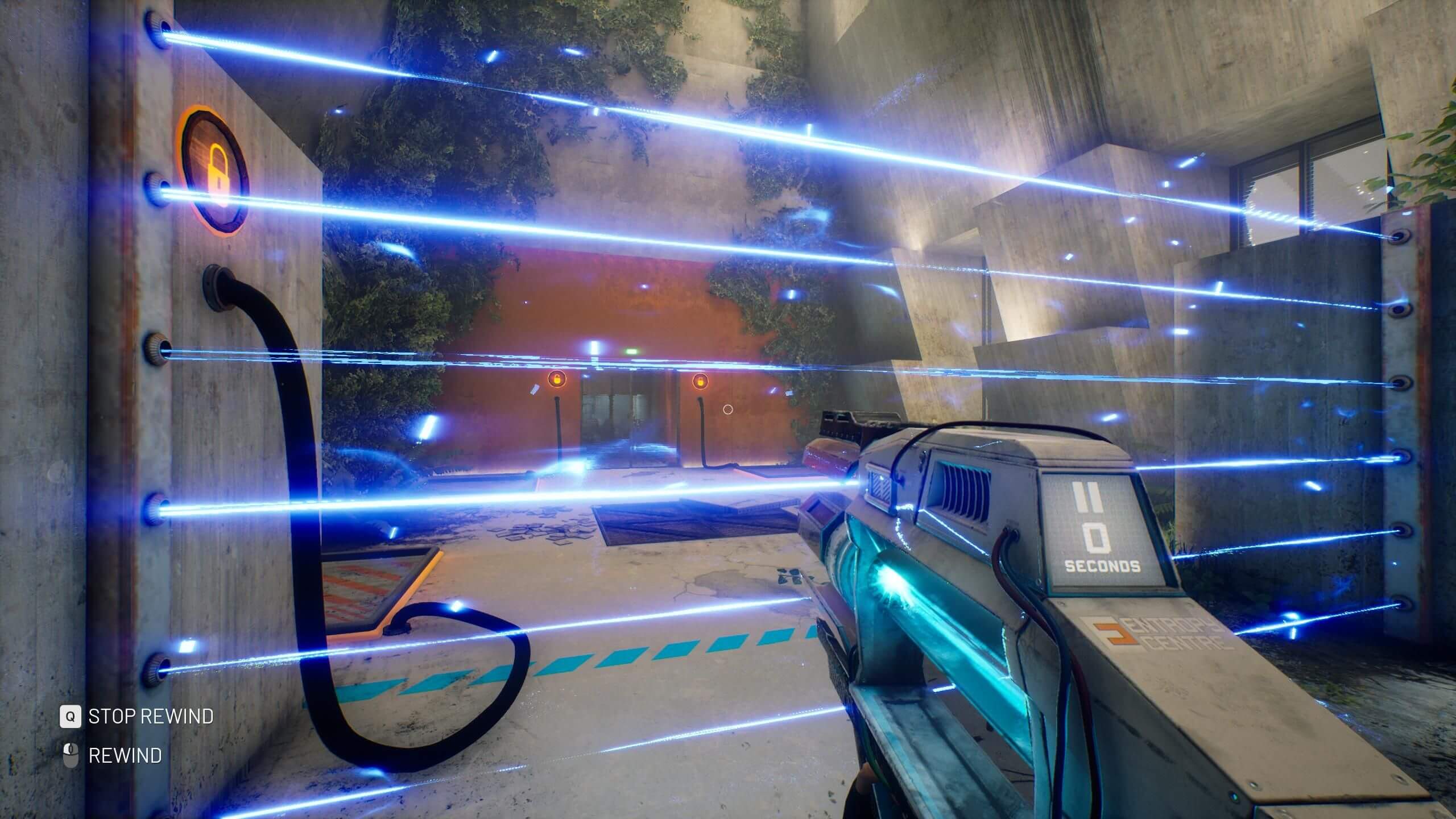
Let's say there are two switches on the floor, opening two consecutive doors, but you only have one box. You want to put it on the second switch first, then move it to the first switch, then go through the first door. From here, aim ASTRA (the time-gun) at the box, and it’ll rewind its route back to that second switch. Ta-da, the second door is open. It’s via this backward thinking that you need to approach these increasingly tricky puzzles. They force you to put your brain into reverse—quite literally planning ahead.
The Case Of The Golden Idol
This is a murder mystery adventure set in the 18th century where you play a detective who must pick up on myriad clues to piece together a series of events. And we’re talking every clue: each character’s name, history, relationship with the others, and—most importantly—their motivations.
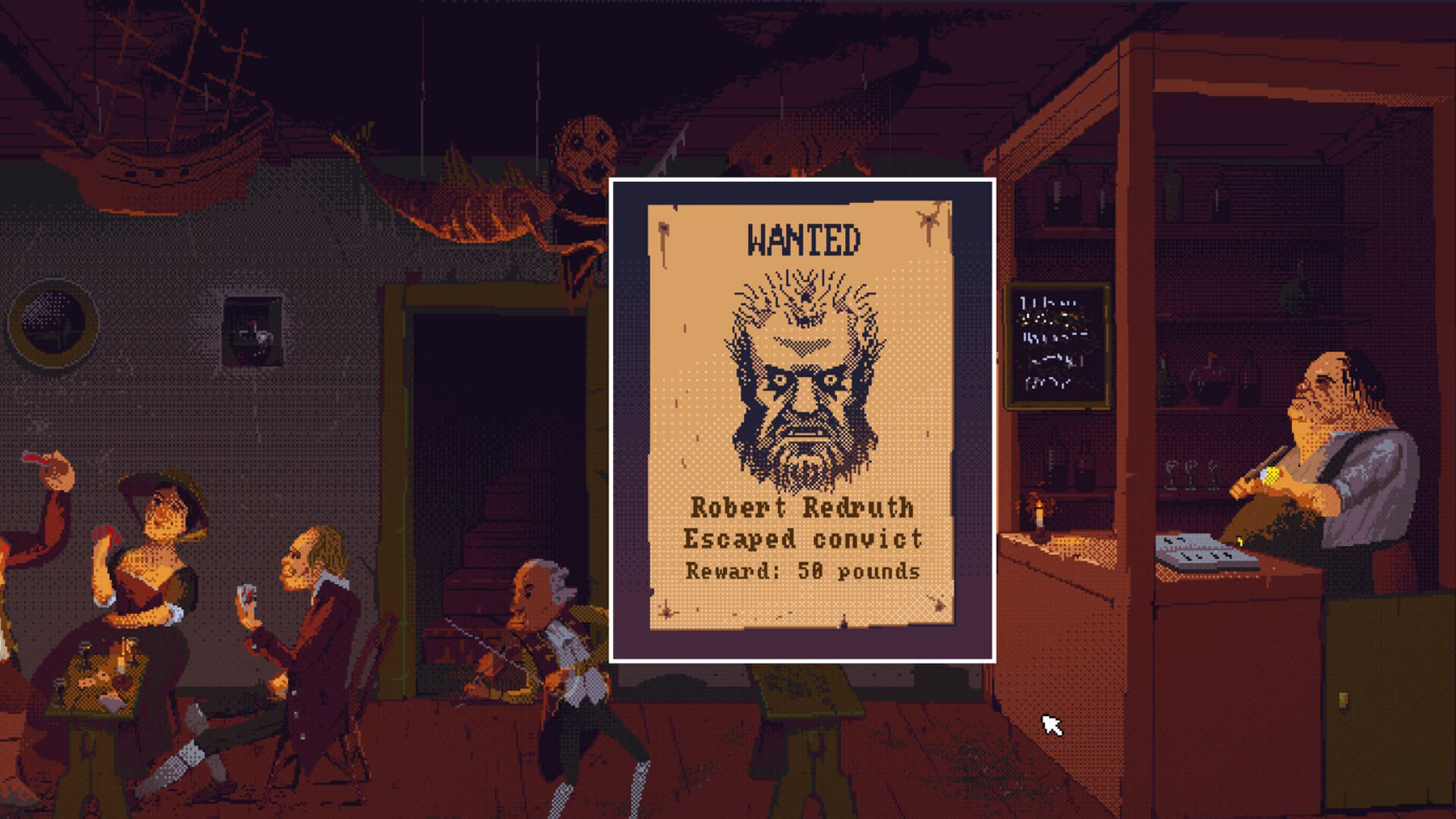
To solve a scene, you need to assign an array of nouns to a series of sentences in your notebook until you’ve correctly pieced together something like the following: “OSCAR WRIGHT got into HENRY GREEN’s room through the TRAPDOOR, while MAURICE EVANS and ASH BREAGE and ROBERT REDRUTH were playing cards with loud music.”
Get everything correct, and the story advances. But it’s far, far harder than you’re imagining, with the intricate clues requiring enormous amounts of reasoned deduction. You’ll be scribbling notes and linking them with red string like a conspiracy theorist before you know it.
Filament
Set on a near-abandoned space station, Filament has your character attempting to rescue an apparent survivor, whose voice guides you along as you solve some unique puzzles.
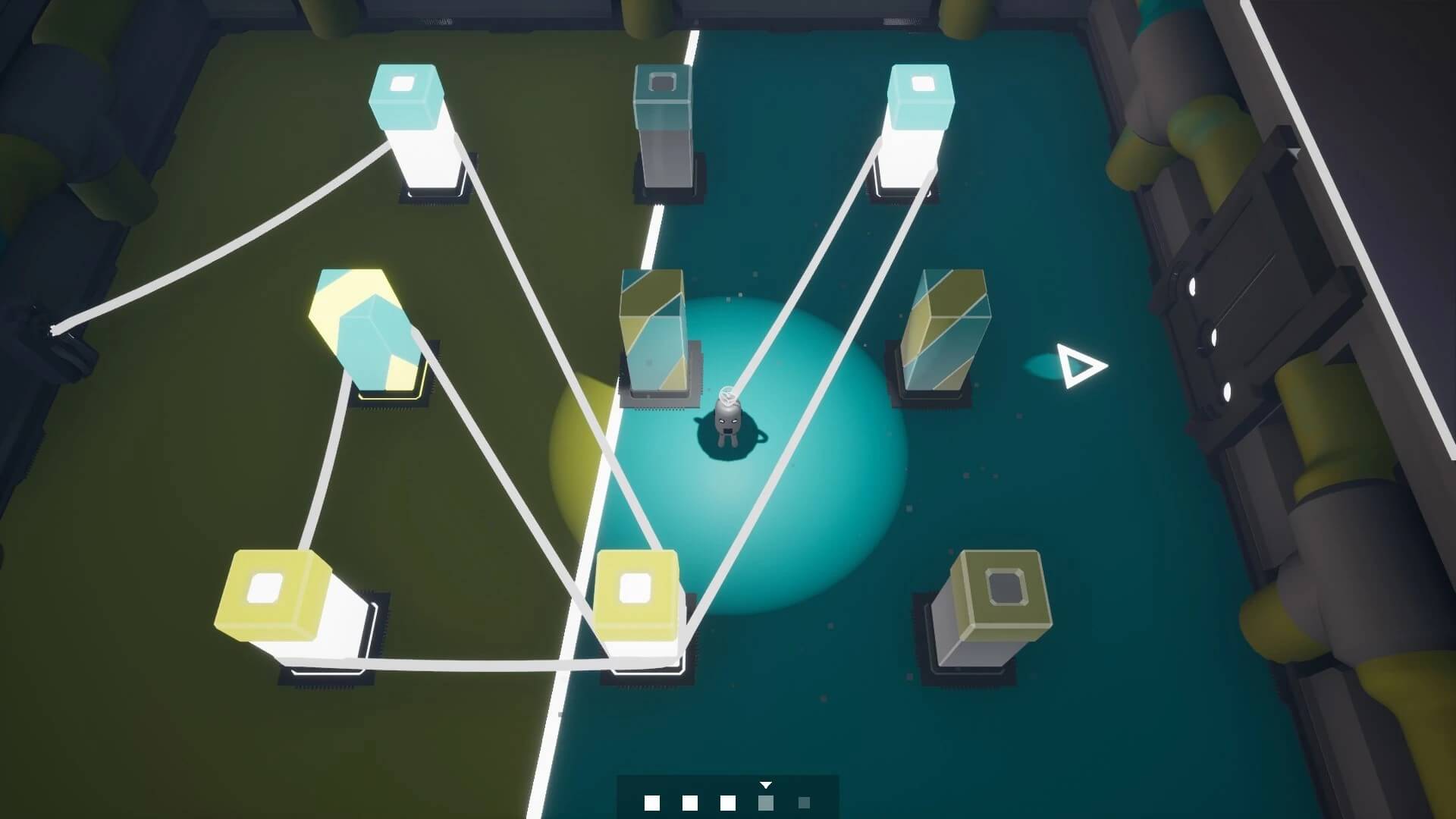
Picture banging a bunch of nails into a board, then threading string between those nails to create a pattern. That careful threading act is the premise here, except with peculiar rectangular towers and a conducting wire laid out by a robot you remotely control. You need the wire to touch the various pillars the correct number of times without getting your poor robot tangled up before he exits the room. Well, that’s how the puzzles start—before they get a lot more complicated.
The game is gorgeous, has stunning music, solid voice acting, and some excellent environmental storytelling. Just be prepared for it to get very difficult.
Shapez
It’s telling that early on in Shapez’s tutorial, it loudly declares: “This is NOT an idle game!” As you build conveyor belts to direct shapes toward your hub and then sit back to watch it all run, it’s tempting to think it might be. But this is a much more intense and complicated puzzle game that takes its main inspiration from Factorio.
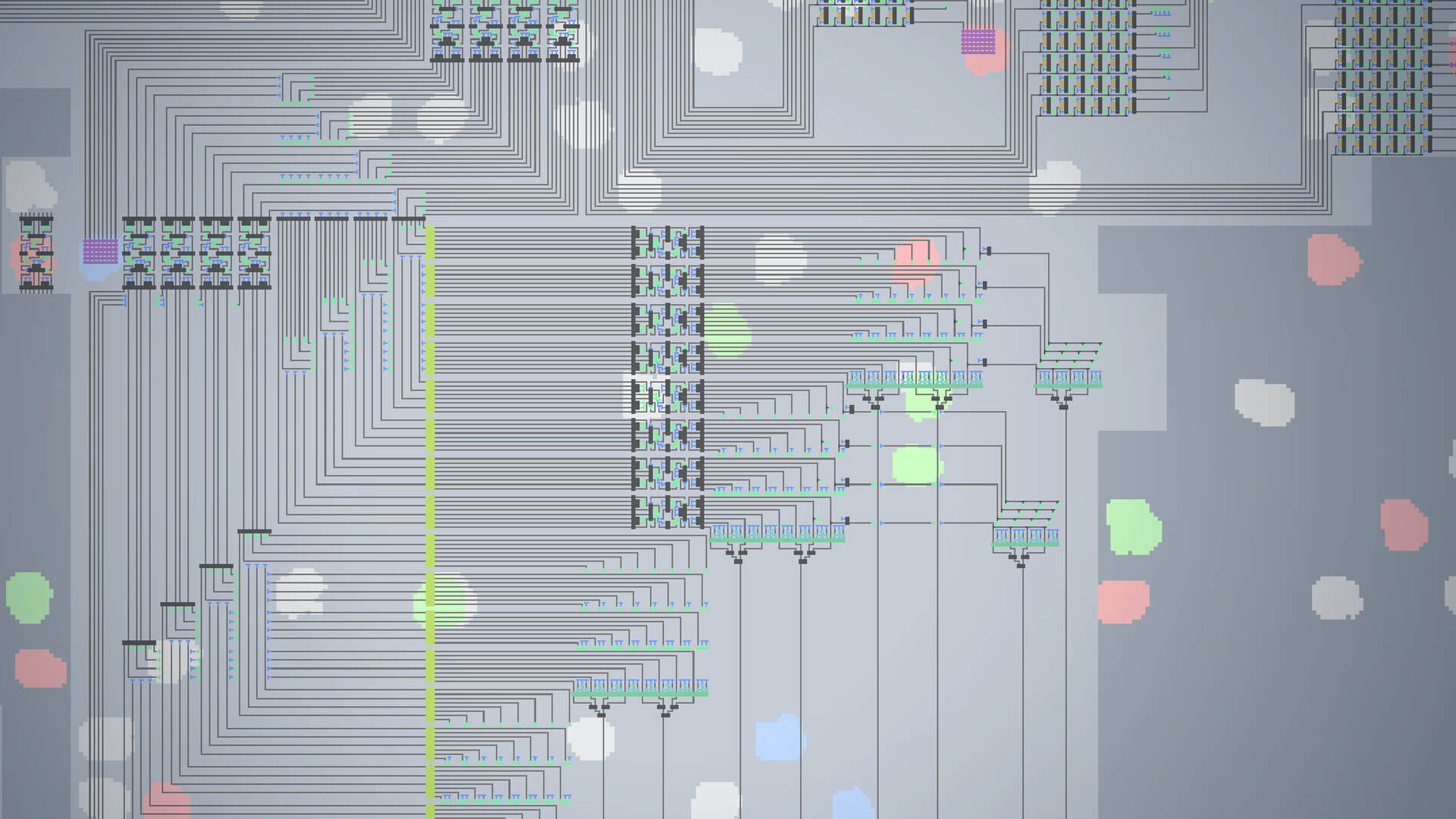
Soon you’re chopping shapes into smaller parts, orienting them correctly, painting them with colors from other conveyor belts, and using them to build elaborate factory machines.
What works so well here is how the tutorial guides you through the first few principles, then just quietly leaves you alone to figure new elements out for yourself. (But there's always a hint system in place in case you’re thrown.)
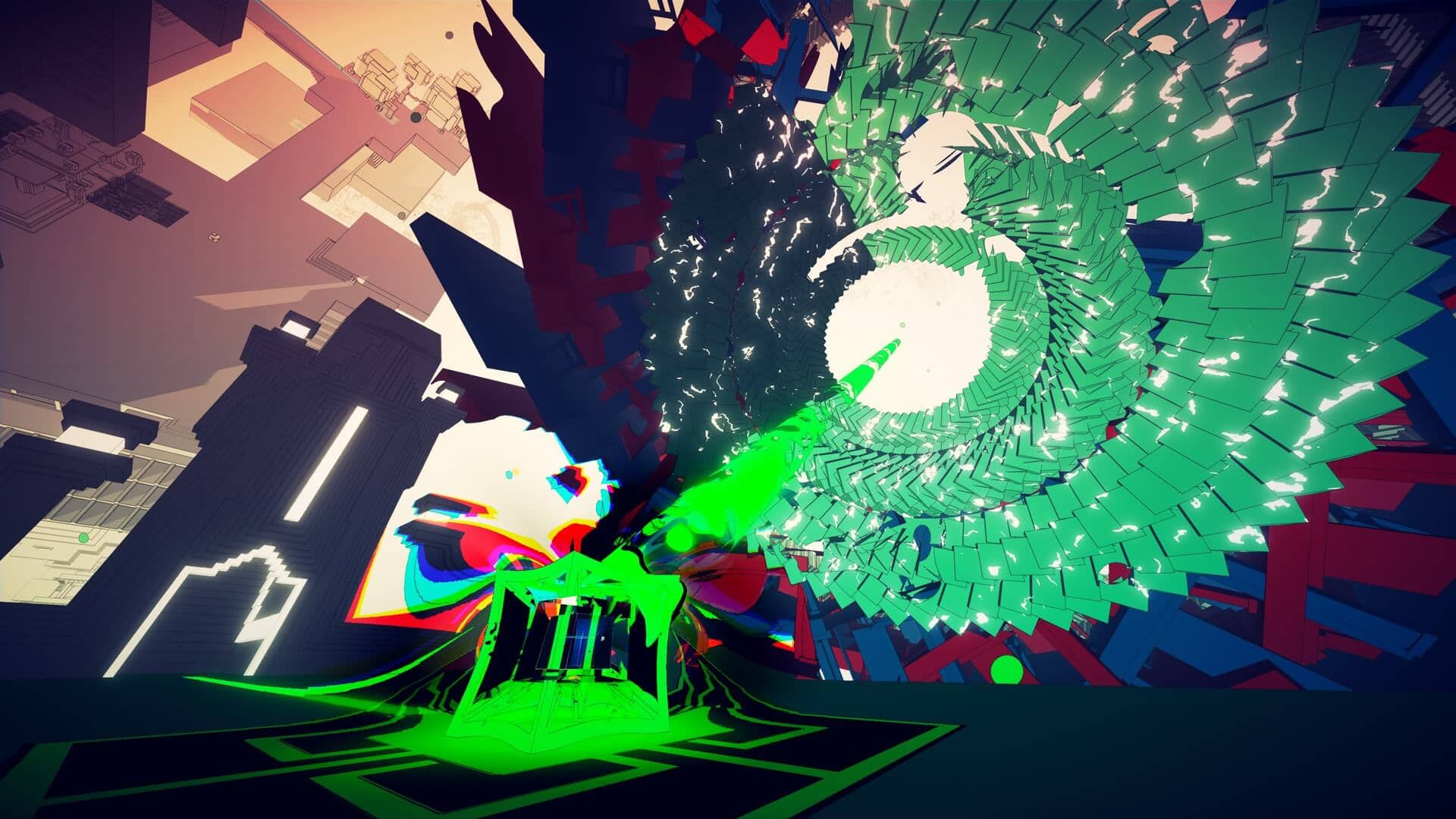
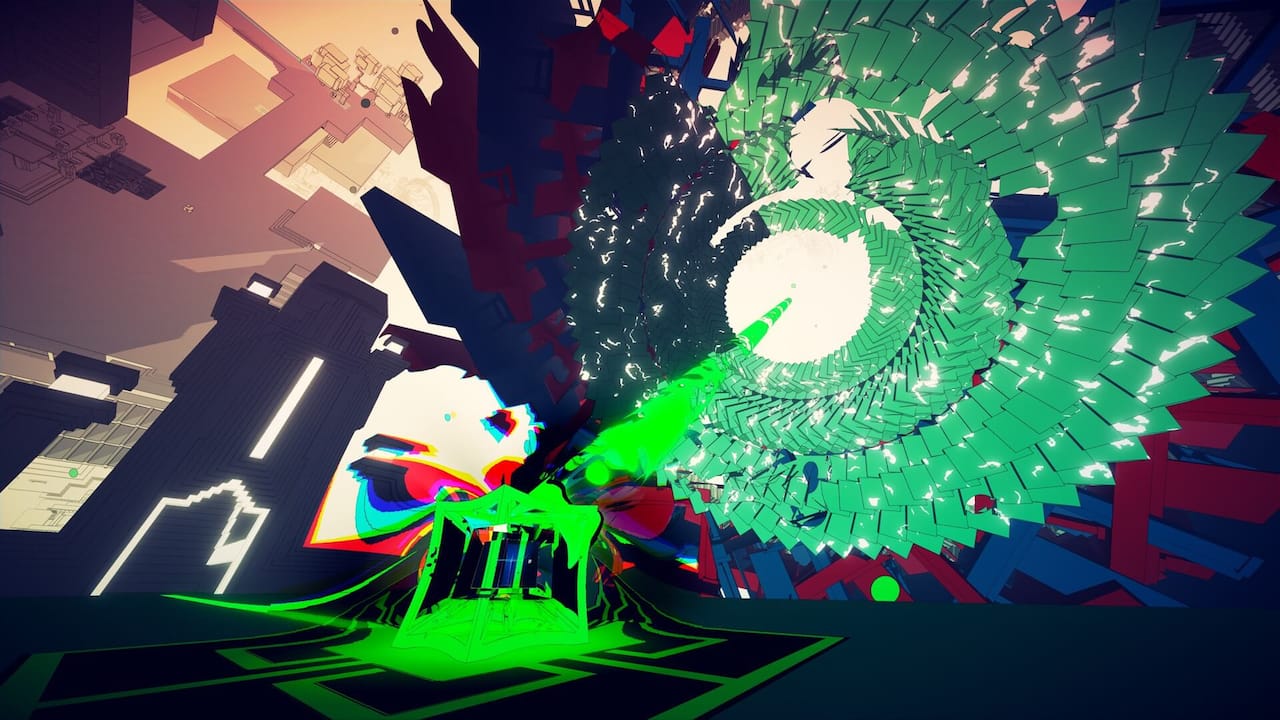
Manifold Garden
A lot of first-person puzzle games ask us to think in new or peculiar ways, but Manifold Garden takes that to a whole other level. It wants you to think in infinity. Or at least in infinitely contained realities, where falling far enough in one direction eventually brings you back to where you fell. Oh, and that reality also contains non-Euclidean geometry, where climbing stairs can keep you on the same level, and walking around four right angles won’t take you back to where you started. Yeah, all that, but you can also change your source of gravity at will in any one of six directions.

It’s within that simple setup that you need to solve puzzles. Well, up until the point where things get slightly trickier, and the cubes you’re moving around contain inverted concepts of themselves, and you begin to think in five dimensions.
Yet, despite all this, Manifold Garden is extraordinarily approachable, thanks to its incredibly clean presentation and subtle guidance. Approachable, but damned tricky.
Bonfire Peaks
There are very many puzzles about moving blocks around a level, but few manage to deliver this with such perfect challenge, and weight of emotion. Bonfire Peaks is about a man burning all his possessions. You move blocks about 3D voxel levels in order to create a pathway through which he can carry his crate of clothing to the level’s bonfire.

What makes this unique is that our character always carries a box one tile out in front of him, meaning you have to determine routes that allow him to maneuverwith this limitation. The controls can take a bit of getting used to, especially when you need to reverse our chap along his route, but it’s well worth persisting with. Bonfire Peaks is extremely smart, very difficult, and surprisingly emotional.
The Witness
You can’t really discuss the most brain-bending puzzles without talking about Jonathan Blow’s The Witness. One of the most famous puzzle games of all time, it deliberately provides no instructions for you to follow. You're left to wander a beautiful island with hundreds of grid-based conundrums on panels, working out the rules as you go, making connections that help you solve both the small panels and larger meta-puzzles within the world.

It encourages you to experiment with simpler versions of a challenge before gradually becoming more complicated as you advance along a chain. Reach a point where you’re totally lost, and you can just walk elsewhere on the game’s island and try a different set of puzzles. This often gives you an insight you can take back to the previous area, and those breakthrough moments can be very satisfying.
A Good Snowman Is Hard To Build
Publishers Draknek have cornered a niche when it comes to third-person puzzling. Along with Bonfire Peaks, they’re also the team behind puzzle hits A Good Snowman Is Hard To Build and A Monster’s Expedition. Consider this entry an endorsement for both of the latter two, which are both brilliant twists on the Sokoban format.

Sokoban games are those block-pushing puzzles that ran on BBC Micros in the 1980s (and everything else since) where you need to move blocks to tiles, keys to doors, etc, without pushing an object into a wall or corner from which it can no longer be moved. Snowman is based on this, except you’re pushing snowballs which grow larger when pushed across tiles filled with snow. The goal is to roll three balls—one large, one medium, and one small—on top of one another to build a snowman, and the design of these puzzles is exquisite.
A Monster’s Expedition is a similar game—down to featuring the same monster-like protagonist—but this time it's about knocking over trees and then rolling the resulting logs to create pathways between islands. Logs pushed widthways will roll until they hit something, but lengthways logs will stand up and then plop over. It’s with this distinction that the incredible array of puzzles are designed.
Sokobond
Given this flurry of Sokoban puzzles, and indeed those published by Draknek, it’s only appropriate to finish on the game that put them on the map: Sokobond.

If you’re looking for a puzzle game that makes it look like you’re doing homework, Sokobond is the best. It’s all about moving atoms to form molecules, and they genuinely link together based on their real-life covalent bonding pattern. The first few levels deal with a couple of hydrogens and an oxygen, and the solutions are about getting those two Hs to join on two orthogonal sides of the O. Like science!
The puzzling aspect comes from that Sokoban logic of not wanting to create a shape that will get stuck against a wall in the tiled levels.
Don’t worry if you’ve forgotten all your high school chemistry.These atoms have their number of possible bonds represented by little circles floating around them, meaning everything can be intuited, even ignoring the chemical angle. But be warned: Atoms love to be friends, and if you get, say, two hydrogens too close together, they’re going to team up in a way that means their bonds are used, and you’ll have to reverse some moves. Things get even more interesting when you start adding double bonds, the ability to break bonds, and—well,seriously, no one’s going to believe you’re goofing off when you’re playing this.