Anno 117: Pax Romana blends tradition with innovation and embraces a multicultural Rome
Anno 117: Pax Romana’s Creative Director Manuel Reinher wasn’t always a believer that Rome was a good fit for the genre-bending strategy series.
For nearly 30 years, the Anno series has been empowering players to civilize and conquer by cultivating a mix of real-time strategy, diplomacy, war, city-building, and economic simulation. To many players, according to Reinher, a game set at the absolute apex of the Roman Empire’s power seemed like an obvious fit, a perfectly logical setting for what he describes as a “building game.”
Anno 117: Pax Romana is the first game in the series to ship during Reinher’s stint as Creative Director, a position he reached after more than a decade working at Ubisoft. And from his new perch, something about the ancient empire always gave him pause.
“I think I was one of the few guys who didn't want to do Rome at the beginning because it was such an obvious fit,” Reinher told the Epic Games Store. “I was always thinking about how there are so many games out there, there are movies, there are comics. Is there anything new? What is our approach to this super-iconic setting? So at the beginning it was not so easy because, on paper, everything is perfect—but what is the hook?”
To find their hook, Reinher and the development team at Ubisoft hit the history books, did their research, and teased out the potential from a well-trod setting. The product of their efforts will arrive on the Epic Games Store later this week, on November 12. We spoke with Reinher about what made him a believer, what makes an Anno game, and how its creators refine and expand on old ideas while doing right by the fans who keep this beloved series alive.
Defining Anno
Reinher has spent the last 20 years working in the video game industry, nearly 13 of which have been at Ubisoft with the Anno series as his exclusive focus, first as Senior Lead Artist and then as Game Director. That puts him in a unique position to understand and explain not just the strategy game genre, but Anno’s particular take on top-down city builders.
Whether they’re set in the Industrial Revolution (like the well-received 2019 entry Anno 1800) or in a fantastical future like Anno 2070 and Anno 2205, Reinher is quick to describe commonalities among what he calls the “premier builder game."
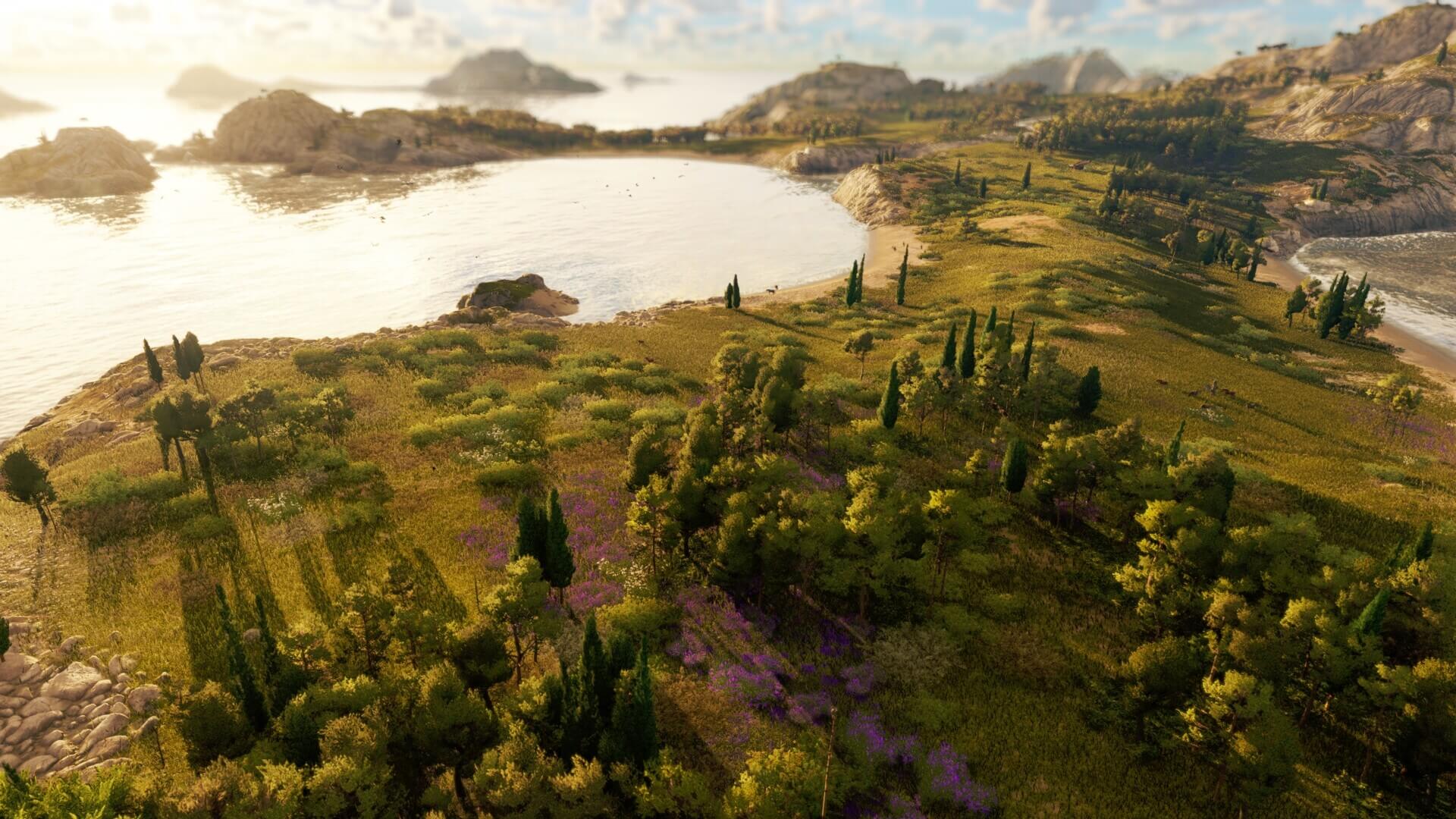
“When we talk about the game itself—the components that we define—we see four pillars,” he said. “The first pillar is that it's about city building. So, usually Anno is always like a blank canvas. It's a sandbox experience, and you start on an empty island, so space management is also a thing. And then you start to build the city of your dreams. How you build it, it's mainly up to you. So you can build a beautiful city, an efficient city, or you can build a city for the records. It's really up to you.”
We spent a few hours going hands-on (and going broke) in Anno 117: Pax Romana earlier this year, and got to see this sandbox for ourselves. You play as a Roman governor, sent by the Emperor to capture and colonize new lands. You begin—just as Reinher described—with a blank canvas, choosing the placement of everything from dirt roads to villas to lumbermills and houses of pagan worship. Your options are even more expansive than before because, in a first for the series, Anno 117: Pax Romana expands the usual horizontal and vertical axes for road and building placements with diagonal lines.
Next comes the economy, which flows through Anno like commerce on Roman roads.
“So you build production chains, you set up trade routes, and this part is really quite deep,” Reinher said. “There are a lot of things that you can explore and needs that you can provide for your people.”
Arising from that foundation are the 4X elements, usually found in strategy games like Sid Meier’s Civilization and Sins of a Solar Empire, which empower players to eXplore, eXpand, eXploit and eXterminate.
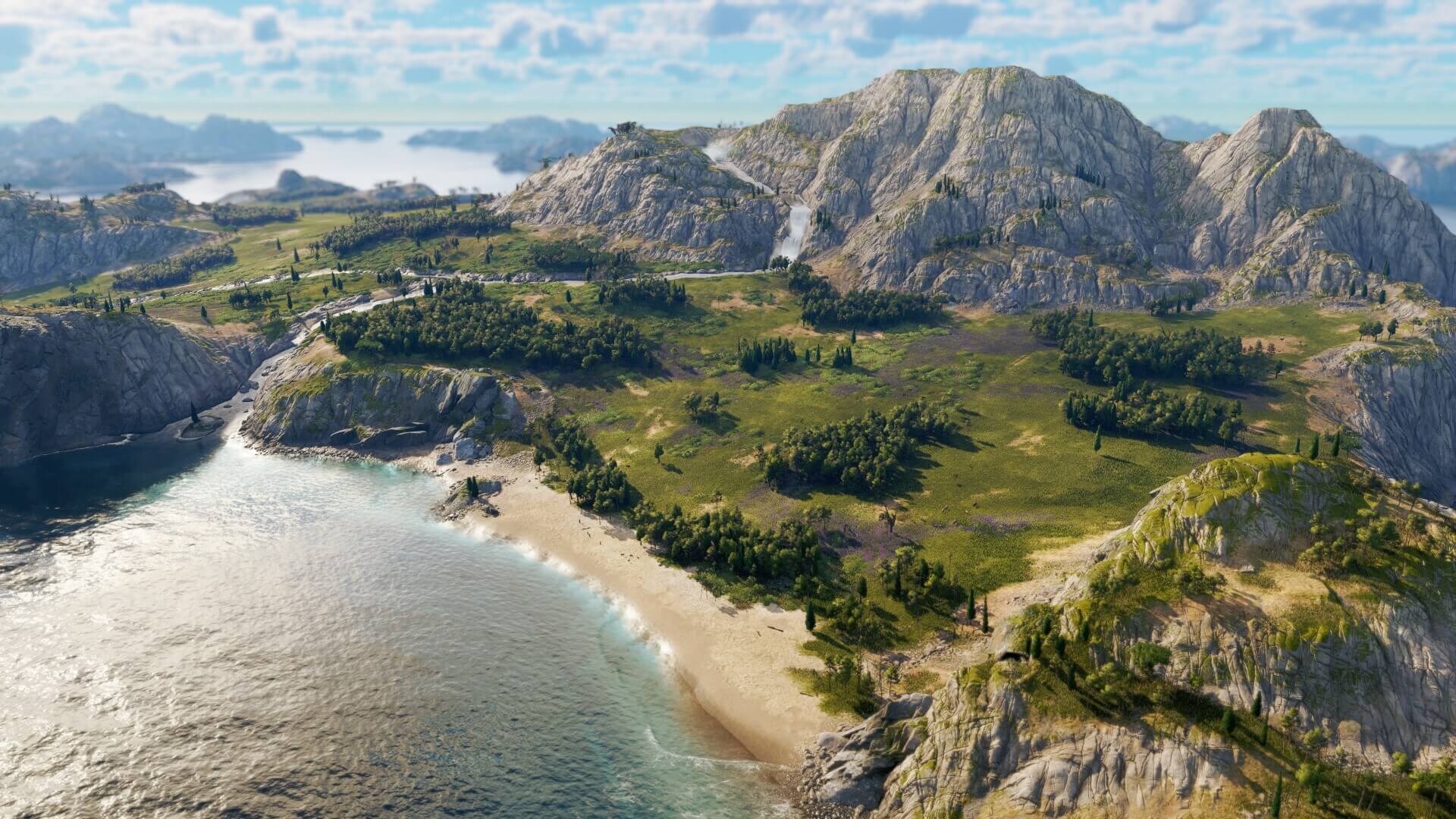
“We combine all of this with 4X elements. We have exploration. We have diplomacy. There is also warfare in the game, although warfare is not the core experience of an Anno game. But it's always been—or has been to some extent—part of the series," said Reinher.
“And we try to wrap all of this into a really immersive world," he continued. "We want to be a benchmark when it comes to the visuals, but also to the audio and music. We really work hard to really push the boundaries when it comes to tech. But also part of the immersive pillar is that they have a narrative layer attached. There is a campaign, there are story elements, and so on.”
Going into Anno 117: Pax Romana, Reinher already knew what it took to make an Anno game—but figuring out how the Roman Empire would fit into that mold without being derivative became one of the first orders of business.
All roads lead to Rome
Peace and research got Manuel Reinher excited about setting the game in Rome.
“At the beginning, we do a lot of research,” he said. “We really dig into the whole potential setting, and we discovered the time of the Pax Romana, the Roman Peace.”
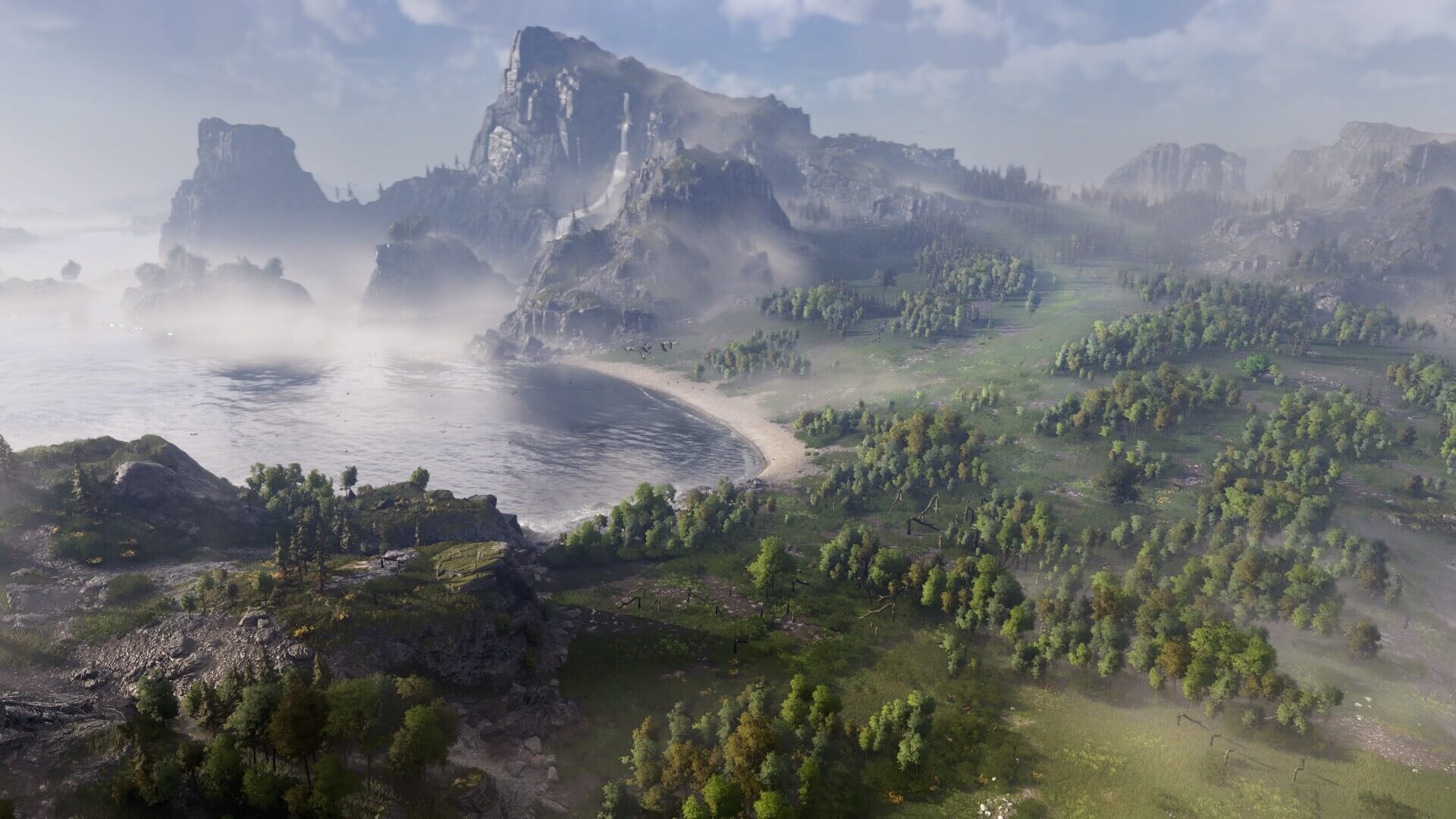
Reinher is referring to the two-century-long period of relative peace, stability, and expansion in the Roman Empire—the period from which the game takes its name. The titular year 117 was the approximate apex of the Pax Romana and the Roman Empire, when it governed about a third of the world’s population.
But it wasn’t really the raw muscle and might of Imperial Rome that tipped the scales for Reinher. It was the cultural possibilities that turned something that’s already been done a million times into something new.
“We defined the lens or the angle that we wanted to look at this era through the different provinces and the different cultures who were part of this peak Rome—the golden age of Rome,” he said. “So once we identified this new angle—this untold story of the multicultural Rome, and how Rome managed to keep the empire together for more than two hundred years—that was the interesting take that got us really excited. And so once you lock in on such a thing, there are some consequences attached to it.”
Nowhere is this “multicultural Rome” more apparent than in Anno 117: Pax Romana's dual provinces. The first will likely be familiar to players because Latium is effectively ancient Italy. The other is Albion, the Celtic wetlands at the edge of the empire—less well-trod territory for a strategy game about ancient Rome, but just as plausible.
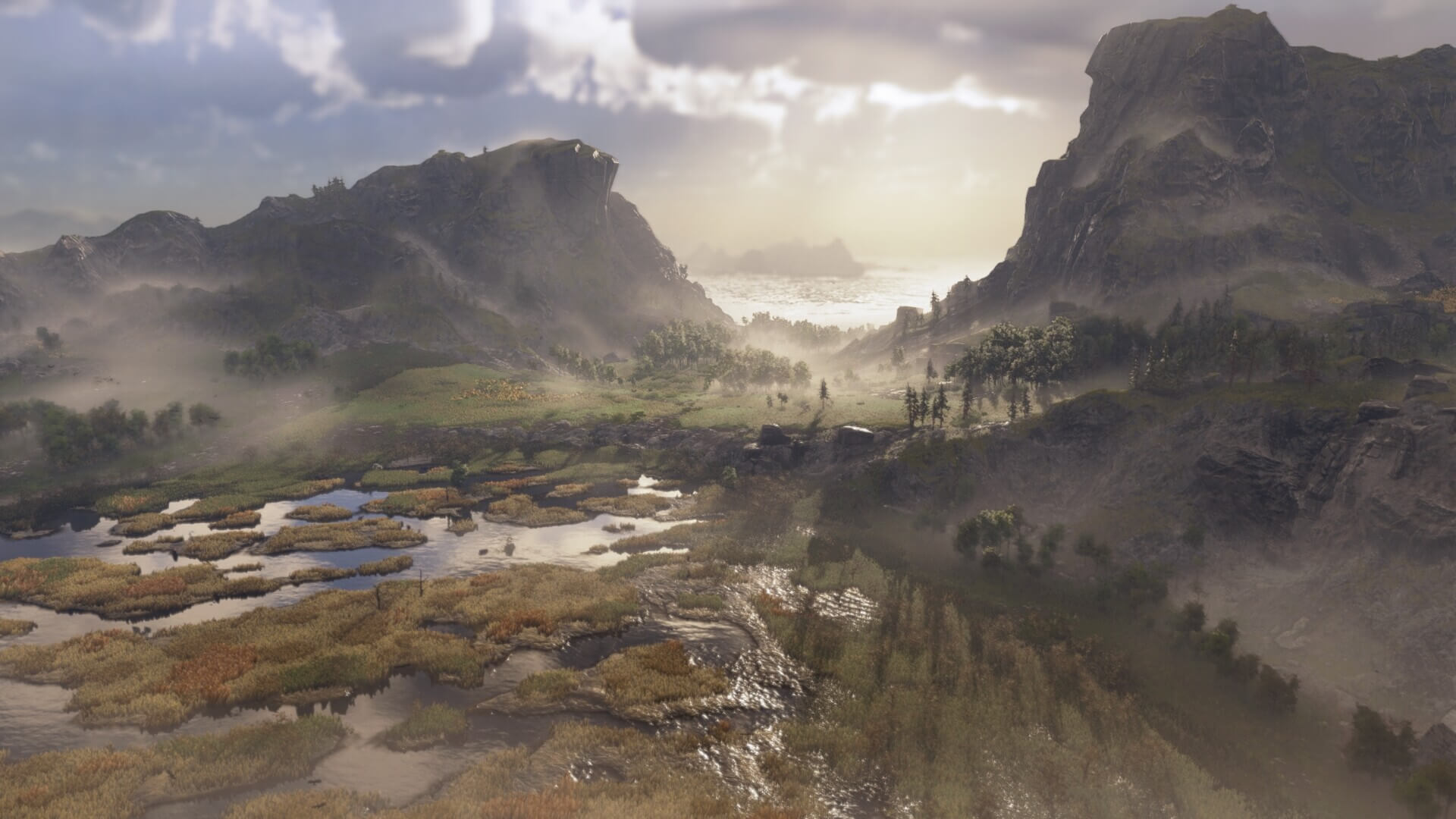
“We try to deliver out the fantasy, but also have some surprises to break with established expectations,” said Reinher. “That’s why, for example, we have Albion as a striking contrast to the Italian-inspired Latium world—just to have some tension and bring something new to this well-established, well-known era.”
Much of what became Anno 117: Pax Romana flowed from that decision to move parts of the game away from the Rome players were already familiar with. That process started with the return of land combat to the series, including infantry, ranged, cavalry, and artillery units, alongside the usual naval battles.
Land-based warfare has been noticeably absent from the series over the last decade after it became a bit of a bugbear for players in the early Anno games. Ubisoft initially planned to resurrect the mechanic in 2019’s Anno 1800, but later pivoted to focus those resources on reworking naval combat. For a game about building Rome, though, you need a Roman legion for players to command.
“For us, it was clear from the start: If we go there, we need to bring back land combat again to really deliver on the full fantasy,” Reinher said. “Because this was also clear: If we do it, we want to do it right so you get everything that you expect. Yes, there needs to be an amphitheater. Yes, we need to have aqueducts with the gameplay feature attached to it. So these are, I think, very easy-to-follow examples, that sometimes the setting really just forces you to do certain things. And thankfully, these are also very easy to connect to Anno mechanics.”
Evolving Anno by expanding Rome
The core of Anno remains strong, according to Reinher, and Anno 117: Pax Romana isn’t a complete reinvention of the series or its decades-long legacy. But it does offer players more flexibility than its predecessors, and a lot of what the developers learned from expanding Anno 1800 for years after its release will arrive in Anno 117: Pax Romana at launch.
“We developed and added to Anno 1800 for a very long time, and along this journey, we learned a lot,” he said. “And one thing, for example, was that previous Annos (including Anno 1800) were quite linear, and this is something we want to change. We want to make the game more modular, more open. and add more choices for the players. Because in previous Annos, sometimes players run into a hard wall.”
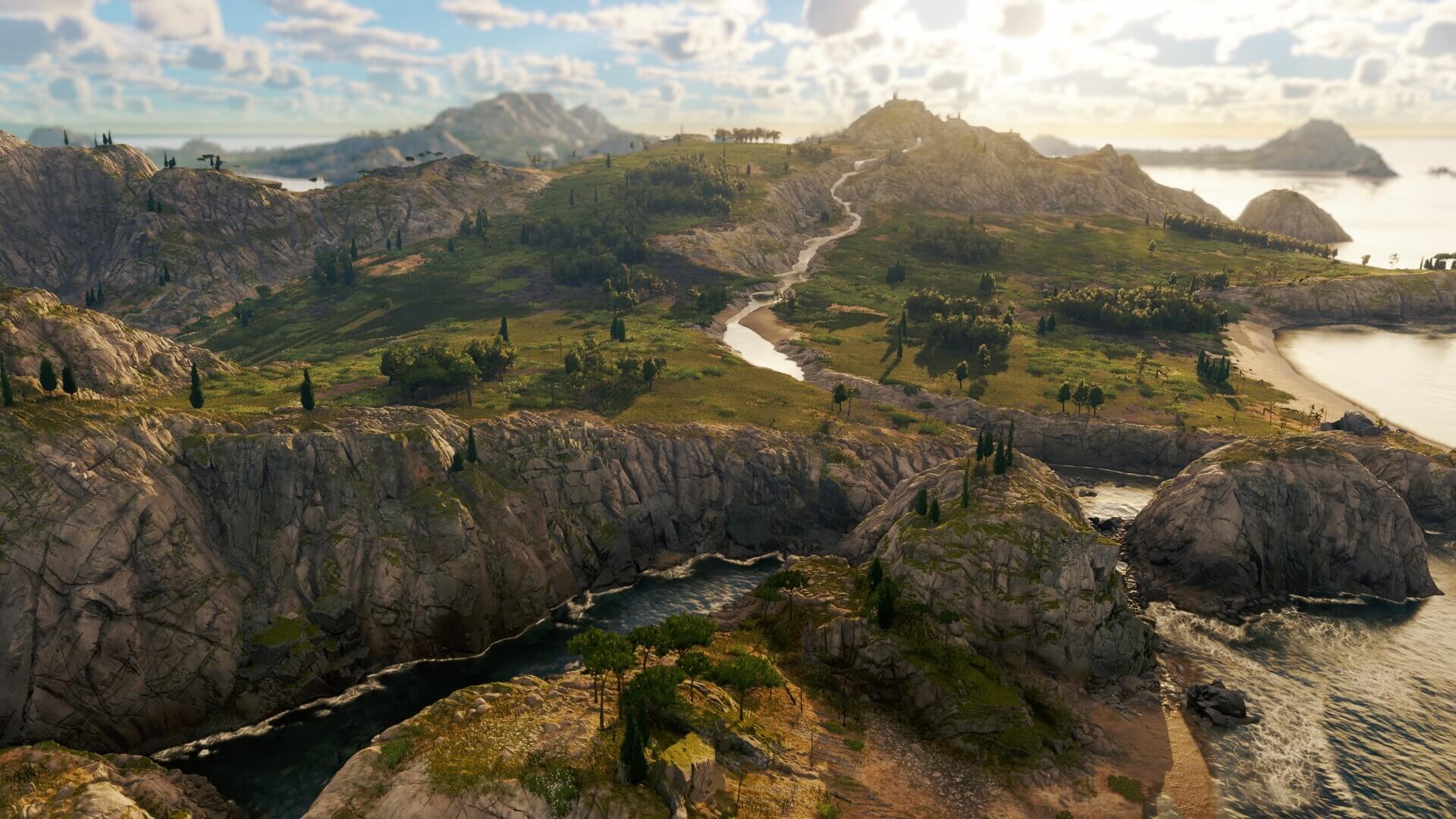
He offered an example from Anno 1800, which compelled players to enter a new biome after a certain point to progress the main campaign. That decision forced a “multiplier of complexity” onto players. In Anno 117: Pax Romana, players can choose to embrace that added complexity or stick to the biome they’ve been cultivating so far without worrying about softlocking the campaign.
Reinher also said that the developers spent more time than usual refining the beginning of Anno 117: Pax Romana, in order to ease new players into the genre’s inherent complexity. Other additions like an active pause system—which pauses everything except the player’s ability to build, blueprint, or move buildings—remove some of the time pressure from the game. Now players can halt time and make decisions at their own pace, the latest example of how Ubisoft listened to players and incorporated much-requested features.
The team also made it easier to contact other provinces without players having to build their way there. This streamlining of communication between provinces also holds some promising possibilities for future game content. At launch, Anno 117: Pax Romana is embracing not just Rome but the far-flung reaches of the empire, and the lens that sold the setting to Reinher seems to just be beginning. In a series known for its post-release support and expansion, it’s easy to imagine the possibilities.
“I think there are so many options still on the table,” Reinher said. “I mean, so far we don't think beyond the first year, and now we need to release the game. We need to see how people like it and what they ask for. But I think it's super strong. Just imagine after the end of year one: You have a province inspired by Italy to really, fully deliver the fantasy, then you have Albion of the Celtic world…and then you have Egypt.
“I think for a builder game, it's a dream come true, and we are very happy with this solution.”
Anno 117: Pax Romana releases on the Epic Games Store on November 12.