Celebrating Galentine's Day with the women-led games of the Epic Games Store
According to city councilwoman and noted Pawnee historian Leslie Knope, Galentine’s Day is “only the best day of the year.” February 13 is a time for “ladies celebrating ladies,” and we're celebrating the video games that do just that.
Despite the fact that about half of all gamers are women, they’re still wildly underrepresented in the industry that produces these games. Things are getting better—according to GDC's 2025 State of the Industry poll, women and nonbinary people represent 32% of game developers, a number that’s risen substantially over the past five years.
Women’s contributions are woven into the very threads of the gaming industry, though, so today—and honestly, every day—it’s time to share their stories and highlight just a small selection of their contributions.
From Mabel Addis to Roberta Williams
Years before Pong kicked off the video game industry as we know it (and decades before home consoles, graphics, and framerates entered the conversation), tech giant IBM and a local New York school board teamed up to create an interactive educational project. Elementary school teacher Mabel Addis, a history buff, was tasked with writing what would become The Sumerian Game, a text-based strategy title designed to teach children about resource management. This marked a number of firsts: The Sumerian Game was the first narrative-based title and the first edutainment game, and Addis herself became the first-ever video game designer and writer.
Sadly, Addis didn’t receive enough attention for her contributions to gaming in her lifetime (though she was given a posthumous Pioneer Award at GDC 2023). Fast forward to the late 1970s, however, and the fledgling arcade industry was entering a golden age. One of the first-ever video game publishers, Atari, capitalized on that success by releasing home versions of arcade classics—first with standalone devices, such as Pong, and later with a series of consoles.
Atari’s meteoric rise wouldn’t have been possible without the work of Carol Shaw, an electrical engineering and computer science graduate who was fresh out of UC Berkeley when hired in 1978. Despite Shaw’s accomplishments and love of math, Atari president Ray Kassar thought having a female game designer meant “She can do cosmetics color matching and interior decorating cartridges!” Other designers at Atari were more supportive, however, and Shaw went on to create several Atari 2600 games before moving on to Activision in 1982.
While women like Addis and Shaw weren’t publicly visible while making video game history, Roberta Williams is another story. Williams is best known for founding developer and publisher Sierra On-Line with her husband Ken, and the company broke ground on the graphic adventure genre with 1980’s Mystery House. She was the creative force behind the long-running King’s Quest series—perhaps Sierra’s most iconic—and later went on to design the cult classic full-motion video adventure Phantasmagoria in 1995.
Williams’s most recent project, 2023’s Colossal Cave, is a 3D remake of the 1976 text-based adventure title Colossal Cave Adventure. Williams’s remake pays homage to the original by maintaining its retro charm as a pixelated point-and-click adventure. “We started Sierra because I played Colossal Cave,” Williams explained in an interview, making the updated version a full-circle moment for one of the industry’s most celebrated developers.
Raiding tombs and half-tucked heroes
In 1996, one of the most recognizable characters in gaming made her first appearance. Her name was Lara Croft, and she was the polygonal star of Eidos Interactive’s Tomb Raider, an action-adventure game that combined platforming, puzzle-solving, and gunplay in a way that was quite innovative for the era. Lara herself was something of an anomaly, gaining attention as one of the few female game protagonists of the era.
There’s a lot to admire in Lara Croft. Throughout Tomb Raider’s 30-year history, she’s always been depicted as strong, smart, and adventurous. However, rather than serving as an empowering figure for the growing audience of female gamers, she was very clearly designed to suit the male gaze. Researcher Janine Engelbrecht called this the “postfeminist action heroine archetype” and acknowledged that the 2013 reboot changed “aspects of Lara Croft’s characterization,” including “her wardrobe, her body shape, and the character’s emotional complexity.”
The reboot trilogy also introduced the series’ first female lead writer, Rhianna Pratchett, who had this to say to critics of Lara’s makeover: “There have been grumbles in certain quarters that we've broken her down and taken a strong character and made her weak. That's really not the case…She's determined, caring, brave, empathetic, passionate and strong-willed, all of which come through during the gameplay and the narrative.”
Whether you prefer the original Tomb Raider games or more modern iterations, there’s no denying the series’ impact. It ushered in a new era of three-dimensional, third-person action-adventure games and inspired countless game designers—including Amy Hennig, who was working at developer Crystal Dynamics when it was acquired by Eidos in the late 1990s. Hennig worked on the Legacy of Kain series at Crystal Dynamics, but according to former colleague Daniel Cabuco, “Amy really wanted to work on Tomb Raider.”
Hennig eventually joined many of her Crystal Dynamics colleagues at Naughty Dog, where she directed Jak 3 in 2004. In 2007, Naughty Dog released Uncharted: Drake’s Fortune with Hennig serving as Creative Director and Writer. Its charismatic protagonist Nathan Drake drew comparisons to Indiana Jones and Lara Croft, and the Uncharted series went on to become one of Sony’s flagship franchises.
Run the world
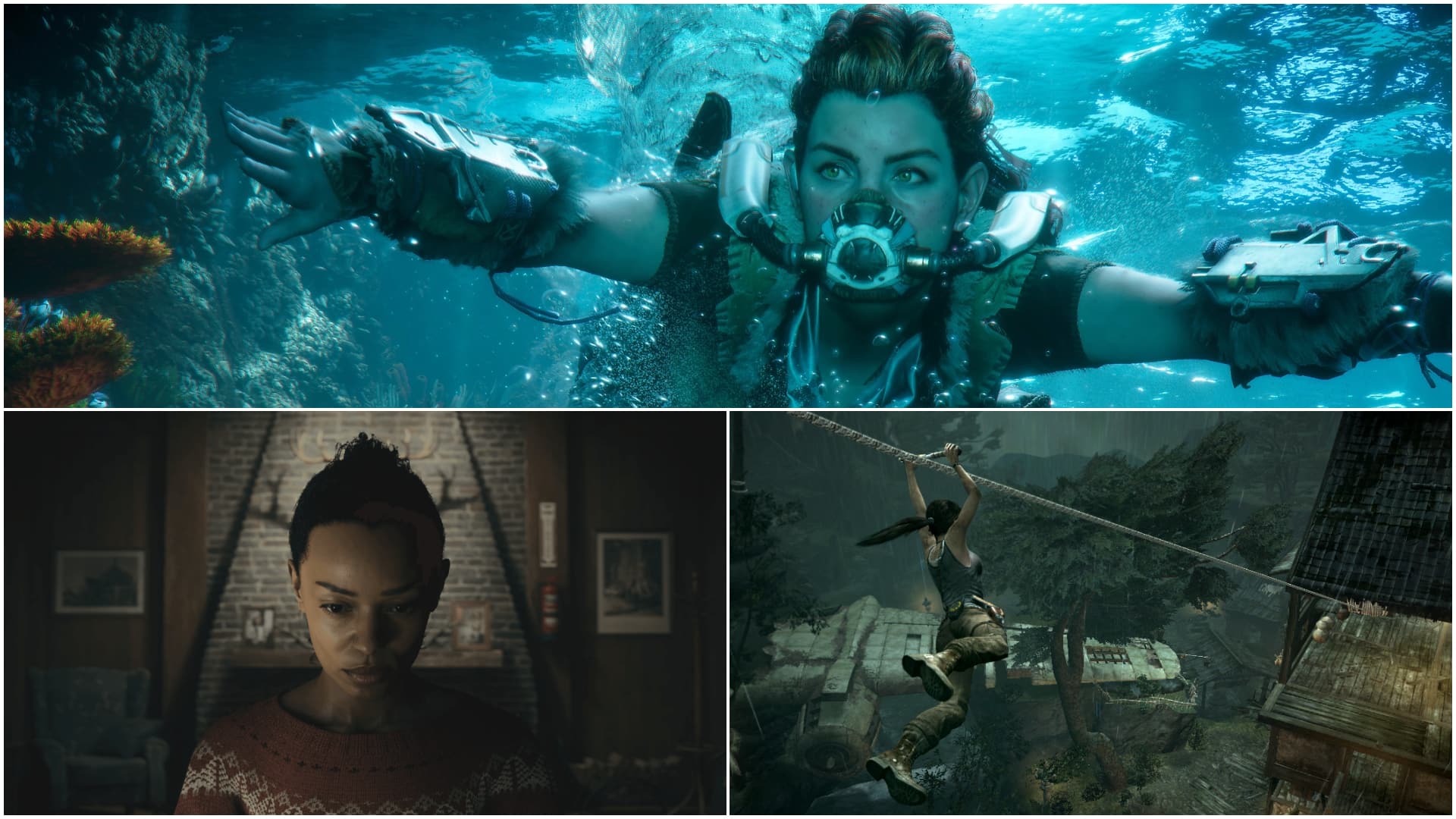
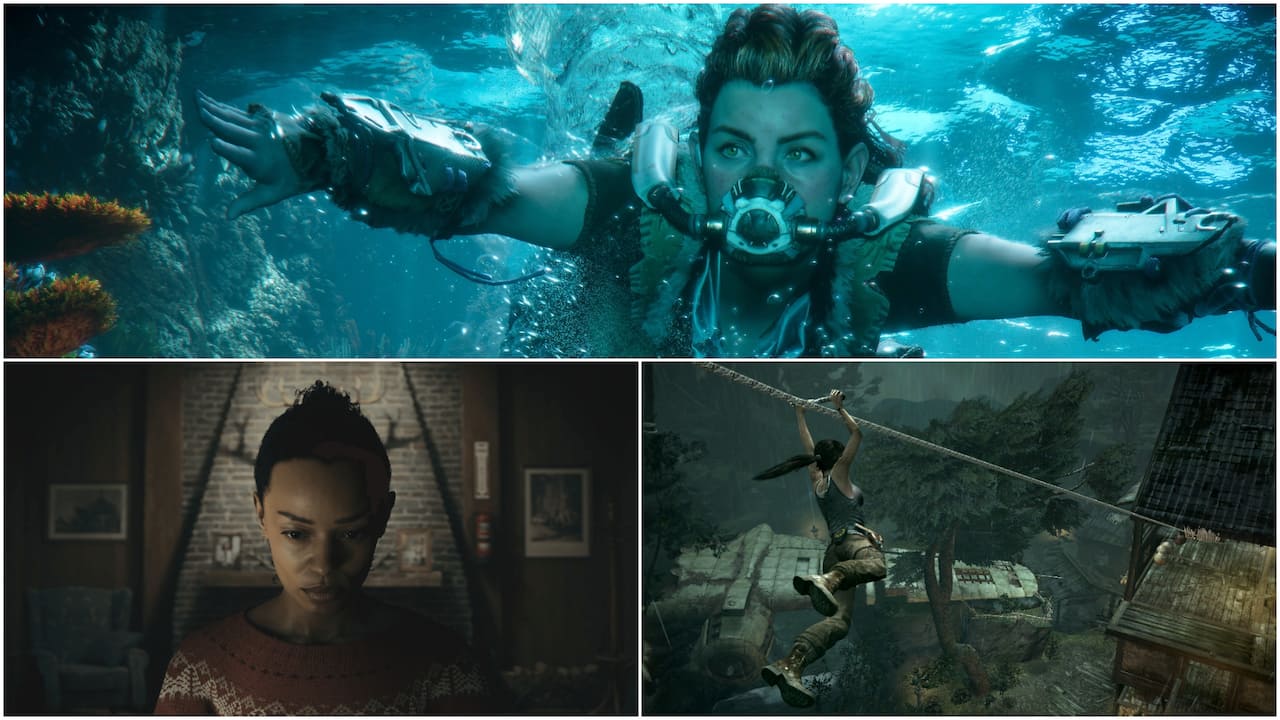
Of course, this is just a fraction of the immeasurable contributions women have made to the video game industry, both as creators and characters. While Amy Hennig worked on Uncharted, Ubisoft’s Jade Raymond was instrumental in bringing the long-running Assassin’s Creed series to life. Lara Croft and Nathan Drake found a worthy successor in Aloy, the skilled hunter at the heart of the Horizon action-adventure series. Maddy Thorson created the critically acclaimed platformer Celeste to help her come to terms with her gender identity. The long-awaited sequel to Alan Wake had the titular writer sharing the screen with a female co-protagonist, Saga Anderson. Meanwhile, women-led studios are becoming increasingly visible.
This Galentine’s Day and beyond, let’s acknowledge the contributions that women have made to the video game industry while remembering that we still have a lot of work to do. Celebrating the work of Mabel Addis, Carol Shaw, Roberta Williams, Amy Hennig, and women-led games of every era is a fantastic step in the right direction.