Nyheter
How theHunter: Call of the Wild keeps players happy in the wilderness
C
Colin Campbell
Hunting games simulate one of humanity's oldest activities, albeit with the use of modern weapons and equipment. They attract real hunters who yearn for the open-air experience, but perhaps find it difficult to get out every weekend, as well as those who enjoy the challenge, but perhaps aren't able (or would prefer not) to shoot real animals.
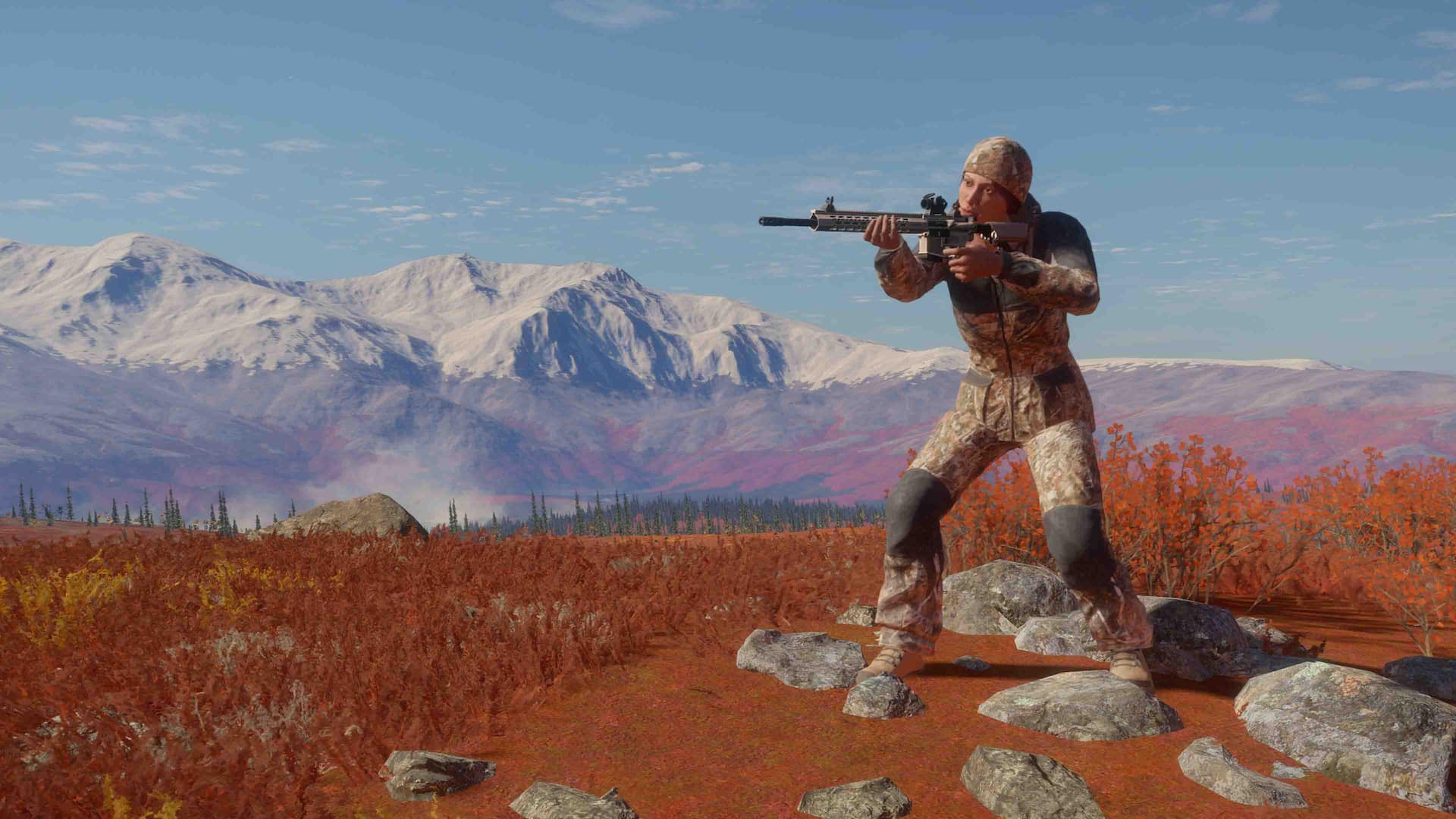
Either way, games like theHunter: Call of the Wild aren't just shooting games—they demand patience, stealth, accuracy, an appreciation of beautiful landscapes, and a respect for the nature of the prey. Animals are adept at hiding, alert to intrusion, and skilled at moving quickly and quietly. This all means that players must take their time to outwit their quarry.
Developer Expansive Worlds (part of Avalanche Studios Group) has been working on hunting games for more than 15 years. Lead game designers Troy Schram and Arshak Ardeshir know what it takes to keep players engaged, with a steady stream of fresh DLC packs getting the job done over theHunter's lifespan.

"Hunting isn't a one-off experience," says Ardeshir. "It's more akin to a hobby or a way of life. The joy of hunting in the wilderness is the experience in itself, and therefore we try to get out of the way for our players and allow them to enjoy it on their terms.
"We recognize that each hunter, while hunting, has dreams of visiting other locations, getting the opportunity to hunt a specific animal, or trying out a specific method or weapon. Finding those dreams and presenting it to our players in an authentic and immersive way is the way we create excitement long term."
Recent additions to the game include the High Caliber Weapon Pack, which includes weapons like the Arzyna .300 Mag Tactical, .45-70 Jernberg Superior, and Strandberg 10SA Executive, as well as camo and other cosmetics. Others, like the Emerald Coast Australia pack, take players to the outback, rainforests, and bushlands down under to hunt creatures like the Magpie Goose, Saltwater Crocodile, and Eastern Gray Kangaroo.
"One of our core guiding principles is to be as authentic to the real world as possible while still making the experience accessible and enjoyable," says Schram. "We do this by creating environments that are as close to the real thing as we can depict within the medium. The same is true for our animal species and weapons."
Players are enticed by the promise of "Great Ones," which are rare and large animals that are especially difficult to find. Virtual hunters are often keen to add these to their collections of antlers, furs, and rare trophies, including some that are albino, piebald (black-and-white spotted), and leucistic (with unusually whitish fur). Often, much patience and planning is required to best these animals.
"We have persistent animals across time in our reserves," says Ardeshir. "It means that animals visit the same locations and thus the player is able to learn their movement patterns the more they play. What makes our game unique and best-in-class is the way we add all these features together."
Of course, many video games feature shooting, more often at a frenetic pace against enemies that shoot back. Hunting games feature gunplay, but they move at a different pace. This presents a challenge for game designers, who wish to faithfully recreate hunting while presenting an appropriate amount of action and excitement.
"Our game is very slow-paced compared to almost any other first-person shooter," says Schram. "Most players enter into the world and immediately start sprinting forward; but in a hunting game, sprinting scares animals. Players who rush around looking for animals naturally won't see any because they are actively scaring them off, so teaching them to approach the game differently to other first-person shooter-type games is challenging. This is something we’re constantly revisiting and looking to improve with our first-time user experience and onboarding."

How would the designers go about persuading FPS fans to try something more leisurely? "It's not really about persuasion," replies Ardeshir. "It's more about showing off the strengths of our game in an authentic and genuine way. The players who are drawn to that will enjoy it for what it is. That's why our marketing material—video trailers for our reserves and so on—follows the tempo of the game.
"We’re constantly mindful of the hunter fantasy, meaning we always make sure that our audience, many of whom are real-life hunters, find our design choices interesting and enticing. Additionally, theHunter: Call of the Wild is a simulation with a blend of arcade, which allows us to interpret lifelike behavior into game systems. Of course, we also have to make sure we create mechanics that are challenging while at the same staying true to nature."
Schram adds: "I'm not a marketer, but I would just tell them that our game is much more relaxed than other games and that putting a trophy up on your hunting lodge wall is more rewarding than any chicken dinner!"
theHunter: Call of the Wild is available on the Epic Games Store, along with its many content packs.