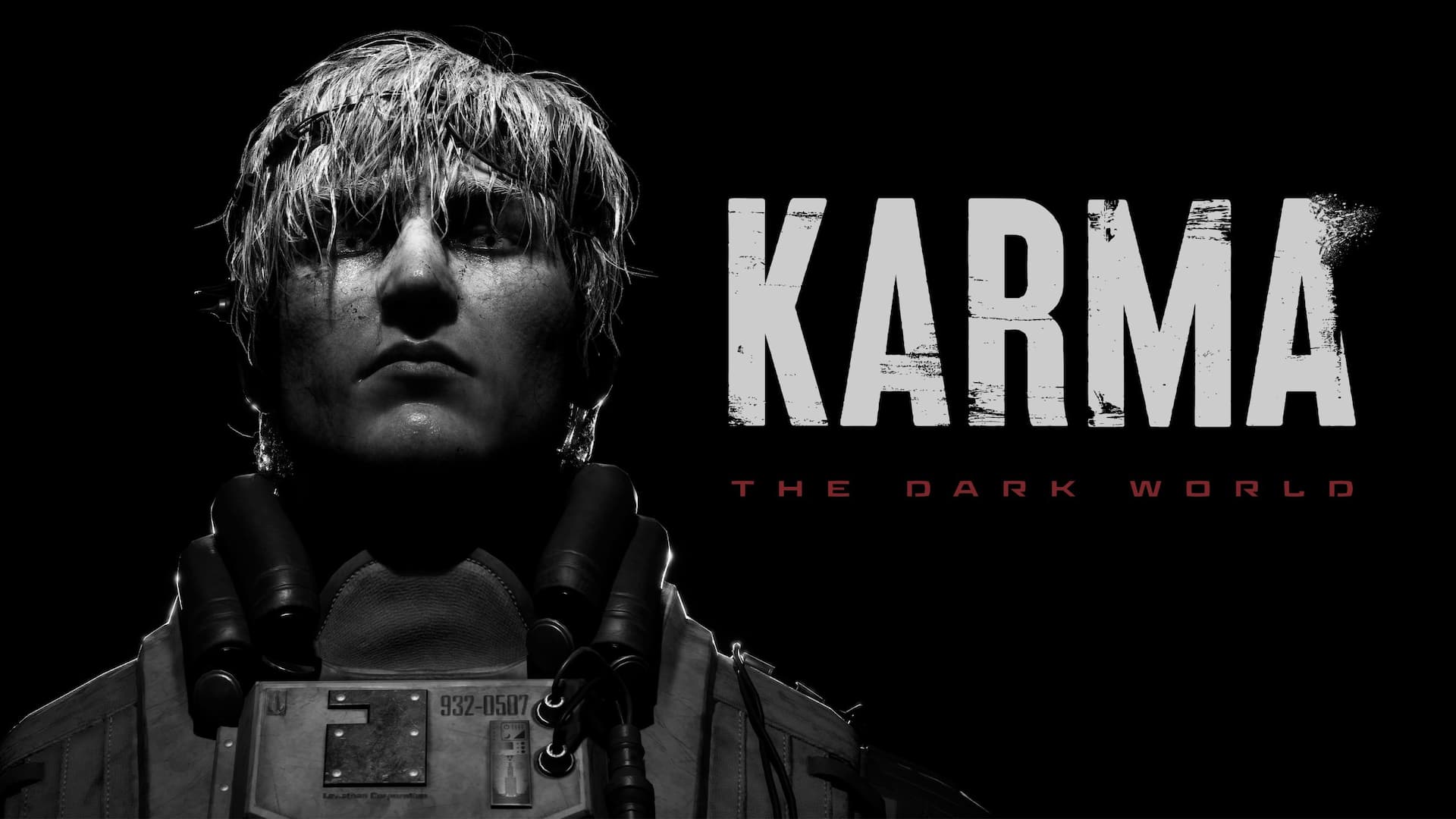
KARMA: The Dark World is an Orwellian Cold War thriller that’ll give you the chills
The year is 1984. The place is Soviet-occupied East Germany in an eerie, alternate history. Nothing is how it seems, and everything is very, very wrong.
George Orwell’s famous dystopian novel associates that now-ominous year with the oppression of once-free citizens and thought control on the grandest scale under unceasing surveillance. The psychological thriller KARMA: The Dark World makes a bold choice with its setting in this time and place, and it intends to deliver on those sinister expectations.
Creative Director Yonghe Wang and Creative Producer Lu Chen tell us Pollard Studio’s debut is a rarity. Orwell’s vision of the future enjoys a prominent place in the Western imagination; 1984's themes and iconography are widely known. However, that isn’t the case in China, a situation the Shanghai-based studio is determined to change—filtering the familiar through a new sensibility and cultural background to make something entirely new.
And they’re going one step further than Orwell. In 1984, one thing was safe from a totalitarian party that otherwise oversaw and controlled every other facet of your existence: your innermost thoughts. KARMA’s Leviathan Corporation, in pursuit of its goal to create a new world order at the directive of the AI MOTHER, possesses a dangerous tool that shatters that barrier: their Roem Agents who can interrogate memories.
“Memories are very unique [and] special for everybody,” says Wang. “People hide things in memories they don’t tell. Secrets they hide in memories [...] There's no secrets under this society.”
The game begins with you waking up in a hospital bed, disoriented and malnourished, with nodes installed into your arm hooking you up to an intravenous flow of mind-numbing drugs. You tear the tubes from your body in horror without a clue how you came to be there. Looking out the window onto the street, street signs and passing cars flicker in and out of reality, a telling intrusion of unreality soon to become more evident. Urged to escape, you walk through a grotesque factory farm of humans grown in bathtubs, bodies of failed experiments piled up like trash awaiting collection. Then you enter the Dark World between memories, stalked by an unknowable, many-armed monster. Scurrying into a vent, it becomes inexplicably filled with Christmas lights before you emerge into an office littered with CRT monitors arranged in the shape of a Christmas tree, office workers’ faces speaking to you from the screens. It only gets stranger from here.
When this section ends, you remove your brain-hacking headset while sitting opposite the confused, innocent victim you thought was your character. Instead, you’re Daniel McGovern, one of the morally questionable agents of the Leviathan Corporation’s Thought Bureau, in the middle of a cruel interrogation into your suspect’s psyche. It’s an audacious twist that caps off a memorable opening, like running through the entirety of Bioshock’s Jack’s character arc in 30 minutes. And the wild ride has just begun.
In that fantastic opening, Pollard Studio demonstrates not only their vivid imaginations and a talent for keeping players on edge, manipulating their emotions at will, but also a cinematic flair to rival the striking imagery of INDIKA and the tumultuous drama of Still Wakes the Deep. Chen says their goal is unsettling psychological horror; Wang adds: “We aren’t creating superheroes to save the world, we are focusing on a character saving themselves.” They want their unnerving dystopia to cultivate a feeling that lingers long after players put down the controller, leaving them questioning their actions.
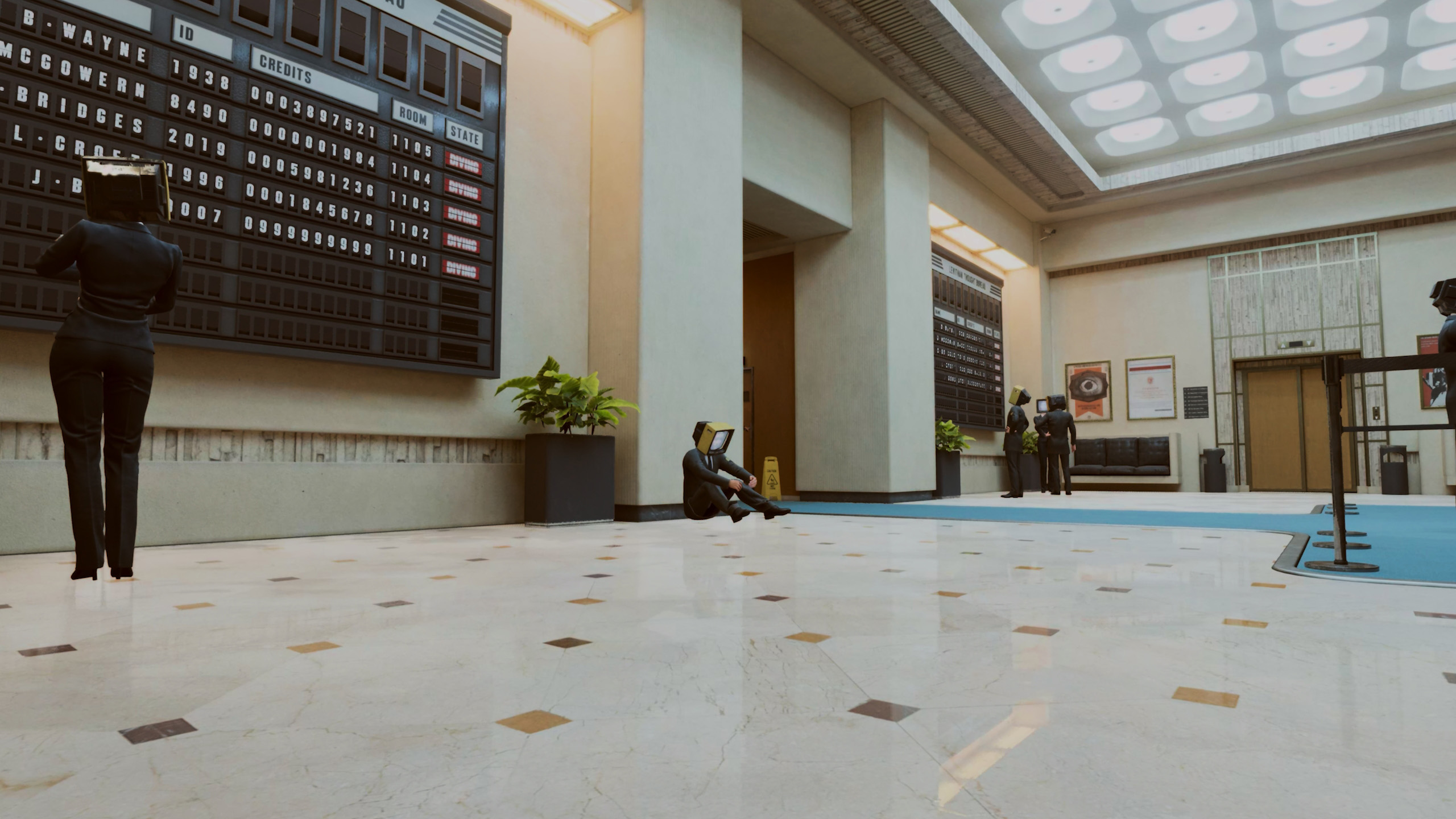
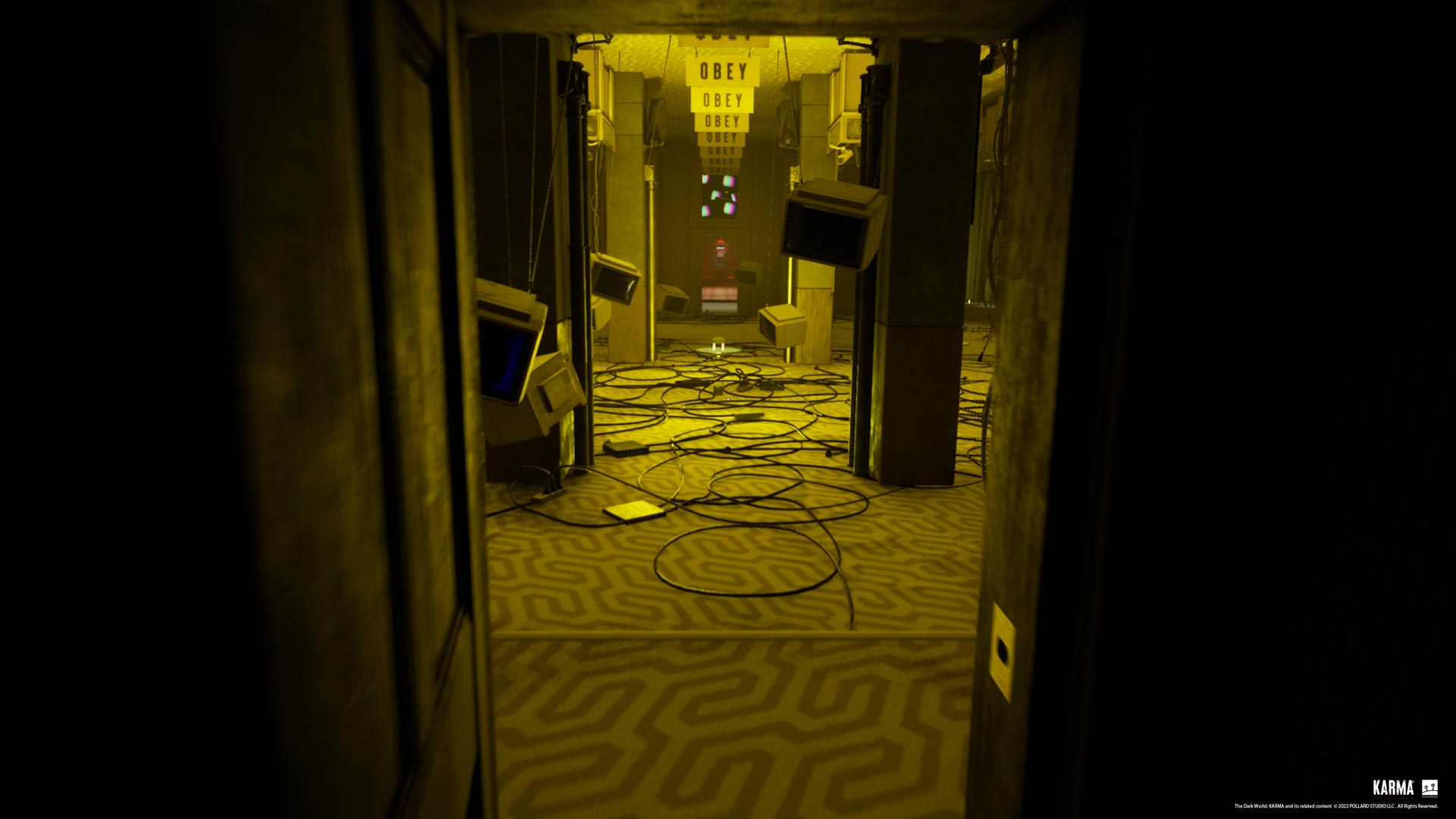
Pollard Studio’s accomplished visual design is a large reason their game maintains such a strong sense of immersion, no matter how surreal things get in the ‘80s setting. Chunky early office computer screens, pneumatic mail delivery tubes, rubber stamps to mark reams of paperwork, and myriad other paraphernalia combine into an irresistible sense of place in a bygone time.
For Orwell, 1984 was a distant future he never lived to see. For us, it’s in the increasingly distant past. Art Director Ke Yang says they aimed to exploit that in their art design, expanding the meaning of the omnipresent screens. “Things like the Christmas tree, the stamps, and the piles of TV-headed figures—they’re meant to feel like little glimpses of fading life. We wanted players to feel that sense of something small and fragile, almost like it’s slipping away, as they explore the world.”
Yang notes that reality was an important reference point, even when they depart from it to surreal, or horrific, effect. “The bathtub idea actually came from an abandoned hospital nursery we found,” says Yang. “There were rows of baby incubators left behind, all covered in dust and filled with dirty water. That image stuck with us, and we used it to create the Cultivation Room in the game.”
David Lynch’s films were a strong influence too, noticeable across KARMA’s storytelling style that raises more questions than answers. There’s a tonal connection between Lynch’s works in the likes of Twin Peaks and maybe even Eraserhead, and the game also mirrors his striking use of color to create spaces with an enduring liminal unreality. While the late director’s films are far from mainstream in China, they have a small but devoted following—and Chen points out that a small following in China counts as a very large one for other, less densely populated countries.
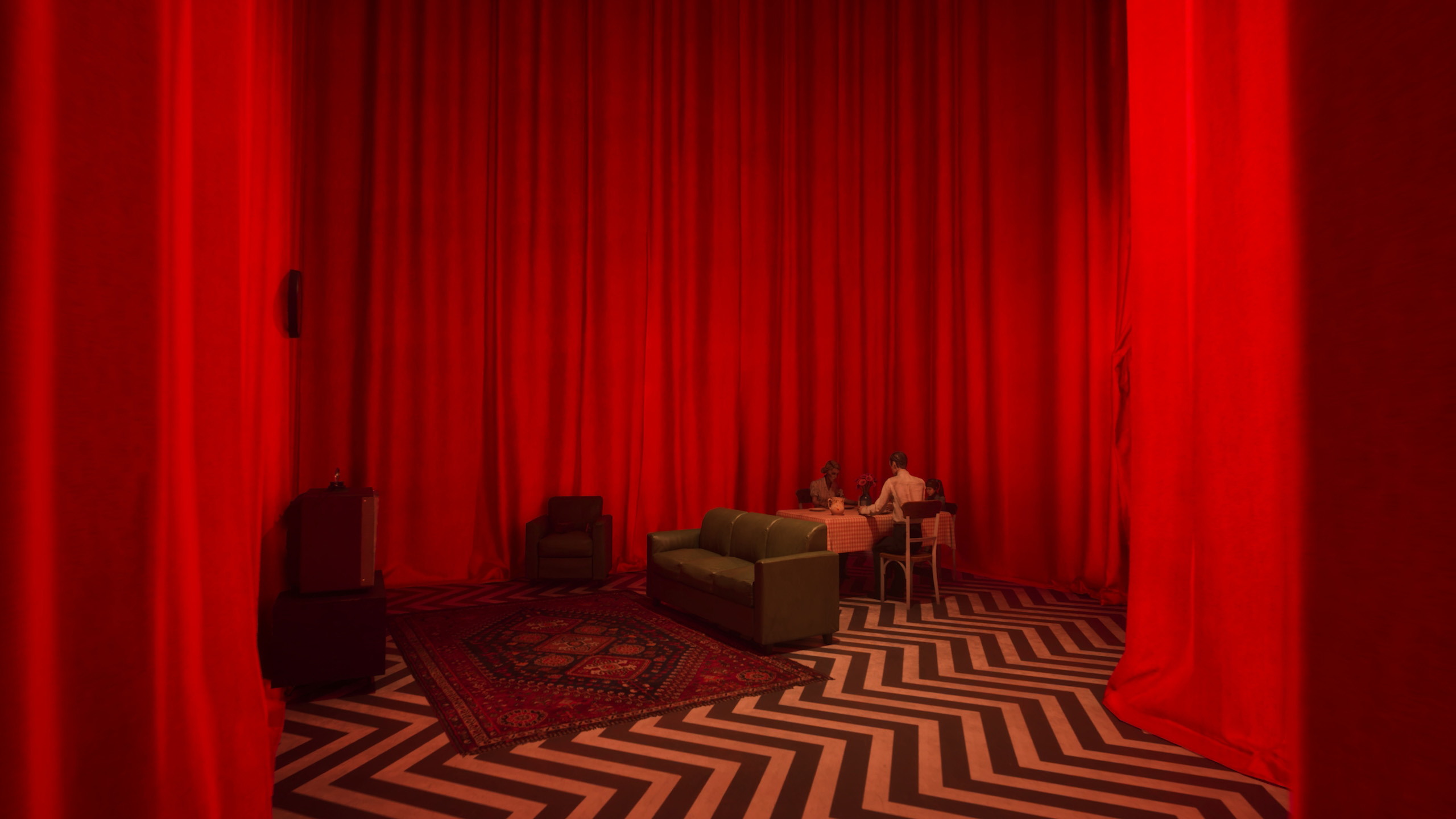
Wang considers Lynch a genius and speaks of his deep respect for the director’s intense dreamlike strangeness and deeply crafted characters who defy easy categorization. His filmography is a fixture in the studio’s movie nights for good reason, and they’re unable to resist paying homage—you’ll certainly notice the reference to The Red Room in Twin Peaks that indicates a turn towards mysticism. “The colors, the camera work, the character nuances—everything about his art feels intentional and profound,” Wang says. “While we could never surpass a master like Lynch, we hope to learn from him—to understand how he created the Lynchian aesthetic and adapt that sensibility into other art forms.”
KARMA has been under development over the last four to five years, and the post-Covid industry downturn left the studio uncertain at times if they would ever make it to release. They saw multiple other studios in China close before releasing their work to the world, and feared they’d be among them. Fortunately, after taking on some outsourcing work to bridge financial gaps, release is now in sight. The team is proud, stronger than before, excited but nervous, and tired in the midst of a challenging final polish and QA stretch.
The signs indicate their brand of dystopian horror has found its admirers. Asked how players responded to a recent Steam Next Fest demo, Wang, speaking in Mandarin for the entire interview until this moment when he calls out an English phrase with a grin: “Take my money!” If the game’s release receives the same reaction, with material for a whole trilogy planned, the team can have no fear that they’ll continue to explore the mysteries of the Dark World.
KARMA: The Dark World is out April 9, 2025 on Epic Games Store.