News
MythForce shows why 1980s Saturday morning cartoons are a perfect fit for roguelikes
J
Julian Benson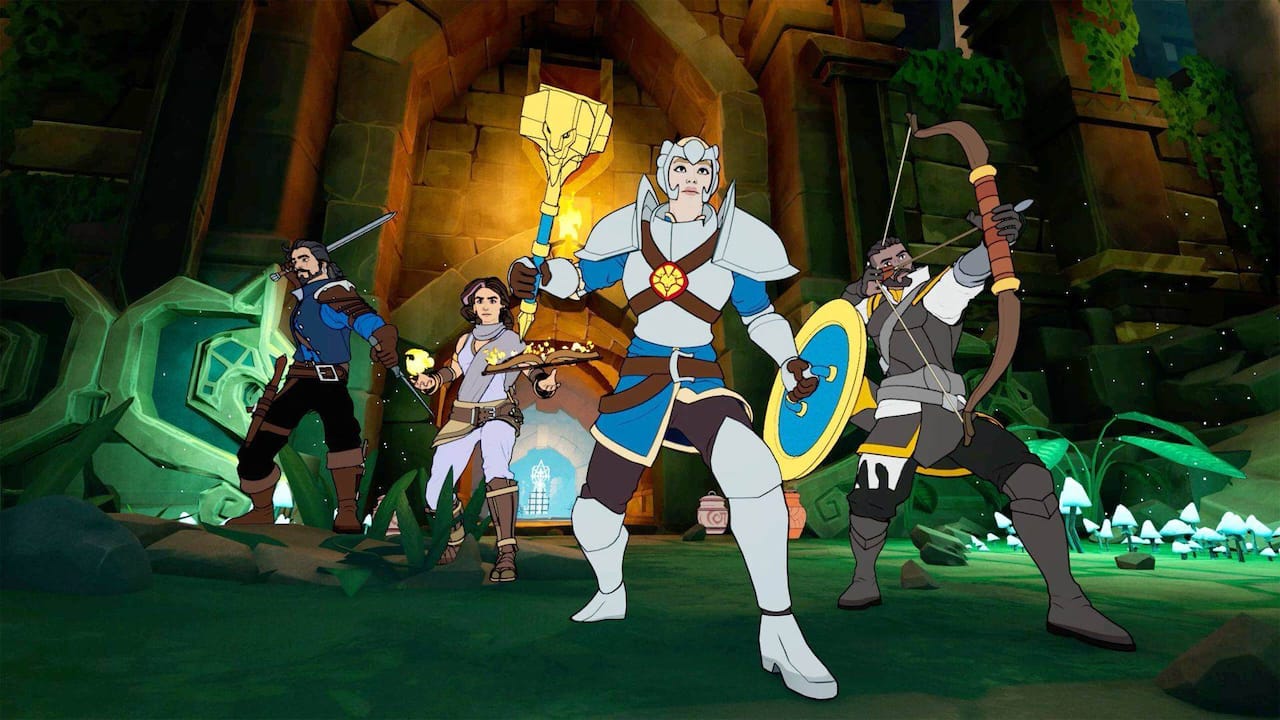
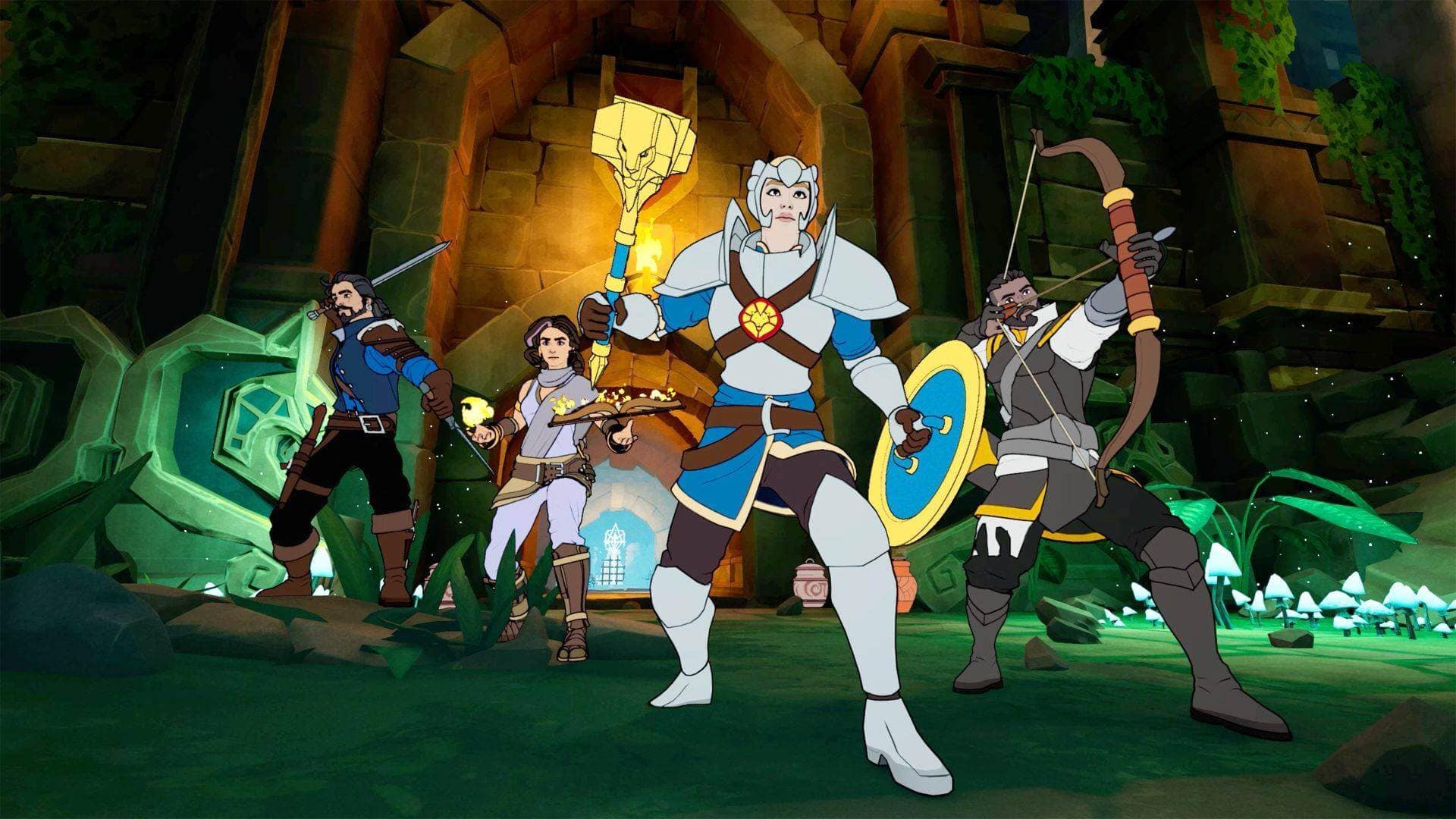
In MythForce, the vampire lord Daedalus has raised an army of undead skeletons, poisonous sporepeople, and forked-tongued lizardmen to burn the fantasy lands of Eldryth to the ground. All that stands between him are four heroes: Rico, a dagger-wielding rogue; Victoria, an armored tank of a knight; the deadly bowman Hawkins; and Maggie, a mage brimming with powerful magic. You take control of one of these heroes in solo or co-op adventures against the followers of Daedalus, cutting your way through his deadly armies and collecting gold and other treasures along the way.
MythForce plays like other first-person roguelikes, such as Warhammer: Vermintide 2 and Gunfire Reborn. You and your friends load into a randomly-generated dungeon and fight through room after room of enemies, collecting loot and leveling up as you go. Between each room, you earn a perk that changes your fighting style, giving your mace swings extra damage, or adding poison damage to your arrows. Occasionally, you find items such as magic healing potions, or gems that you can use to buff your character stats, or upgrade your home base. What sets MythForce dramatically apart from other games is that it is framed like a 1980s cartoon, capturing the essence of that era of animation. All the characters, enemies, and breakable items in MythForce’s world are rendered in cel-shaded graphics, but the world itself is closer to a watercolor painting.
For younger adventurers

The game's unique setting was inspired in part by the life experience of the people making it. “There are a number of young parents on the team,” Rideout explains; that count includes Beamdog co-founder Cameron Tofer. Tofer often plays roguelike games with his children, and he cites the genre as one of their favorites. That game style can be great for children because it focuses on replayability and bite-sized sessions, which let you complete a run in less than an hour. It’s a genre that feels like you’re making progress every time you play, even if you can only invest a little time. However, as Rideout puts it: “Historically, the genre has been filled with games that are far more scary or gory." He says that the team “wanted to create something family-friendly."
“I've always been a bit of an animation nerd and a 1980s pop-culture enthusiast, being a child of the 1980s myself,” Rideout says. “So I pitched the idea of framing MythForce as a ‘monster of the week’ 1980s cartoon setting. At their core, the cartoons of the 1980s are very video-gamey. The heroes are nearly superheroic, but because of the limitations of animation and rotoscoping, they're relatable, even aspirational, because they still move and fight like humans. 1980s animation was much less frenetic and bombastic than what you see in modern cartoons. It lent itself perfectly to the more measured, 'first-person Dungeons & Dragons’ pace that we wanted.”
The Saturday morning TV take on fantasy adventurers immediately offered opportunities to the team. The team knew MythForce would be multiplayer, and players would need different character roles to choose from. Out of that need, a knight, a rogue, a hunter, and a mage become obvious choices. While they’re standard features of fantasy adventures, 1980s cartoons don’t shy away from tropes and cliché, so neither would Beamdog.
“It was like the setting gave us the deck of cards,” Rideout says. “It was the lens through which we looked at all our decisions.” However, the 1980s art style presented a technical challenge for Beamdog’s artists. “Unreal Engine 4 and 5 are not built for making games that look like cartoons, so we were very much fighting against what the engine expects.” MythForce’s artists “had to unlearn a number of conventional modern techniques” to make models that harnessed the cel-shaded technology the team had developed.
How to be a hero

The self-imposed boundaries of the 1980s cartoon also challenged the team. While it allowed Beamdog to lean into familiar tropes, it also meant they coudn't drift too far from what you would expect to see on your television set on a Saturday morning.
Like the cartoons at the time, such as Thundercats and He-Man, MythForce is an optimistic story of teamwork, friendship, and heroism. “We didn't want to make something that parodied the 1980s, but instead create something that was a love letter to the decade and the cartoons created within them,” Rideout says. “It was immensely important that we didn't look at the source material with the cynicism it's so often viewed with today. We instead wanted to channel the earnestness of the creative minds that made those cartoons.”
While the endless adventures of 1980s cartoons fit nicely over the bones of the roguelike genre, turning those stories into a video game wasn’t always a neat fit. With television, you’re an observer, but a game puts you in the driver's seat—and this is even more noticeable in a first-person view. Players carve their way through dungeons filled with hundreds of enemies in their quest to defeat the evil vampire lord Daedalus. On a single adventure, you can easily get into triple-digit body counts of skeletons, mushroom people, and lizardmen. If the player does all that, how can they still be considered a hero?
That very question “informed many narrative decisions and decisions around monster design,” Rideout says. According to him, the team had to fight the instinct to let the game "become violent." It’s why the enemies you face are said to be creatures created from evil magic, and when they die, they don’t ragdoll on the floor, but disappear into a pool of luminescent goop, or a flash of purple magic.
This push to escape the violence at the core of many roguelikes and to embrace the merciful ways of 1980s TV heroes actually presented a solution to a narrative problem present in many other games. In many roguelikes, you will face and kill the same bosses many times over. Then, each time you start a new run, they are revived, and you meet them again without explaining how they came back to life. Not so in MythForce. As in the TV programs it’s referencing, the characters you play are always heroes. As Rideout explains: “They don't falter; they always show mercy. The heroes will never strike the final blow because they don't need to, and when the bad guys are defeated, they slink off to be bad again another day.”
In Saturday morning cartoons, it makes sense that the same Decepticons challenge the Autobots every week, that Team Rocket is always behind the plots hindering Ash on his journey to the Pokémon League, and that Shredder is allowed to regroup his forces to fight the Teenage Mutant Ninja Turtles in the future. The heroes could defeat them permanently, but then they wouldn’t be heroes. MythForce could kill Daedalus’ sidekick Beastor, but then they wouldn’t be the figures of good they need to be. So, instead, they will leave him beaten, but free to challenge them again on the next roguelike run through his forest kingdom.

The roguelike genre is constantly evolving, and its mechanics are turning up in unexpected places. Examples of this include Wall World, a game that crosses Manic Miner and Missile Command, or Against The Storm, a real-time strategy game where the entire world is destroyed every year, which forces you to rebuild from scratch again and again. Games like MythForce allow for a fresh appreciation of its mechanics and tropes by reframing the genre in a new setting. Who would have thought that so many of roguelike genre's oddities—from its unkillable bosses to its fleeting successes—could all be explained by applying the logic of 1980s children’s TV?
MythForce 1.0 is available now on the Epic Games Store. Face villains like Beastor the Brute, Hexstar the Dark Sorceress, and the evil vampire lord Daedalus.