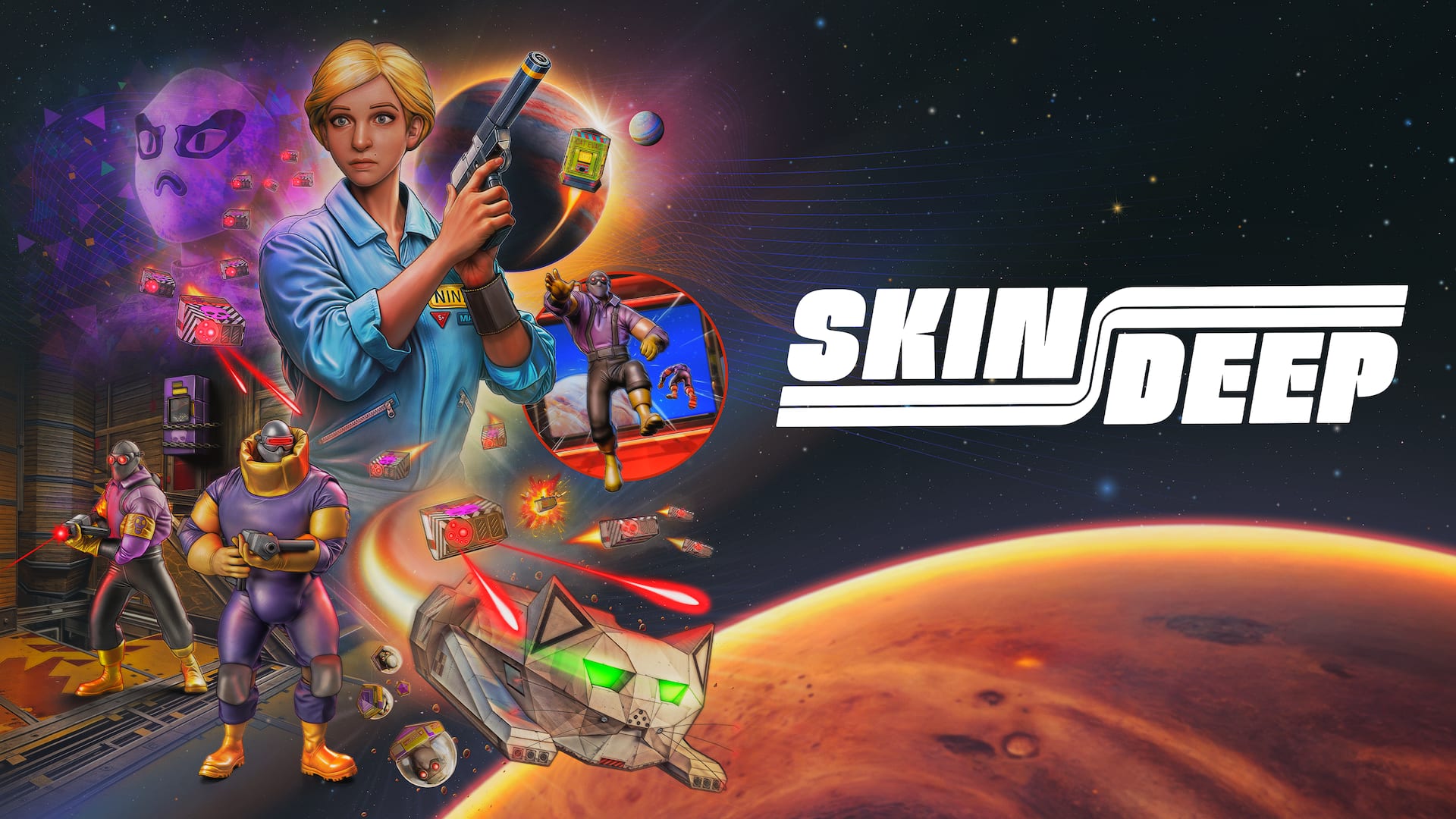
Skin Deep interview: An immersive sim with Looney Tunes (and '80s action movie) logic
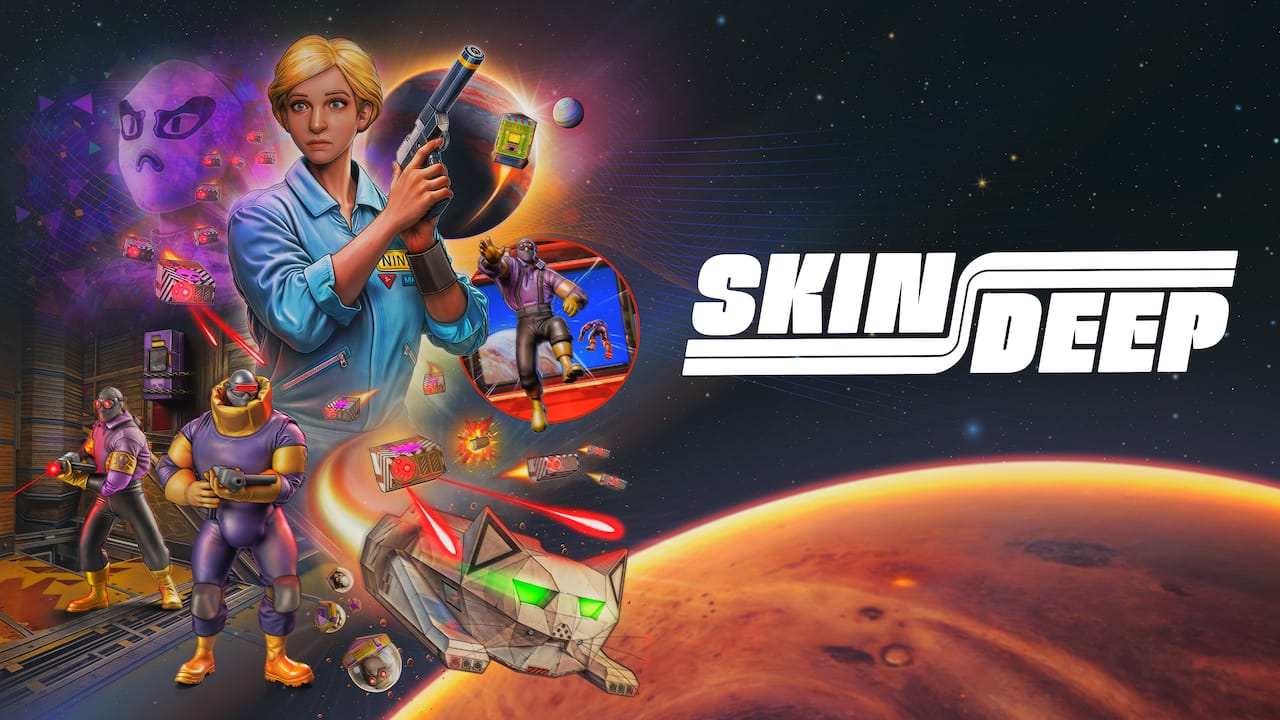
Skin Deep is an accessible and whimsical take on a notoriously hard-nosed genre. The so-called "immersive sim" got its name in part because it simulates the consequences of your actions—flammable things explode, electricity travels through metal (and unlucky enemies). Consistent but often wildly surprising results are the hallmark of titles like Dishonored, BioShock, and Prey. Now Skin Deep takes this systems-driven mindset and combines it with a game where you rescue cats from spaceships while using banana peels to stop guards.
“We decided to go in the direction of a Looney Tunes cartoon or an '80s action movie and use those as our touchstones,” said Brendon Chung, Founder and Creative Director of Blendo Games.
Built on the decades-old code of legendary Doom programmer John Carmack, Brendon Chung and Programmer Sanjay Madhav took the 21-year-old open-source id Tech 4 engine (famously used for Doom 3) into uncharted territory, re-gearing the immersive sim to produce a slapstick comedy of intentional mayhem and highly unintended consequences.
Die Hard in space
Implausible as it sounds, that combination of Bugs Bunny zaniness with John McClane’s wry vent-crawling style makes Nina Pasadena’s cosmic adventures in Skin Deep a madcap delight.
Throw a banana peel into a Pirate’s path, you’ll be unsurprised to see them slip stunned to the floor. Use a hand sanitizer pump, watch its noxious fumes hang in the air, and then throw a lit lighter towards the hazy pink cloud and wait for the inevitable boom. Or sneak attack, not with a competent chokehold but by pouncing and smashing them into any nearby fixtures like you’re in Mission: Impossible - Fallout’s arm-pumping bathroom fight scene.

Ways to dispatch space pirates abound, especially as you uncover an increasing number of gadgets (and a Duper to make copies of them). But there’s a wrinkle: Pirates are equipped with a device known as a Skullsaver. Once incapacitated, you can't simply drag the Pirate's body into the nearest bin or behind a hedge. Instead, their head detaches from their space suit and they begin floating back to a revivifying portal that will make them good as new.
Chung explains why they chose to complicate the trusty loop of dealing with an enemy before stuffing it into a convenient hidey-hole. “There's something nice about the ritual of doing something with an object. We did have bodies dragging around for a while, but the Skullsaver gave the player this arcane magic spell process to take care of things.”
Sadly they dropped plans to let you interrogate Pirates post-mortem, holding skulls aloft like Prince Hamlet with a dialogue wheel. Instead, when you come into possession of a severed pirate skull your arcane ritual involves getting it off the ship, pronto. Until then, it’s a head-scratching inconvenience, taking up precious space in your inventory, its muffled complaints threatening to give you away until you can locate a waste vent, airlock or (most undignified of all) a toilet to eject it safely into outer space.
This isn’t the only instance where Skin Deep drops an anvil from perilous heights onto genre convention. It’s the only game to make me fret about holding in a sneeze as I race through a spaceship's dusty vents, or plucking bullets and shards of glass from my bare feet, or wiggling into cover after slipping on a soapy laundrette floor after overloading the pipes with detergent.
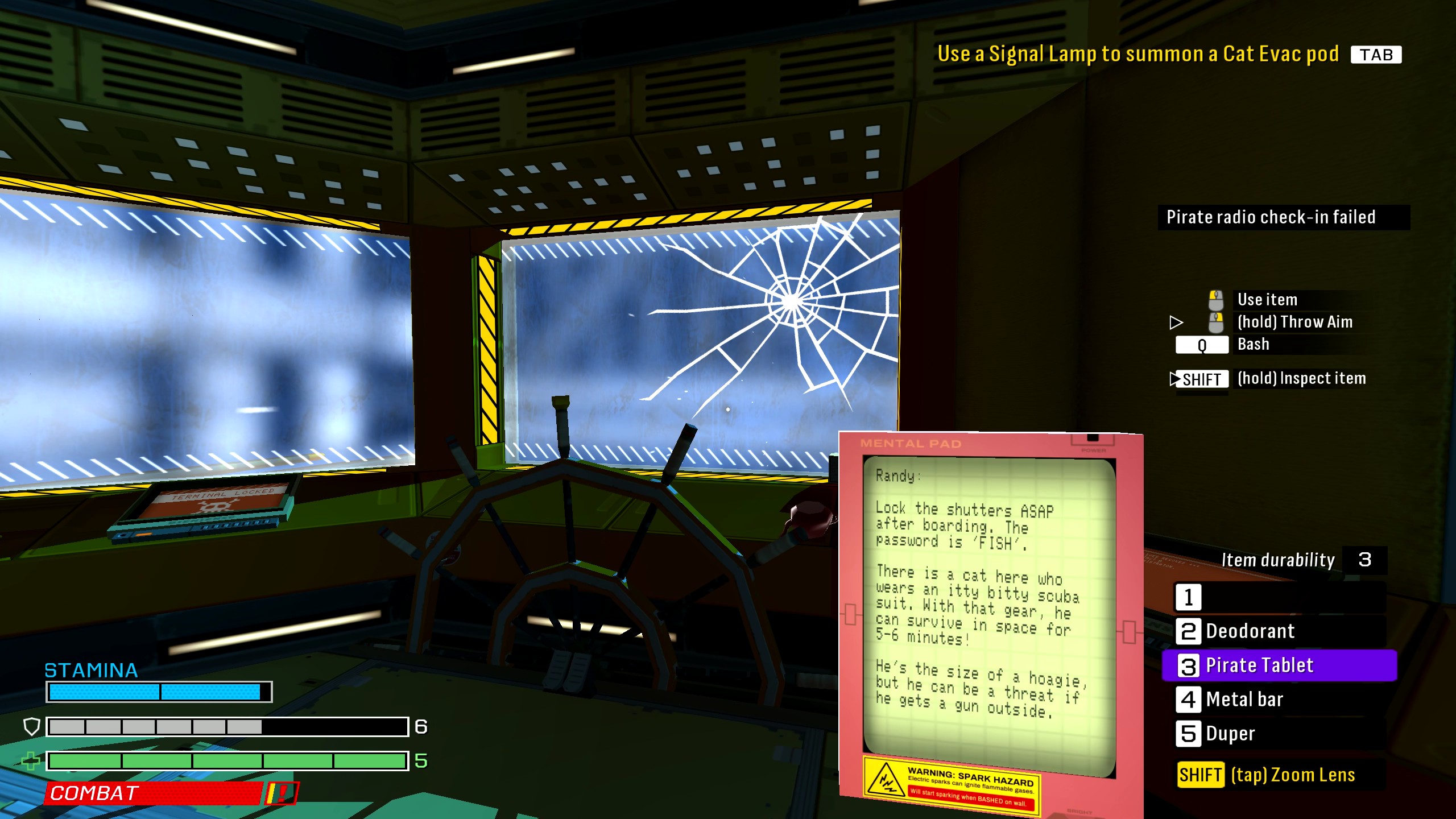
The immersive sim genre has always existed just one step away from farce. Skin Deep crosses that line with a giddy leap.
Chung explains why they chose to expand what the immersive sim actually simulates, beyond parameters like visibility, enemy patrols, sound proximity, and hacking. “In first-person games, we choose what to abstract and not to abstract, what to simulate and not to simulate,” he says, “For most first-person shooter games, it makes sense to keep it a very seamless and streamlined experience. You're running around shooting people and it's very frictionless. But there's something funny and interesting about making your body a real physical thing that can be an obstacle.”
Rip and tear the open-source Doom 3 engine
Chung has a long-running infatuation with the id Tech 4 engine he used for Skin Deep and its predecessor, the hacker-sim Quadrilateral Cowboy. Most famously used for Doom 3, Chung says id Tech 4's appeal comes from its single-minded utility. “It's a piece of tech that's very specifically made for making first-person games. It's designed to do one thing and it does it really well.”
Its age shows in some respects. Many first-person conventions that are now part of the genre’s grammar didn’t exist in id Tech 4. It's a time capsule of 2004 first-person shooters, releasing pre-Half Life 2 (by a smidge) and Call of Duty 4: Modern Warfare.
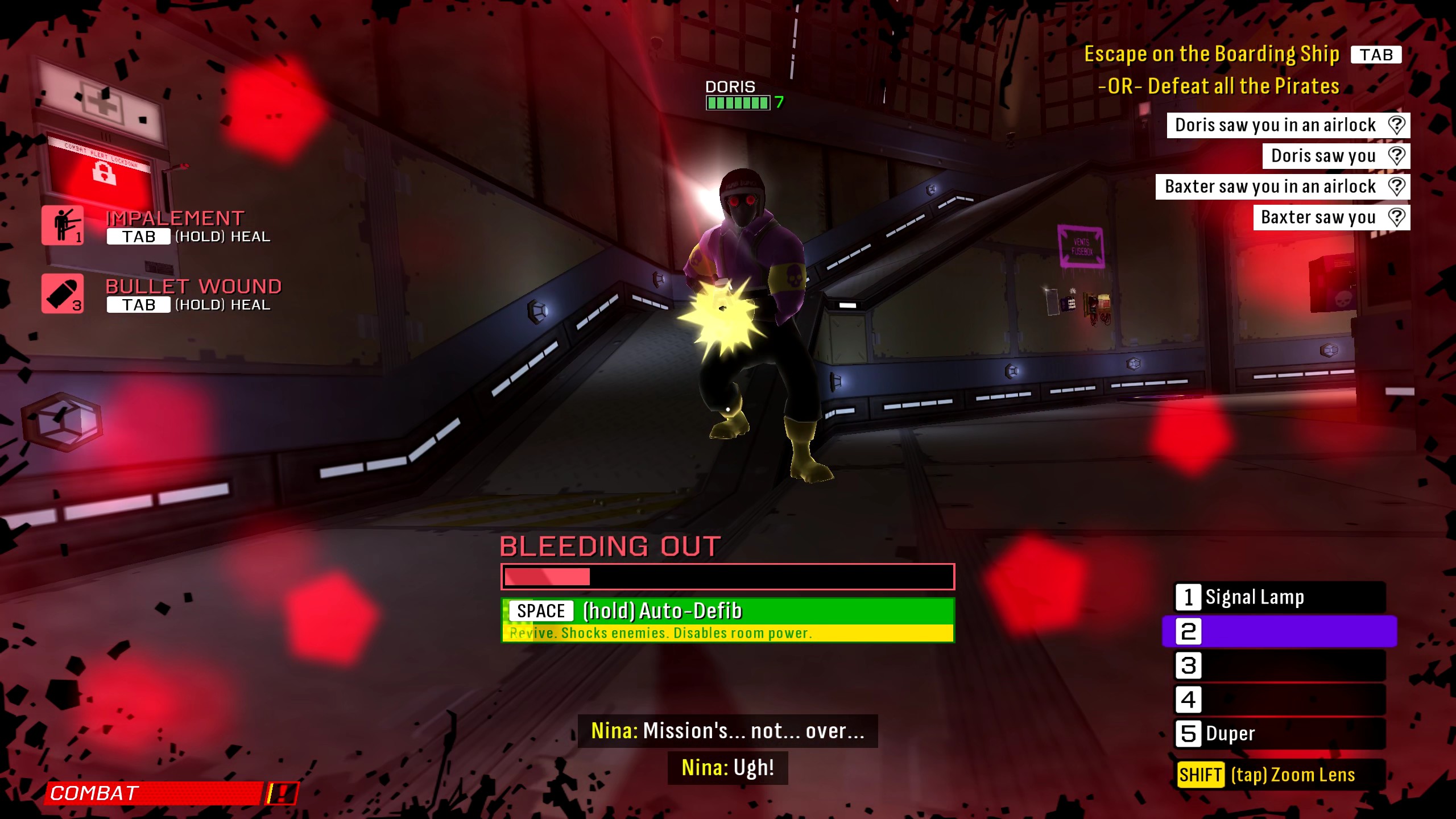
Post-processing effects like highlighting interactive objects on mouseover or the desaturated red-tinged screen that appears when you take damage were challenging to pull off with the 21-year-old graphics shaders, written in an old form of assembly language—so dated the Steam Deck could only output a black screen. “Eventually I was like, OK, we need to update by 10 years,” concedes Chung, proud to say they got Skin Deep playable on Valve’s handheld.
Skin Deep is also made up of many interactions that weren’t available in Doom 3, much as I’d love to see a Cyberdemon vanquished by a makeshift deodorant can explosive. The engine was designed for traversing narrow hallways chock-full of demons, not physics-based puzzling or managing the sheer number of physics objects common in immersive sim levels or shattering windows and escaping into zero-gravity—although Doom 3’s Mars level tech proved useful for that last one.
Still, Blendo Games had to build a lot of Skin Deep from scratch on top of id Tech 4's foundation. Physics was a particular pain. In a game where throwing items is an essential mechanic (whether it’s a book, a knife, or one of those invaluable banana peels), they had to get it right.

And while Doom 3’s engine is open-source, certain proprietary elements aren't…or at least weren't. Madhav remembers that John Carmack’s shadow system, developed for Doom 3, ran afoul of a patent inexplicably held by audio company Creative Labs, best known for their Sound Blaster sound card—remember those?
“We were having a problem with the shadows rendering slowly,” remembers Madhav. “And then I was like ‘Wait, didn't the patent on John Carmack's shadow thing expire?’ We looked it up and it expired in 2018.” They promptly reintroduced it for Skin Deep.
Cutting Skin Deep
Blendo Games’ previous id Tech games used a distinctive LEGO-esque cube-person design for its characters. “Traditional character art, where they're very detailed and semi-realistic, is very hard to do. The cube people are much more doable for a small team and for a person who might not have a specialization in character art,” says Chung. He explains that Skin Deep’s human characters have more conventional character designs due to a specific mechanic that didn't appear in Thirty Flights of Loving and Gravity Bone’s purely narrative experiences.
“Traditionally, cube people have very large heads. We felt it would be too easy to get headshots on them,” says Chung. The cats, at least, remain in the familiar cubic style—and no, you can't headshot your own clients.
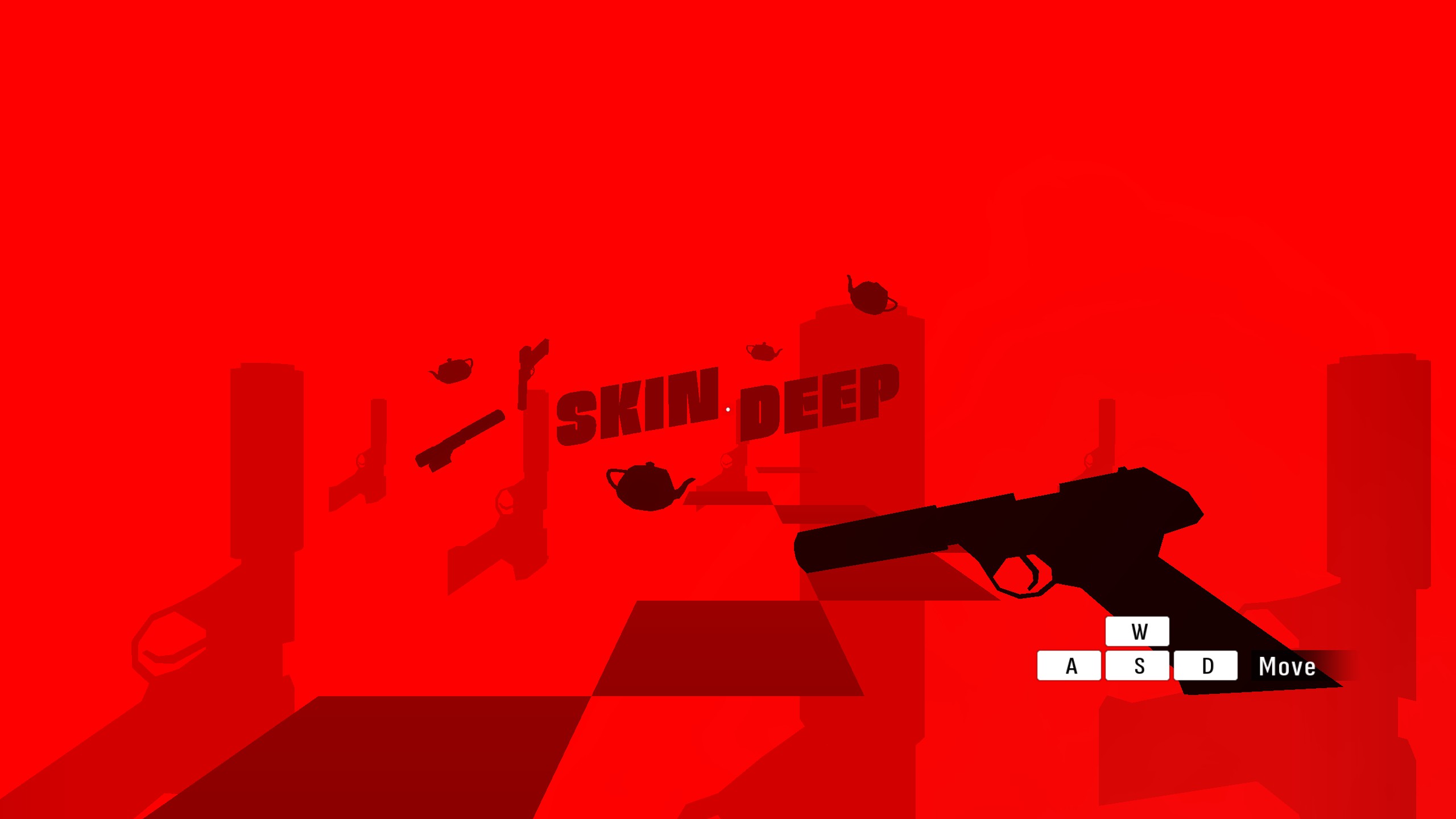
Anyone familiar with Blendo Games knows the team loves movies. Few are better at adapting cinematic techniques like quick-cuts, for instance. Skin Deep's playable Bond-style opening credits is a thrill to experience, as are the numerous vignettes between missions.
“People who watch movies have this shared knowledge or language for what movies do—if you do a certain kind of shot, certain kind of cut, or a certain kind of transition,” says Chung. “You get away with saying a lot with this shared cinematic knowledge people have.”
Film language is another tool for players to decode Skin Deep's intimidating systemic density. Puncture a gas main and the game pauses for a second, a freeze-frame drawing your attention to the explosive gas flowing out of it with helpfully scribbled diagrams. “It's more fun to know what's happening, as opposed to feeling confused or ambiguous,” explains Chung.
Skin Deep definitely wants you to know what’s going on and avoid being lost in design cul-de-sacs. Highlight any interactive object from any distance and hit Shift, and you’ll zoom in on a playfully written instruction sticker. Your Memory Palace calls up every note you’ve come across in any given level at the click of a button.
Exploring new ways to use tech that’s practically geriatric in gaming terms is far from a fool’s errand for Chung, a passionate believer in its enduring value. “Old technology is worth continuing to use. Just because it's 10, 20 years old doesn't mean it's bad. If they made an interesting game with it before, you could probably do it again. I support people who use older stuff.”
As for what to expect next from Blendo Games? “We're looking at different technologies to explore. We're gonna take a break first,” Chung shares, a beat before admitting that one modern title could tempt him to try a modern game engine. “If we can get Doom: The Dark Ages in open-source, then I won't complain. I'll take it!”
Skin Deep is out now on the Epic Games Store.