The rise of FMV gaming: how the forgotten genre is now a must-play
There was once a time when the phrase “FMV game” could only be intoned with doom and foreboding. That time was the advent of the CD-ROM—the 1990s—when we were all very impressed with the fact that it had 450 times much storage space as a floppy disk. They had to fill it with something, right? And that something was all too often an hour of jerky full-motion video C-list actors chewing the scenery in front of a poorly keyed greenscreen.
But forget those times! Forget Ripper and Night Trap and Plumbers Don’t Wear Ties! The last ten years have seen a resurgence for the format, where affordable film-quality cameras have allowed those with a script and an imagination to truly realize the potential of full-motion video gaming.
The Shapeshifting Detective
The current monarch of the FMV revival is publisher Wales Interactive. With an extraordinary twelve games on the Epic Games Store in just the last seven years, it's become the go-to name for interactive movies—and The Shapeshifting Detective is perhaps their most popular. From developer D’Avekki Studios, this is a supernatural murder mystery in which you play a detective who can—you guessed it—shapeshift. You use this ability to take on the form of other characters, and then employ this deception to trick suspects into sharing secret information. Which… isn't exactly morally sound, is it? It almost certainly wouldn’t be admissible in court.

A group of tarot readers is staying at a guest house, and between the three of them, they predict a murder that happens that night. Obviously, as they’re the three main suspects, you begin by talking to each of them, the local police chief, and the owner of the guest house. But after this, you’re able to shapeshift into the form of any of them, and then use your new skin to gain information from unwitting witnesses. You do all this while trying not to arouse suspicion, digging out personal tidbits that will help you unravel the mystery.
The acting varies—some great, some a little stiff—but once you’re past the uncanny feeling of each character’s permanent camera-spiking eye contact, it all starts to feel natural. Here, it’s as much about what you don’t say as what you do; judicious silence or refusing a particular angle can open up whole other avenues of conversation. It's especially difficult to juggle all the lies you’ve told to so many different people while pretending to be so many different people.
Not For Broadcast
Not For Broadcast is a superbly innovative use of FMV. Rather than working within the restrictions of a limited amount of filmed material, it instead builds its whole concept around this. You’re running the production desk at a live TV network—presumably at some point in the early 1990s, given the use of VHS tapes—where you need to cut between cameras, play in commercials, and live-censor any swearing you might encounter. You also have to ensure that there’s no interference as you juggle multiple feeds and these other tasks, with generally so many things happening at once that you can barely react to any of it.

The game begins like far too many nightmares: your unnamed character—a janitor at the network—finding himself in a production booth with a phone ringing. When you answer it, a gruff-voiced Dave informs you that he can’t be bothered to come to work today, the news is about to start, and you’re just going to have to do it yourself. Thankfully, Dave stays on the line to talk you through it and introduce the very many aspects of live TV.
This is a distinctly British game, complete with Teletext (Wikipedia it) for aspects of its UI, along with pastiches of stereotypically British television. However, the themes of how your editing choices can affect the viewers’ understanding—and its ongoing plot about a populist political party—are universal. It’s also very funny, if often sinister, with so much going on that you’ll be glad of the option to watch any of the videos used again after a chapter ends.
Night Book
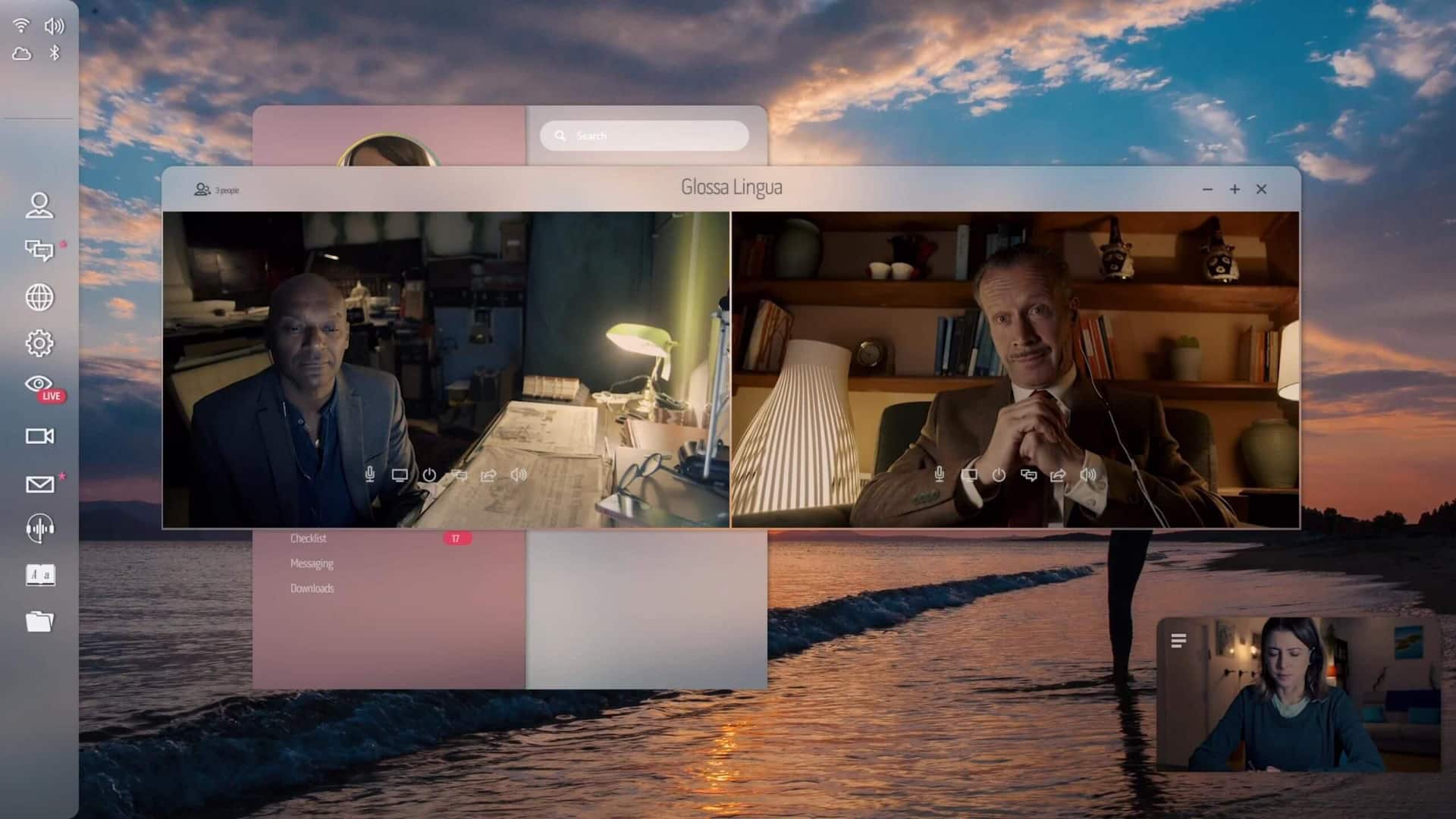
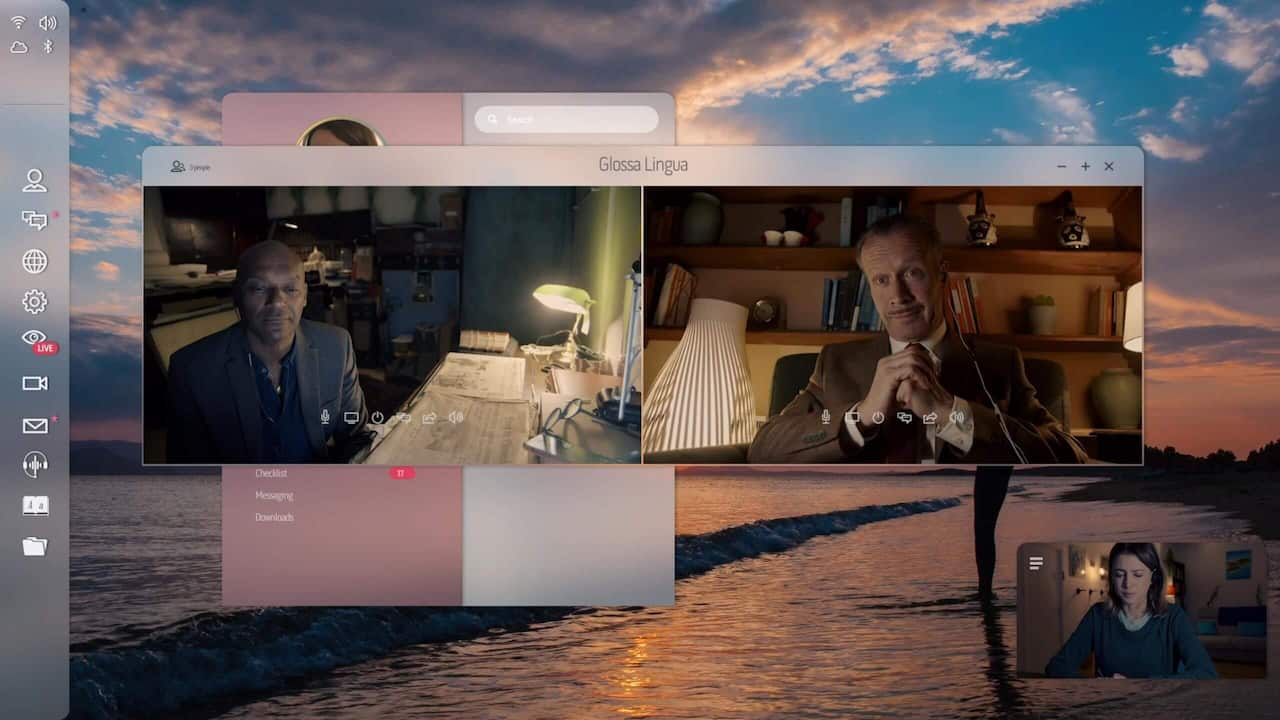
Another Wales Interactive game, but this time from developers Good Gate Media, Night Book is a very subtle horror story that was born out of COVID lockdown. In the game, you play as a pregnant French woman, Loralyn, who lives in London and works as an online interpreter. She is hired via an agency to translate video calls for various businesses, speaking French, English, and an ancient, almost extinct language called Kannar.

Meanwhile, her husband Pearce is working on the Godshand Islands, where a hotel is due to be built on some ancient land, and some believe the spirits of the area aren't best-pleased. These spirits seem to be rather enlivened by the Kannar language.
On top of all this, Loralyn has her father living in her apartment, locked in his bedroom and believing himself possessed by similar spirits. He’ll only communicate via mobile phone, and he's making pretty unnerving noises in there.
As you might imagine, Loralyn gets heavily involved in the mystery surrounding this building project, some ancient Kannar texts, and various interested parties. This is all conducted by you controlling her desktop computer, with the events of the game portrayed through video calls. Evil spirits possibly aside, this is how so many of us spent lockdown—and, indeed, the circumstances under which the game was made. The entire cast of the game filmed their sections alone, with each on one end of a call, which means it all feels completely natural that no one is physically interacting.
There are a remarkable 15 different endings to Night Book, and one playthrough might have you watch only 40 or so of the total 223 filmed scenes. Needless to say, you can replay this game a lot. You will occasionally be disappointed by how similarly things can work out, but with the ability to skip scenes you’ve already seen in previous playthroughs, it’s not arduous to plunder it for new angles and different endings.
Stonekeep
Let’s throw in a stone-cold classic FMV game into the mix, if only to prove the 90s weren’t all bad. Because for every 30 Fox Hunts, there was something that tried to use the format more smartly—and few were better than Stonekeep.

Stonekeep was released in 1995 by Interplay, the publisher that would go on to give us Baldur’s Gate. This first-person dungeon crawler was made in the style of classics of the genre like Dungeon Master and Wizardry, but with the most modern tech available at the time: pre-rendered backgrounds and FMV characters. Playing as Drake, you set out into the labyrinth of corridors and chambers with only a magic mirror and magic scroll, eventually teaming up with other party members, learning magick, and defeating the evil Shadowking.
Originally starting development in 1988, Interplay had intended the game to be finished in nine months and with a budget of $50,000. Some seven years and $5 million later, the game was released, its development ever hindered and boosted by the rapidly evolving tech of the era. Though it was originally intended for release on eight floppy discs, it eventually released only on CD-ROM. Its opening FMV sequence—filmed on greenscreen, then plonked over Myst-like 3D backgrounds—is a brilliantly dated piece of 90s tech. But it remains joyous to watch!
The whole game—while surprisingly tricky some 30 years later—remains a classic dungeon crawler, and it’s a treat that this time capsule of how people tried to use FMV in the mid-’90s is still available to play today.
The Complex
We’re back with Wales Interactive again, and this time a collaboration with Good Gate Media: The Complex. Pushing more toward the visual novel end of the interactive spectrum, The Complex is an interactive movie where your decisions might not be frequent, but they can have some fundamental effects on the story you’re told.
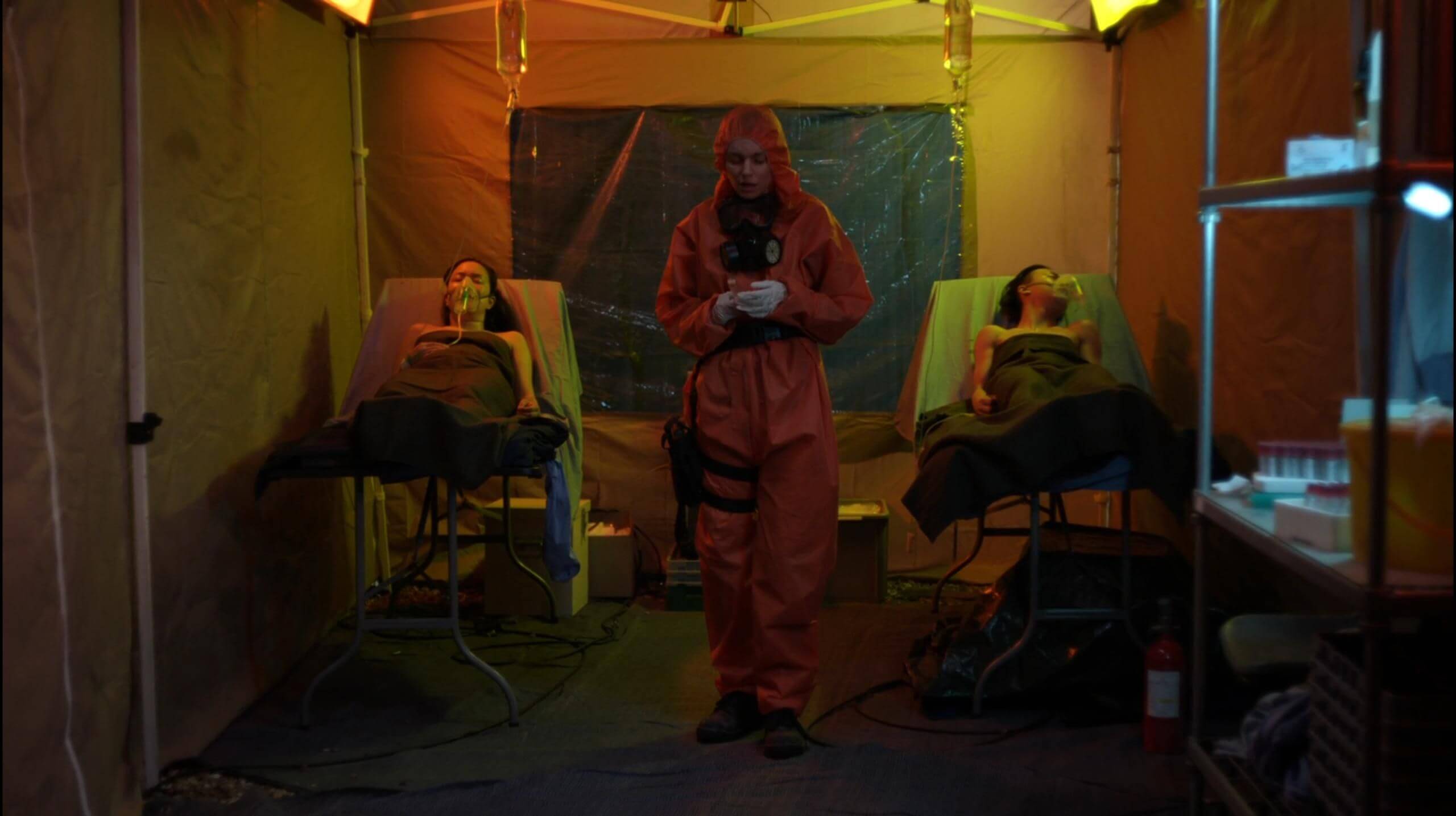
That story is a sci-fi thriller in which you play Dr. Amy, a research scientist involved in a bio-attack on London. Locked in a network of labs with limited oxygen, Amy has a bunch of choices to make that will ultimately decide her and others’ lives. This all plays out as a superbly gruesome science-fiction horror, but what's really surprising is the level of detail in how your actions affect the story. Of the nine different endings, some are extremely different from the others, but your role determines more than that. Choices you make early on—and the relationships you form with other characters—can eliminate or introduce completely different avenues later on, making it a game you’ll want to play at least three times.
The other thing that really helps The Complex stand out is its talent. The game was written by Lynn Renee Maxcy, one of the lead writers on The Handmaid’s Tale, and stars a cast of known UK actors with lengthy IMDB entries, including shows like Game Of Thrones. It’s also boosted by its large, elaborate sets, which contrast heavily with the bedrooms and greenscreens that you'll find elsewhere in the genre.
The result is a really compelling thriller with some very adult language and gore that would be worth watching if it were a straight TV show. It’s even better that it’s not, given just how differently the whole thing can play out based on the decisions you make.