
The Rise of Cozy Games

In early 2020, millions of people moved into a tiny island supersaturated with vibrant colors, populated by cheery neighbors, and which offered its inhabitants cozy connections and the chance to live quaint, pastoral lives that clashed beautifully with the wider chaos unfolding in the world.
As governments enacted real-world stay-at-home orders, gamers around the world built out their new virtual homes in Animal Crossing: New Horizons. Released on March 20, 2020, Nintendo’s quintessentially cozy game offered a timely respite from the COVID-19 pandemic outside. Animal Crossing: New Horizons became, at launch, the fastest-selling Nintendo Switch title of all time.
Animal Crossing: New Horizons was not the first cozy game, but a rising tide lifts all boats, and the Nintendo title’s wild popularity at a particular moment in history injected not just the phrase “cozy gaming” but the underlying gameplay concepts deeper into mainstream consciousness than perhaps any previous effort.

And at least for a little while during those early pandemic days, cozy games even changed the cultural conversation around gaming from the dangers of violent video games to the benefits of other, chiller experiences, according to Dr. Rachel Kowert, a research psychologist who’s been studying the uses and effects of video games for about 15 years.
“I remember there was a parents’ magazine that had a feature story saying something to the effect of ‘play games with your kids,’” Kowert said about the early days of the pandemic. “And I was like ‘I've died!’ What do you mean they're recommending you play games?”
Dr. Kowert’s particular professional focus has been on trust, safety, and video game use for mental health, and she knows well the seemingly interminable struggle between parents and children, between the daily experience of gamers and their sometimes sensationalized portrayal in the media. But in 2020, it seemed that some defaults—up to and including what video games could be or didn’t have to be anymore—were being reconsidered.
“If a parents magazine was like, ‘play games,’ and they were talking about Animal Crossing, it’s like, did they not know these kinds of games exist? Everyone just thinks of Grand Theft Auto and Call of Duty.”
Before Animal Crossing: New Horizons put a spotlight on the genre, there were a handful of standard-bearers for cozy gaming, like developer Ben Esposito’s Donut County, Maxis’s The Sims 4, and ConcernedApe’s Stardew Valley.
The next few years saw a veritable Cambrian explosion of cozy games though, bathed in warm colors and relaxing soundscapes and set inside living worlds that let players amble at their own pace, eschewing action for leisure. Recent cozy games include developer Bad Viking’s Strange Horticulture and Strange Antiquities, Gummy Cat’s Bear and Breakfast, and Omnivorian’s Cosmic Coop. The trend is set to continue with upcoming titles like Tmesis Studio’s Universe for Sale and Square Glade Games’ Outbound. Even Animal Crossing: New Horizons is receiving major updates, nearly six years after its release.
We spoke to cozy game developers about what makes a game cozy, why people love cozy games, why they loved and wanted to create them, how to create something cozy without being boring, and the future of the genre.
A brief history of cozy gaming
People had been playing so-called "cozy games" for perhaps decades before their recent rise in popularity, but the actual "cozy game" moniker gained momentum in the last decade or so, coalescing online in places like Reddit where people asked about comfy or cozy games to play when sick.
Though it seems lost to online history exactly when and where the term became synonymous with a certain type of game, its etymology bears a notable resemblance to a literary term that shares many characteristics with its video game counterparts. Cozy mysteries are a subgenre of crime fiction in which the blood, gore, and sex take place off the page and screen. Rather than dwelling on the deed’s dirty details, the narrative tends to focus on regular folks solving problems.
Author Agatha Christie’s Murder at the Vicarage is an early example. It’s the first novel to star Miss Marple, an amateur detective who lives in the pastoral English village of St. Mary Mead. Those of a certain age will also remember Jessica Fletcher, the mystery writer and amateur detective protagonist of the Murder, She Wrote TV show, which aired for more than a decade.
Just like their namesake cousins, cozy games share much in common with other games, but they tend to offer a gentler lens through which to experience an often action-focused medium built on challenge and difficulty. Cozy games span a wide gamut, from the agricultural management of Farming Simulator 25 to the puzzle-solving of Botany Manor, or even just tending to the needs of ordinary life, which goes at least as far back as Activision’s 1985 life- or social-simulation game Little Computer People.
Cozy games are versatile, malleable, and varied. As Cosmic Coop creator Kyle Keersemaker pointed out, “It’s less about genre and more about feeling.” Identifying a cozy game ends up feeling a lot like invoking an infamous definition from United States Supreme Court Justice Potter Stewart: You know it when you see it.
That's valuable, but it’s certainly not as obvious a genre as, say, first-person shooters, which have firmly established conventions. According to Dr. Rachel Kowert’s research, though, there are three elements that could describe the cozy genre.
“The first is a sense of safety,” she said. “So a sense of inclusion…that supports reliability, familiarity, repetition—you know what's coming—that sense of safety. Abundance is the second one, so it's a game where the basic needs are provided and easily attainable. You can see that really easily in Animal Crossing, for instance. You don't really need anything to survive, but trees are easily attainable. They're already there on your island when you get there. And the last is softness—gentle, comforting stimuli, good music, something aesthetically pleasing, right? It's not going to be a horror game, but something with bright colors and a soothing soundtrack.”
Cozy games are different, in other words. Broadly speaking, they’re not what might come to mind when someone says “video games,” and that’s true even for the people who play and make games.
So how do you make a cozy game if the genre is fundamentally different from many other games? According to the developers we interviewed, there are several common factors, including atmosphere, pacing, and a focus on a particular kind of emotionality.
Easygoing pace
At the end of Ridley Scott’s Alien, the bloodthirsty Xenomorph is loose and the desperate, surviving crew of the Nostromo has done the unthinkable: They’ve triggered the spaceship’s self-destruct timer. Countless video games from Deathloop to Outer Wilds to Fortnite and Vampire Survivors have used the same time-honored plot device to infuse instant urgency into the current moment.
But cozy games? Not so much. In fact, that’s basically anathema to the formula.
Brothers Rob and John Donkin of Bad Viking, developers of Strange Antiquities and Strange Horticulture, see the decreased focus on time as an integral component of cozy games.
“For us,” they co-wrote in an email interview, “cozy games are games you can play at your own pace, without timers and pressure. Games that allow you to think and breathe. It’s about that sense of quiet focus, giving players permission to slow down, observe, and take pleasure in the small things.”
Zeno Colangelo, the art director of Universe for Sale, sees it similarly and adds that slowing down produces a different emotional state for players than, say, action games.
“A cozy game is one that lets you exist in a place without being rushed, where curiosity replaces pressure,” said Colangelo. “It’s about atmosphere, intimacy, and emotional safety more than difficulty or challenge.”
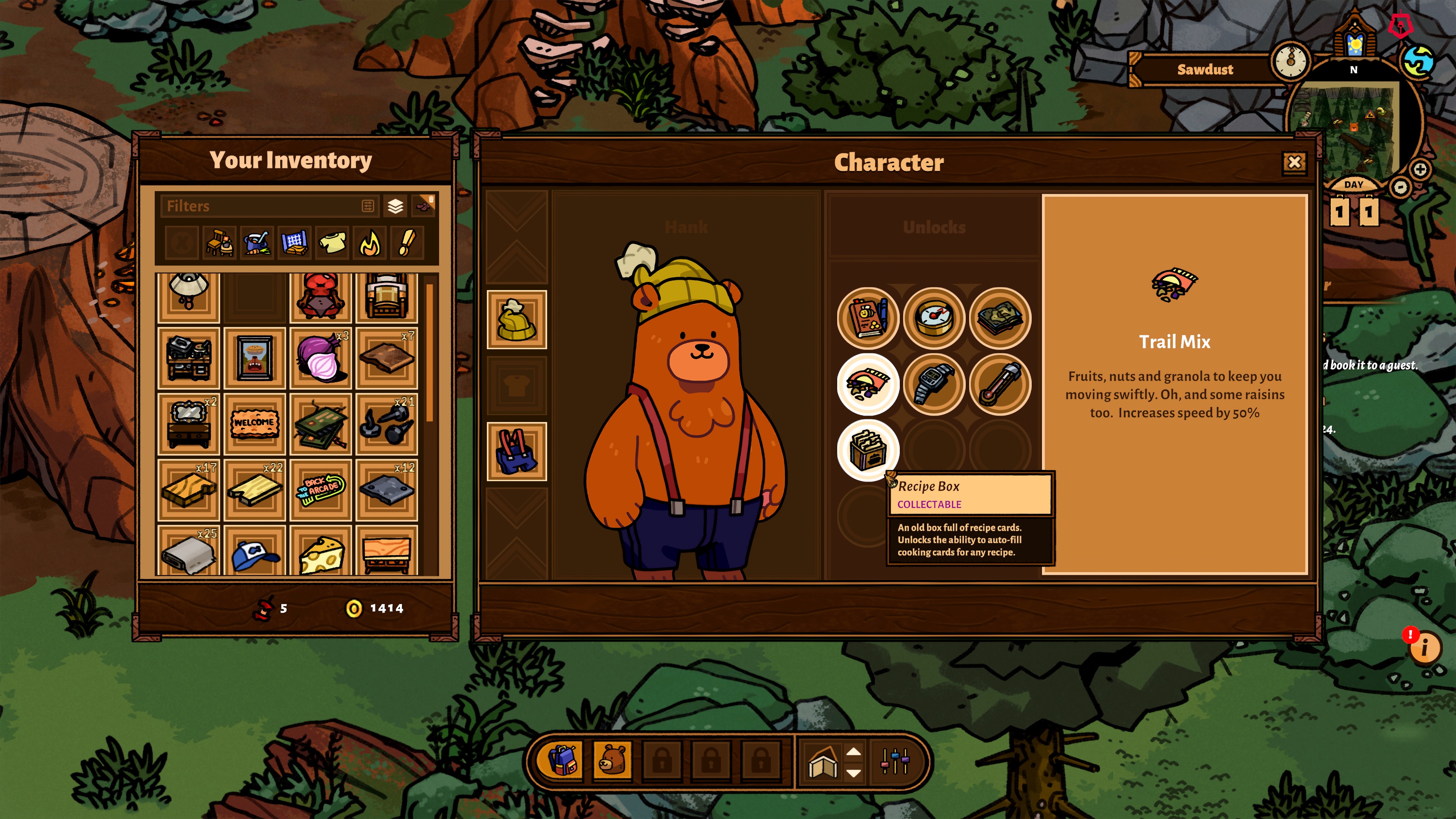
Cozy games are like a warm, digital blanket, according to Cosmic Coop developer Kyle Keersemaker, and players can even adopt the posture of the genre in the real world.
“For me, cozy games are about slowing down,” he said. “They usually have little-to-no combat and instead focus on creativity, community, and comfort. You can play them curled up on the couch or in bed without worrying about work or school or anything that is bothering you in the real world.”
Pressureless is the term that comes to mind for Tobias Schnackenberg—co-studio head of developer Square Glade Games, alongside co-founder Marc Volger—when he thinks of cozy games like his studio's upcoming Outbound.
“To me,” said Schnackenberg, “a game is cozy when there are no external forces pushing me into a specific direction or stressing me. In my opinion, you play cozy games mainly to relax. A cozy game gives you the freedom to choose your own pace, whether you want to explore, decorate, gather resources, or simply exist in the world for a moment. It is about feeling safe and unhurried.”
In that sense, cozy games stand in stark contrast to many of their contemporaries. They give their players the freedom to explore without any particular pressure, which itself creates a relaxing environment. But how do you create a satisfying narrative loop, a game that wants to be played, without dangling death and danger in front of players?
“That’s been one of my biggest challenges as a solo developer,” said Keersemaker. “You need enough structure to keep players engaged but enough freedom for them to express themselves.”
Solving that process often starts with visual design as a way to warmly welcome players.
Designing for coziness
Cozy games trade the power fantasy found in action games (If I don’t singlehandedly save the world from the evil alien invaders, who will?) for a deliberately tranquil and leisurely experience.
That’s what you might call a game’s atmosphere—the design of the world that players inhabit. Cozy games often have idyllic settings, leaning on the warm browns and oranges of the autumn months. Cozy worlds are meant to be lived in and inviting, not harsh and brutal.
“Atmosphere and vibes are very important to us,” the Donkin brothers said. “We want to create worlds with a strong sense of time and place that players can sink into and feel at home in.”
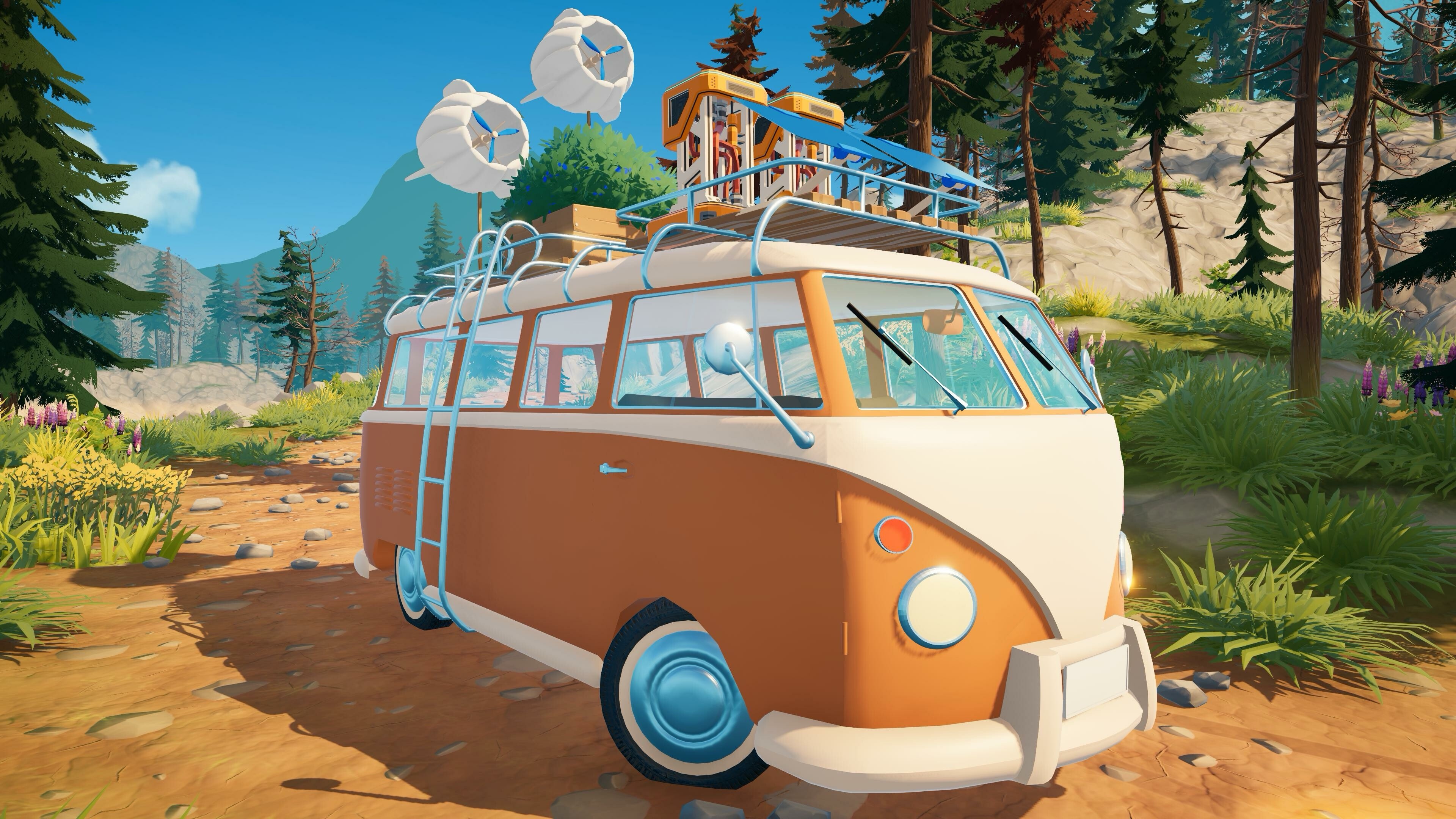
Square Glade Games' aforementioned Outbound is an upcoming open-world game centered on a camper van. Players explore, find, and collect materials, and upgrade their mobile home. And every facet of the 3D world that Tobias Schnackenberg created is designed for maximum coziness, from its colors to its soft shapes.
“We are very particular when it comes to color,” said Schnackenberg. “Outbound follows a very specific color palette, which creates a cohesive and consistent look throughout the entire world. I think this visual harmony contributes a lot to the cozy feeling, because just like in a home, a sense of structure and clarity can make the environment feel safe and comforting. The shapes and designs in the game are also intentionally soft and approachable. We avoid harsh contrast or overly sharp details, and instead focus on warm tones, gentle lighting, and natural materials. Everything in the world should feel pleasant to look at and pleasant to exist in.”
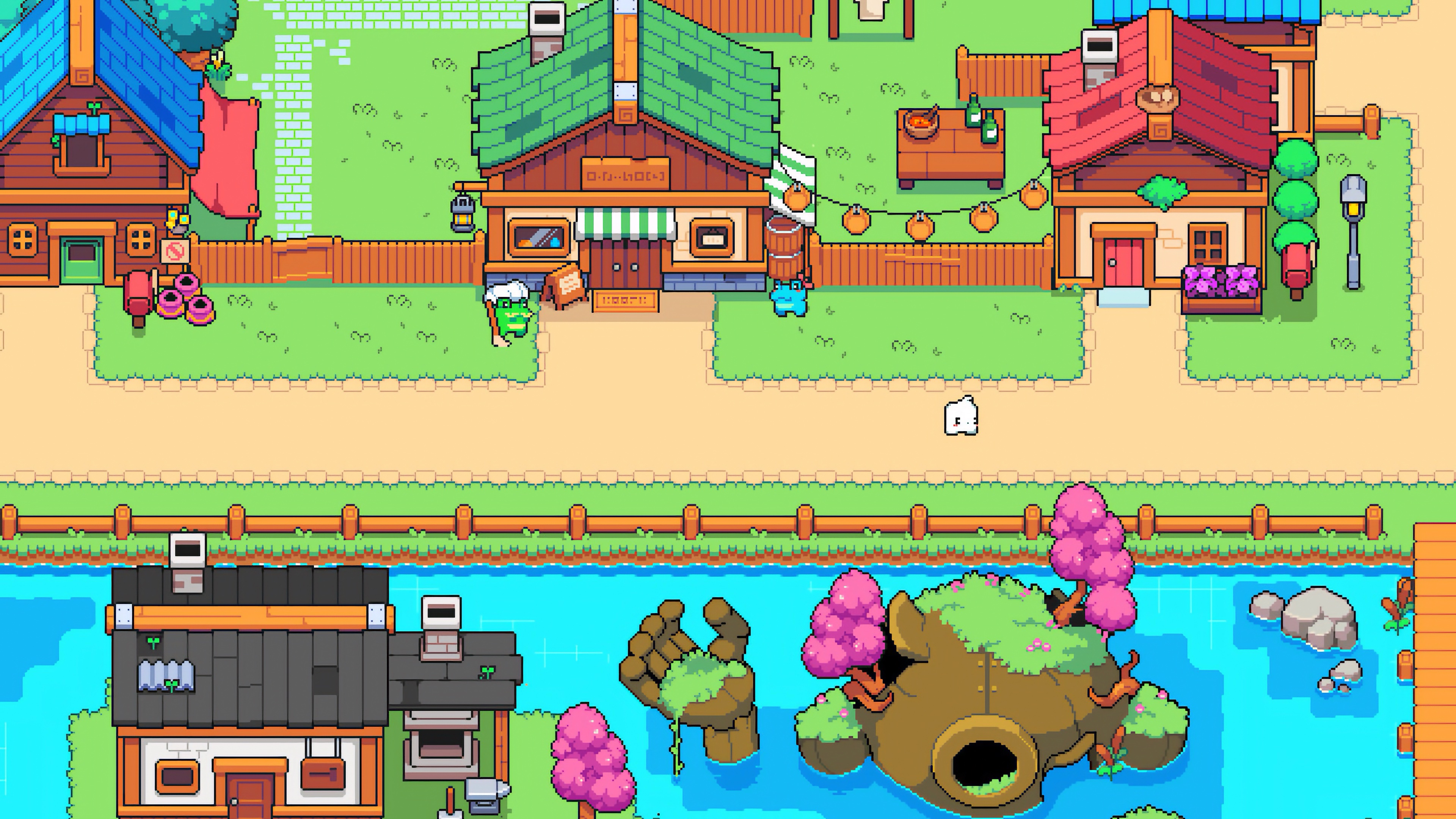
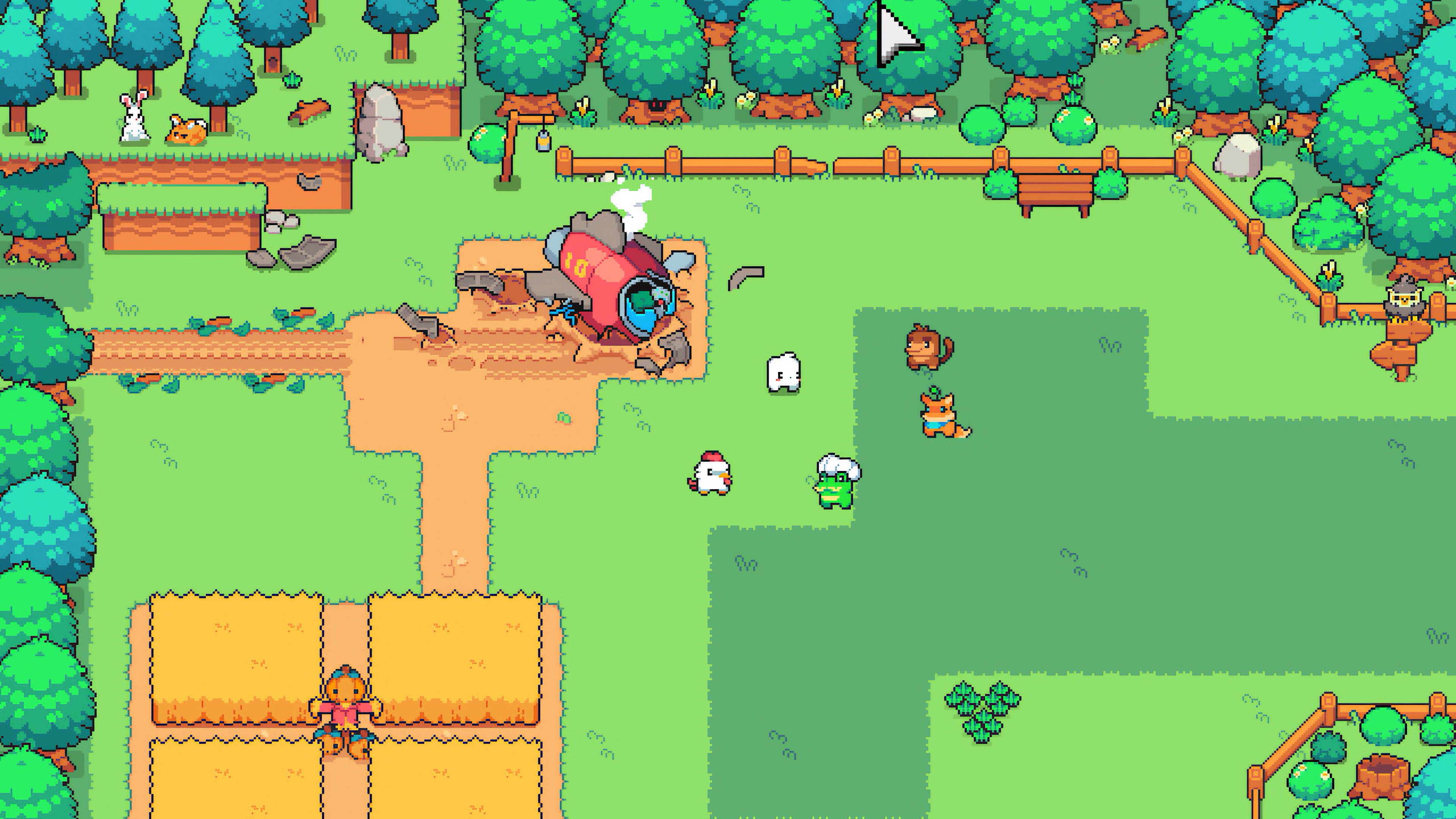
Kyle Keersemaker takes a similar approach to warm and welcoming design with his sprites. In his upcoming Cosmic Coop, there will be no combat—but there will be plenty of decorating your farm to attract adorable aliens called Critterlings.
“Cosmic Coop uses bright, simple pixel art to create a cheerful, inviting world. Color is central to the design: resident Critterlings are vivid and full of life, while visitors are muted until they decide to stay, making your farm naturally more colorful as you progress," said Keersemaker.
“Cosmic Coop includes five in-game years of quests that unfold naturally as you play, plus a wide variety of decorations for both your farm and your home interior. Once players unlock new furniture and items, players are likely to spend hours just designing and customizing their spaces," he continued. "That creative freedom is what keeps it engaging without breaking the cozy flow."
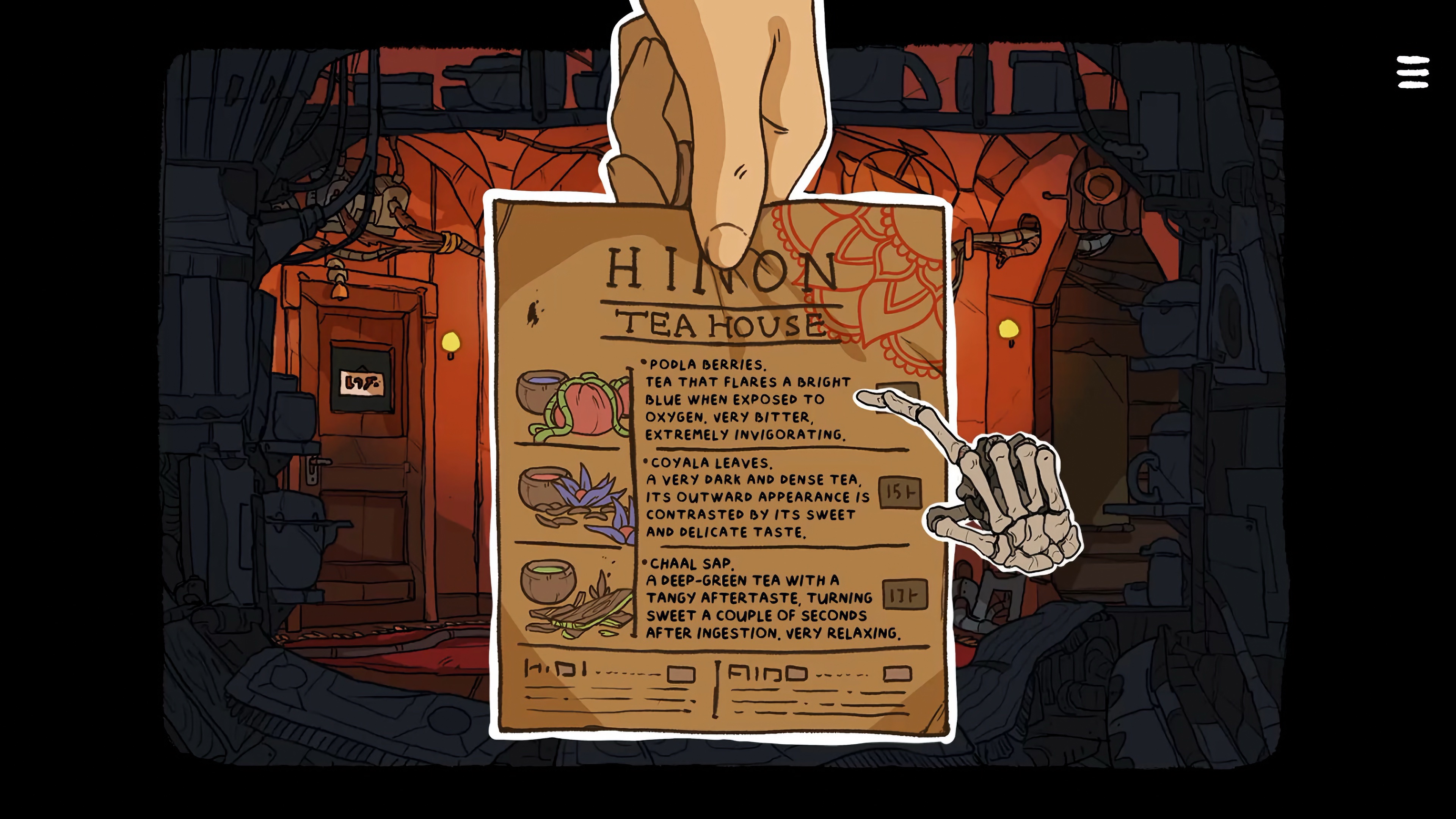
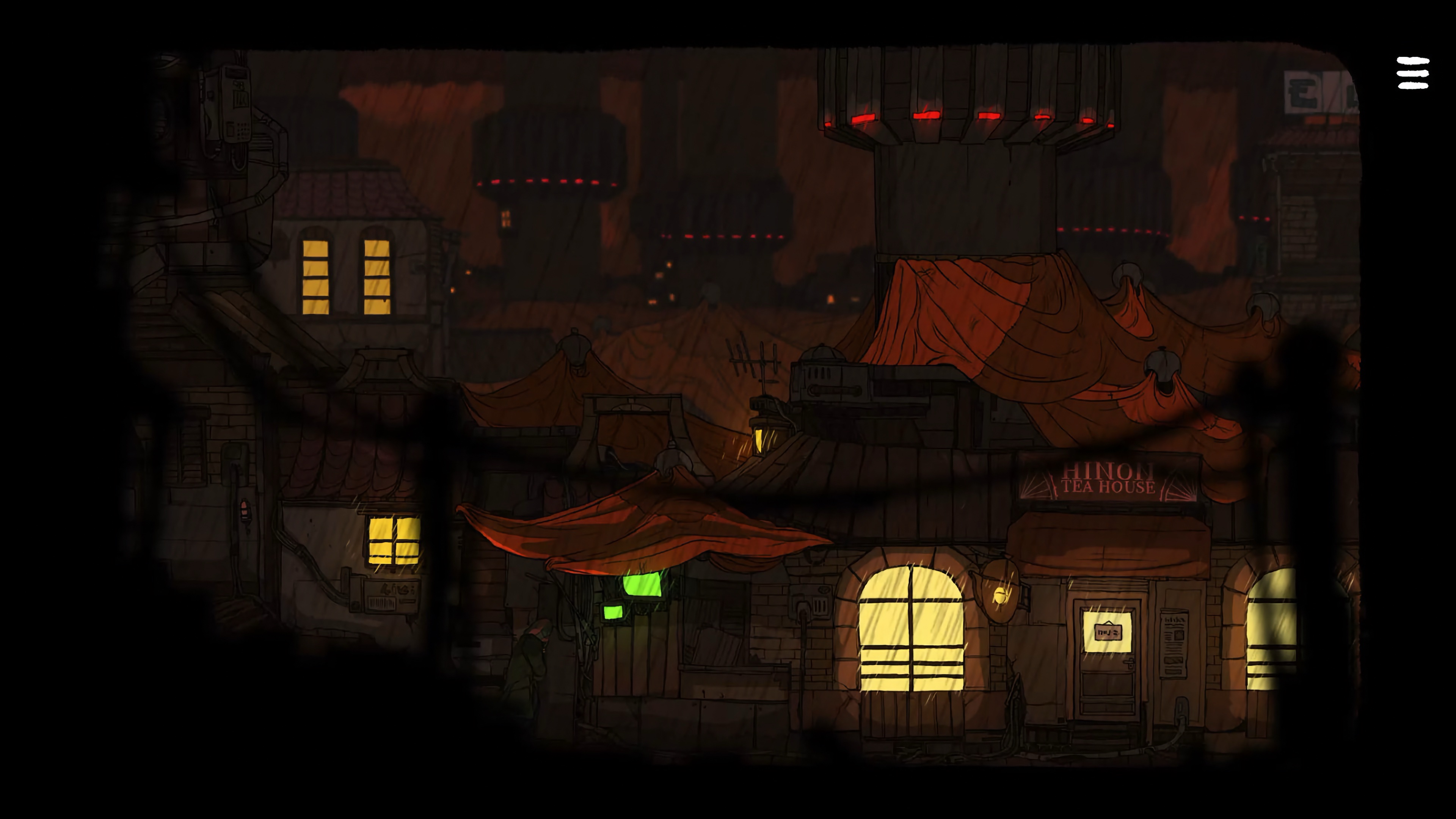
Players of Universe for Sale, the upcoming hand-drawn game from Tmesis Studio, will feel the coziness “through warmth—in light, in sound, in pacing,” said Zeno Colangelo.
Universe for Sale takes place in a bazaar beneath the clouds of Jupiter, a crossroads for cosmic wanderers where a mysterious girl sells handmade universes. Gameplay involves listening to conversations, reacting with gestures, and observing the familiar and the strange. “It’s cozy not because it avoids melancholy, but because it treats it gently, finding warmth in slowness and imperfection,” he said.
“The colors are warm, evoking a nostalgic sense of calm. We designed every location to gently draw the player into a world that feels rich and alive without being overwhelming," Colangelo continued. "The music hums like a fan on a summer evening. We try to make every frame feel inhabited and imperfect, as if the world had a pulse. We wanted the experience of playing the game to feel like reading a book on a rainy afternoon, with a cup of tea nearby—something slow, intimate, and comforting.”
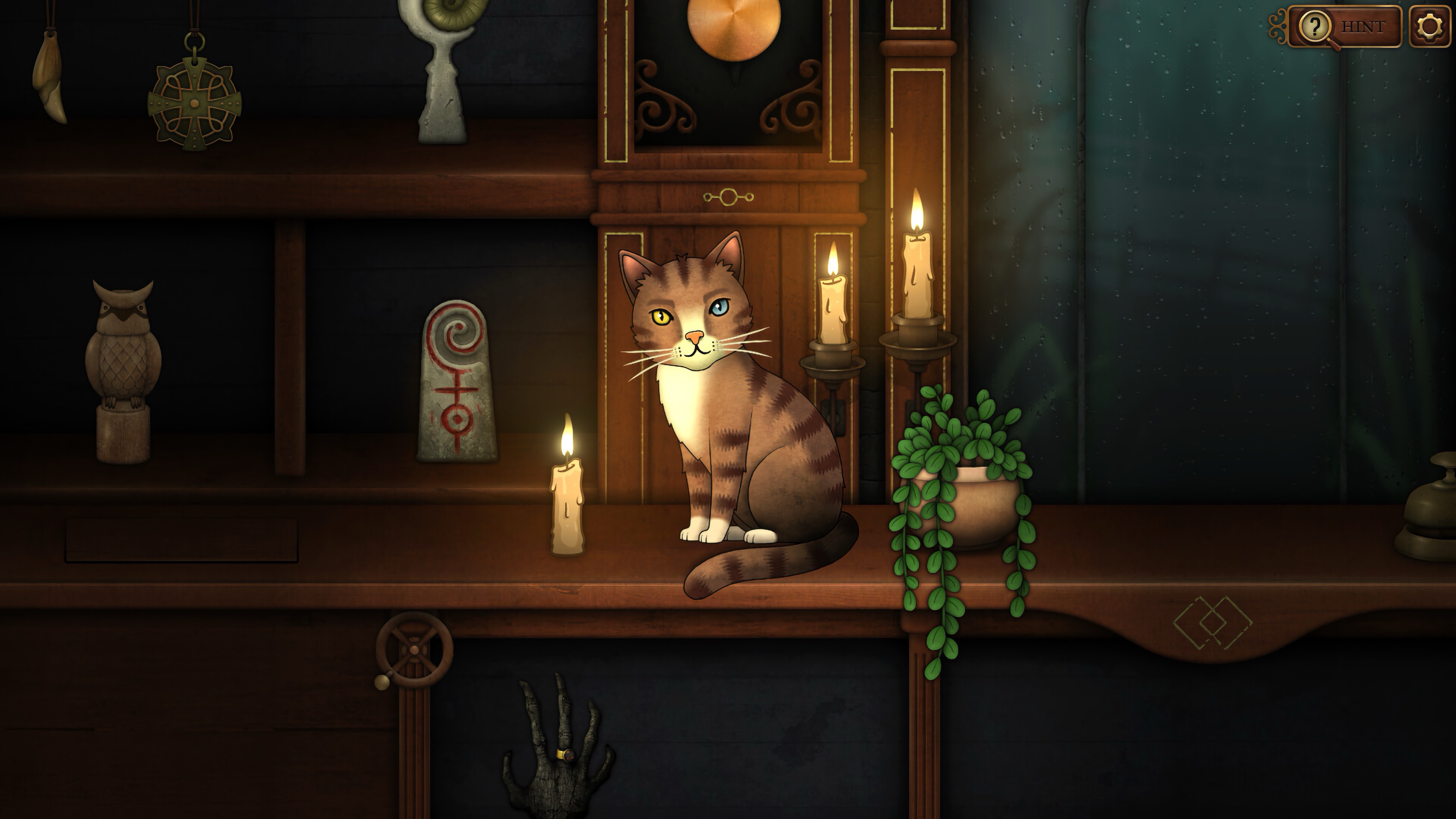
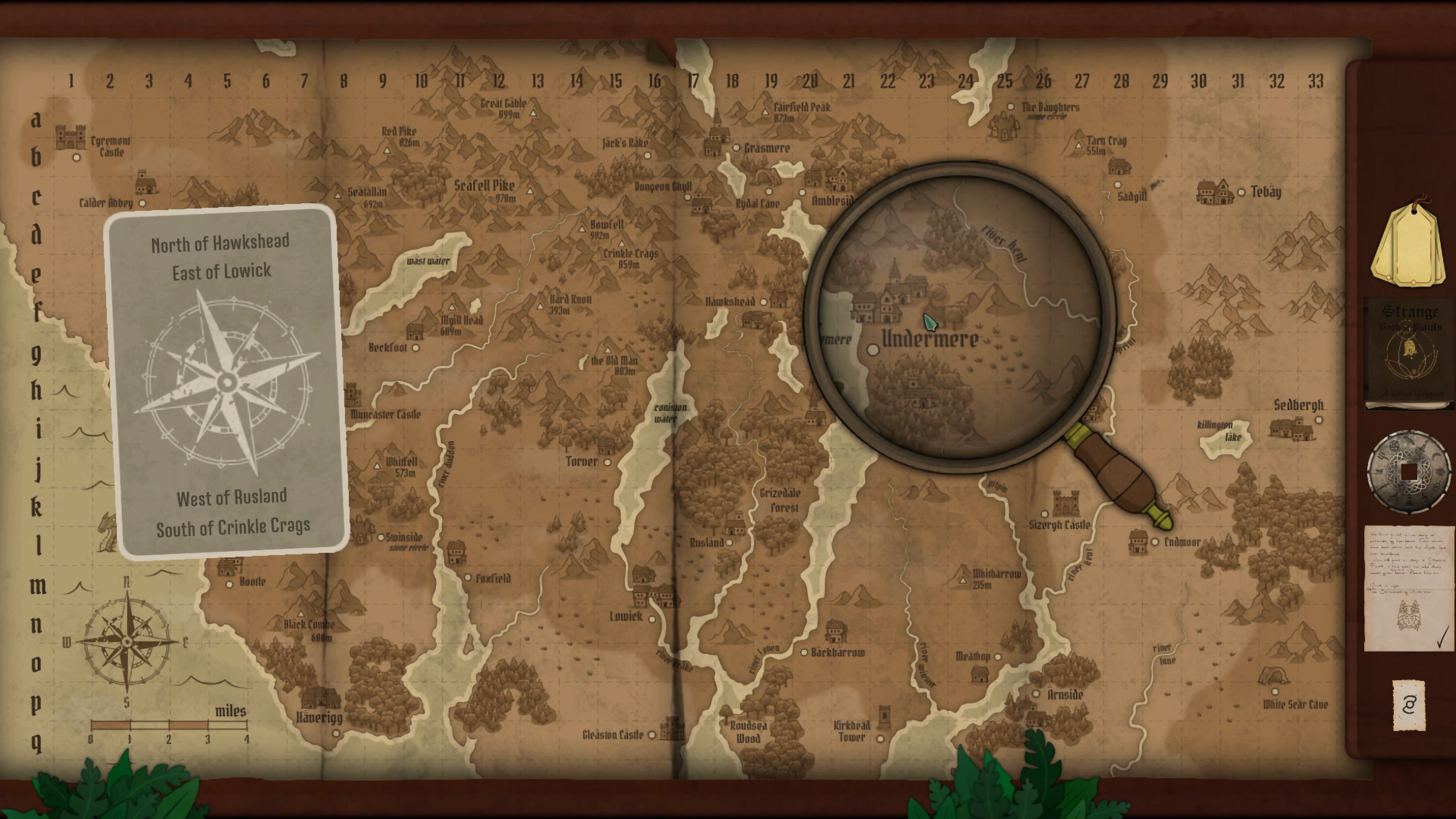
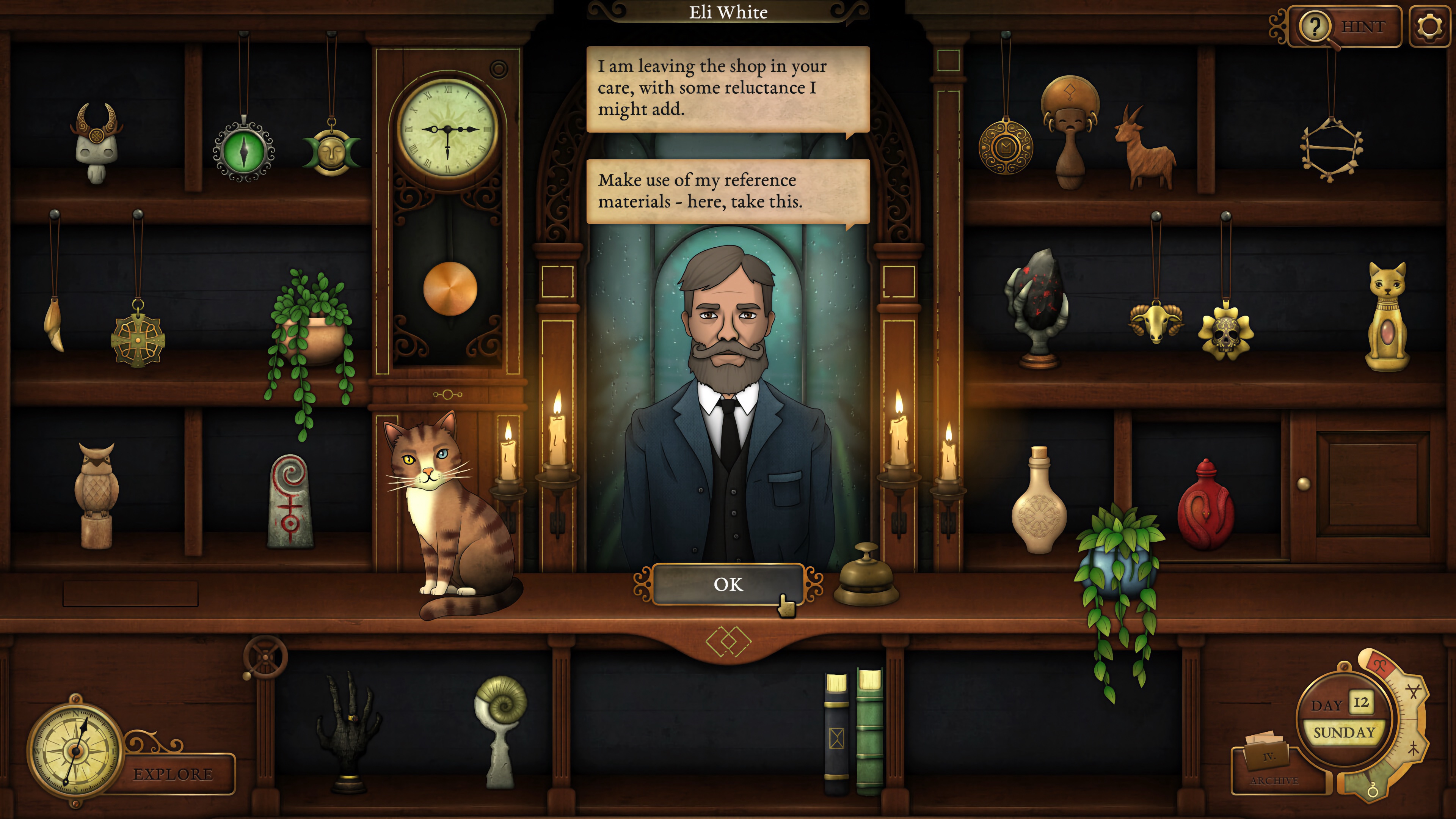
Meanwhile, Bad Viking's Strange Antiquities and Strange Horticulture deviate from the stereotypical cozy game atmosphere, serving as an example of the genre’s adaptability. In both, you play as a shopkeeper in the dark, Victorian-inspired town of Undermere. You’re effectively a detective, tasked with discovering and identifying rare artifacts and plants, solving puzzles, and using the knowledge you amass to help the odd townsfolk. They say it’s “cozy in tone, but with undercurrents of unease presented through a dark narrative that unfolds outside your shop.”
Easy listening
If the goal visually is to give players a comfortable place to hang out, then the audio reinforces that comfort.
Tobias Schnackenberg, whose upcoming Outbound puts players in camper vans, sees the audio as a huge component. That includes both ambient sounds and music.
“We use a lot of natural ambience, like birds, wind, and the rustling of trees,” Schnackenberg said. “These sounds help ground the player and create the feeling of being outdoors in a calm and peaceful environment. Classical music also enters at the right moments to support that mood rather than overwhelm it.”
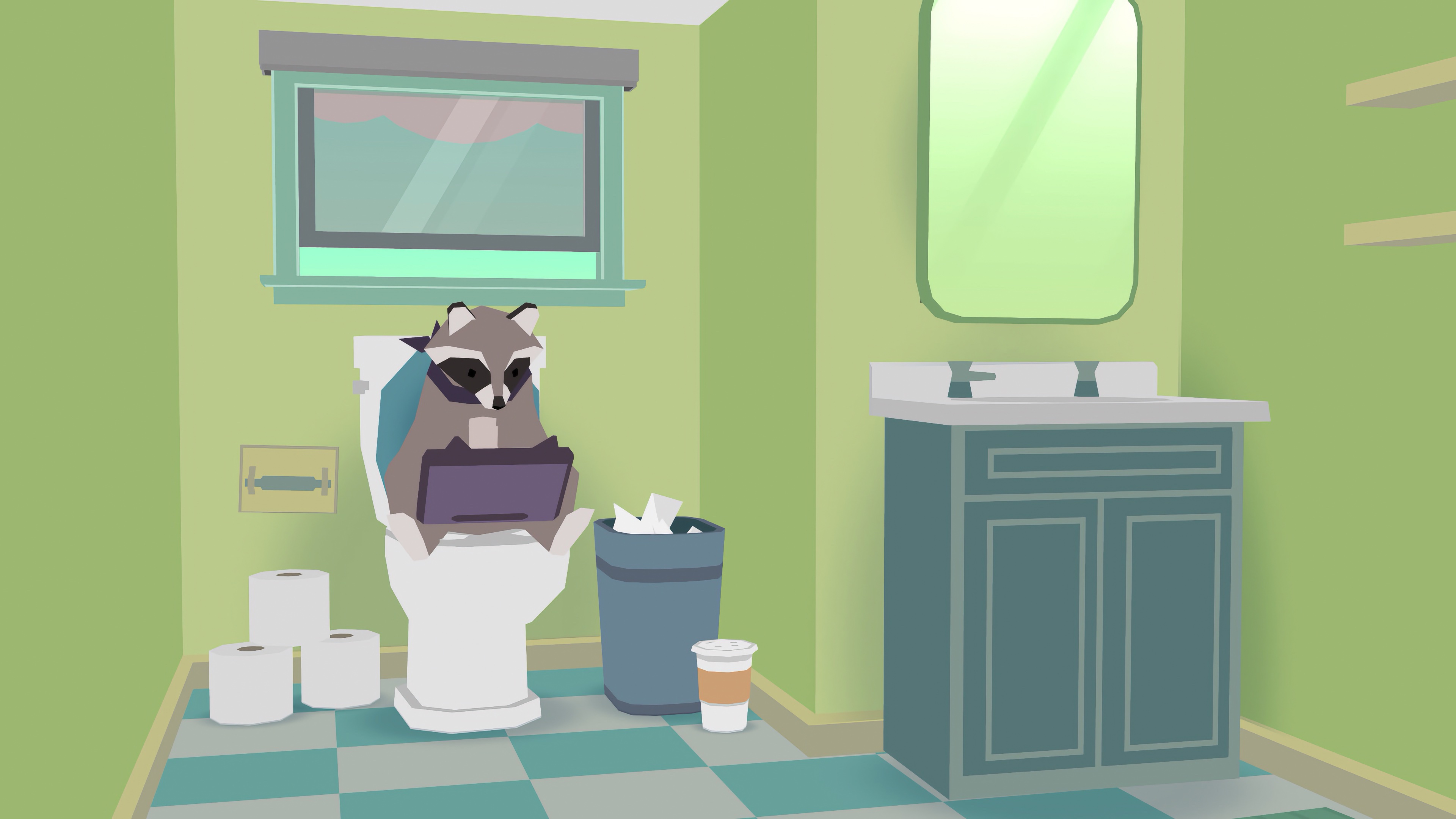
Donut County developer Ben Esposito sees his game’s soundtrack as the glue. In his game, you play as a raccoon who destroys cities with holes in the ground. Every time you drop something inside of a hole, it gets bigger (and you win prizes). There is no way to lose and plenty of chaos to spread.
“It’s all tied together (and in some cases inspired) by Daniel Koestner’s extremely laid back score,” Esposito said. “His music relies heavily on samples that he creates himself that have a textured and handmade feel. I think it brings out the personality in all the game’s details. Please find the imperfections charming!”
Developer Kyle Keersemaker made Cosmic Coop in part because he was tired of waiting for another Viva Piñata game, and his game’s audio is designed to evoke the feelings that developer Rare’s classic cozy game instilled in him.
“Sound also plays a huge part,” he said. “Each Critterling has unique audio cues that match its personality, and the music is whimsical yet gentle enough to stay in the background. Composer Simon Wood did an incredible job capturing that balance. My goal was to recreate the same relaxed joy I felt playing Viva Piñata years ago.”
The hope, according to the Donkin brothers, is to create a comfortable, living world.
“It’s about creating a cohesive atmosphere: hand-drawn textured artwork and a minimalistic soundtrack that is moody, mysterious, yet quietly contemplative, all working together,” they said.

The chill appeal of cozy gaming
The question remains: Why do people like cozy games? The answer lies—at least in part—in psychology.
Many video games tend toward action-oriented and combat-focused activities, from Arc Raiders to Zenless Zone Zero. That’s not true of every game, of course. The top charts in online stores include a mix of action titles like Battlefield 6 and Borderlands 4, sports titles like EA SPORTS FC 26 and Madden NFL 26, as well as simulation games like Cities: Skylines. But the bulk of bestseller lists on consoles and PC (though perhaps less so on mobile) are tilted more toward titles like God of War than solitaire.
So what attracts players to the alternate path of cozy games?
Rares Cinteza, co-lead and Game Design Director at Bear and Breakfast developer Gummy Cat, links the feeling of cozy games to his formative years, echoing Dr. Kowert’s emphasis on safety.
“For me personally,” Cinteza said, “a cozy game makes you feel like some of the best and most intimate parts of your childhood memories. It makes you feel both safe and engaged, and I don't think you can have one without the other, necessarily—at least not for a long enough time to keep you immersed. As long as I feel safe, or cozy, I can let myself be taken in by the world I'm experiencing, and I'm more open to believing what's being served, be it characters, stories, or gameplay.”
Tobias Schnackenberg says that cozy games are a form of stress relief and believes that they offer mental health benefits.
“I think that many gamers are looking for something that helps them unwind after a hard day of work. Sometimes you do not want to play a game that requires a lot of concentration or one that is overly competitive. Sometimes you just want to chill,” said Schnackenberg.
“I also believe that cozy games can improve your mental health, because they provide a safe and comforting space to relax in. Cozy games allow you to slow down and enjoy small moments. They give you the freedom to take things at your own pace, without pressure or expectations. This can feel incredibly refreshing, especially when real life is fast, demanding, or stressful.”
Dr. Kowert agrees and points to research that backs the lived experiences up.
“A lot of people in a lot of the research, they do really clearly tie cozy games to positive mental health outcomes,” she said. “Like people are aware that these are the games you go to if you want to feel good about life.”
Kowert specifically sees the seemingly ordinary gameplay in cozy games as a positive complement to our basic psychological needs.
“I like to talk a lot about self-determination theory,” she said, “which is a theory of human motivation that says all actions humans do are motivated by the desire to feel autonomous, make our own decisions, the desire to achieve something, and the desire to feel connected to other people. And games are really good at that generally—but Animal Crossing is a really, really exceptional example because the relatedness and the parasocial relationships you feel with your Animal Crossing villagers has been well documented.”
Researchers, she said, tend to determine these outcomes with diary studies, where participants are asked to write about how they feel before and after playing a game. For cozy games, in particular, they tend to make players feel relaxed.
“It's a sense of transportation—teleportation, I think, is the word they use actually—where you were transported to another place where everything is less stressful and everything is kind-of happy and cheery,” she said.
That’s the psychological benefit of spending a little time in a cozy world devoid of intense pressure.
“Nobody's chasing you, and it makes you feel relaxed,” she said. “You can take a breath. You can focus only on what you're doing here in the moment—which is all happy, cheerful, good soundtrack, bright colors—instead of what's happening around you.”
She’s also quick to point out that cozy games are not therapy in and of themselves.
“I think cozy games are a great genre for boosting your mood,” she said. “I think when we want to talk about games as therapeutic tools—not games as therapy, that's different—but games as therapeutic tools, cozy games are a great genre to look at. When we want to talk about the way that media and specifically games can help manage our moods, help us feel connected, help us de-stress at the end of a really stressful day, I think that's important.”
Dr. Kowert knows this from her studies, and players and developers of cozy games also know this from their experience.
“Cozy games offer a sense of calm that many people crave,” Cosmic Coop creator Kyle Keersemaker said. “Life can be stressful, and games that let you unwind, decorate, and create at your own pace feel like a small escape.”
These concepts—including the fundamentally positive emotionality of the cozy gaming experience—appeared again and again in our discussions with developers. And that, according to the Donkin brothers, goes a long way toward explaining why cozy games have become popular in the post-COVID era.
“Cozy games have really exploded in the past few years, partly as an antidote to how stressful life can be,” they said. “They provide a safe and meaningful way to unwind, and escape the weary, fast-paced pressures of modern life. They’re slower, quieter, more deliberate but give players a sense of purpose without stress. We like the way cozy games let you exist somewhere else for a while—not just play, but inhabit. You can lose yourself to the ritual, immerse yourself in a mood, and live out a fantasy through role-play.”
What cozy games aren’t
Jenny Windom liked cozy games so much that she’s turned her hobby into a career. At Wholesome Games, she spreads the news through annual showcases that include “uplifting games that focus on joy, hope, delight, and making mundane moments and activities feel magical.”
There’s something implicit in that mission, something mirrored in every developer conversation we had: Cozy games may have become more popular, but there are still common misconceptions about them—that they’re easy and simple.
“There are a few misconceptions I’ve encountered,” Windom said. “The first is that cozy or wholesome games aren’t really games. That misconception is one I find frustrating on multiple levels—how we perceive specific types of difficulty as more valid in gaming, and I also find that it’s tied to a disregard for game mechanics and styles that are often interpreted as more feminine. Cozy games are games.”
Dr. Rachel Kowert has also seen cozy games’ perceived difficulty leading to misunderstandings.
“People think cozy games are girl games. They associate them with being easy games. I would never say Stardew Valley is easy. That fishing is awful,” she said with a laugh.
The welcoming visual language seems to work both for and against cozy games. The developers we spoke with pointed out that some conflate simplistic visual design with simplicity of the underlying game.
“I think there's a good reason why people tend to equate cozy games with childish games, or simplistic experiences without much depth, aimed at mostly children,” said Rares Cinteza, co-lead and Game Design Director of Bear and Breakfast. “It's easy to take a lot of cozy games at face value based on artwork alone and make that assumption, sometimes fairly.”
Zeno Colangelo has also seen "cozy game" misunderstood as a synonym for “simple or shallow” experiences.
“In reality, cozy games often deal with emotional and design complexity—finding meaning in subtle gestures and quiet pacing," said Colangelo. "The best ones use stillness as a kind of depth: beneath the calm surface, there’s a lot of emotion, intention, and craft at work.”
Outbound developer Tobias Schnackenberg echoed that broad sense, arguing that cozy games can provide depth without stress.
“Many people also assume that cozy games are easy or simple by default, but that is not necessarily true,” Schnackenberg said. “They can have deep mechanics and progression without stressing the player. Cozy game design is also about designing meaningful interactions without creating too much of a challenge.”
And Cosmic Coop developer Kyle Keersemaker said that some people tend to create a false dichotomy, but players don’t have to choose just one type of game.
“Some players dismiss them as too slow or simple, but that’s missing the point,” he said. “They’re designed for a different kind of satisfaction. I used to spend hours in Diablo II and Quake, yet I’d still relax with a cozy title when I wanted a break from intensity or when my friends were offline."
The Donkin brothers offered an elegant and succinct rebuttal of the criticism.
“We’ve seen cozy games dismissed as bland or lacking in depth," they said. "One person’s ‘boring’ is another person’s pleasure.”
Developers of cozy games are combating these misconceptions with their work, as is Jenny Windom.
“On a more philosophical level,” Windom said, “a goal of mine is that Wholesome Games and our presence allow developers, publishers, and players to think about games a little differently—think about what we assume people want to play, what we have traditionally offered, and what we have traditionally overlooked or underestimated.”

The future of cozy gaming
The cozy game ecosystem is growing. It’s also evolving, and every developer we spoke with had interesting ideas about where it’s going.
“I think cozy games will continue to evolve toward more social and cooperative experiences,” Kyle Keersemaker. “Players love hanging out together in stress-free worlds, so co-op and voice chat features will become key parts of the genre. We’re entering an exciting era where cozy doesn’t just mean solo, it can mean shared comfort with friends.”
Brothers Rob and John Donkin are already pushing the boundaries of cozy gaming with their dark, Victorian-inspired Strange Antiquities and Strange Horticulture, and they’d like to see others experiment, too.
“Hopefully we’ll see more games explore how coziness can coexist with tension and melancholy—or even fear—to play with player expectations,” they said. “We hope developers in the space don’t shy away from creating games that challenge us to think. Too much of our modern world is about making life easy for people. So cozy, dark, thinky games—that’s what we hope to see.”
And when Outbound developer Tobias Schnackenberg looks toward the future, he sees the past as an anchor. A lot of the future will be built on the very foundations that have made the past popular.
“I believe we will see more cozy games that let players express themselves, build their own spaces, and shape the world around them,” he said. “There is a strong desire among players to have a place where they can just be, without pressure or competition.”